
How to choose construction chemicals for concrete repair substrates
Author
Date Published
Reading Time
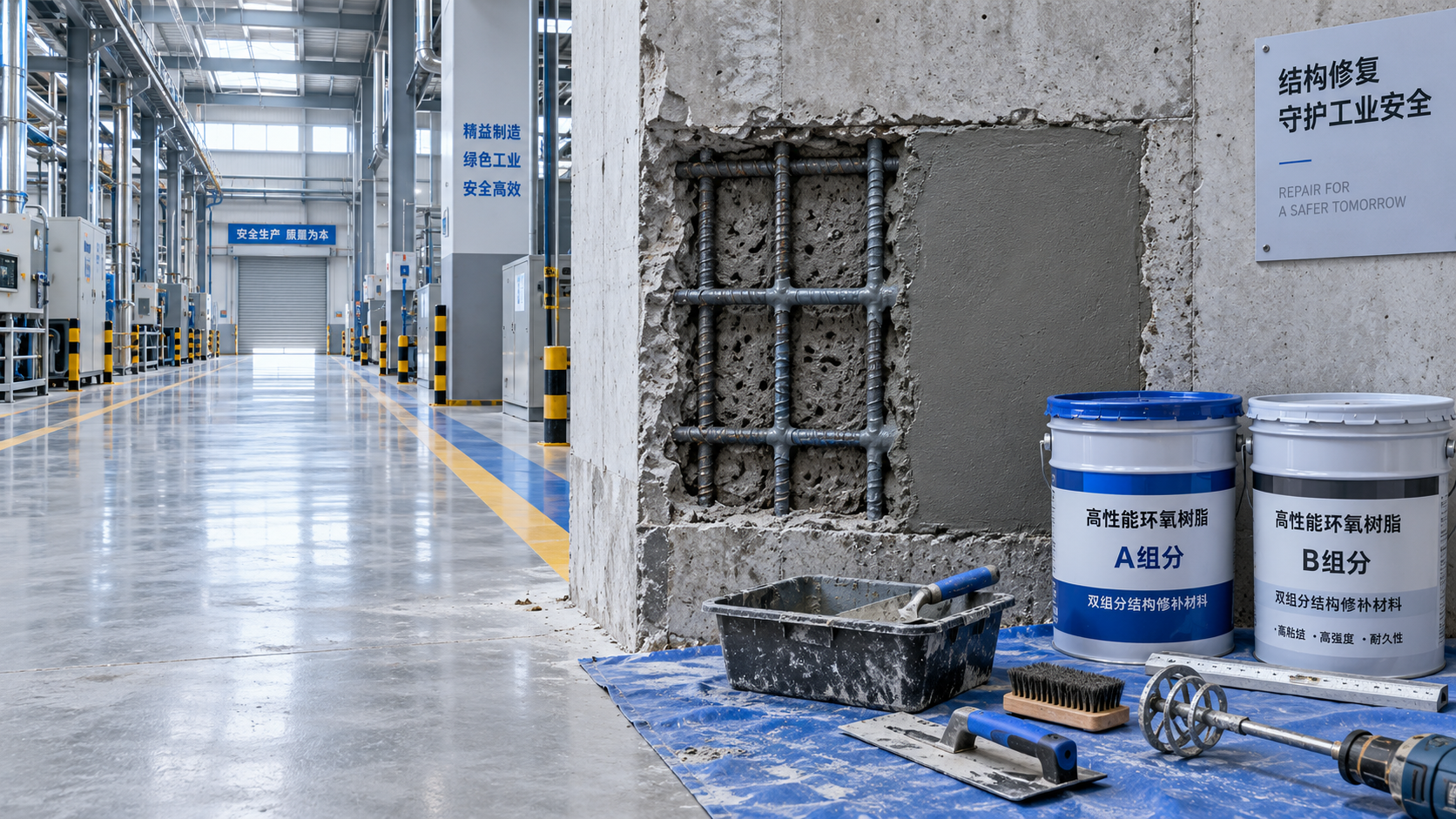
A concrete repair can look straightforward on a drawing: remove damaged material, prepare the surface, apply a repair mortar, and protect the finished area. On site, the decision is rarely that simple. A repair that appears sound at handover may crack, debond, stain, or allow water back into the structure if the selected materials do not match the condition of the concrete beneath them.
For project managers, choosing construction chemicals for concrete repair substrates is therefore not a matter of selecting a familiar product brand or the lowest quoted system. It is a compatibility decision. The repair mortar, bonding agent, primer, corrosion-control treatment, sealant, and protective coating must work with the substrate, the exposure conditions, the installation method, and the expected service life of the asset.
The most reliable selections begin with one question: what is the substrate actually telling the project team? A sound but carbonated bridge soffit, a damp basement wall with chloride contamination, and a warehouse slab affected by forklift traffic may all be called “concrete repair,” but they require very different construction chemicals and application controls.
Start with a substrate diagnosis, not a product list
Before comparing technical data sheets, establish the nature and extent of deterioration. This stage often determines whether the repair scope is durable or simply cosmetic. A repair material can only perform as intended when it is applied to a substrate that is sufficiently sound, clean, and prepared to receive it.
Site investigation should identify loose or delaminated concrete, cracking patterns, exposed reinforcement, honeycombing, laitance, contamination, and previous coatings. It should also distinguish between damage caused by a one-time event and damage driven by an active mechanism. For example, repairing spalled concrete without addressing ongoing corrosion can lead to recurring failures around the edge of the repair patch.
Useful substrate checks commonly include:
- Concrete strength and cohesion, especially in the near-surface zone.
- Moisture condition: dry, damp, saturated surface-dry, or subject to active water pressure.
- Carbonation depth and potential chloride contamination where reinforcement corrosion is suspected.
- Crack width, movement history, and whether the crack is structural, dormant, or actively moving.
- Surface contaminants such as oil, curing compounds, dust, salts, old paint, or chemical residues.
- Ambient and service conditions, including temperature variation, UV exposure, freeze-thaw cycles, abrasion, and chemical attack.
The objective is not to generate unnecessary testing. It is to avoid selecting construction chemicals on an incomplete picture. A project manager should ask the inspection team to translate findings into practical selection criteria: “The substrate is damp and contaminated with chlorides,” for example, is more actionable than “the concrete is in poor condition.”
Match the repair system to the failure mechanism
Concrete is not failing for only one reason. Its visible condition may reflect corrosion, water ingress, shrinkage, impact damage, sulfate exposure, poor original compaction, thermal movement, or a combination of these factors. Each mechanism changes the chemistry and performance properties needed from the repair system.
Where corrosion is the underlying issue
When steel reinforcement has corroded, remove concrete until sound material is reached and reinforcement is adequately exposed for cleaning and assessment. Depending on the specification and condition of the steel, the system may include a reinforcement corrosion-control coating, a compatible repair mortar, and a protective surface treatment to limit future ingress of carbon dioxide, chlorides, and water.
Do not assume that a polymer-modified mortar alone resolves corrosion risk. In a chloride-exposed marine, coastal, or de-icing salt environment, project teams may need to consider broader protection measures, including coatings, hydrophobic impregnation, or electrochemical solutions where appropriate. The right choice depends on structural condition and maintenance strategy, not simply on the size of the spall.
Where water is entering through cracks or joints
Water changes the repair conversation. An epoxy crack injection system can provide structural bonding in dry, dormant cracks, but it is not a universal solution for a leaking structure. Wet or actively leaking cracks may require moisture-tolerant injection resins, polyurethane injection systems, or a combination of water-stopping and structural repair approaches.
Similarly, a rigid repair mortar should not be used to bridge a movement joint. If movement is expected, the project needs an elastomeric joint sealant or a designed joint assembly with suitable adhesion, movement capability, and chemical resistance. Treating a moving joint as a crack is a common and expensive selection error.
Where the surface faces mechanical or chemical stress
Industrial floors, loading areas, wastewater facilities, and processing plants require more than a visually acceptable patch. Abrasion resistance, impact tolerance, chemical exposure, thermal cycling, and cleaning regimes may govern material selection. Cementitious repair mortars may be suitable for rebuilding profiles, while resin-based screeds, linings, or coatings can be necessary where aggressive service conditions continue.
The key is to verify the entire build-up. A chemical-resistant topcoat applied over a weak or moisture-sensitive substrate will not create a reliable floor system. Bond strength, primer compatibility, moisture vapour transmission, and curing conditions must be considered together.
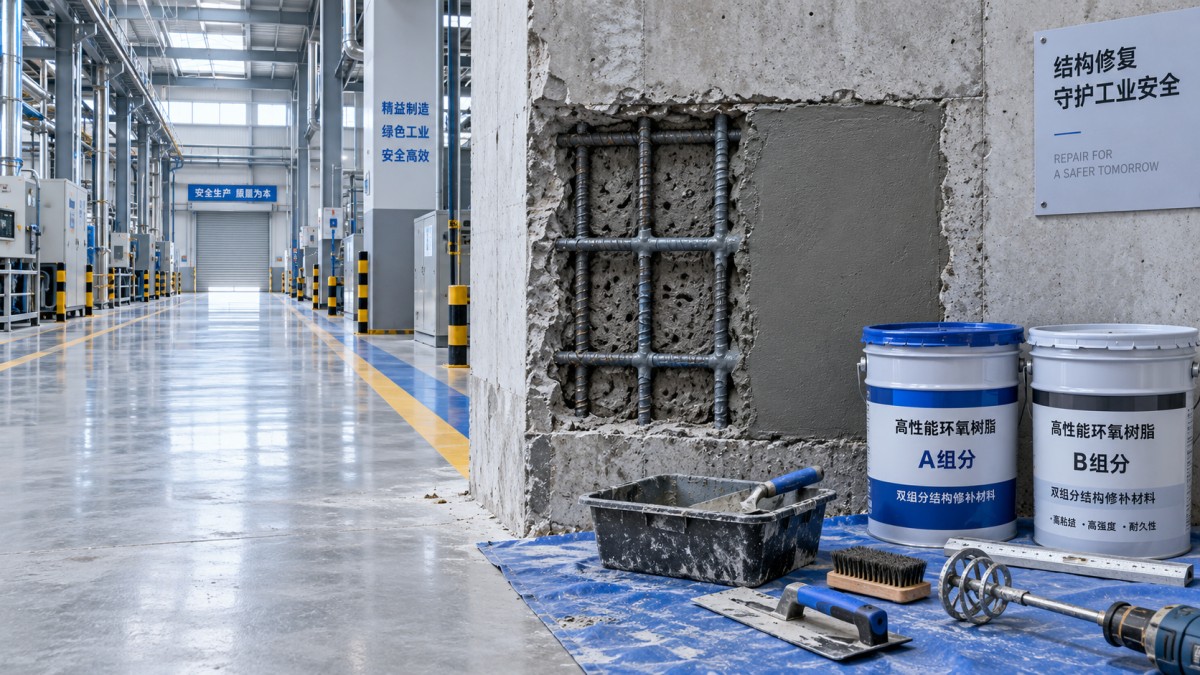
Moisture is often the deciding factor
Many repair failures begin with a rushed assumption that a surface “looks dry enough.” Concrete may contain significant internal moisture even when its face appears dry. Moisture can interfere with resin adhesion, cause blistering beneath impermeable coatings, or alter the curing behaviour of certain products.
For cementitious construction chemicals, a saturated surface-dry condition is often preferred because it reduces rapid water draw from the repair mortar while avoiding standing water. Resin-based systems have more varied requirements. Some primers and epoxies require a dry substrate; others are formulated for damp concrete. Their suitability should be confirmed by the manufacturer’s stated limits, not by general assumptions about resin chemistry.
Where moisture is persistent, investigate its source. Is it rising damp, a leaking joint, hydrostatic pressure, failed drainage, condensation, or water trapped behind an existing coating? Selecting a moisture-tolerant primer may help in some cases, but it is not a substitute for correcting a drainage or waterproofing failure.
Evaluate compatibility beyond “will it stick?”
Adhesion is essential, but compatibility is broader. Concrete repair materials need to move, cure, and age in a way that does not place harmful stress on the substrate or adjacent concrete. A very high-strength mortar is not automatically the best choice for old, lower-strength concrete. If the repair is excessively stiff or has a significantly different thermal or shrinkage behaviour, stress can concentrate along the repair perimeter.
When reviewing construction chemicals, project managers should compare the following properties in the context of the substrate:
- Compressive strength and elastic modulus: These should be appropriate for the existing concrete and the structural duty of the repair.
- Bond strength: Check both the product’s stated performance and the feasibility of achieving adequate surface preparation on site.
- Shrinkage and cracking tendency: Important for larger-volume repairs, thin sections, and restrained areas.
- Permeability and vapour transmission: A dense coating may protect against external ingress but can trap moisture if the assembly is not designed for it.
- Thermal compatibility: Particularly relevant for exterior façades, bridge elements, and structures exposed to large temperature swings.
- Application thickness: A material designed for shallow patching may not be suitable for deep repairs in one lift.
- Cure profile: Fast-setting products can reduce downtime, yet may leave little margin for placement, finishing, or hot-weather work.
Think in systems rather than individual containers. A primer, repair mortar, levelling compound, and coating from different suppliers may each be technically credible, but their combined performance should not be assumed. Where possible, use a tested and documented system, or obtain written confirmation on cross-product compatibility from the responsible technical parties.
Specify the preparation method with the same care as the material
Even well-chosen construction chemicals cannot compensate for weak preparation. The substrate needs to be free of unsound concrete, dust, oils, loose particles, and bond-inhibiting residues. Mechanical methods such as scabbling, grinding, scarifying, or abrasive blasting may be selected according to the repair depth, contamination level, required surface profile, and the risk of damaging surrounding concrete.
A polished or overly smooth surface can reduce mechanical key. Conversely, aggressive removal can introduce microcracking or leave an irregular profile that is difficult to fill properly. The aim is a clean, sound, textured surface suited to the chosen repair material.
Preparation also includes edge detailing. Repair perimeters are often saw-cut to avoid feather edges, which are vulnerable to premature breaking. Reinforcement should be cleaned and inspected, and repairs around bars should allow material to fully encapsulate the steel. These are small execution details, yet they frequently separate repairs that age well from those that require early rework.
Use standards as a decision framework, not a checkbox
For projects operating under European specifications, the EN 1504 series provides a useful framework for concrete repair and protection products. It helps teams link a deterioration mechanism to a repair principle and then to performance requirements for the relevant material type. Other regions may use local building codes, transport authority specifications, or owner standards with similar intent.
A declaration of conformity or test classification can support procurement decisions, but it should not end the technical review. Ask whether the stated classification relates to the actual application: overhead versus horizontal placement, low-temperature installation, chloride exposure, potable-water contact, chemical splash, or rapid reopening to traffic. The most relevant documents are the technical data sheet, safety data sheet, method statement, and clear records of applicable test standards.
Build procurement around site reality
Project managers are often balancing technical risk against programme pressure, supplier availability, and budget. That is normal. The mistake is treating these considerations as separate from material performance.
A repair system that requires specialist equipment, tight temperature control, or highly trained applicators may still be the right choice—but those conditions must be available. If a product has a short pot life in high temperatures, crews need realistic mixing quantities and placement logistics. If imported construction chemicals have long lead times, the procurement plan should include storage limits, batch traceability, transport constraints, and contingency for damaged or expired stock.
Before purchase approval, request a practical submittal package that addresses:
- Substrate condition and required preparation standard.
- Recommended primer, bonding layer, mortar, coating, or injection material as one repair sequence.
- Application temperature, humidity, and moisture limitations.
- Minimum and maximum layer thicknesses, curing requirements, and recoat intervals.
- Expected material consumption, including realistic allowance for rough substrates and wastage.
- Quality-control tests, such as pull-off testing, trial areas, and records of batch numbers.
- Training or technical support requirements for the installer.
A small on-site trial is often worth more than a lengthy product comparison. It can reveal whether the substrate is more absorbent, wetter, weaker, or more contaminated than the investigation suggested. It also gives the contractor a chance to confirm workability, finishing, curing, and coating adhesion under actual site conditions.
Common selection mistakes that create avoidable repair risk
One frequent mistake is choosing by compressive strength alone. Stronger is not always more compatible, particularly on aged or low-strength concrete. Another is using a generic bonding agent without confirming whether it is suitable for the repair mortar, the moisture condition, and the exposure environment.
Teams also underestimate the importance of curing. Rapid drying, wind, direct sunlight, frost, or early wet exposure can compromise cement-based repairs even when the material itself is correctly selected. Protective curing compounds, wet curing, membranes, or temporary environmental controls may be part of the repair plan rather than an afterthought.
Finally, avoid assuming that a protective coating can conceal unresolved defects. Coatings are valuable tools for reducing ingress and improving durability, but they are not a remedy for active cracks, poor drainage, weak concrete, or inadequate surface preparation.
A practical selection sequence for project teams
When time is limited, a disciplined sequence prevents rushed decisions. Define the repair objective first: structural reinstatement, water stopping, corrosion mitigation, profile restoration, surface protection, or a combination. Then confirm the substrate condition through inspection and testing. Identify environmental exposure and service demands, select a compatible material system, and validate it with a trial area or mock-up where the repair is significant.
The final decision should be documented in a repair method that links each material to its purpose. That clarity helps purchasing teams source equivalent products responsibly, enables site supervisors to inspect the right conditions, and gives asset owners a clearer record for future maintenance.
Choosing construction chemicals for concrete repair substrates is ultimately about reducing uncertainty before the first bag is mixed or cartridge is loaded. A careful match between substrate, repair mechanism, material properties, and site execution will not eliminate every construction risk. It does, however, give the project a far better chance of delivering a repair that remains dependable long after the work area has been reopened.
Technical Specifications
- How to choose construction chemicals for concrete repair substratesAuthor :Chemical Industry Editorial Team
- How do I prevent connector compatibility problems when upgrading control panels?Author :Electrical Components Editorial Team
- How to choose ceramic tiles for bathroom floors with better slip resistanceAuthor :Construction Materials Editorial Team
Expert Insights

Chief Security Architect
Dr. Thorne specializes in the intersection of structural engineering and digital resilience. He has advised three G7 governments on industrial infrastructure security.
Core Sector // 01
Security & Safety