How to choose ceramic tiles for bathroom floors with better slip resistance
Author
Date Published
Reading Time
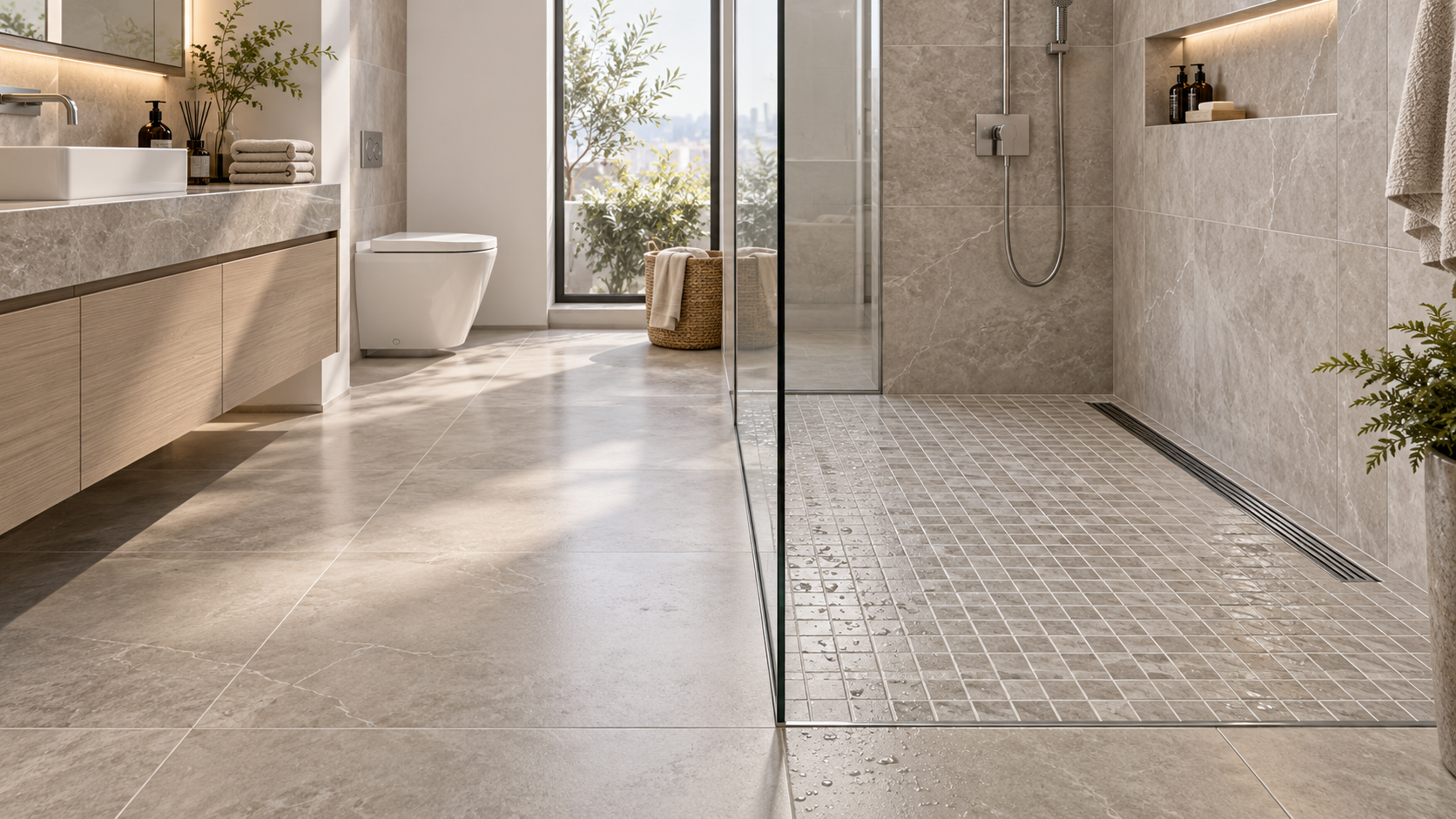
A bathroom floor has to perform in a way few other surfaces in the home do. It is walked on with wet bare feet, exposed to shampoo residue and body wash, and often used by people moving quickly in the morning or stepping out of a warm shower when visibility and balance are not at their best. In that setting, choosing ceramic tiles for bathroom floors is not simply a matter of color, pattern, or price. It is a practical safety decision.
The good news is that a safer floor does not have to look industrial or overly rough. Modern ceramic and porcelain tiles come in matte stone looks, subtle textured finishes, terrazzo effects, and wood-inspired designs that can offer useful grip while still making a small bathroom feel calm and inviting. The challenge is knowing what to compare before ordering samples or committing to a full renovation.
Start with the real conditions in your bathroom
Before looking at collections, think about where water actually lands and how the room is used. A guest bathroom with a shower used once or twice a week has different demands from a family bathroom shared by children, older adults, and pets. A walk-in shower without a raised curb also creates a larger wet zone than a bathtub with a shower curtain.
For most homes, the floor should be selected for the “wet bare foot” reality rather than the dry showroom display. Smooth, glossy tiles can look striking under retail lighting, but they may become slippery when water and soap film are present. This does not mean every shiny tile is automatically unsuitable; it means the exact product, finish, and installation setting need closer scrutiny.
It also helps to separate the room into zones:
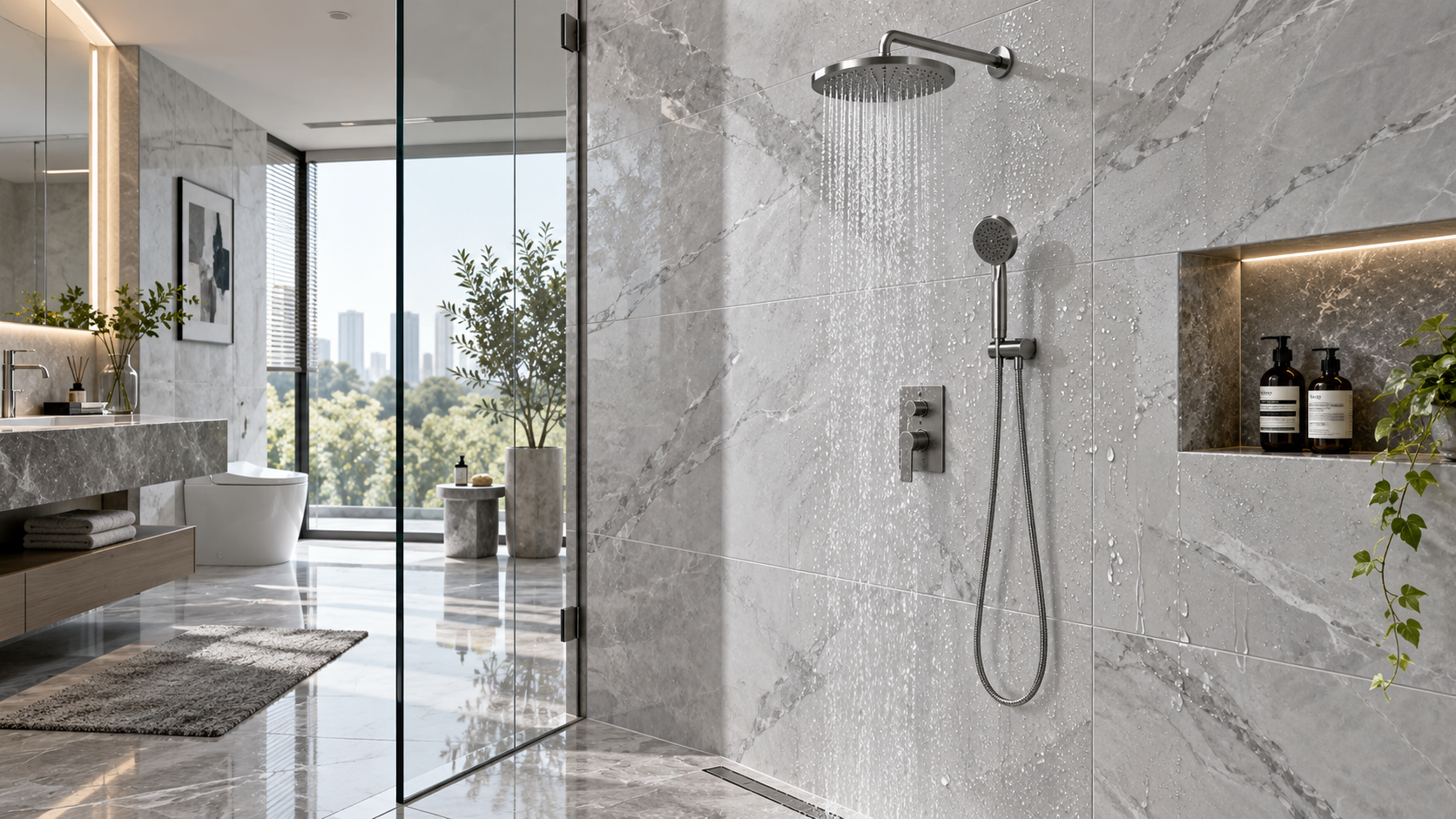
- Shower floor: This is usually the highest-risk area and needs reliable traction, effective drainage, and a tile size that follows the shower slope.
- Floor immediately outside the shower or tub: Frequent splashes make this another priority zone, especially where bath mats are not always used.
- Main bathroom floor: It may remain drier, but it should still provide a comfortable and stable walking surface.
- Accessible or multigenerational bathrooms: These often benefit from more conservative slip-resistance choices, even if the room is visually designed to feel refined.
A floor that is appropriate for the general bathroom may not be the best choice inside the shower. It is common—and often sensible—to use coordinating tiles with a smaller, more textured mosaic in the shower area.
Understand slip-resistance ratings, but do not treat them as the whole answer
Tile manufacturers may publish different test results depending on the market. These figures are useful, but they must be read in context. There is no single global slip-resistance number that makes every comparison straightforward.
In the United States, buyers may see a DCOF value, referring to Dynamic Coefficient of Friction testing under ANSI A326.3. For interior level spaces expected to be walked on when wet, a value of 0.42 or higher is widely used as a benchmark. It is a helpful screening point for bathroom floor tiles, but it does not guarantee that a particular bathroom layout, cleaning product, or user will be risk-free.
European product literature may instead show an R rating, often from R9 upward, based on an inclined ramp test using footwear and oil. Higher R values indicate greater resistance in that specific test. These ratings are common in commercial, industrial, or exterior discussions, yet they should not be translated directly into a wet-barefoot bathroom conclusion. Some specifications also include barefoot classifications, such as A, B, or C, which are more relevant in wet barefoot areas like pool decks and shower zones.
Pendulum test values may also appear in certain markets. Again, the testing method, surface condition, and local building requirements matter. The practical takeaway is simple: compare products tested under the same standard, and ask the supplier which rating applies to your intended use.
When reviewing a product sheet, ask these questions:
- Is the stated rating for a dry surface, wet surface, or both?
- Was the tile tested as a flat floor tile rather than a wall application?
- Does the manufacturer specifically recommend it for residential bathroom floors or shower floors?
- Is the tested finish the same finish and color being ordered?
- Are there local code, accessibility, or contractor requirements that need to be met?
Marketing descriptions such as “anti-slip,” “safe step,” or “grip finish” can be useful clues, but they are not substitutes for a technical data sheet.
Finish matters more than the tile photograph suggests
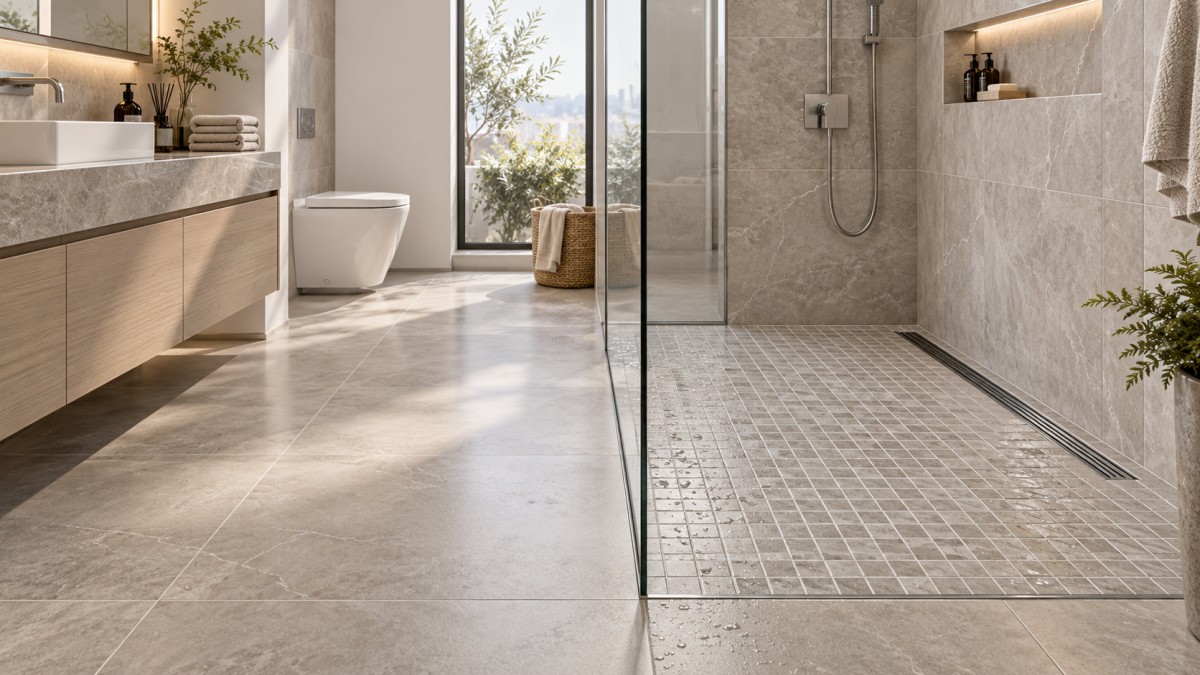
The surface finish has an immediate effect on traction. Matte tiles are often a dependable choice because they reduce glare and usually offer more friction than highly polished alternatives. Many homeowners find them easier to live with visually too: water spots, fingerprints, and minor smudges are less obvious than on mirror-like surfaces.
Textured ceramic tiles can provide additional grip, but texture is not automatically better. A deeply ridged or heavily abrasive surface can hold soap residue, cosmetics, and mineral deposits. In a small bathroom, that may turn a safety-minded decision into a frustrating cleaning routine. The best balance is often a fine, controlled texture—noticeable underfoot but not so coarse that it traps dirt.
Natural stone-look tiles are particularly varied. Two tiles that appear similarly “matte” online may feel very different in person: one may have a soft satin finish, while the other has a granular surface designed for wetter settings. Order full-size samples where possible. Place them on the floor, wet the surface with clean water, and touch them with bare feet. This informal check does not replace certified testing, but it can reveal whether the surface feels uncomfortably slick or excessively rough.
Why smaller tiles and grout lines can improve footing
Tile size affects slip resistance in ways that are easy to overlook. Large-format tiles create a clean, uninterrupted look, which is why they remain popular for modern bathrooms. However, fewer grout joints mean fewer natural interruption points underfoot. On a wide, wet, smooth tile, that can matter.
Smaller tiles add more grout lines, and those joints contribute to traction. This is one reason mosaics are frequently chosen for shower floors. Their many joints also allow the installer to shape the finish surface around the drain and slope more accurately than a large tile can.
That does not mean large tiles are unsafe by definition. A properly selected matte large-format tile can work very well on the main bathroom floor. But for a shower base, small-format tiles or mosaic sheets are usually the more practical option. They accommodate drainage, reduce awkward cuts, and give feet more surface variation.
Consider grout carefully as well. A grout joint that is too narrow may reduce the traction benefit of a smaller tile layout. A very wide joint may be harder to clean and can dominate the design. Your installer can recommend an appropriate joint width based on tile calibration, edge style, and the floor’s layout. Use a grout designed for wet areas, and choose a color that does not make routine cleaning feel like a constant battle.
Ceramic, porcelain, and the bathroom floor question
People often use “ceramic” as a broad term covering both traditional ceramic tile and porcelain tile. In practice, porcelain is a type of ceramic tile that is generally denser and less absorbent. It is widely used for bathroom floors because it handles moisture well and is available in many slip-resistant finishes.
Standard glazed ceramic floor tiles can also be suitable when they are rated for floor use and installed correctly. The key is not to assume that every ceramic product belongs on the floor. Wall tiles are often thinner and may have decorative glazes that are not designed for foot traffic or wet-floor traction. Always confirm the manufacturer’s approved applications.
For most consumers, the more useful comparison is not “ceramic versus porcelain” in isolation. Instead, assess the product as a complete package: floor suitability, surface finish, wet slip information, abrasion resistance, tile size, maintenance needs, and compatibility with the bathroom design.
Do not let design choices quietly reduce safety
Some visual choices make a bathroom easier to navigate, while others can create small but meaningful risks. Extremely busy patterns can obscure puddles or changes in floor level. Very dark glossy tiles may hide water until someone steps into it. On the other hand, a floor that is too pale and uniform can make it harder for some users to distinguish the floor from a shower threshold or wall edge.
A modest visual contrast around the shower area, niche, step, or drain can improve orientation without making the room feel clinical. This is especially worth considering in bathrooms used by older family members or guests unfamiliar with the layout.
Also look beyond the floor tile itself. A slip-resistant finish cannot compensate for a poorly positioned shower door, a towel bar placed too far from the tub, inadequate lighting, or a bath mat that slides across the tile. Safer bathrooms are built from several small decisions that work together.
Installation can make a good tile perform badly—or well
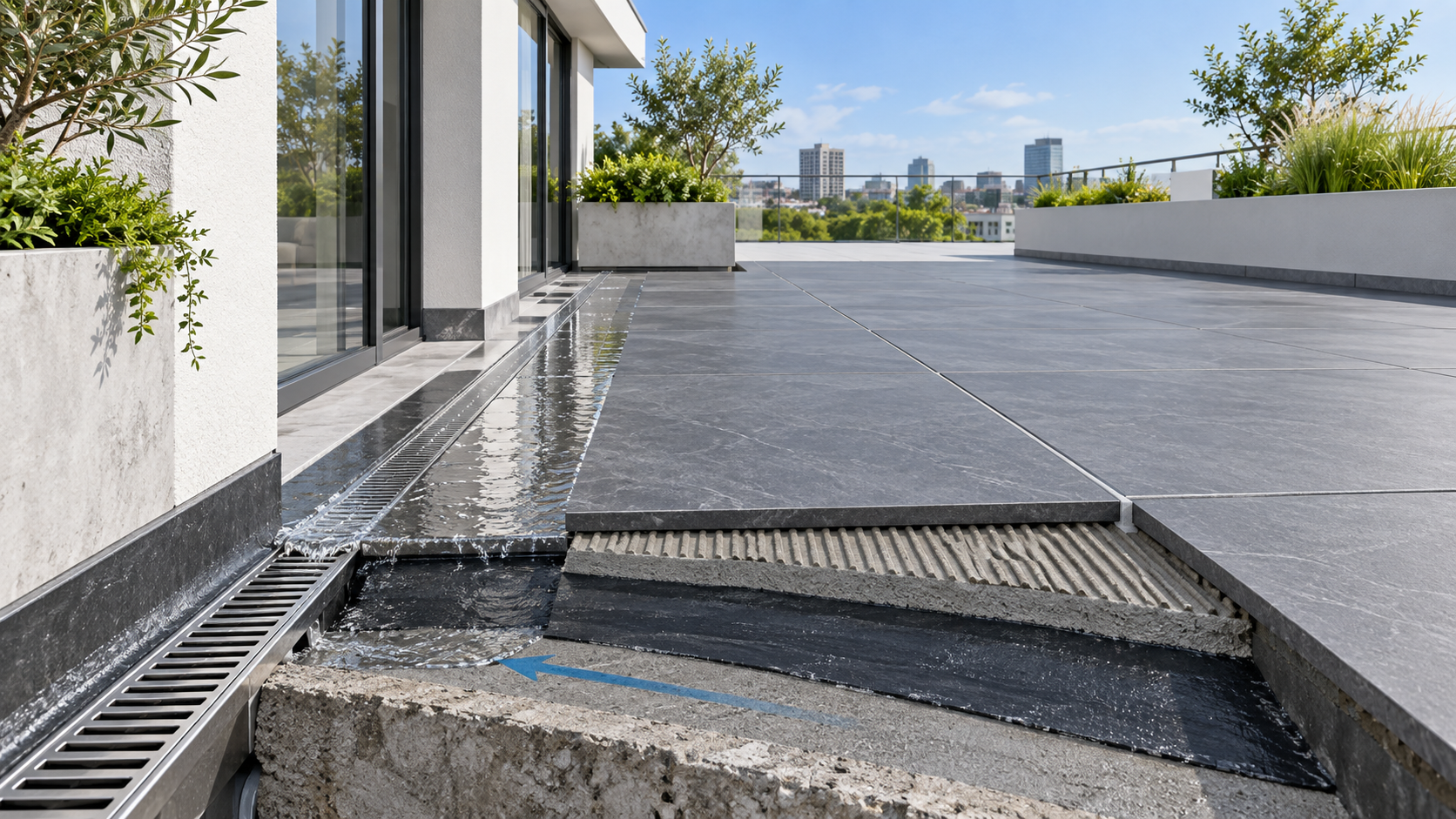
Even excellent ceramic tiles for bathroom floors can become problematic if the installation is wrong. Water should move toward the drain rather than collect in low spots. In shower areas, the substrate must be properly sloped, waterproofed, and prepared according to the tile system and local building requirements.
Ask your contractor how the selected tile will work with the drain location. A large tile may require envelope cuts around a central drain, which can interrupt the pattern and create uneven edges. Linear drains can make larger formats easier to use in some shower designs, but the finished slope still needs careful execution.
Lippage—where one tile edge sits higher than the next—also deserves attention. It can catch bare toes and become more noticeable with large-format tile. A qualified installer will assess floor flatness, use the right setting materials, and respect the tile manufacturer’s recommended installation methods. Do not choose a tile only from a display board without discussing its size and finish with the person installing it.
Cleaning habits influence traction over time
Slip resistance is not permanent if the tile surface becomes coated with residue. Soap, conditioner, bath oils, hard-water minerals, and inappropriate cleaning products can all change how a floor feels underfoot. Some cleaners leave a glossy film intended to create shine; on a bathroom floor, that shine may work against the texture you paid for.
Use a cleaner approved for the tile and grout type, rinse when needed, and avoid products that promise wax-like protection unless the tile manufacturer specifically recommends them. Regular cleaning is particularly important for textured tiles and shower mosaics, where residue can build up in fine surface details.
Grout also needs attention. Discolored or deteriorating grout is not only an appearance issue; cracked joints can allow water to reach areas where it does not belong. Maintenance may not be the most exciting part of a renovation, but it protects both the look and the day-to-day safety of the finished floor.
A practical shortlist before you buy
When comparing samples, narrow the choices using a short decision checklist rather than relying on color alone. Confirm that the tile is approved for bathroom floors. Review the relevant wet slip-resistance information. Favor matte or lightly textured finishes for areas exposed to splashes. Use smaller tiles or mosaics where drainage and grip are most important, especially in showers. Then consider cleaning: can you realistically maintain this texture, grout color, and pattern in your household?
Finally, see the tile in the bathroom’s own light. Daylight, warm vanity lighting, and a wet surface can make a finish look completely different from its appearance under showroom lamps. A tile that feels grounded, easy to clean, and comfortable to walk on will usually remain a better choice than one selected only for a dramatic first impression.
The safest bathroom floor is rarely determined by one label or one design trend. It comes from matching a tested, floor-rated tile to the wetness of the space, choosing an appropriate finish and format, and ensuring the installation drains correctly. With those factors considered together, ceramic tile can deliver the durability and style homeowners want without overlooking the moments when a bathroom floor needs to be at its most dependable.
- Last One:No more articles
- Next Article:Which plumbing materials are best suited to hard-water systems?Oct 03, 2026
Technical Specifications
- How to choose ceramic tiles for bathroom floors with better slip resistanceAuthor :Construction Materials Editorial Team
- Which plumbing materials are best suited to hard-water systems?Author :Construction Materials Editorial Team
- When are porcelain wall tiles the right choice for shower walls?Author :Construction Materials Editorial Team
Expert Insights

Chief Security Architect
Dr. Thorne specializes in the intersection of structural engineering and digital resilience. He has advised three G7 governments on industrial infrastructure security.
Core Sector // 01
Security & Safety
- How to choose ceramic tiles for bathroom floors with better slip resistanceAuthor :Construction Materials Editorial Team

- When are porcelain wall tiles the right choice for shower walls?Author :Construction Materials Editorial Team

- How to choose porcelain floor tiles for high-traffic areasAuthor :Construction Materials Editorial Team

- How to choose a cutting machine for stone based on slab thicknessAuthor :Construction Materials Editorial Team

- When are porcelain tiles for outdoor spaces at risk of cracking?Author :Construction Materials Editorial Team

- Marble Stone Price: What Changes Cost Across Grade, Finish, and Origin?Author :Construction Materials Editorial Team

- Marble vs Granite: Which Surface Performs Better Indoors?Author :Construction Materials Editorial Team

- Common Marble Problems and How to Prevent Stains and EtchingAuthor :Construction Materials Editorial Team