
When do elastomers outperform thermoplastics in flexible seals?
Author
Date Published
Reading Time
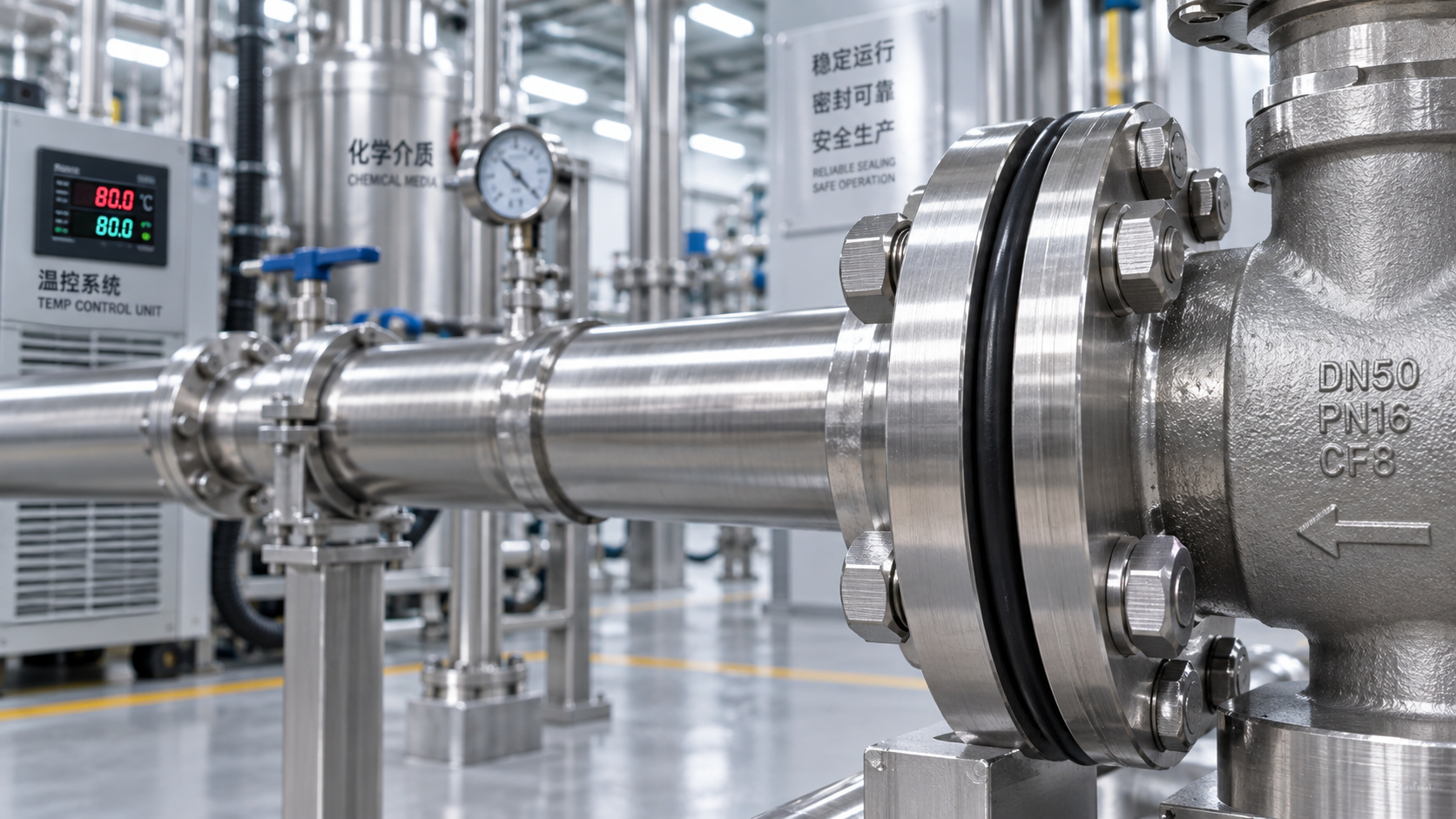
Elastomers outperform thermoplastics in flexible seals when the seal must remain resilient after long compression, tolerate difficult temperatures or chemicals, and keep sealing despite movement, pressure cycling, or imperfect mating surfaces. The difference is not simply that elastomers are “softer.” Their crosslinked molecular structure usually gives them better elastic recovery and long-term sealing stability under demanding conditions.
Thermoplastics can be the better choice when stiffness, dimensional precision, fast processing, recyclability, or lower-cost high-volume production matters more than sustained elastic performance. The practical decision comes down to what happens after the seal has been installed: does it need to spring back repeatedly, remain compressed for years, or survive an environment that changes during service?
Start with the sealing duty, not the material family
A flexible seal works by conforming to a surface and maintaining contact force. That contact force must remain high enough to block liquid, gas, dust, or contaminants throughout the service interval. A material that looks flexible on a data sheet can still be a poor seal if it loses recovery, hardens, creeps away from the joint, or swells in the operating fluid.
This is why comparisons between elastomers and thermoplastics should begin with the application’s failure mode. A door-edge trim, a static water gasket, a fuel-system O-ring, and a snap-fit dust cover may all be described as flexible sealing components, but they impose very different demands on the material.
Elastomers generally have the advantage when the component acts primarily as a continuous, force-maintaining seal. Thermoplastics are often competitive when the component also needs to provide shape, structure, wear resistance, or a manufacturable rigid-to-flexible geometry.
Compression set is often the deciding property
For many static seals, compression set is the property that separates a material that merely passes an initial leak test from one that remains functional in service. When a gasket or O-ring is compressed, it stores elastic energy. If it is later released and does not substantially return toward its original shape, it has taken a compression set. In a real joint, that loss of recovery reduces contact stress and raises leakage risk.
Crosslinked elastomers are typically selected for applications where the seal will remain compressed for a long period and may later need to recover after thermal cycling, maintenance, or changes in joint loading. This makes them common choices for flange gaskets, weather seals, valve seats, appliance door seals, hose connections, and many fluid-handling applications.
Thermoplastics can relax under sustained load, especially as temperature approaches the material’s softening region. This behavior is commonly called creep or stress relaxation. It does not automatically rule out thermoplastic seals. A thermoplastic gasket in a low-temperature, lightly loaded, well-controlled enclosure may work very well. But if the joint relies on the material maintaining squeeze over a long interval, a thermoplastic should be evaluated for retained sealing force, not just initial hardness and tensile strength.
A frequent selection error is comparing materials only by Shore hardness. Two materials with similar hardness may behave very differently after months under compression. Hardness indicates resistance to indentation; it does not directly tell you how much sealing force will remain after heat, time, fluid exposure, and loading.
Temperature changes can shift the decision quickly
Temperature affects both material flexibility and the rate at which mechanical properties change. At low temperatures, some thermoplastics become less compliant or brittle near their transition range. At elevated temperatures, they may soften, creep, or lose load-bearing capability. Elastomers also have temperature limits, but rubber families are often chosen specifically because they retain useful flexibility within a defined hot or cold service environment.
The relevant question is not the maximum temperature written in a general material description. Evaluate the complete temperature profile: normal operating temperature, startup conditions, shut-down exposure, local hot spots, transport conditions, and temperature cycling. A seal that sees only occasional heat may behave differently from one held under compression at elevated temperature continuously.
Elastomers are particularly valuable where temperature cycling changes the geometry of the assembly. Metal housings, plastic covers, glass panels, and composite parts expand at different rates. A compliant elastomer can accommodate that movement while continuing to press against both surfaces. A more rigid thermoplastic seal may work at assembly temperature but lose conformity as the joint opens, closes, or shifts.
At the same time, “elastomer” is not a single answer. Natural rubber, silicone, nitrile, EPDM, fluorinated elastomers, and other compounds have substantially different heat, cold, fluid, and weathering behavior. Selecting the right family matters as much as choosing elastomer over thermoplastic.
Chemical resistance is about the fluid, the temperature, and the stress
A seal exposed to a fluid can fail through swelling, shrinkage, softening, cracking, extraction of additives, or loss of mechanical strength. The same material may perform acceptably in a fluid at room temperature and fail after prolonged exposure at higher temperature or under mechanical stress.
Elastomers offer a broad selection of chemistries for difficult service fluids. That is one reason they frequently outperform thermoplastics in fuel, lubricant, process chemical, hot-water, and outdoor weather-sealing duties. The advantage is conditional: the elastomer must be compatible with the actual medium. A rubber chosen for water and weather resistance may be unsuitable for hydrocarbon oils; another rubber suited to oils may not be appropriate for hot steam or aggressive oxidizing chemicals.
Thermoplastics can have excellent resistance to some chemicals and may be preferable where a seal also needs rigidity or abrasion resistance. However, a chemically resistant resin is not necessarily an effective resilient seal. Chemical compatibility and sealing recovery must both be acceptable. The material should be assessed in its final form, including fillers, plasticizers, reinforcement, and any bonded or overmolded construction.
For fluid-sealing decisions, specify the medium precisely. “Oil resistant” is too broad to support a reliable choice. Identify the fluid type, possible contaminants, concentration where relevant, operating temperature, exposure duration, pressure, and whether the seal is static or dynamic. This information narrows material selection more effectively than a generic material comparison.
Where elastomers have a clear operational advantage
Elastomeric seals are usually the stronger candidate in the following situations:
- Long-lived static compression seals: enclosure gaskets, pipe and flange seals, lids, access panels, and joints that must retain clamping force over time.
- Dynamic or cyclic seals: components exposed to vibration, pressure pulses, thermal expansion, or relative movement between parts.
- Irregular sealing interfaces: cast surfaces, painted surfaces, assembled panels, and joints with realistic manufacturing variation.
- Outdoor exposure: weather seals that must tolerate moisture, ozone, sunlight, temperature shifts, and repeated opening or closing.
- Fluid systems with demanding media: provided the elastomer compound is matched to the fluid and service temperature.
- Low closing-force assemblies: seals that need to conform without requiring excessive bolt load, latch force, or housing stiffness.
These applications benefit from resilience because the seal must compensate for change. It may need to recover after a door opens, follow a vibrating housing, maintain contact as a flange expands, or reseal after pressure changes. In those cases, a thermoplastic’s ease of molding may not offset the risk of relaxation or insufficient compliance.
When thermoplastics should not be dismissed
It is easy to overcorrect and assume elastomers are always better for any flexible component. They are not. Thermoplastic elastomers and flexible engineering thermoplastics can be highly practical where production efficiency and component integration are important.
A thermoplastic-based solution may make sense when the seal is integrated with a rigid carrier, clip, frame, or housing feature through overmolding or co-extrusion. It may also be suitable for dust exclusion, light environmental sealing, protective edge trims, short-duration closures, and applications where the joint geometry tightly controls deformation.
Thermoplastics can also offer processing advantages. They can often be reheated and reshaped, molded in shorter cycles, welded, and incorporated into multi-material assemblies more easily than conventional cured rubber. For high-volume parts with modest sealing demands, these factors can reduce assembly steps and improve dimensional repeatability.
The important boundary is this: processing convenience does not prove lifetime sealing performance. If the part is intended to hold pressure, prevent costly leakage, withstand a difficult fluid, or stay compressed for a long service interval, verify stress relaxation, compression recovery, and environmental aging under representative conditions.
Do not compare “rubber” with “plastic” at the wrong level
The broad labels can obscure the real decision. An elastomer compound may include fillers, cure systems, plasticizers, and additives that change its properties substantially. Thermoplastic options range from relatively rigid resins to thermoplastic elastomers that feel rubber-like. A molded part’s geometry, surface finish, wall thickness, and assembly load also affect its sealing behavior.
For this reason, material selection should move from a family-level comparison to a part-level validation. A favorable polymer description is only a starting point. A gasket with excessive squeeze can fail from compression set even when the material family is appropriate. A seal with insufficient squeeze can leak despite excellent material properties. Sharp corners, mold parting lines, incomplete support, poor surface finish, and excessive joint gap can all undermine the result.
Check the assembly before changing the material
Material changes cannot solve every sealing problem. Before specifying a higher-performance elastomer, examine whether the design provides a controlled compression range, sufficient contact width, adequate groove support, and stable clamping force. In dynamic service, assess friction, lubrication, extrusion risk, and the possibility of abrasive particles entering the interface.
A resilient material needs a sound geometry to work well. Conversely, a robust seal design may allow a lower-cost thermoplastic elastomer to meet the requirement. The right decision is usually a combination of material chemistry and joint design, not a choice made in isolation.
A practical evaluation sequence
For a new flexible-seal specification, begin by documenting the conditions that can change material behavior. This avoids selecting on appearance, hardness, or unit price alone.
- Define what must be sealed: liquid, gas, dust, moisture, pressure, or environmental ingress.
- Describe the joint: static or moving, expected gap variation, surface condition, clamping method, and available compression.
- Map the service environment: temperatures, cycling, fluids, cleaning agents, UV exposure, ozone, abrasion, and contamination.
- Set the service-life expectation and consequence of failure. A minor dust leak and a pressurized fluid leak should not be evaluated to the same threshold.
- Screen material families for chemical and temperature suitability, then compare their recovery and stress-relaxation behavior under the intended load.
- Validate the finished geometry, not only a raw material sample. Assembly force, molding details, and mating surfaces can change the outcome.
For global sourcing, this level of definition also improves supplier comparisons. A request that only asks for a “soft rubber seal” invites inconsistent quotations and substitutions. A request that describes medium, temperature profile, compression condition, movement, dimensions, and validation expectations gives manufacturers a usable basis for proposing a compound and process.
Choose elastomers when the seal must keep working after conditions change
The strongest reason to select an elastomer is not that it feels flexible at the moment of installation. It is that the seal must preserve resilience after compression, heat, fluid contact, vibration, or movement has changed the assembly. In those conditions, elastomers often provide the more dependable route to retained contact force and lower leakage risk.
Thermoplastics remain valuable where structural integration, controlled geometry, efficient processing, and moderate sealing duty dominate the requirement. The decision should be made after defining the actual load history and environment. If long-term recovery is central to the seal’s function, elastomer performance deserves priority in the specification.
Technical Specifications
- Which local safety approvals apply to imported power suppliesAuthor :Electrical Components Editorial Team
- How to choose the right tempered glass panel for safety glazingAuthor :Construction Materials Editorial Team
- When do elastomers outperform thermoplastics in flexible seals?Author :Polymers & Rubber Editorial Team
Expert Insights

Chief Security Architect
Dr. Thorne specializes in the intersection of structural engineering and digital resilience. He has advised three G7 governments on industrial infrastructure security.
Core Sector // 01
Security & Safety