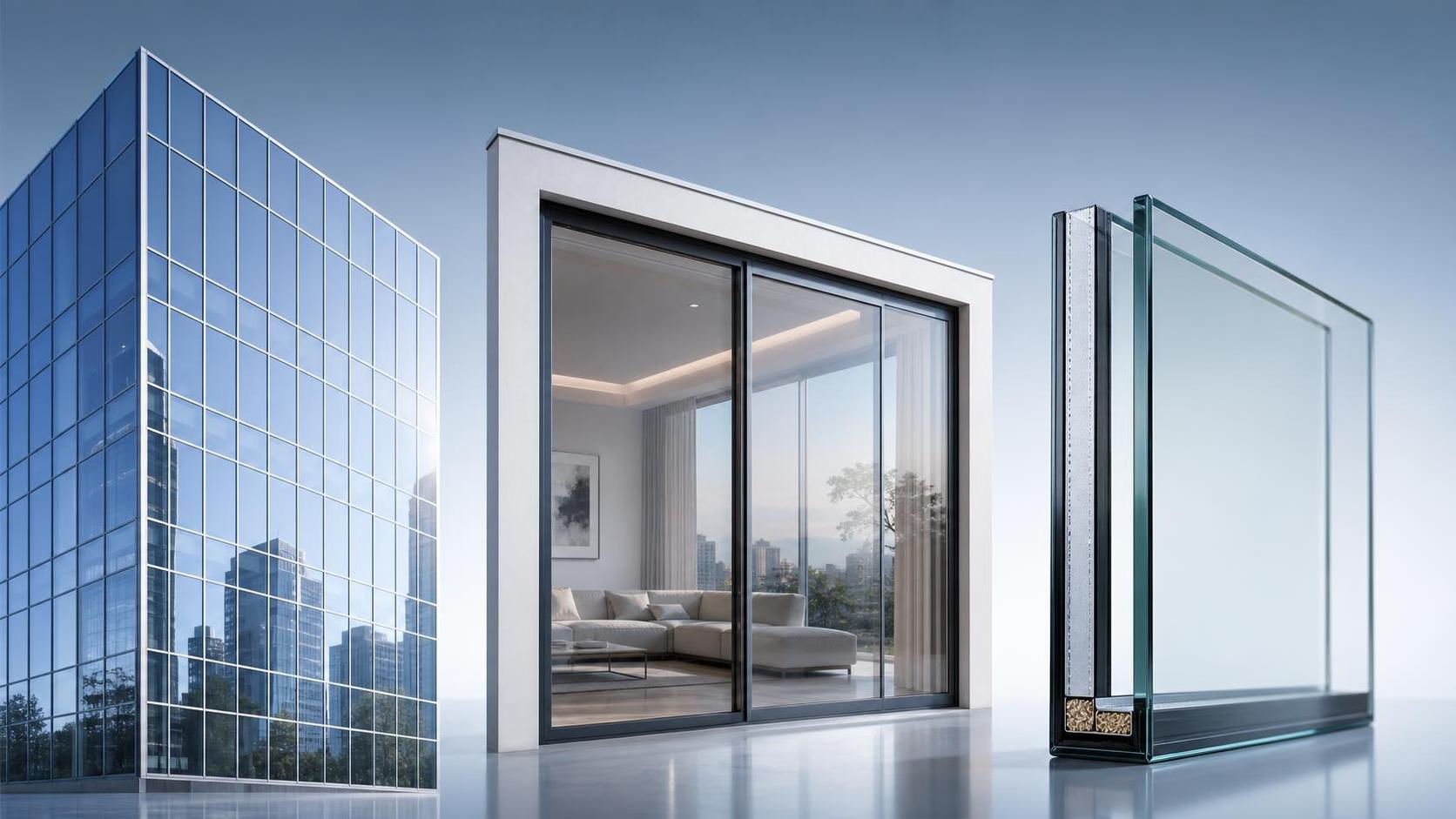
How to choose the right tempered glass panel for safety glazing
Author
Date Published
Reading Time
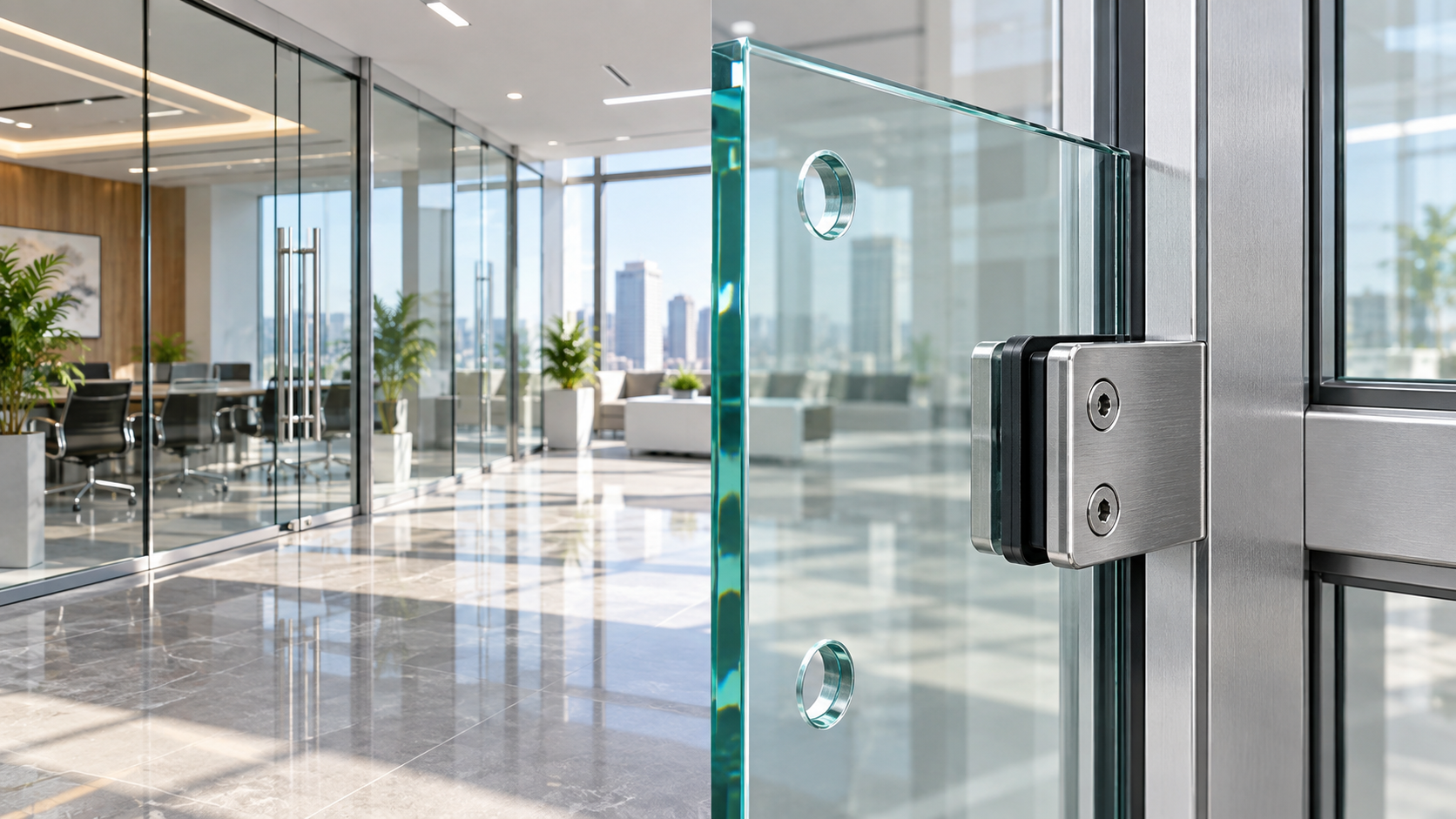
A tempered glass panel should be selected from the installation outward, not from appearance or unit price inward. The correct choice depends on what the glass must resist, how it will be supported, what happens if it breaks, and whether the surrounding system can accommodate its movement and edge condition. A panel that performs well in an interior partition may be unsuitable for a balustrade, a shower enclosure, a storefront, or an exposed exterior screen.
For safety glazing, start by defining the risk: human impact, fall protection, wind exposure, thermal stress, vandalism, repeated door use, moisture, or a combination of these conditions. Once that is clear, thickness, heat treatment, edge work, finish, and supporting hardware can be specified as one system rather than as separate purchasing decisions.
Define the safety function before comparing glass options
“Safety glass” is often treated as a single product category, but the required behavior after impact varies by application. Tempered glass is designed to be stronger than ordinary annealed glass and, when it breaks, to fragment into relatively small pieces rather than large sharp shards. That makes it a common choice where people may strike the glass or where breakage needs to reduce laceration risk.
That does not automatically make a single tempered glass panel appropriate for every safety-critical location. In applications where the glazing must remain in place after breakage, such as certain overhead, fall-protection, or containment situations, a laminated construction may be needed. Lamination uses an interlayer between glass sheets to help hold broken glass together. Tempered and laminated properties can also be combined, but the specification must follow the required post-breakage performance, not a general assumption that “tempered” covers every hazard.
The useful procurement question is not simply, “Do we need tempered glass?” It is, “What must this glazing continue to do if it is hit, stressed, or broken?” That distinction prevents a large share of specification errors.
Thickness is a structural decision, not a default specification
Thickness is often the first detail requested in a quotation, yet it cannot be chosen reliably without the panel dimensions, support arrangement, opening location, and expected loads. A narrow panel supported along multiple edges behaves very differently from a large panel fixed only at its base or held by point fittings.
Thicker glass may improve stiffness and resistance to deflection, but it also adds weight. More weight affects hinges, clamps, setting blocks, brackets, transport handling, and installation sequencing. It can also change how much tolerance the system has for frame movement or uneven support. Selecting the thickest available option is not a substitute for checking the full glazing system.
For a preliminary review, collect these details before asking suppliers to recommend thickness:
- Finished glass width and height, including any irregular shape.
- Whether the panel is framed, channel-set, point-fixed, clamped, or supported at the base only.
- Locations of doors, public circulation, furniture movement, or other impact sources.
- Indoor or outdoor exposure, including direct sun, wind, water, and temperature variation.
- All holes, notches, slots, cut-outs, and hardware loads.
- Whether the panel has a barrier, guarding, overhead, or security role after breakage.
These inputs enable meaningful comparison between quotations. Without them, suppliers may price different assumptions while appearing to offer the same tempered glass panel.
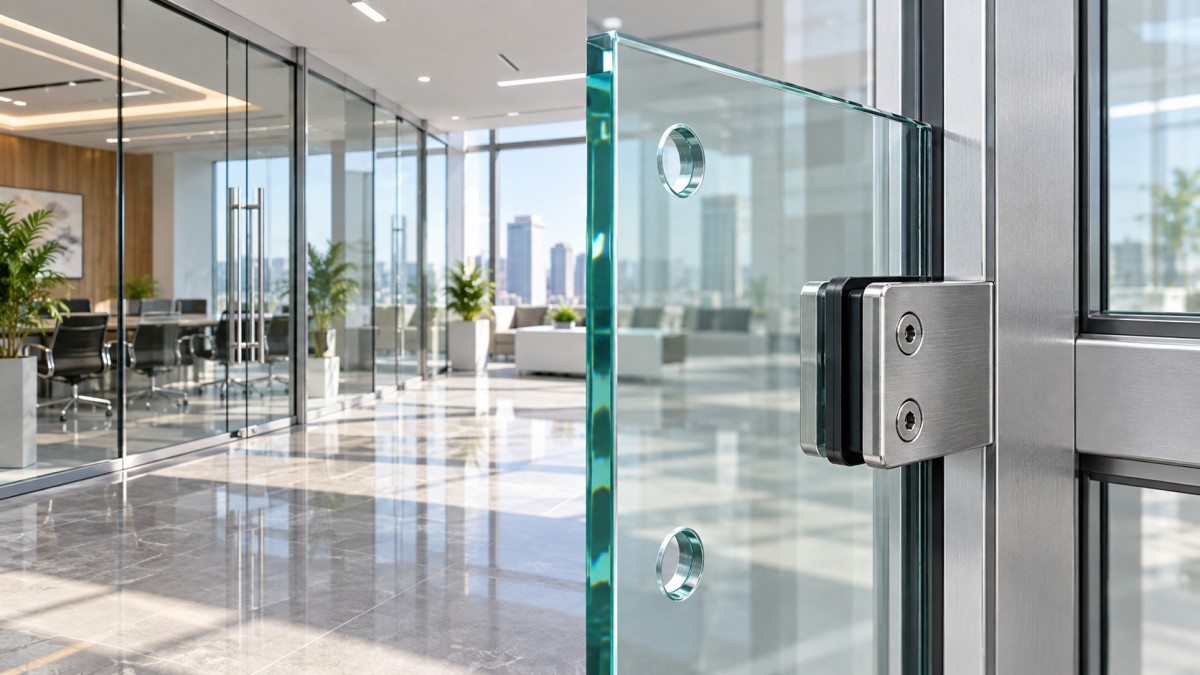
Look closely at edges, holes, and cut-outs
Most glass failures associated with fabrication occur at stress-concentrating details rather than in the middle of a clean, flat panel. Edges, drilled holes, internal corners, notches, and cut-outs require particular care because glass is sensitive to localized damage and uneven loading.
All fabrication should normally be completed before tempering. Cutting, drilling, or altering a fully tempered panel after heat treatment is generally not feasible because it can cause immediate breakage. This makes approved shop drawings especially important. A late change to handle spacing, hinge position, access-control hardware, or a cable opening can require the panel to be remade.
Edge finish is not merely cosmetic. A polished exposed edge may be appropriate where the glass is visible and likely to be touched, while a seamed or otherwise finished edge may suit concealed framed glazing. The correct option depends on the design and handling conditions, but no edge should be treated casually where it interfaces with metal hardware, adjacent glass, or a high-traffic area.
Ask the fabricator to review the relationship between glass holes and fittings, rather than supplying hole sizes independently. Hardware manufacturers often have specific requirements for hole geometry, gaskets, clearances, and glass thickness. Small discrepancies can create concentrated pressure at installation and shorten the service life of an otherwise sound panel.
Specify the glass assembly, not only the visible surface
Clear tempered glass may be the simplest choice, but safety glazing is frequently combined with functional requirements. Tinted, reflective, low-emissivity, fritted, patterned, acid-etched, or coated glass can affect heat absorption, visual privacy, glare, cleaning, and inspection. Those choices should be reviewed before the final heat-treatment process is selected.
Solar exposure deserves attention in exterior work. Darker or highly absorptive glass can develop greater temperature differences across its surface, especially where part of a panel is shaded by structure, film, signage, or interior finishes. Thermal treatment can help manage thermal stress, but the final selection still depends on the complete make-up, orientation, shading, and installation conditions.
For doors, partitions, and storefronts, visibility can also be a safety consideration. A large transparent panel in a circulation route may be difficult to see. Applied manifestations, patterns, contrasting bands, or other visible design elements can reduce accidental contact while preserving the intended openness of the space.
Do not separate glass procurement from the framing and hardware package
Tempered glass is only one component of a safety glazing assembly. The frame, sealants, gaskets, setting blocks, clamps, channels, hinges, fasteners, and substrate all influence its performance. A correct panel can still fail in service if it is installed with hard point contact, insufficient edge clearance, incompatible sealant, or poorly aligned hardware.
Glass requires controlled support. Direct glass-to-metal contact can create local stress, so systems commonly rely on suitable cushions, gaskets, or packing materials. The assembly also needs enough clearance to accommodate manufacturing variation, building movement, and thermal movement without binding the glass at its edges.
For exterior installations, confirm drainage and water management. Persistent water at channels, incompatible sealants, or poorly detailed joints can create maintenance problems even when the glass itself is correctly specified. For interior wet areas, pay similar attention to corrosion-resistant hardware, cleaning access, and how water is kept away from joints and concealed fixings.
Use compliance documents as evidence, not as a substitute for design review
Safety glazing requirements vary by project location, building use, and application. A supplier’s test documentation or certification can help demonstrate that a product has been manufactured and assessed to an applicable safety-glazing framework. However, paperwork for the glass alone does not prove that the installed configuration satisfies the needs of a particular opening.
Review documents against the actual order: glass type, nominal thickness, dimensions, coating or finish, fabrication details, and the intended use. Also ensure the final marking, documentation, and traceability requirements are considered early. This is especially important when sourcing across borders, where terminology and customary specifications may differ.
For larger purchases, the submittal package should make it easy to compare offers on a like-for-like basis. It should identify the glass construction, fabrication drawings, edge treatment, heat treatment, visual-quality expectations, packing method, delivery sequence, and any required records. A low quotation is difficult to evaluate when these items are missing.
Evaluate supplier capability around the details that create risk
A supplier may be able to produce standard rectangular panels yet have limited control over complex shapes, tight fabrication tolerances, special coatings, oversized units, or coordinated hardware drilling. The right sourcing review focuses on the panels that are most difficult to replace, not just the repetitive standard units.
Useful questions include whether the supplier can provide drawing review before production, how it identifies panels during packing, how edges and corners are protected in transit, and how it manages breakage or remake requests. Logistics matter because finished tempered glass cannot be modified after delivery. A damaged panel or a fabrication mismatch can affect the installation schedule disproportionately, particularly when the glass is tied to doors, custom metalwork, or façade access equipment.
For imported material, confirm crate design, handling instructions, delivery lead time, and the sequence in which panels will be unpacked. A glass package that arrives intact but cannot be safely stored, identified, or installed in the planned order still creates site risk.
A practical approval sequence
Before release for fabrication, use a short approval process that connects design, procurement, and installation:
- Classify each opening by its safety function and failure consequence.
- Confirm the support method and associated hardware before setting the glass build-up.
- Freeze dimensions, holes, notches, and cut-outs on approved drawings.
- Review finish, visibility treatment, coating, and exposure conditions together.
- Compare supplier submissions on the same technical scope, not only on price.
- Plan inspection, storage, lifting, and installation before shipment reaches site.
The final choice should produce a panel that is appropriate for the opening, compatible with the surrounding system, and realistic to install without improvised site changes. When those decisions are made early, a tempered glass panel becomes a controlled part of the project scope rather than a late-stage source of breakage, delay, or avoidable redesign.
Technical Specifications
- Which local safety approvals apply to imported power suppliesAuthor :Electrical Components Editorial Team
- How to choose the right tempered glass panel for safety glazingAuthor :Construction Materials Editorial Team
- When do elastomers outperform thermoplastics in flexible seals?Author :Polymers & Rubber Editorial Team
Expert Insights

Chief Security Architect
Dr. Thorne specializes in the intersection of structural engineering and digital resilience. He has advised three G7 governments on industrial infrastructure security.