
How does buying in bulk affect silicone sealant prices?
Author
Date Published
Reading Time
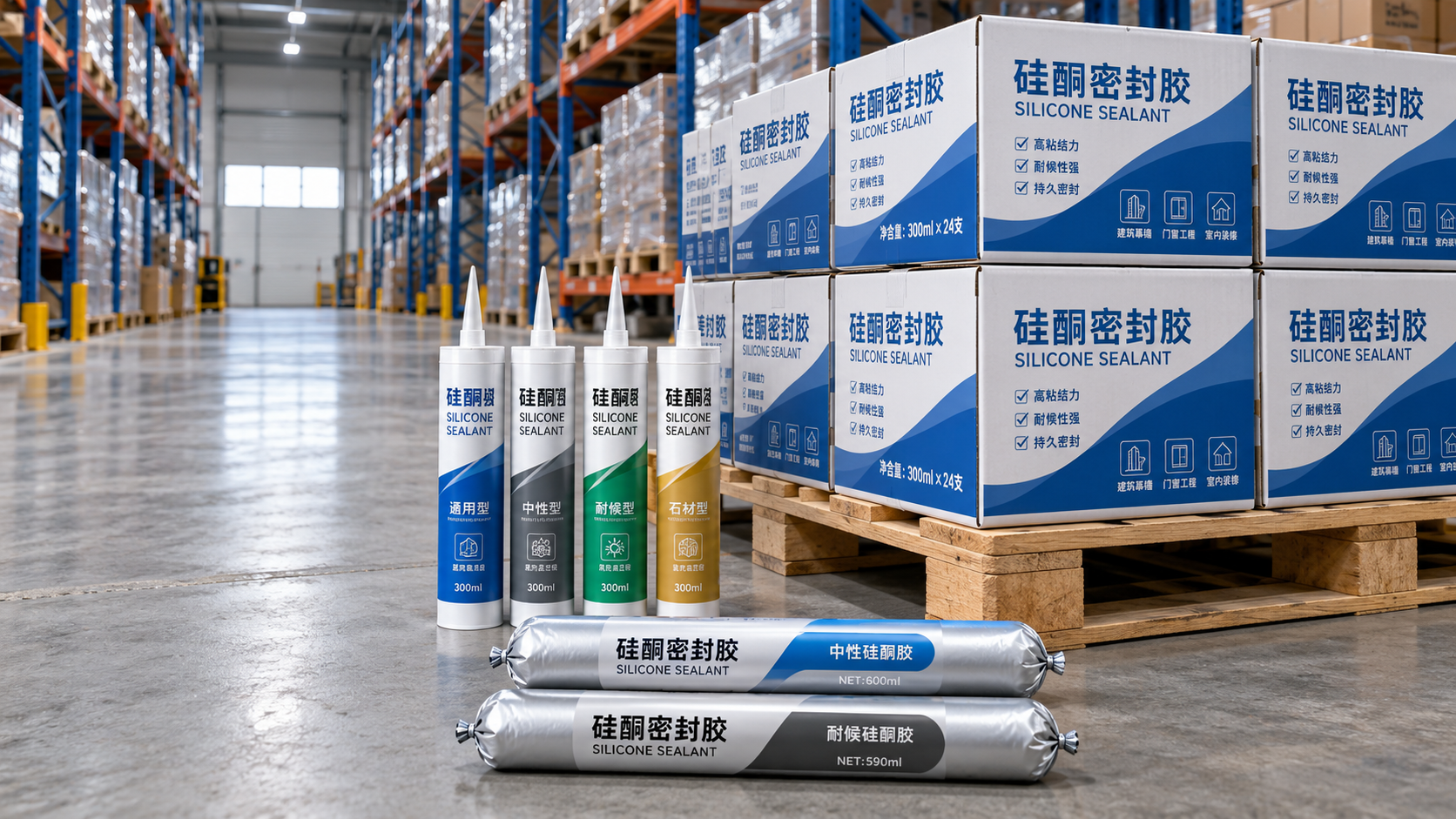
Buying silicone sealant in bulk generally reduces the quoted price per cartridge, sausage pack, or drum when a larger order lets a supplier spread production, packaging, and transaction costs across more material. The lowest unit quote, however, does not necessarily produce the lowest installed cost. Freight, usable shelf life, packaging waste, payment terms, and the amount of sealant that can actually be applied all change the result.
A meaningful comparison starts with equivalent products and quantities, then follows the material through delivery and use. A discount on a large shipment is valuable only to the extent that the sealant remains suitable, available where needed, and usable before its shelf life expires.
Where the volume discount comes from
A larger order can reduce the supplier's cost per unit in several ways. Production runs may require fewer changeovers, packaging materials can be purchased or prepared in larger quantities, and administrative work is spread across more units. A full pallet or consolidated shipment can also be cheaper to handle per unit than several small orders.
Those savings do not increase evenly with every additional carton. A supplier may quote different tiers around practical thresholds such as a production batch, a full pallet, or a container load. Crossing a threshold can improve the price, while adding a small quantity within the same tier may make little difference. Ask for prices at quantities on both sides of a relevant threshold rather than assuming every increase earns a proportional discount.
The discount also depends on how readily the order fits the supplier's existing production schedule. A large quantity of a standard color and formulation may be easier to price competitively than the same volume split across custom colors, labels, and delivery dates. If the order requires separate batches or packaging changes, the combined quantity alone may not support the expected reduction.
Compare the same sealant before comparing prices
Two quotes expressed per cartridge are not comparable until the fill volume, formulation, and intended application match. Silicone sealants vary in cure chemistry, adhesion, movement capability, weather resistance, and suitability for substrates. A lower-cost general-purpose product does not automatically replace a specified construction, glazing, sanitary, or industrial grade.
Acetoxy and neutral-cure sealants illustrate the point. Their curing behavior and compatibility with particular materials differ, so a lower price for one chemistry is not a saving if the application calls for the other. The same applies to color consistency, paintability requirements, and whether a primer is specified. Confirm the required performance against the product data sheet and the actual substrate before treating two prices as alternatives.
Packaging can disguise the difference. A carton price says little without the number of units and the net fill of each unit. Normalize offers to a common basis, such as cost per liter of sealant, then retain a separate comparison of the package format and application equipment. Where products have different densities or are quoted by weight, conversion to volume requires the relevant product density; a kilogram of one formulation should not automatically be treated as the same volume as a kilogram of another.
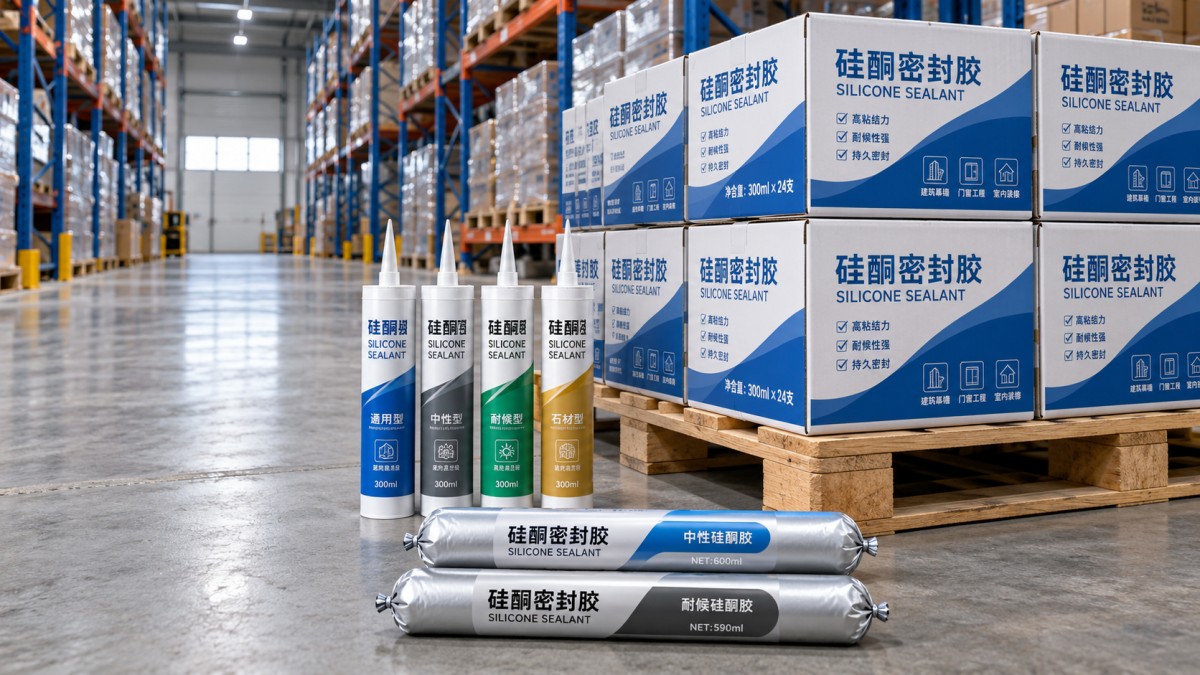
Packaging changes both the quote and the work
Cartridges, sausage packs, pails, and drums serve different application methods. Larger packs often use less packaging per unit of sealant, and the material price per liter may be lower. That advantage can be offset by dispensing equipment, maintenance, cleaning, or material left in the package and equipment after work stops.
A cartridge is convenient when work is dispersed across locations or colors change frequently. A sausage pack can reduce packaging waste while still allowing portable application, provided compatible guns and nozzles are available. Pails and drums suit operations with appropriate bulk dispensing equipment and a consistent demand for the same formulation. They are less attractive when a container must remain open between irregular jobs or when contamination and skin formation cause material loss.
Compare package sizes against the joint or assembly work actually planned. A larger pack that is rarely finished can deliver a higher cost per usable liter than a smaller pack with a higher purchase price. Conversely, changing many small cartridges during continuous application adds handling time and discarded remnants. Both effects belong in the cost comparison when labor and waste are material to the decision.
Calculate landed cost on a usable-material basis
The silicone sealants price on a quotation is only the starting point. A landed-cost comparison adds the expenses required to place the goods at the intended location, using the same delivery point and cost assumptions for each offer. Freight, insurance, import charges where applicable, unloading, and local delivery should be assigned according to the quoted delivery terms. Avoid adding a charge twice when it is already included in the price.
A useful working calculation is:
Cost per usable liter = total landed cost of the order ÷ expected liters available for application.
Total landed cost includes the product invoice and attributable delivery and handling costs. Expected usable volume starts with the stated net fill, then deducts a reasonable allowance for damaged packs, expired stock, and application waste. Keep those allowances separate from the supplier's stated quantity so that assumptions remain visible. If waste is unknown, compare scenarios rather than presenting a single estimate as a fact.
For example, an order with a lower price per liter can still cost more per usable liter if it must be stored beyond the available shelf life. The result changes again if deliveries are staged and each batch arrives with sufficient remaining life. The same calculation can accommodate equipment costs when a bulk format requires a dedicated pump or dispensing system; allocate those costs over the expected volume that the equipment will handle, rather than charging the entire purchase to a single order without explanation.
Installed cost is a further step. Coverage depends on joint dimensions, application method, and waste, so a price per liter does not by itself establish the cost per meter of joint. Compare planned joint dimensions and application conditions consistently when converting material volume into installed coverage.
Stock age can erase a negotiated saving
Sealant has a defined shelf life and must be stored under the conditions stated by the manufacturer. The relevant period for a purchase is the remaining life upon arrival, not simply the shelf life printed in the product literature. Production date, transit time, customs clearance, and time in a distributor's warehouse all reduce the interval available for use.
Request the manufacturing or expiry information that will accompany each batch and agree on a minimum remaining shelf life at delivery. This is especially important for large orders covering intermittent projects. A supplier's ability to deliver fresh stock in installments can be worth more than a lower price for immediate delivery of the full quantity, although scheduled releases may carry separate handling or freight charges.
Storage capacity also has a cost. Space, temperature control where required, stock rotation, and protection from damage must be considered over the entire holding period. Opened bulk containers require particular attention to the manufacturer's handling instructions; resealing a container does not automatically guarantee that the remaining material will stay usable for the same period as an unopened pack.
Consumption forecasts should distinguish committed work from expected work. Stock reserved for a confirmed project has a different risk profile from material purchased against a tentative schedule. If the application requires a special color or formulation, unused stock may be difficult to redirect to another job even when it remains within shelf life.
Order terms determine how much volume is actually committed
A quoted discount may depend on a single shipment, a minimum order quantity per color, or a commitment to purchase a stated volume over time. These arrangements are not interchangeable. A blanket order with scheduled releases can reduce storage pressure, but the agreement should specify whether the price applies to each release, who holds the inventory, and what happens if project dates change.
Payment timing affects the comparison as well. A lower invoice price paid upfront ties up cash sooner than an offer with later payment terms. Currency, exchange-rate exposure, and credit charges can also alter the effective cost when quotations are issued on different terms. Keep these financing effects distinct from freight and material cost so the reason for any difference remains clear.
Clarify whether the quoted quantity refers to a firm purchase or a forecast. If a price tier requires a total volume that is not ultimately reached, the agreement should state whether earlier deliveries are repriced. Conversely, a stated annual volume without release dates may not guarantee access to the same production capacity or stock throughout the period.
When a larger order is worth accepting
Bulk purchasing is strongest when demand for the same approved formulation is predictable, storage conditions are suitable, and the order can reach an efficient packaging or freight threshold without creating surplus. It is less compelling when colors or specifications are likely to change, project schedules are uncertain, or the material arrives with limited remaining shelf life.
Ask suppliers to quote the same specification at several realistic quantities, including any relevant pallet or shipment threshold. Request both a single-delivery price and a staged-delivery option where available. Compare each offer using its actual pack size, delivery charges, remaining shelf life, payment terms, and expected usable volume. A smaller order can then be evaluated on the same basis as a bulk offer, with the price difference tied to conditions that can be verified before the order is placed.
Facing technical bottlenecks in manufacturing or looking for more efficient industrial solutions? Leave your details below and let the engineering experts at GIi solve them for you.
“We respect your privacy. Your information is strictly confidential.”
Technical Specifications
- How to verify the consistency of PVC resin from a supplier in EuropeAuthor :Polymers & Rubber Editorial Team
- How to choose polyethylene grades in Saudi Arabia for film productionAuthor :Polymers & Rubber Editorial Team
- US Finds Imported Robots a Security Threat, Defers Tariffs for 180 DaysAuthor :Industrial Machinery Editorial Team
Expert Insights

Chief Security Architect
Dr. Thorne specializes in the intersection of structural engineering and digital resilience. He has advised three G7 governments on industrial infrastructure security.
Core Sector // 01
Security & Safety
- How does buying in bulk affect silicone sealant prices?Author :Chemical Industry Editorial Team

- When are low modulus silicone sealants needed for moving joints?Author :Chemical Industry Editorial Team

- Silicone Sealants: Indoor vs Outdoor PerformanceAuthor :Chemical Industry Editorial Team