How to assess an injection molding manufacturer’s quality control
Author
Date Published
Reading Time
Choosing an injection molding manufacturer requires more than comparing prices and lead times. Quality and safety teams need evidence that controls work consistently before approving production.
The strongest supplier assessments combine document review, factory observation, sample validation, and ongoing performance measurement. A certificate alone cannot prove reliable quality under real production conditions.
For buyers, the central question is simple: can this manufacturer repeatedly produce conforming parts, detect problems early, contain risk, and prevent recurrence when failures occur?
This guide explains which quality controls deserve the closest scrutiny, what evidence to request, and how to identify warning signs before defects reach customers or regulated markets.
Start With the Quality Risks of Your Specific Part
Do not evaluate every injection molding manufacturer using one generic checklist. The required control level should reflect your product’s function, material, market, and consequences of failure.
A cosmetic consumer component may mainly require surface consistency and color control. A medical, automotive, electrical, or food-contact part demands stronger traceability, validation, and documented risk management.
Begin by defining critical-to-quality characteristics, often called CTQs. These may include dimensions, wall thickness, resin grade, flame resistance, appearance, sealing performance, or mechanical strength.
Ask internal engineering, quality, and safety stakeholders which defects could create recalls, installation failures, injuries, noncompliance, or downstream assembly disruptions. Those risks should drive supplier evaluation priorities.
A capable injection molding manufacturer should understand how part geometry affects quality. Thin walls, deep ribs, tight tolerances, inserts, threads, and complex cosmetic finishes require tailored process controls.
Request a review of the drawing, material specification, annual volume, application conditions, and acceptance criteria. Strong suppliers identify manufacturability concerns instead of accepting specifications without questions.
For critical products, ask whether the supplier has manufactured comparable parts previously. Relevant experience matters because similar tooling, resin behavior, and inspection demands reduce the learning curve.
However, comparable experience should support, not replace, verification. A supplier’s past success does not prove its current machines, operators, measurement systems, and subcontractors will meet your requirements.
Verify Whether the Quality Management System Is Active
ISO 9001 certification is a useful starting point because it indicates a documented quality management system. It should never be treated as the final approval decision.
Ask for the current certificate, certification body, scope, site address, and expiration date. Confirm that the certified location is the actual production facility, not an unrelated office.
Depending on the end market, additional systems may be necessary. Examples include IATF 16949 for automotive supply, ISO 13485 for medical devices, or AS9100 for aerospace programs.
Quality teams should examine how procedures are translated into shop-floor behavior. During an audit, compare written work instructions with the controls operators actually follow at molding machines.
Look for controlled documents with revision dates, approvals, and accessible instructions. Outdated specifications beside production equipment are a direct warning that document control may be weak.
Ask how management reviews quality performance, customer complaints, scrap costs, audit findings, and delivery failures. Effective systems turn data into actions with owners and completion deadlines.
Also review internal audit reports or summaries. The most credible records include nonconformities, root causes, corrective actions, due dates, and verification that corrective actions actually worked.
A mature manufacturer does not claim to have no quality problems. It can show that issues are detected, investigated honestly, contained promptly, and used to improve future production.
Examine Material Traceability and Resin Handling
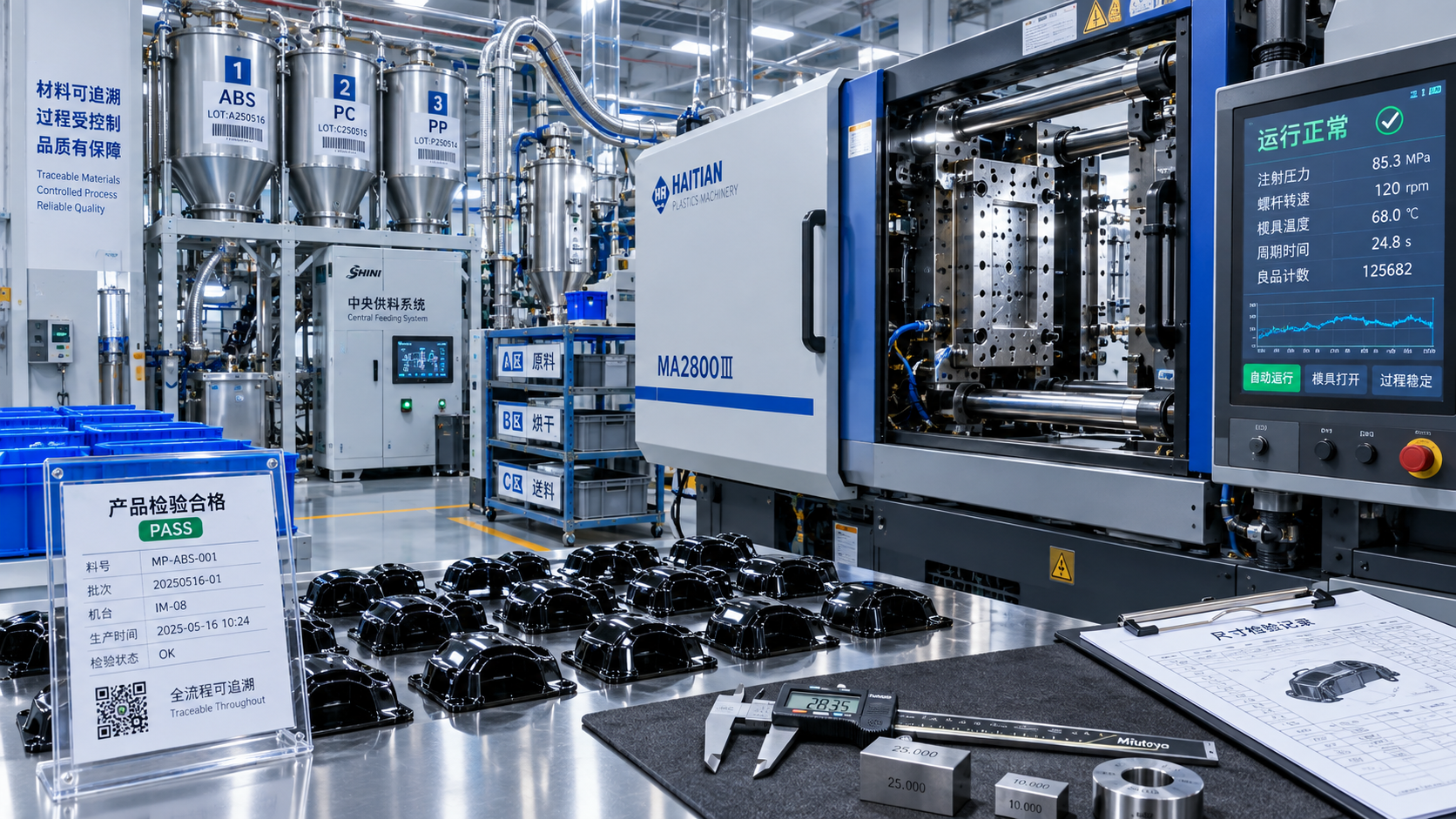
Material control is one of the most important quality and safety considerations in injection molding. Incorrect resin, contamination, moisture, or unauthorized regrind can compromise otherwise acceptable parts.
Request material specifications, supplier certificates of analysis, safety data sheets, and incoming inspection records. These documents should match the approved resin manufacturer, grade, color, and additive requirements.
For regulated applications, ask whether the supplier can provide lot-level traceability from finished cartons back to resin batches, masterbatch, inserts, and relevant process records.
Walk through the material storage area if possible. Resin bags, gaylords, and colorants should be labeled clearly, protected from contamination, and separated to prevent accidental mix-ups.
Drying controls deserve close attention for hygroscopic materials such as nylon, PET, polycarbonate, ABS, and certain thermoplastic polyurethanes. Drying temperature and time must be controlled and recorded.
Ask how operators verify that the correct material reaches each machine. Barcode systems, signed issue tickets, hopper labels, and material reconciliation are stronger than verbal confirmation.
Regrind policy is another critical topic. The supplier should define permitted percentages, eligible materials, segregation practices, and restrictions for safety-critical, cosmetic, food-contact, or medical products.
Be cautious when a factory cannot clearly explain its regrind controls. Excessive or mixed regrind may affect mechanical performance, appearance, molding stability, and long-term product reliability.
Assess Process Control at the Molding Machine
Quality is created during the molding process, not only at final inspection. A reliable injection molding manufacturer controls key machine settings and reacts when process conditions drift.
Review the process sheet for each tool. It should define injection pressure, melt temperature, mold temperature, holding pressure, cooling time, cycle time, and other relevant parameters.
For complex parts, request process capability studies or validation evidence. These records show whether the process can consistently meet tolerance requirements rather than merely producing a few acceptable samples.
Ask whether the supplier uses documented setup approvals after mold changes, machine moves, maintenance, or material changes. First-off verification should occur before routine production begins.
Machine monitoring systems can provide useful data on pressure curves, cushion, cycle time, and alarms. Their value depends on whether operators investigate deviations instead of simply resetting alerts.
Observe whether process settings are protected from unauthorized changes. Password controls, approved parameter windows, and change logs reduce the risk of undocumented adjustments during production.
Tool maintenance is equally important. Request preventive maintenance schedules, repair histories, spare-part availability, and records of mold cleaning, polishing, cooling-channel maintenance, and cavity inspections.
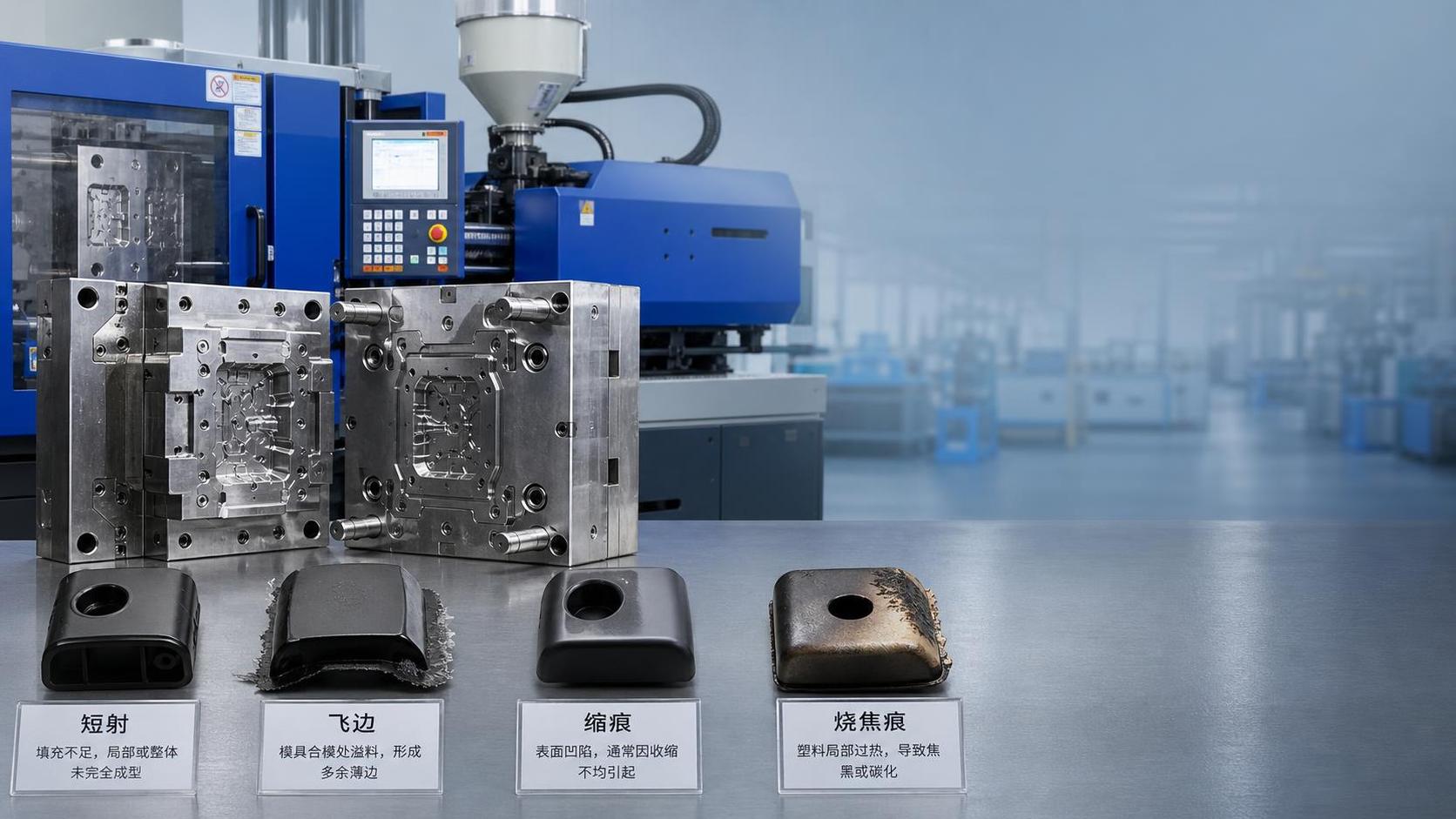
Poorly maintained tooling often creates flash, sink marks, dimensional variation, short shots, weld-line weakness, burn marks, and inconsistent surface quality. Final inspectors cannot reliably compensate for these failures.
Review Inspection Methods, Equipment, and Sampling Plans
Inspection plans should link directly to your critical characteristics. Ask the supplier to show incoming, first-article, in-process, final, and outgoing inspection requirements for comparable production programs.
A robust control plan states what is checked, how often it is checked, which equipment is used, acceptable limits, responsible personnel, and escalation steps for failures.
Do not accept vague statements such as “100 percent inspected” without details. Determine which characteristics receive full inspection and whether the inspection method can reliably detect relevant defects.
For dimensional parts, evaluate measurement capability. Calipers may be suitable for basic checks, while tight tolerances may require coordinate measuring machines, gauges, vision systems, or functional fixtures.
Ask for calibration certificates and gauge control records. Measurement equipment must be traceable to recognized standards, maintained within schedule, and protected from damage or unauthorized adjustment.
Where measurement risk is high, request gauge repeatability and reproducibility studies. A measurement system that varies between inspectors can create false acceptance or unnecessary rejection decisions.
Sampling plans should be based on risk, volume, process stability, and customer requirements. Suppliers should understand applicable acceptance quality limits and how sampling results trigger containment.
Inspectors also need clear visual standards. Approved samples, defect photos, limit samples, and lighting requirements help prevent subjective decisions on color, texture, gloss, flash, scratches, and contamination.
Test How the Supplier Handles Nonconforming Product
Every factory eventually produces nonconforming material. The key assessment issue is whether the supplier can isolate the product quickly and prevent it from moving into shipment.
Ask to see the nonconforming material procedure and physical quarantine area. Rejected parts should be clearly identified, access-controlled, and separated from approved inventory.
Traceability labels should make it possible to identify the production date, machine, mold, cavity, operator, material lot, and inspection status associated with suspect parts.
Strong suppliers use formal corrective-action methods, such as 8D, five whys, fishbone analysis, or failure mode analysis. The method matters less than evidence of disciplined investigation.
Review an anonymized customer complaint or internal defect case. Look for immediate containment, root-cause verification, corrective actions, responsible owners, and effectiveness checks after implementation.
Be concerned if root causes blame operators without examining equipment, tooling, materials, training, instructions, or process design. “Operator error” often signals incomplete problem solving.
Ask whether the supplier uses layered process audits, defect trend reviews, and scrap analysis. These activities can reveal recurring weaknesses before they become customer-visible failures.
For high-risk components, define notification requirements contractually. The injection molding manufacturer should notify you before shipping any deviation, process change, material substitution, or quality escape.
Evaluate Change Control and Production Traceability
Uncontrolled changes are a major source of quality and compliance risk. A supplier may alter materials, tooling, equipment, subcontractors, or processes without realizing the downstream consequences.
Ask for the engineering change procedure. It should identify which changes require customer approval, risk assessment, sample requalification, updated documents, and new first-article inspection.
Changes worth controlling include resin supplier substitutions, colorant revisions, mold repairs, cavity modifications, machine relocation, process parameter changes, packaging changes, and inspection method changes.
Production traceability should support efficient containment. If a defect is discovered later, the supplier should identify affected lots and shipments without recalling unrelated production unnecessarily.
Review packaging and labeling controls as well. Correct parts can still fail customer requirements when labels are inaccurate, lots are mixed, cartons are damaged, or moisture protection is inadequate.
For products with regulatory requirements, confirm that retention periods match your obligations. Quality records, test reports, material certificates, and process data may need long-term preservation.
Digital records can improve searchability, but paper systems can also work when they are controlled. What matters is retrieval speed, legibility, completeness, and clear linkage between records.
A supplier that cannot reconstruct a production lot after shipment may struggle to manage recalls, warranty investigations, safety incidents, or regulatory inquiries effectively.
Use an Audit Scorecard, but Avoid a Box-Ticking Decision
A structured scorecard makes supplier comparisons more consistent. Weight the categories according to product risk instead of giving equal importance to every audit question.
For safety-sensitive applications, give greater weight to material traceability, process validation, measurement capability, corrective action, change control, and traceability than to general housekeeping alone.
Score evidence quality, not just yes-or-no answers. Direct observations, current records, validated data, and traceable samples deserve more confidence than policy statements or verbal assurances.
Consider assigning findings by severity. Critical findings may block approval, major findings may require corrective action before production, and minor findings may be monitored during supplier development.
Financial and operational factors also matter. Evaluate capacity utilization, backup equipment, maintenance capability, workforce stability, supply-chain resilience, and communication quality alongside formal quality controls.
Before awarding a major program, consider a pilot order or production trial. Verify first-article results, documentation accuracy, packaging performance, delivery reliability, and responsiveness to issues.
Quality approval should be conditional when evidence is incomplete. Define the required closure actions, acceptance criteria, responsible contacts, and timeline before releasing higher-volume purchase orders.
Supplier assessment should continue after approval. Track defect rates, supplier corrective-action response, on-time delivery, complaint recurrence, audit results, and process-change notifications over time.
Conclusion: Look for Control, Evidence, and Learning Capacity
The best injection molding manufacturer is not necessarily the supplier with the lowest quoted price or the most polished presentation. It is the one with proven control over variation.
Quality and safety teams should prioritize evidence that materials are traceable, processes are stable, inspections are capable, defects are contained, and changes receive formal approval.
Certificates and factory tours are useful, but they are only entry points. The final decision should rely on records, observed practices, sample performance, and corrective-action discipline.
By assessing these areas before production begins, buyers can reduce compliance exposure, avoid costly quality escapes, and build supplier relationships that remain dependable as volumes and requirements grow.
- Last One:No more articles
- Next Article:When does a high precision CNC machine justify its added cost?Sep 26, 2026
Technical Specifications
- How to assess an injection molding manufacturer’s quality controlAuthor :Industrial Machinery Editorial Team
- When does a high precision CNC machine justify its added cost?Author :Industrial Machinery Editorial Team
- How to identify control components causing intermittent machine faultsAuthor :Electrical Components Editorial Team
Expert Insights

Chief Security Architect
Dr. Thorne specializes in the intersection of structural engineering and digital resilience. He has advised three G7 governments on industrial infrastructure security.