When does a high precision CNC machine justify its added cost?
Author
Date Published
Reading Time
When Does a High Precision CNC Machine Justify Its Added Cost?
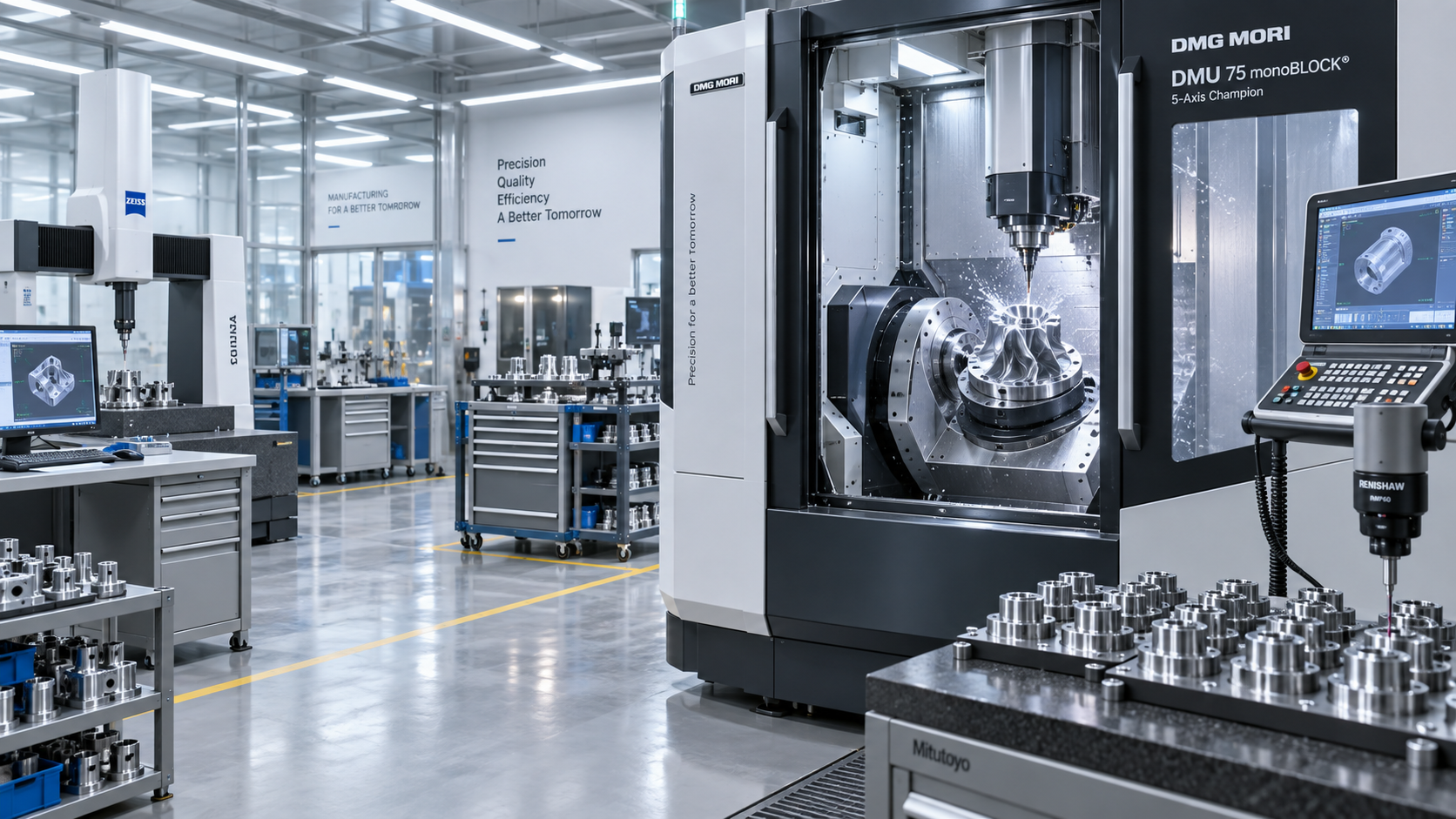
A high precision CNC machine can deliver tighter tolerances, lower scrap rates, and stronger customer confidence—but its higher purchase price requires a clear financial case. For approval decision-makers, the central issue is not whether the machine is technically superior. It is whether its production, quality, delivery, and commercial effects are large enough to repay the additional capital cost over a realistic ownership period.
That distinction matters because “precision” is often treated as an automatic upgrade. In practice, many operations do not need the same level of positioning accuracy, thermal stability, spindle performance, measurement capability, or automation readiness. A standard machine may be the more profitable choice for general fabrication, roughing work, low-risk components, or parts with generous tolerances. Conversely, a lower-cost machine can become expensive when it creates hidden losses through rework, inspection delays, rejected batches, missed delivery windows, or limited access to higher-value work.
The right approval decision starts with the economics of the part family, not the headline specification of the equipment.
Precision has to be defined before it can be priced
The term high precision CNC machine covers a wide range of equipment. One buyer may mean a machining center capable of holding demanding dimensional tolerances through a long production run. Another may be looking for better surface finish, repeatable multi-axis contouring, more stable bore geometry, or reliable machining after temperature changes. These are related concerns, but they are not interchangeable.
A finance review should ask the manufacturing team to identify the actual control requirement. Is the problem positional accuracy, repeatability, geometric accuracy, spindle runout, tool wear compensation, fixturing variation, material instability, or the inspection process? If the root cause is an inconsistent fixture or a weak process plan, buying a more accurate machine may not resolve the commercial issue. If the root cause is thermal drift during long cycles, limited feedback capability, or insufficient machine rigidity for the material and cutting strategy, the premium may be justified.
Technical claims should also be read carefully. A quoted accuracy value is meaningful only with its measurement conditions, test method, machine configuration, axis travel, ambient environment, compensation settings, and stated acceptance criteria. Buyers should request documentation that explains what is being measured rather than comparing a single number from competing quotations.
For internationally sourced equipment, this is particularly important. Product literature may use similar language while referring to different test conditions or different levels of machine preparation. A quotation should therefore be assessed alongside the scope of commissioning, acceptance testing, calibration records where relevant, control system options, included probing, and local service support.
The premium is justified when it changes the cost of making a part
The purchase price is visible. The cost of variation is often less visible because it is distributed across production, quality, scheduling, purchasing, and customer service. A more capable CNC platform earns its place when it reduces those recurring costs in a measurable way.
Consider a component that repeatedly requires manual adjustment after machining. The direct machining cycle may look acceptable, yet operators may spend time checking critical dimensions, making offset changes, handling parts twice, and routing selected pieces to rework. If the process sits close to tolerance limits, a minor change in material condition, ambient temperature, tool state, or operator practice can turn a normal run into a quality event. In that situation, higher accuracy and repeatability can affect far more than scrap. They can make output predictable enough to plan labor, inspection capacity, and shipments with confidence.
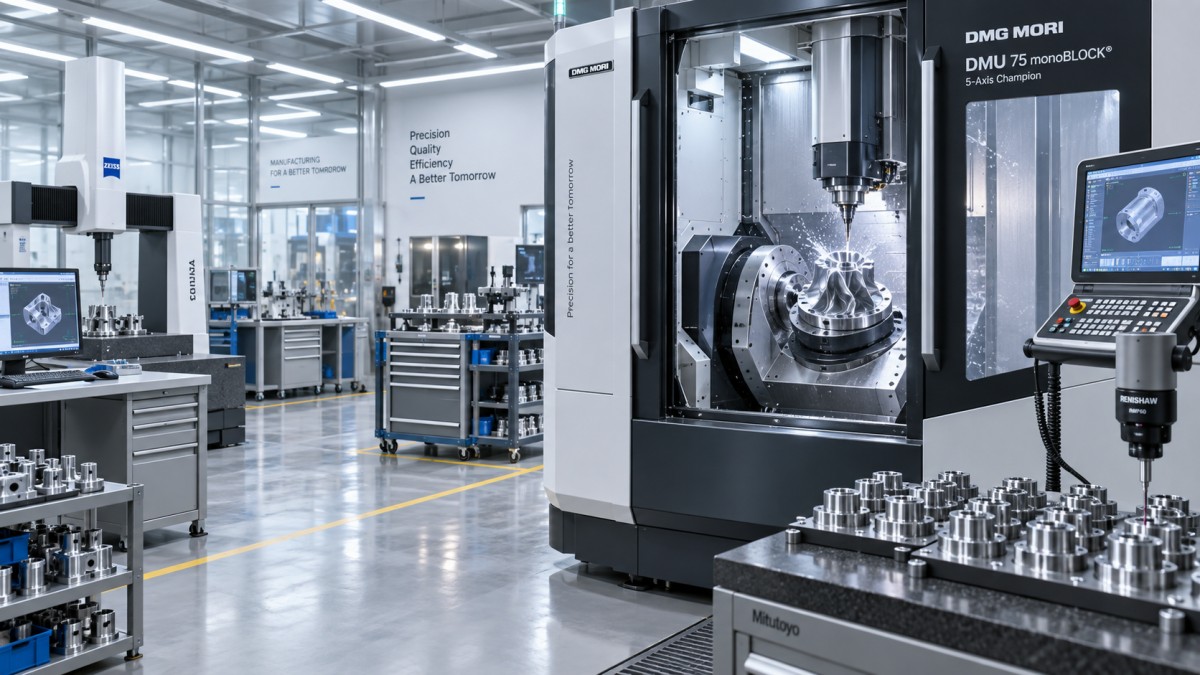
The strongest business case usually comes from a combination of effects rather than one dramatic improvement. A high precision CNC machine may support fewer rejected parts, less finish machining, reduced inspection burden, shorter setup stabilization, more unattended operation, or a higher first-pass yield. It may also reduce the need to reserve production capacity as a buffer against quality uncertainty. These effects need to be mapped to the current workflow, not assumed from the machine brochure.
Look beyond scrap: the financial model should include process friction
A capital request based only on “higher quality” is difficult to approve because quality has to be translated into cash impact. The analysis does not require artificial precision, but it should distinguish between plausible savings and optimistic assumptions.
A practical model begins with the incremental investment: the difference between the high-precision option and a suitable standard alternative. That difference should include tooling interfaces, probing packages, software, freight, installation, site preparation, operator training, electrical work, coolant and filtration requirements, financing costs, and any expected initial validation expense. A lower quoted machine price may not remain lower after these items are added.
Against that incremental cost, estimate the annual impact of four categories:
- Quality losses avoided: scrap, rework, concessions, additional inspection, and the cost of remaking parts.
- Labor and time recovered: manual touching-off, measurement loops, setup correction, deburring caused by inconsistency, and machine time lost to adjustments.
- Capacity released: the value of producing more saleable parts on the same shift or avoiding outsourced capacity during peaks.
- Margin from new work: only where there is credible demand for parts that require the added capability.
Capacity deserves careful treatment. It is not automatically a cash saving. If released hours merely create idle time, the benefit is operational flexibility rather than immediate financial return. If those hours replace subcontract machining, remove overtime, protect a bottleneck, or allow confirmed orders to be accepted, the benefit is more tangible. Approval models should state which of these applies.
Similarly, projected revenue from premium work should not carry the entire proposal unless the sales pipeline is well supported. Finance teams are right to challenge claims that a machine will “open new markets.” The better question is whether existing inquiries, customer specifications, or recurring outsourcing needs indicate a defined gap. A machine should not be purchased solely for hypothetical demand when current production inefficiencies are the only proven issue.
The machine is only one part of a precision system
A costly mistake is to expect machine accuracy to compensate for an uncontrolled production environment. Precision machining depends on workholding, tool selection, cutting parameters, coolant management, part handling, measurement discipline, programming, maintenance, and the stability of incoming material. The more demanding the work, the more these surrounding factors determine whether the stated capability becomes usable output.
For example, an advanced machine may include thermal compensation, high-resolution feedback, in-process probing, or robust structural design. Those features can be valuable, but they do not eliminate the need for a repeatable setup strategy. If a plant cannot maintain appropriate environmental conditions for its target tolerance range, or if inspection equipment cannot verify the finished feature reliably, the investment case is incomplete.
This is where acceptance planning becomes commercially important. Before issuing a purchase order, buyers should define representative parts, materials, critical features, expected cycle conditions, measurement methods, and acceptable proof of performance. A generic no-load demonstration is rarely enough. The agreed test should reflect the work that created the business case in the first place.
Compare lifecycle risk, not only equipment specifications
For global procurement teams, machine selection also involves delivery and support risk. The best technical configuration loses value if a critical controller component, spindle service, ball screw replacement, or application engineering response is difficult to obtain in the operating region. Buyers should ask how preventive maintenance is handled, what spare parts are commonly stocked, who performs installation, and what escalation path exists when a machine is down.
The controller ecosystem deserves scrutiny as well. A familiar control platform may simplify training, program transfer, post-processor development, and access to local technicians. An unfamiliar system may still be a sound choice, but its ownership costs should be evaluated honestly. Software compatibility, remote diagnostics, language availability, cybersecurity requirements, and integration with existing manufacturing systems can affect the final cost of adoption.
Import conditions can change the economics too. Freight exposure, customs procedures, documentation requirements, installation scheduling, packaging standards, and currency risk may be material in cross-border purchases. These are not arguments against international sourcing; they are reasons to compare delivered and commissioned cost rather than factory-gate price. Industry news, supply-chain reporting, and sourcing references can help purchasing teams identify changing logistics conditions or emerging availability constraints before they become project delays.
When the answer is probably no
A premium CNC machine is not automatically prudent because the company serves a technical industry or wants to present a more advanced image. The investment is hard to justify when most current parts have tolerances well within the capability of lower-cost equipment, when output is constrained by labor or material supply rather than machining performance, or when quality problems arise mainly from poor upstream control.
It may also be premature if volumes are too uncertain to recover the additional investment, if the business has no clear plan for training and maintenance, or if the proposed machine is configured far beyond the needs of the parts likely to run on it. Over-specification can lock capital into a capability that remains underused while more immediate bottlenecks persist elsewhere.
In some cases, an intermediate option is more sensible: improved probing, better workholding, a more capable spindle, upgraded inspection, or process engineering support may solve the actual problem at lower cost. Decision-makers should be wary of comparisons that present only the least expensive machine and the most sophisticated machine. The relevant benchmark is the lowest-risk configuration that can reliably meet the required process outcome.
A disciplined approval question
The most useful approval question is not, “Can this high precision CNC machine make better parts?” In many cases, it can. The more useful question is: “Which recurring costs, delivery risks, or qualified revenue opportunities will change if we buy it, and can those changes be verified under our real operating conditions?”
A sound proposal connects machine capability to a defined part mix, a documented source of process loss, a realistic implementation plan, and a lifecycle support arrangement. It separates hard savings from strategic potential, includes commissioning and ownership costs, and establishes a meaningful acceptance test. When those elements align, the added cost is not a premium for precision alone. It is an investment in a more controlled and commercially reliable manufacturing process.
Before approval, it is worth comparing supplier quotations against the same part requirements and delivered scope, then reviewing service coverage, lead times, standards documentation, and regional logistics exposure alongside the financial model. That approach gives procurement and finance teams a clearer basis for deciding whether the higher specification is genuinely needed—or simply attractive on paper.
Technical Specifications
- How to assess an injection molding manufacturer’s quality controlAuthor :Industrial Machinery Editorial Team
- When does a high precision CNC machine justify its added cost?Author :Industrial Machinery Editorial Team
- How to identify control components causing intermittent machine faultsAuthor :Electrical Components Editorial Team
Expert Insights

Chief Security Architect
Dr. Thorne specializes in the intersection of structural engineering and digital resilience. He has advised three G7 governments on industrial infrastructure security.
Core Sector // 01
Security & Safety
- When does a high precision CNC machine justify its added cost?Author :Industrial Machinery Editorial Team

- When do CNC machines justify their higher upfront cost?Author :Industrial Machinery Editorial Team

- When a Waterjet Cutting Machine Is Better Than Laser or PlasmaAuthor :Industrial Machinery Editorial Team

- CNC Machines Buying Guide: Accuracy, Throughput, and ROIAuthor :Industrial Machinery Editorial Team

- What Causes CNC Machines to Lose Precision Over Time?Author :Industrial Machinery Editorial Team