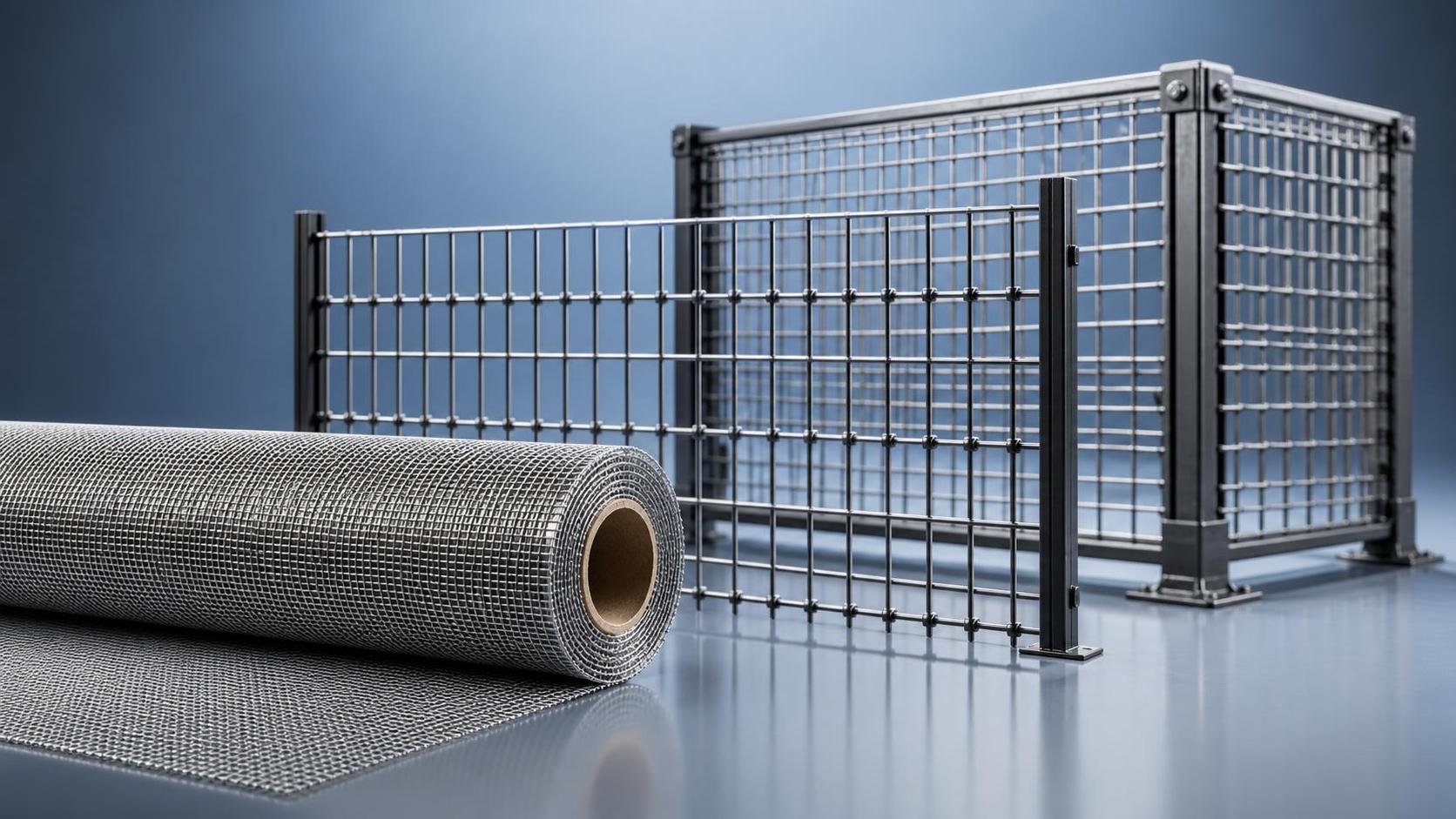
Which wire mesh for fencing suits high-security boundary projects?
Author
Date Published
Reading Time
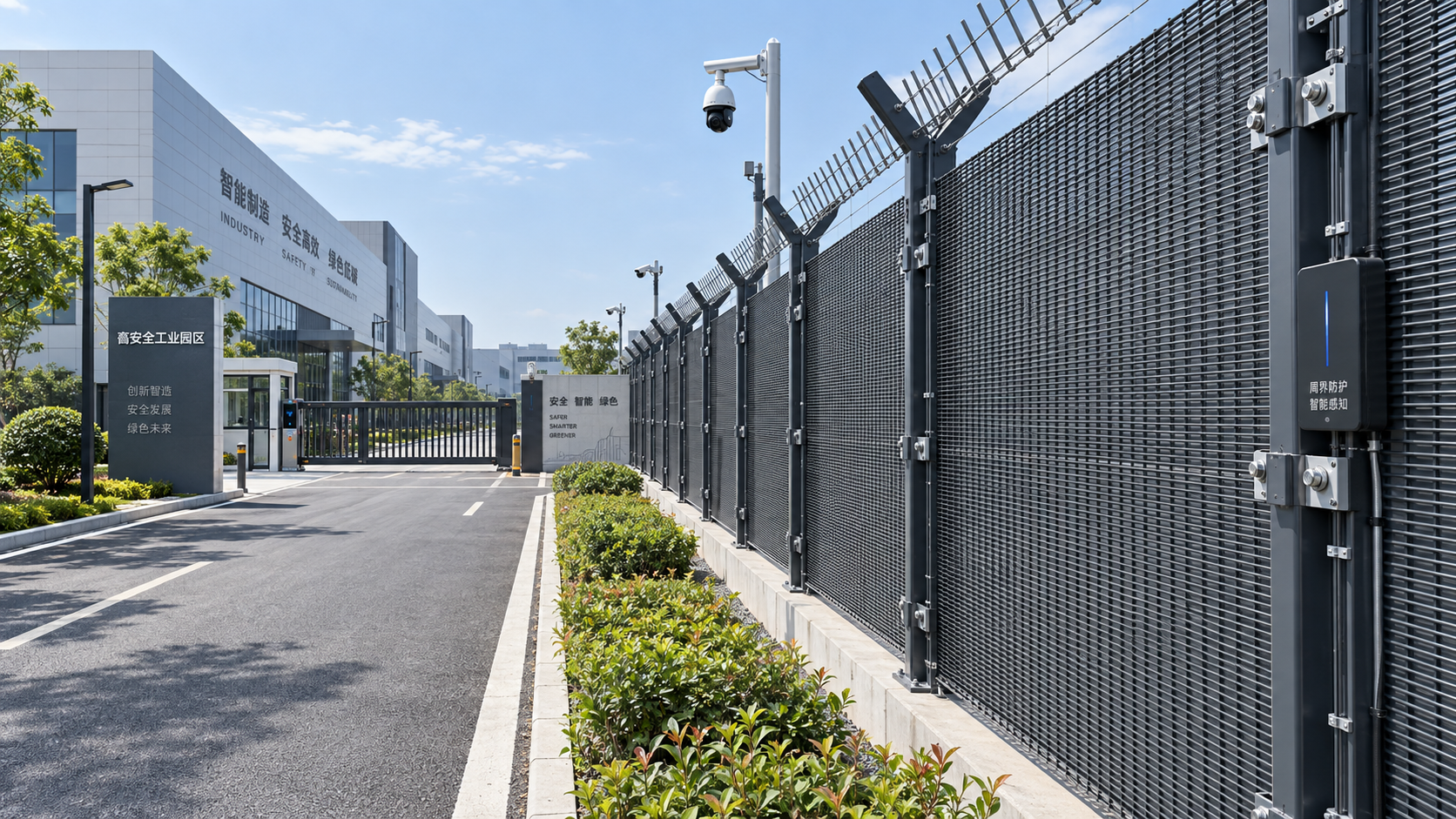
Which Wire Mesh for Fencing Suits High-Security Boundary Projects?
Choosing wire mesh for fencing in a high-security project is primarily a risk-management decision, not simply a material purchase.
For most critical boundaries, welded anti-climb mesh with narrow apertures, heavy wire, corrosion protection, and integrated detection capability provides the strongest overall result.
However, the correct specification depends on threat level, site conditions, required visibility, installation constraints, maintenance capacity, and the consequences of a breach.
Project managers should evaluate the complete perimeter system, including posts, foundations, gates, topping, sensors, and operational procedures, rather than comparing mesh panels alone.
Start With the Security Threat and Site Consequences
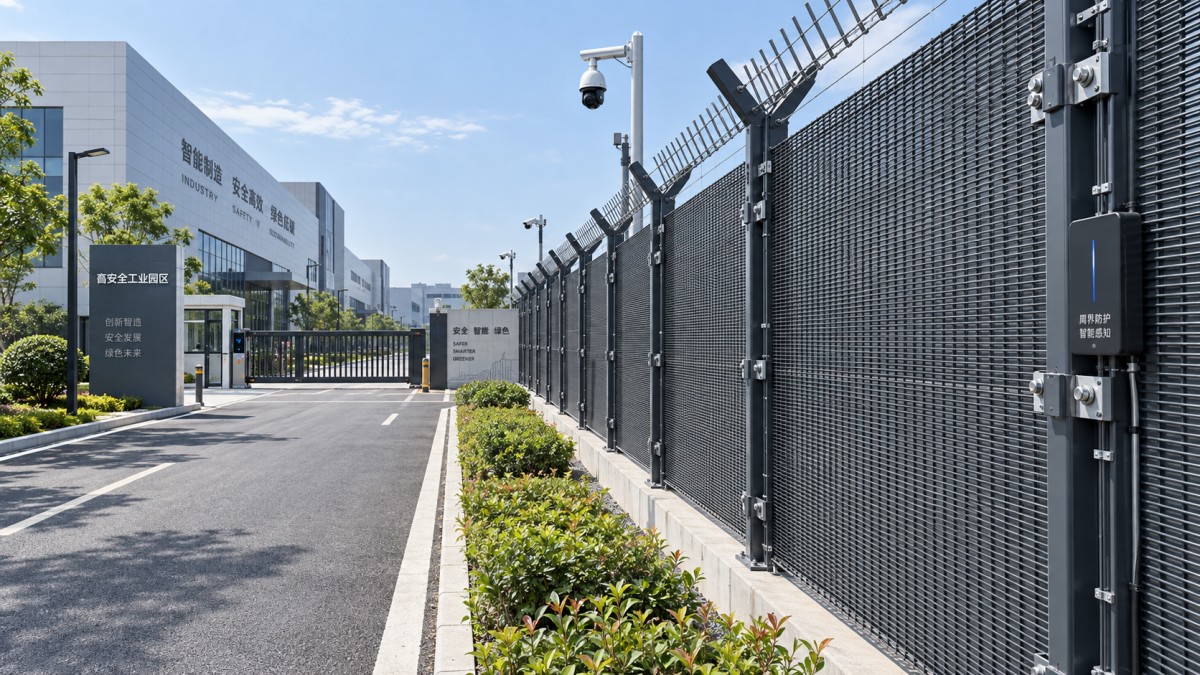
The first question is not which mesh looks strongest, but what the fence must prevent, delay, detect, or visibly discourage.
A warehouse perimeter facing opportunistic trespassers needs a different wire mesh for fencing than an airport, data center, prison, utility substation, or defense facility.
Define whether the expected threat involves climbing, cutting, vehicle impact, covert entry, coordinated intrusion, theft, vandalism, or unauthorized photography.
Also assess the likely response time after an alarm. A fence that delays intruders becomes more valuable when security teams can react quickly.
For high-consequence sites, mesh selection should support layered protection. The perimeter should create delay while cameras, sensors, lighting, and guards identify the intrusion.
Documenting threats early prevents specification changes later. It also helps procurement teams explain why a lower-priced standard fence does not meet operational requirements.
Consider surrounding terrain as well. Slopes, drainage channels, retaining walls, nearby trees, adjacent buildings, and public access routes can undermine an otherwise robust boundary.
A properly designed high-security fence controls obvious crossing points and prevents nearby features from becoming climbing aids, concealment areas, or bypass routes.
Why Anti-Climb Welded Mesh Is Usually the Leading Option
For many high-security applications, rigid welded mesh panels outperform chain-link fencing because they offer superior anti-climb resistance, clearer sightlines, and stronger visual deterrence.
The most common high-security format uses closely spaced horizontal wires with wider vertical spacing, creating a narrow aperture that offers few practical footholds.
Apertures around 12.7 by 76.2 millimeters, often described as 358-style mesh, are widely used where climbing resistance and visibility are both important.
Its small horizontal openings make it difficult to gain finger or toe purchase. The dense grid also limits access for common cutting tools.
Welded mesh panels remain rigid after installation. This rigidity improves perimeter appearance and makes forced deformation more noticeable to patrols and surveillance operators.
Compared with opaque walls, mesh fencing allows cameras and guards to observe movement outside the boundary without creating major blind spots.
Visibility matters because security teams must distinguish real events from nuisance alarms. Dense landscaping or solid barriers can complicate camera coverage and response decisions.
Anti-climb welded mesh is not automatically suitable everywhere. Extremely corrosive coastal, chemical, or industrial environments may require upgraded materials and carefully specified coating systems.
Projects with substantial vehicle-threat exposure also need separate crash-rated barriers. Standard wire mesh for fencing should not be treated as vehicle-impact protection.
Compare Aperture, Wire Diameter, and Panel Geometry
Mesh aperture is one of the most important security characteristics. Smaller openings generally improve anti-climb performance and make tool access more difficult.
Yet smaller apertures also increase material use, panel weight, wind loading, and procurement cost. The best choice balances measured risk with installation practicality.
For moderate commercial security, larger welded apertures may be acceptable when cameras, lighting, and access management provide additional protection around the site.
For high-risk boundaries, narrow-aperture panels are usually preferable because they reduce footholds and make the fence harder to climb without specialized equipment.
Wire diameter affects stiffness, resistance to cutting, and panel durability. Thicker wires are generally stronger, but nominal diameter alone does not prove system performance.
Check whether the stated wire measurement applies before or after coating. A supplier may quote total coated diameter, which can obscure the steel core thickness.
Project specifications should identify minimum core-wire diameter, allowable tolerances, weld quality expectations, panel dimensions, and evidence supporting the stated material grade.
Panel geometry also matters. Reinforced bends, folded profiles, and closely spaced line wires can improve rigidity, but should not create useful climbing ledges.
Review samples and technical drawings together. Security performance can be weakened by seemingly minor details, including sharp panel edges, joint gaps, or inconsistent mesh spacing.
Specify Posts, Fixings, and Foundations as Part of the Fence
A strong mesh panel attached to weak posts provides only an impression of security. Intruders often target fixings, post connections, gates, and foundation weaknesses.
Posts should be selected according to fence height, panel weight, wind exposure, soil condition, terrain changes, and the required anti-tamper performance.
For critical perimeters, use security fasteners that cannot be easily removed with ordinary hand tools from the public-facing side of the fence.
Clamp covers, recessed fittings, tamper-resistant bolts, and protected panel edges reduce opportunities to dismantle the boundary quietly over repeated attempts.
Post spacing must match the tested or engineered system. Increasing spacing to reduce material cost can cause deflection, vibration, and premature damage under loading.
Foundation design deserves early engineering review. Concrete depth, diameter, reinforcement, and drainage requirements vary significantly with soil bearing conditions and regional frost movement.
On soft ground or steep gradients, standard footing details may be inadequate. Poor foundations can allow posts to lean, creating gaps and reducing fence tension.
Specify how the fence will meet walls, culverts, service trenches, and uneven ground. These transitions are frequent perimeter vulnerabilities when left to field improvisation.
Require installers to maintain controlled ground clearance. Excessive gaps below the mesh can permit crawling access, while improvised infill can create maintenance problems.
Choose a Coating System for the Real Operating Environment
High-security fencing is expected to perform for years, so corrosion resistance should be assessed over the entire planned service life, not only at handover.
Hot-dip galvanizing provides a widely used corrosion barrier for steel wire mesh for fencing, particularly where abrasion resistance and long-term durability are required.
Powder coating or PVC coating can add color, improve appearance, and provide supplementary protection. These finishes are not substitutes for a suitable galvanized base.
For coastal projects, salt spray, airborne chlorides, humidity, and trapped moisture can accelerate corrosion around welds, cut ends, fasteners, and ground-level connections.
Industrial facilities may face acids, alkalis, chemical vapors, fertilizer dust, or washdown exposure. Material selection should reflect actual contaminants, not regional climate alone.
Request coating weight, galvanizing method, coating thickness, adhesion requirements, and relevant corrosion-test information in supplier documentation before award.
Color selection has operational consequences. Dark green or black mesh can visually recede in landscaped areas, while lighter colors may improve boundary identification and inspection.
Any finish should support security operations. Avoid surface treatments that hide corrosion, make repairs difficult, or create glare that compromises night cameras.
Include a repair procedure for damaged coatings. Installation scratches, drilled holes, and field-cut edges need treatment before corrosion develops beneath surrounding finishes.
Integrate Gates, Detection, Cameras, and Toppings Early
The fence line is only one part of a controlled boundary. In practice, gates and service entrances often present a greater risk than mesh panels.
Specify gates with equivalent mesh, frame strength, hinge protection, locking arrangements, and ground clearance. A high-security panel system should not end at a weak gate.
Sliding gates require special attention to guide tracks, tail gaps, emergency release functions, power-loss behavior, and access-control integration.
Where intrusion detection is needed, select mesh and post configurations compatible with vibration sensors, fence-mounted sensors, buried detection systems, or fiber-optic technologies.
Sensor performance depends on installation quality and calibration. Excessive panel movement, loose fixings, or vegetation contact can create false alarms and reduce operator confidence.
Camera planning should account for fence height, mesh pattern, illumination, weather conditions, and the ability to identify people near the perimeter after dark.
Install lighting to support observation without causing glare or creating deep shadows. Coordinate cable routes and cabinet locations before foundations are poured.
Toppings such as rotating spikes, anti-climb extensions, razor wire, or other deterrents may be appropriate, but require legal review, safety controls, and maintenance planning.
Use topping only when the threat assessment justifies it. Highly aggressive measures can increase liability, complicate emergency access, and create public-facing reputational concerns.
Use Standards, Testing, and Documentation to Control Procurement Risk
High-security fencing should be procured against measurable requirements. Generic descriptions such as “heavy-duty mesh” leave excessive room for quality variation and substitution.
Depending on location and application, projects may reference standards for steel materials, galvanizing, welded wire products, coating performance, structural loading, and security classification.
Relevant standards vary by market. Project teams should confirm local building codes, client requirements, insurance conditions, and sector-specific regulations before issuing specifications.
For higher-risk sites, ask whether the system has independent testing for cutting resistance, climbing resistance, forced entry delay, impact, or attack methods.
Do not assume a product name guarantees tested performance. Manufacturers may use similar descriptions for systems with very different wire dimensions, fixings, and post assemblies.
Supplier submittals should include drawings, material certificates, coating data, installation instructions, warranty terms, and evidence that all components work as one system.
Request a sample panel, post, clamp, and fastener assembly before final approval. Physical inspection often reveals differences that specification sheets fail to show.
For international sourcing, clarify Incoterms, packaging, container loading, lead times, spare-part availability, customs documentation, and responsibility for transit damage.
A lower unit price can become expensive when replacement panels, matching fasteners, coating repairs, or local technical support are unavailable after installation.
Evaluate Lifecycle Cost Rather Than Initial Panel Price
Project managers should compare installed lifecycle cost, not just the price per square meter. The cheapest wire mesh for fencing may require earlier replacement or heavier maintenance.
Lifecycle evaluation should include foundations, posts, gates, labor, access-control interfaces, coating durability, inspection needs, repair materials, and expected downtime after damage.
Installation productivity also affects budget. Large rigid panels may reduce labor on long straight runs, but challenging terrain can require more cutting and alignment work.
Standardized panel widths and modular post systems can simplify spare stock and future repairs. This is particularly valuable for remote industrial and infrastructure sites.
Consider the cost of a security failure as well. Theft, operational disruption, data loss, regulatory exposure, injury, and reputational damage can outweigh upfront savings quickly.
A practical evaluation matrix assigns weighted scores to intrusion resistance, corrosion performance, visibility, installation complexity, supplier reliability, maintainability, and total installed cost.
Use the same matrix for all bidders. It creates a defensible decision record and makes it harder for procurement discussions to focus solely on purchase price.
Where alternatives remain close, prioritize the system that best supports inspection, repair, and future upgrades. Security requirements commonly become more demanding over time.
A Practical Specification Path for Project Teams
Begin by classifying the site as low, medium, high, or critical risk, then identify the threats the boundary must deter, delay, or detect.
Next, select a fence height and narrow-aperture welded mesh configuration that corresponds to the risk level, operational visibility requirements, and local planning restrictions.
Define minimum steel core diameter, coating system, post arrangement, tamper-resistant fixings, foundations, ground-clearance limits, and acceptable transition details.
Then specify gate performance separately, including access control, emergency egress, locking, safety requirements, and equivalent resistance to the surrounding fence line.
Coordinate security technology before installation. Detection, cameras, lighting, communications, and power routes are more reliable when designed with the fence rather than added afterward.
Finally, require quality checks during delivery and installation. Verify panel dimensions, coating condition, post alignment, fixing orientation, foundation records, and handover documentation.
The best wire mesh for fencing high-security boundaries is usually a complete anti-climb welded system, selected through threat assessment and supported by durable engineering details.
For project managers, the decisive question is whether the perimeter creates enough delay and visibility for the security operation to respond effectively over its intended lifecycle.
- Last One:No more articles
- Next Article:What to verify before choosing a screw manufacturer in IndiaOct 10, 2026
Technical Specifications
- Which wire mesh for fencing suits high-security boundary projects?Author :Metals & Fabrication Editorial Team
- What to verify before choosing a screw manufacturer in IndiaAuthor :Metals & Fabrication Editorial Team
- How to assess quality consistency from a granite exporter in BrazilAuthor :Construction Materials Editorial Team
Expert Insights

Chief Security Architect
Dr. Thorne specializes in the intersection of structural engineering and digital resilience. He has advised three G7 governments on industrial infrastructure security.