What to verify before choosing a screw manufacturer in India
Author
Date Published
Reading Time
The lowest quoted unit price rarely represents the lowest landed cost. A screw that strips during installation, arrives with inconsistent coating, or misses a shipment window can create rework, line stoppages, rejected assemblies, expedited freight, and disputes that outweigh a small saving on the purchase order. When selecting a screw manufacturer in India, the useful question is not simply whether the factory can make the requested item. It is whether it can repeatedly make the correct item, document that result, pack it for the intended journey, and maintain the agreed supply terms.
Start with the product application and failure consequences. A general-purpose fastener for furniture has a different risk profile from a screw used in machinery, electrical assemblies, outdoor equipment, construction work, or corrosion-prone installations. The manufacturer should be evaluated against the actual use case rather than against a generic catalogue description.
Lock the technical requirement before comparing quotations
An RFQ that only states diameter, length, and quantity leaves too much room for interpretation. Two suppliers may quote what appears to be the same screw while using different material grades, thread forms, point designs, head geometry, drives, heat treatment routes, coatings, or inspection levels. The prices will differ, but the comparison will not be meaningful.
A usable specification should define the characteristics that affect fit, installation, strength, corrosion resistance, and appearance. For a standard item, an applicable drawing, sample, or established product standard may be enough. For a custom part, include a controlled drawing with tolerances, material expectations, finish requirements, and any functional dimensions that must be checked.
- Thread type, pitch, and thread length, not merely nominal diameter and overall length.
- Head style, head diameter, drive recess, point type, and any required washer or captive feature.
- Base material and required mechanical condition where load, vibration, or repeated tightening matters.
- Surface treatment, colour, corrosion expectation, and cosmetic acceptance criteria.
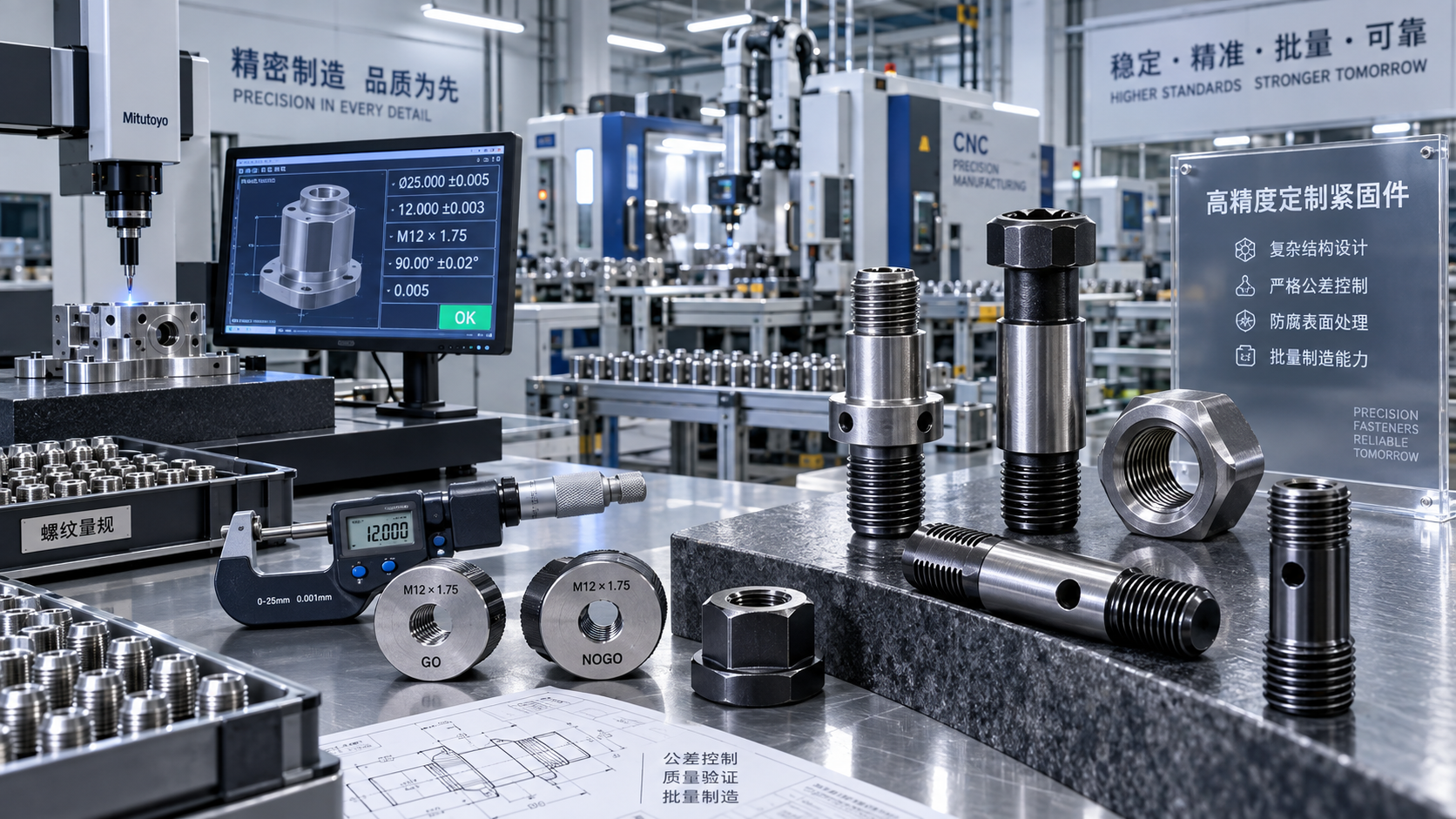
- Dimensional tolerances, especially for parts that enter pre-drilled holes or automated assembly equipment.
- Packaging unit, label information, and traceability expectations.
It is also worth stating what the screw will join. Sheet metal, hardwood, plastic, aluminium, masonry, and steel can require different thread profiles and point designs. A supplier that produces a wide range of fasteners is not automatically the right choice for every application; demonstrated familiarity with the required product family matters more than a long catalogue.
Check the factory’s process capability, not just its product list
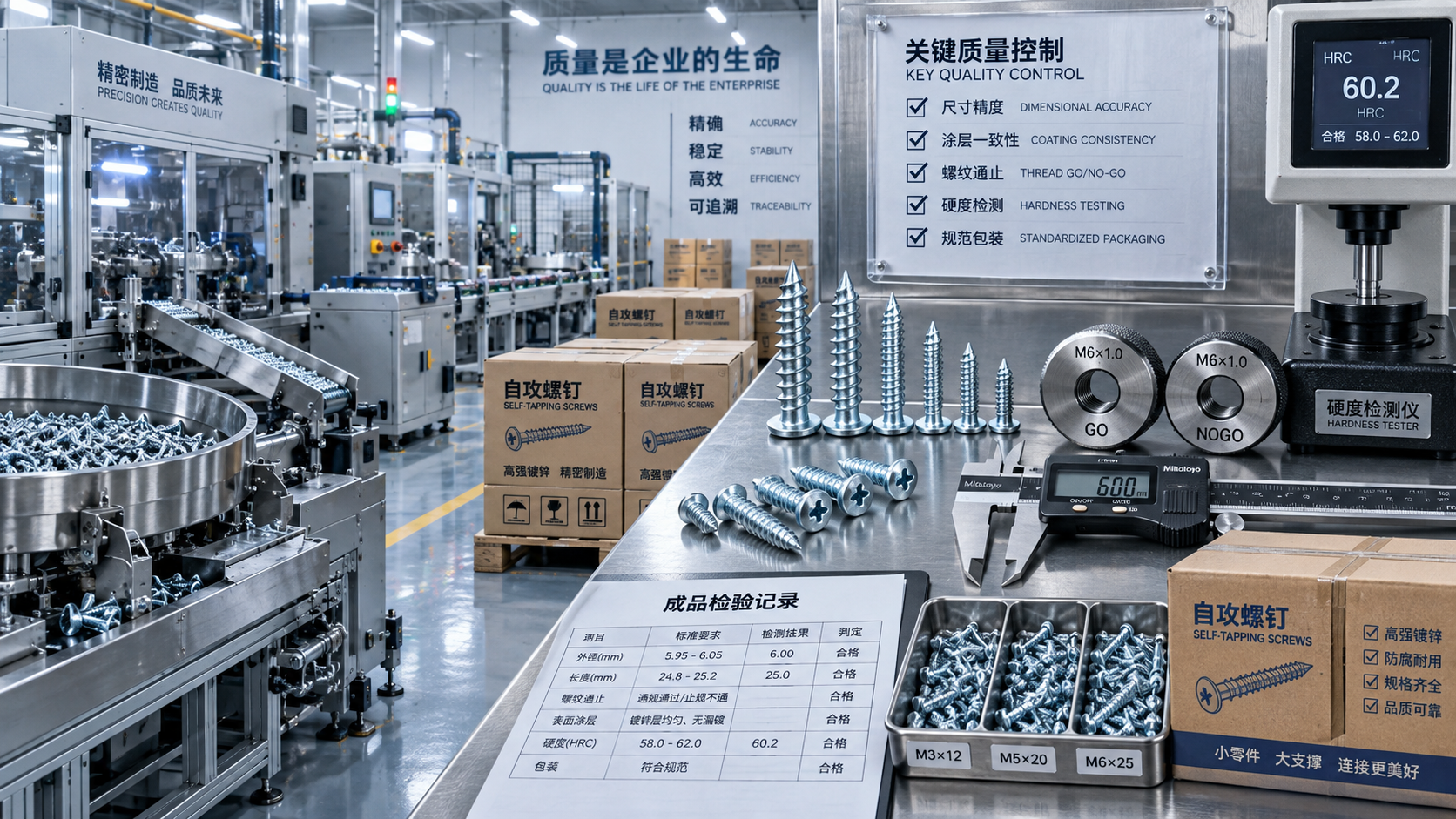
Manufacturing a screw consistently involves a sequence of controlled operations. Depending on the product, this can include wire preparation, cold heading, thread rolling, drilling or point forming, heat treatment, surface finishing, sorting, inspection, and packing. Problems often arise at the handoff between these stages, particularly when critical work is outsourced without clear controls.
Ask which operations are performed in-house and which are subcontracted. Outsourcing is not inherently a problem. Specialist heat treatment or plating providers can be entirely appropriate. The important issue is ownership: who sets the process requirements, receives inspection records, handles nonconforming batches, and remains accountable for the finished screw?
For parts with demanding mechanical or corrosion requirements, request a clear explanation of the process route. A factory should be able to describe how it controls incoming wire, verifies tooling, separates production lots, prevents mixed material, and approves finished batches. Vague assurances such as “export quality” do not answer these operational questions.
Test samples in the conditions that matter
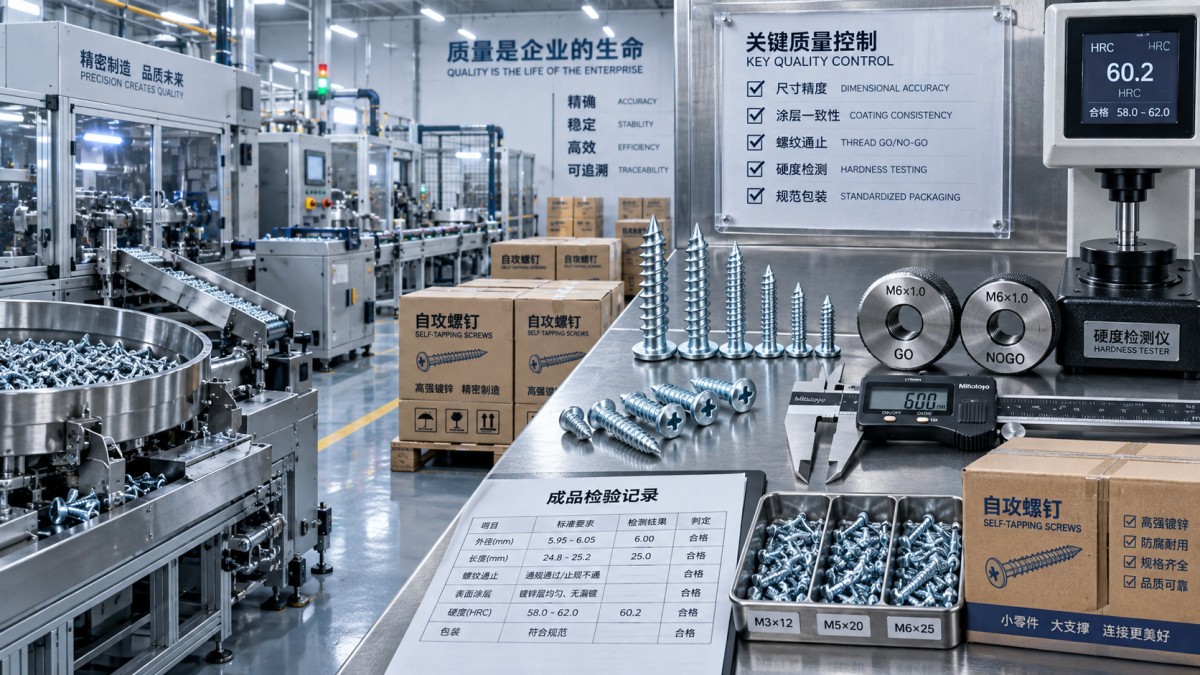
A visual sample is useful for confirming appearance, but it cannot establish production reliability. Before committing to a large order, obtain samples from the intended manufacturing route where possible, then inspect and trial-fit them against the mating parts, installation tools, and working conditions. This is especially important for self-drilling, self-tapping, security, coated, and custom screws.
During a practical trial, assess more than whether the screw “works.” Check whether the drive recess accepts the intended bit securely, whether the screw starts cleanly, whether it seats at the correct depth, whether the head remains undamaged, and whether the part performs consistently across multiple pieces. An installation process that needs excessive torque or has frequent cam-out can slow assembly even when the screw passes basic dimensional checks.
For automated assembly, small dimensional changes can become major production issues. Feed systems may reject screws with variable head geometry, incomplete threads, burrs, or inconsistent coatings. A factory should understand that a screw acceptable for manual installation may not be acceptable for high-speed feeding equipment.
Make quality documentation proportional to the risk
Not every purchase needs an extensive documentation package. Requiring elaborate records for a simple, low-risk commodity can add cost without improving the outcome. The right level of control depends on the application, the cost of failure, and whether the product is subject to contractual or regulatory requirements in its final market.
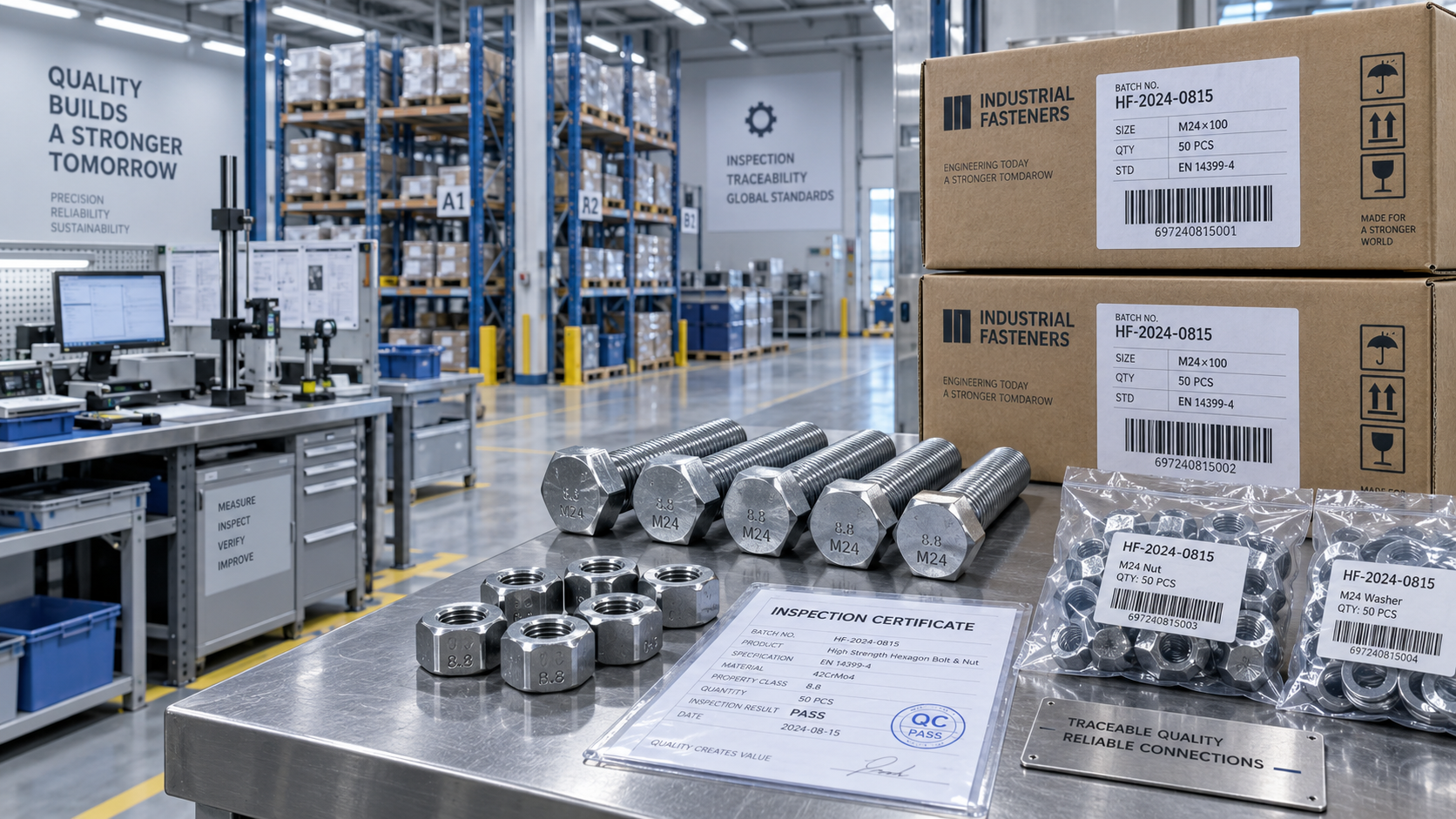
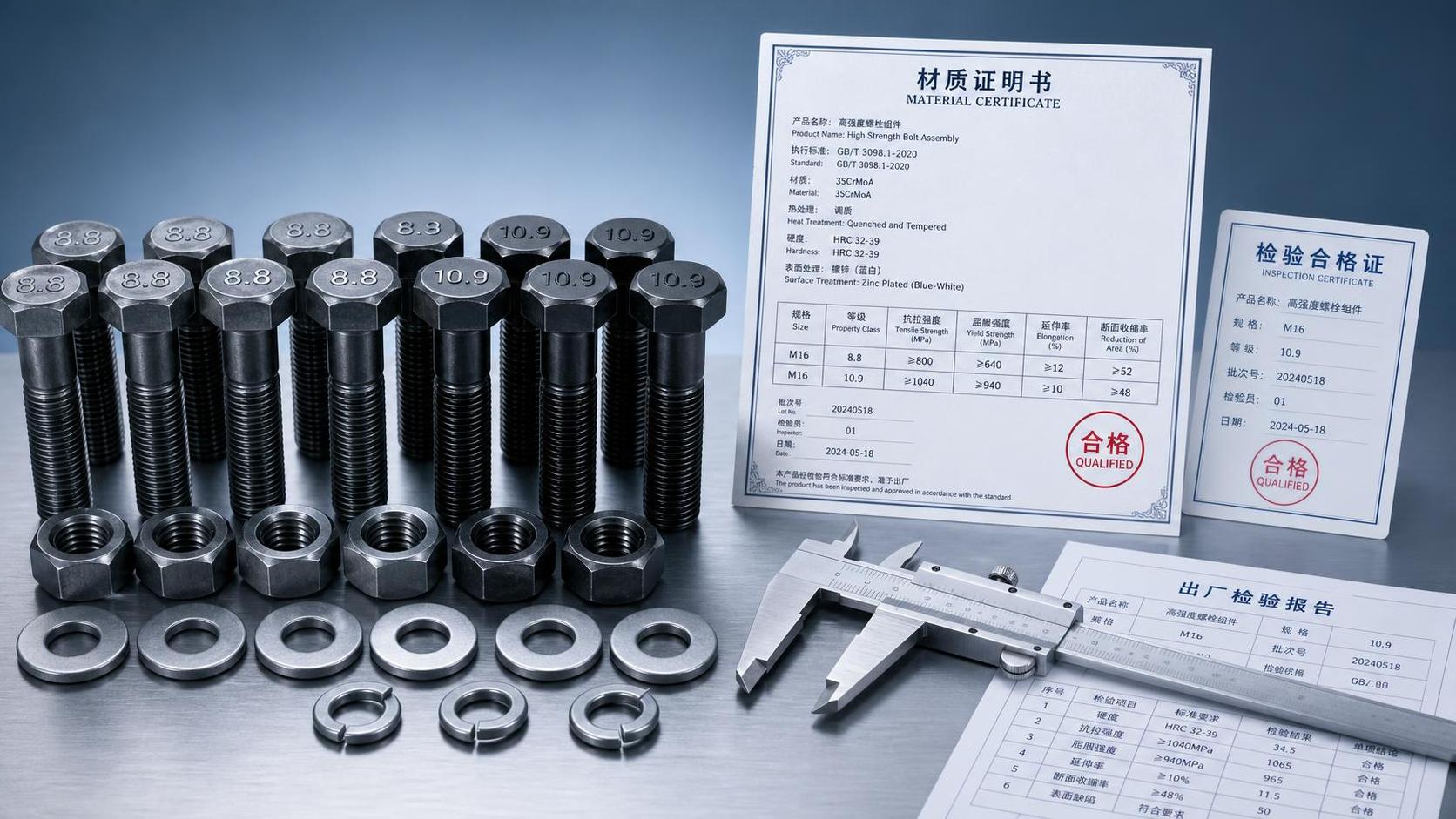
For repeat industrial orders, a reasonable starting point is an agreed inspection plan that identifies the characteristics to be checked, the sampling approach, acceptance criteria, lot identification, and the records supplied with shipment. Relevant material declarations, coating information, dimensional inspection results, and batch records should match the order rather than being generic documents unrelated to the actual production lot.
Be precise about certifications. A certificate held by a factory may demonstrate that it operates a documented management system, but it does not by itself prove that a particular screw meets every drawing or application requirement. Similarly, a test report has value only when it identifies the tested item, lot, method, and result in a way that can be connected to the delivered goods.
Define the defect response before the first shipment
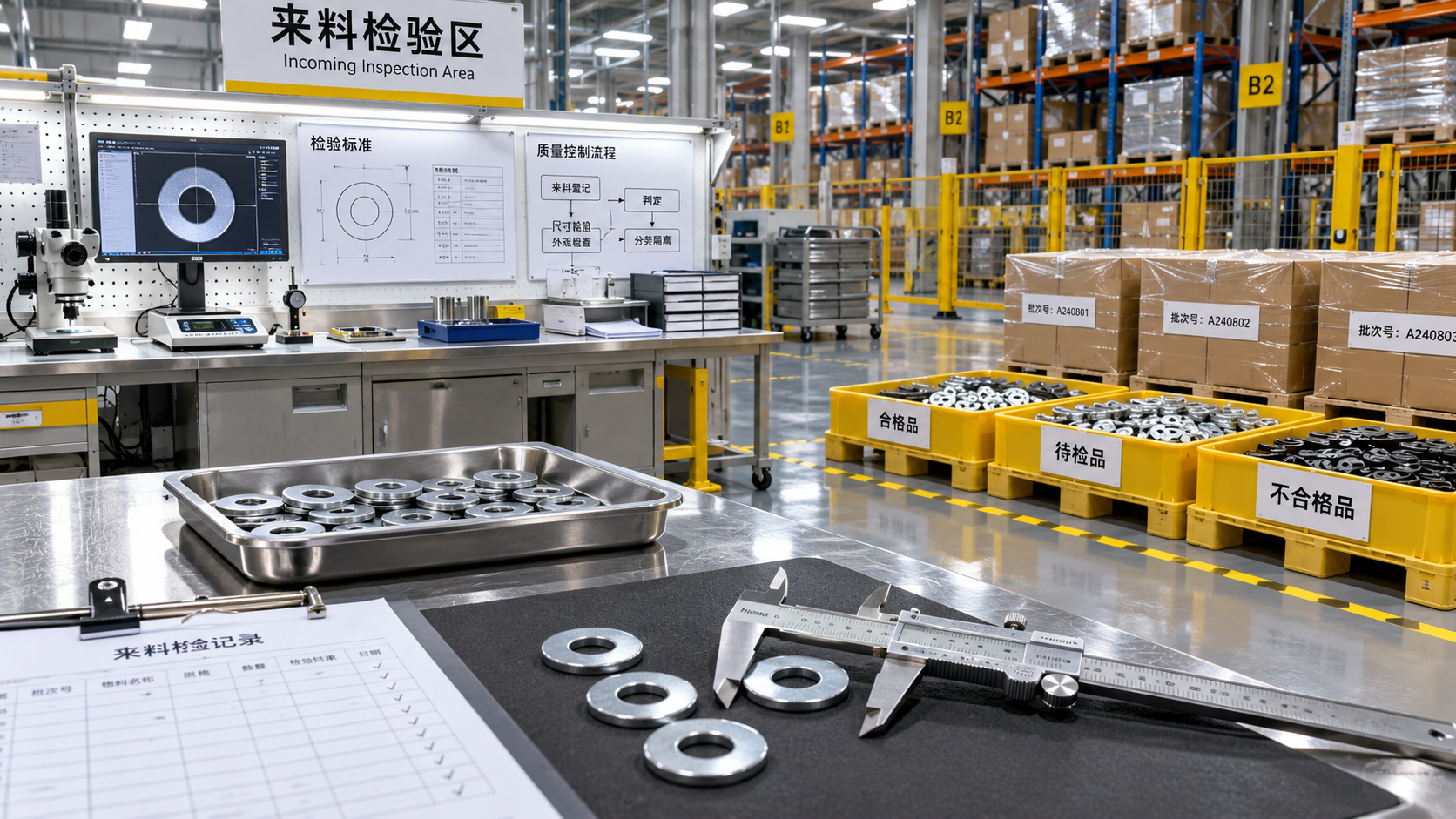
Quality discussions often focus on prevention and overlook containment. Agree how a suspected defect will be handled: who receives the notification, what evidence is required, how stock will be quarantined, whether replacement material can be prioritized, and how root-cause actions will be communicated. This does not assume a failure will occur; it prevents confusion when time matters.
A manufacturer that can provide a clear corrective-action process is generally easier to manage than one that only promises to replace goods after a dispute. The commercial impact of a defect includes inspection labour, sorting, production disruption, transport, and missed delivery commitments, not only the price of the screws themselves.
Compare landed cost and commercial terms line by line
Quoted price should be normalized before selecting a supplier. Confirm currency, unit of measure, packing method, tooling charges, sample costs, inspection charges, delivery terms, payment milestones, and the point at which risk transfers. A low ex-works figure can look less attractive after inland handling, export packing, freight, duty exposure, and local delivery are considered.
Packaging deserves more attention than it receives. Fasteners are heavy, small, and vulnerable to moisture, abrasion, mixed lots, and count discrepancies. Define whether the requirement is bulk cartons, small boxes, bags, palletized loads, or customer-branded packs. For long transit routes or humid storage conditions, ask how cartons are protected, how lot labels are applied, and whether packaging prevents different sizes from being mixed.
For a new relationship, it is sensible to separate the first order from the long-term forecast. A manufacturer may be able to support a trial batch but not the recurring schedule required later. Discuss minimum order quantities, size-specific tooling, raw material purchasing, replenishment lead times, and capacity reserved during demand peaks. The cheapest source becomes expensive when it forces oversized inventory or repeated emergency purchases.
Evaluate communication as an operating control
Clear communication is part of supplier capability. The commercial contact should be able to translate a request into a controlled order specification and return questions when requirements conflict. Watch for warning signs: quotations that omit critical details, copied product descriptions that do not match the drawing, unexplained substitutions, or changing lead times after order confirmation.
Useful communication is specific. It distinguishes a confirmed manufacturing capability from an assumption, identifies deviations before production starts, and documents agreed changes in writing. This matters when drawings are revised, packaging changes, or a substitute finish is proposed because of material availability. Informal approval through a chat message can create costly ambiguity if different versions of the requirement are later used.
Export readiness should also be assessed as a workflow, not a claim. The supplier needs to prepare commercial documents accurately, coordinate packing and dispatch, identify cartons consistently, and respond promptly when logistics providers request information. A factory with limited export exposure may still be suitable, but the first shipments may need closer coordination and simpler commercial terms.
Use a staged selection process
The most reliable selection method narrows risk in stages. Begin by screening several screw manufacturers against the product specification and their stated process capability. Then compare quotations only after each supplier has quoted the same technical and packaging basis. Shortlist candidates for technical discussion, sample evaluation, and documentation review before awarding a larger order.
- Issue a complete RFQ with drawing, application details, expected volume, packaging, delivery destination, and quality requirements.
- Review each response for omissions, alternatives, and assumptions. Clarify these before treating prices as comparable.
- Request product-specific samples and evaluate installation, fit, finish, and consistency.
- Confirm the manufacturing route, outsourced processes, inspection records, traceability method, and corrective-action procedure.
- Place an initial order that is large enough to assess packing, documents, communication, and delivery execution, but not so large that a quality issue becomes difficult to contain.
- Use the first shipment to establish measurable approval criteria for repeat orders.
Questions that expose hidden sourcing risk
A short set of direct questions often reveals more than a polished company profile. Ask whether the quoted material and coating are fixed or subject to substitution, whether the quoted lead time includes external processing, how the production lot will be identified on cartons and documents, and what inspection data can accompany the shipment. Ask what changes if the annual requirement rises or falls. A dependable supplier will address the operational implications instead of responding only with a revised unit price.
It is equally useful to ask about limitations. A manufacturer that states its preferred size range, product strengths, and constraints is easier to work with than one that accepts every request without technical discussion. The best fit may be a focused producer with stable control over the required screw type, rather than a larger source offering every fastener category.
Do not award on price until the comparison is genuinely equivalent
Price remains important, particularly for high-volume screws, but it should be the final comparison between technically equivalent offers. A slightly higher-priced option can be less costly when it reduces installation rejects, simplifies incoming inspection, provides consistent packaging, and meets replenishment dates. Conversely, a premium quotation has little value if the manufacturer cannot explain how it controls the characteristics that the application depends on.
The strongest purchase decision connects the drawing, intended use, production route, quality records, packaging, logistics terms, and replenishment plan. Once those elements are aligned, the quoted price becomes a useful commercial decision point rather than a guess about what will arrive.
Technical Specifications
- Which wire mesh for fencing suits high-security boundary projects?Author :Metals & Fabrication Editorial Team
- What to verify before choosing a screw manufacturer in IndiaAuthor :Metals & Fabrication Editorial Team
- How to assess quality consistency from a granite exporter in BrazilAuthor :Construction Materials Editorial Team
Expert Insights

Chief Security Architect
Dr. Thorne specializes in the intersection of structural engineering and digital resilience. He has advised three G7 governments on industrial infrastructure security.
Core Sector // 01
Security & Safety
- What to verify before choosing a screw manufacturer in IndiaAuthor :Metals & Fabrication Editorial Team

- How to assess fastener traceability when sourcing in EuropeAuthor :Metals & Fabrication Editorial Team

- What to do when a washer shipment arrives defectiveAuthor :Metals & Fabrication Editorial Team

- Which custom fastener capabilities matter for complex assemblies?Author :Metals & Fabrication Editorial Team

- When do custom fasteners outperform standard parts in equipment design?Author :Metals & Fabrication Editorial Team

- High Tensile Fasteners: Key Grade Checks Before Project ApprovalAuthor :Metals & Fabrication Editorial Team

- Bolts and Nuts Grades Explained for Safer AssemblyAuthor :Metals & Fabrication Editorial Team

- Flat Washers vs Spring Washers: When Should Each Type Be Used?Author :Metals & Fabrication Editorial Team