How to assess quality consistency from a granite exporter in Brazil
Author
Date Published
Reading Time
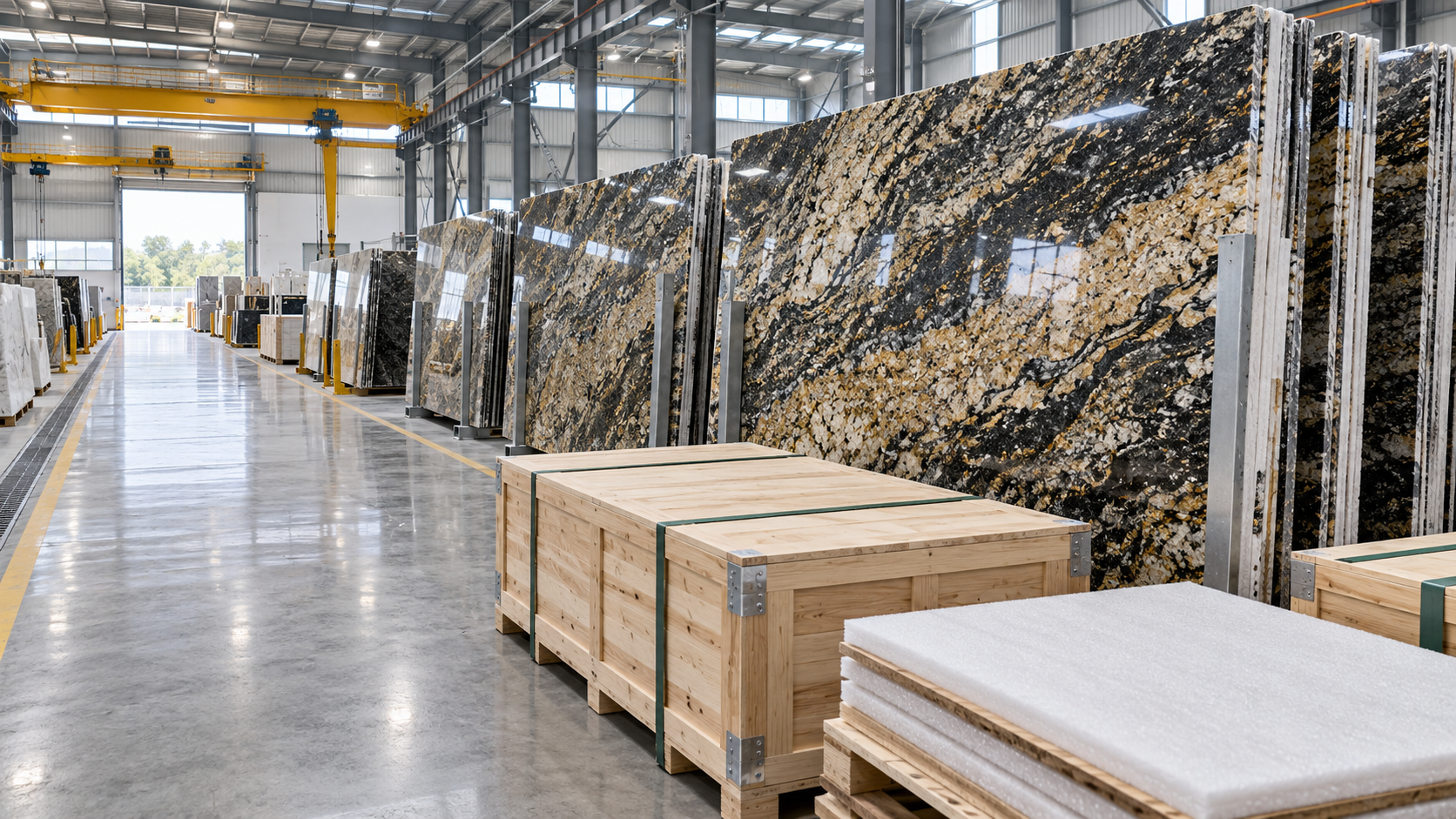
Quality consistency is the central sourcing risk in Brazilian granite, not because Brazil lacks strong stone resources or capable processors, but because natural variation, quarry allocation, finishing control, and shipment sequencing can all create visible differences between what was approved and what arrives on site. A low unit price does not offset the cost of mixed shade lots, mismatched veins, inconsistent polish, or replacement material that cannot be matched months later.
An exporter should therefore be assessed as a control system rather than as a catalog. The relevant question is not whether the supplier can provide an attractive sample, but whether it can repeatedly supply the same commercial selection, dimensions, finish, packaging standard, and documentation across the quantity and delivery schedule required.
Start by defining what “consistent” means for the project
Granite is a trade name used broadly in the stone market. Many materials sold as granite are technically different igneous or metamorphic stones, including gneiss, quartzite, and gabbroic materials. Their commercial names may remain stable even when visual character and physical behavior differ substantially. A material name alone is not an adequate purchase specification.
Consistency should be defined against the application. A dark, uniform countertop material may require tight control of background color, resin visibility, polish, slab thickness, and edge integrity. A façade package may require control of tone range across elevations, panel calibration, surface finish, and anchor-zone soundness. For paving, the priority may shift toward thickness, cut geometry, surface texture, slip-related requirements, and frost or weathering suitability where applicable.
Before comparing any Brazilian granite exporter, convert the design expectation into measurable acceptance criteria. These should include:
- Approved commercial material name and quarry or production source where relevant;
- Accepted color range, grain movement, veining direction, mineral concentrations, and allowable natural features;
- Slab, tile, cut-to-size, or block dimensions and tolerances;
- Nominal thickness and permitted variation;
- Surface finish, including polish level or texture definition where needed;
- Permitted repair methods, such as resin fill, mesh backing, or structural reinforcement;
- Rules for lot separation, packaging, labeling, and shipment sequence;
- Inspection rights, sampling method, and remedy for non-conforming material.
Terms such as “premium,” “first choice,” or “export quality” are commercial descriptions, not shared technical standards. An exporter may use them consistently within its own business, but they do not establish what a buyer will accept. A written visual standard does.
Ask whether the exporter controls the quarry relationship or merely trades the material
Brazilian stone supply can involve quarry owners, block traders, slab factories, fabricators, and exporters that coordinate material from several sources. None of these business models is automatically unsuitable. The risk lies in unclear responsibility for source control.
For a project that needs a continuous visual field, a supplier should be able to state whether blocks come from a single quarry face, several areas of one quarry, or multiple quarries selling under the same commercial name. Even within one quarry, a change in extraction bench or geological zone can alter background shade, crystal size, movement, or the frequency of natural fissures.
Useful questions are operational rather than promotional:
- Who owns or manages the quarry allocation for the order?
- Can the material be reserved from identified blocks before production begins?
- How are blocks numbered and linked to slab production?
- Can the exporter show photos of the blocks before cutting?
- Will the order be produced from one block lot, or will several lots be blended?
- What happens if the selected block yield is lower than expected?
An exporter with limited quarry control can still be workable for smaller, non-continuous orders if it accurately discloses its role and does not promise unrealistic uniformity. For larger repeat programs, however, traceability from block to slab is a meaningful advantage. It allows the buyer to identify whether variation comes from geology, sawing sequence, finishing, or packing errors.
Do not approve from a hand sample alone
A hand sample establishes only a general material family. It cannot show the range of a full slab, the direction and scale of movement, resin use, fissures, or the effect of polishing on darker minerals. This limitation is especially important for white, grey, blue, green, and strongly patterned Brazilian stones, where small samples can conceal substantial lot variation.
The approval set should match the product form being purchased. For slabs, request high-resolution images or video of complete slabs from the proposed production batch, with a reference for scale and neutral lighting where possible. For cut-to-size work, review dry layouts or cutting plans that show how pieces will be distributed. For book-matched designs, confirm that sequential slabs will be numbered and preserved through fabrication.
The practical approval document should identify more than a single “master sample.” It should include an accepted range: images of acceptable light and dark limits, allowed movement, excluded defects, finish expectation, and any directional requirements. A range-based approval is more durable than a single sample because it makes clear which natural variations are acceptable and which are not.
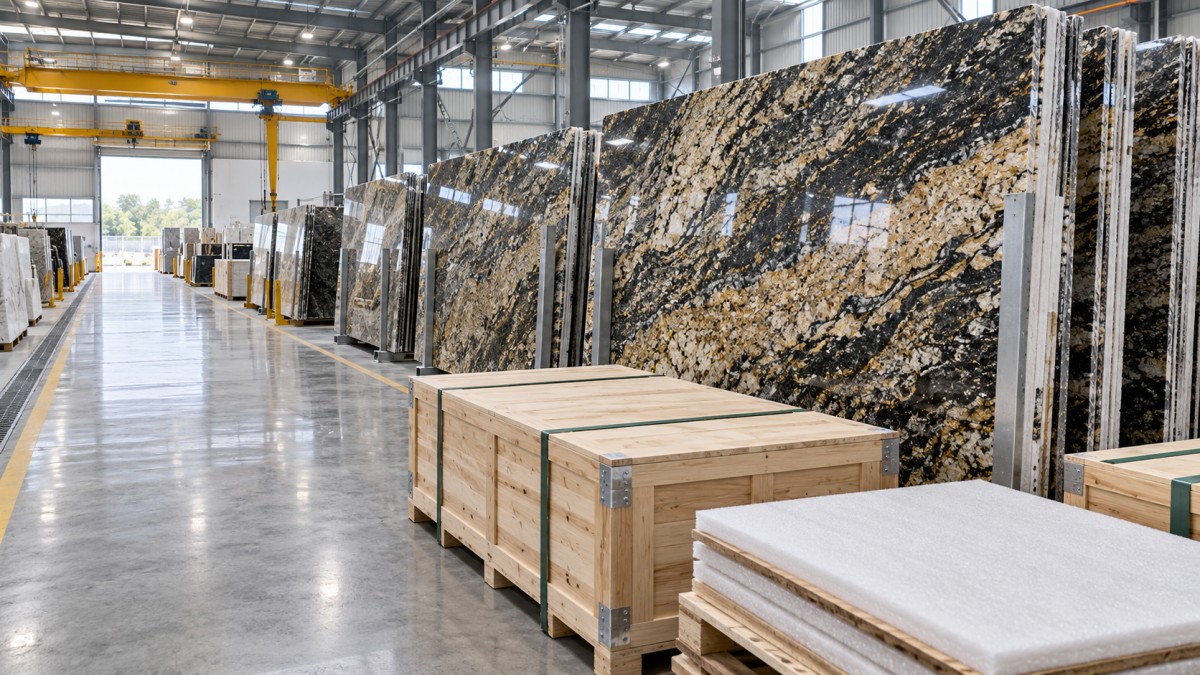
Photographs still need careful interpretation. Camera exposure can flatten contrast; wet slabs appear darker than dry slabs; warehouse lighting can alter apparent warmth; and images of selected slabs may not represent the full lot. Request both close views and full-slab views, and ask that slabs be photographed in consecutive sequence rather than as isolated “best pieces.” This makes abrupt changes in shade or pattern easier to detect.
Evaluate batch control at the slab and finished-piece level
Quality consistency is lost most often when material is mixed after selection. A factory may have suitable slabs, yet pack tiles or panels from different block lots into the same crate. The result may be technically compliant dimensions but visibly uneven installation.
For visible installations, require a batch plan before final packing. The exporter should be able to explain how slabs are sorted by shade, how pieces are allocated by area, and how crates are marked. A clear labeling system links each crate to the material name, lot, finish, dimensions, quantity, and packing list. For complex projects, labels should also correspond to drawing references or installation zones.
Sequential sawing matters where vein continuity is important. Slabs cut from the same block may show a progressive pattern that can be arranged in a flowing layout or book-match. Once slabs are mixed, this design value is difficult to recover. If continuity is required, the purchase order should state that slabs must remain in cutting sequence and that substitution requires written approval.
Reserve material is another overlooked issue. A project may need extra pieces for breakage, later modifications, or replacement. These should be produced from the same approved lot whenever possible, packed separately, and identified as reserve stock. A spare crate from another extraction area is not a true visual contingency.
Inspect processing quality separately from stone appearance
A visually attractive slab can still create costly fabrication or installation problems. Exporter assessment should cover the factory’s ability to process the selected stone, not simply source it.
Thickness variation is one of the most consequential checks. Calibrated material should be measured at multiple positions rather than at one convenient edge. Variation affects adhesive bed depth, joint alignment, fabrication settings, and installed flatness. The allowable tolerance must be stated in the order because it depends on whether the product is rough slabs, calibrated tiles, façade panels, or precision cut-to-size components.
Surface finish requires equal attention. A polished surface should be assessed for uniform reflectivity, burn marks, dull areas, scratch patterns, resin haze, and edge chipping. For honed, flamed, leathered, bush-hammered, or brushed finishes, the exporter should provide an approved finish sample and identify the process used. Texture can vary between production lines, abrasive conditions, and stone lots. A finish name alone does not ensure the same visual result.
Natural fissures, hairline cracks, resin treatment, and mesh backing should not be treated as automatically unacceptable or automatically acceptable. Some stones require reinforcement to be safely processed and transported. The critical issue is disclosure and suitability for the intended fabrication. Ask whether resin is used for cosmetic filling, structural stabilization, or both; whether backing mesh is present; and whether these treatments affect the intended finish, edge profile, outdoor exposure, or food-contact expectations.
Edges and corners deserve inspection even when the main purchase is slab material. Damage at these locations often indicates weak handling, poor crate design, insufficient separation, or unsuitable loading practices. A factory that protects finished surfaces but repeatedly ships chipped corners has not achieved dependable export quality.
Use documents that connect inspection to contractual remedies
Certificates and test reports have value when they relate to the exact material and intended use. They do not replace visual batch approval or dimensional inspection. Physical properties can differ between stone types and, in some cases, between quarry areas, so an old report under a commercial trade name should not be assumed to represent every lot.
Where project specifications call for testing, request reports from a competent laboratory that identify the stone clearly and state the test method used. Depending on the application, relevant properties may include water absorption, density, flexural strength, compressive strength, abrasion resistance, and freeze-thaw behavior. The required method and acceptance value should come from the project specification, applicable regulations, or the responsible design authority—not from a generic supplier claim.
Commercial documents should make quality obligations enforceable. The purchase order and proforma invoice should reference the approved sample range, finish, dimensions, tolerances, allowed treatments, quantity by lot, packing requirements, and inspection procedure. If third-party inspection is required, state the timing: before crating, after packing, or before container loading. Inspection after the container has sailed has limited preventive value.
Non-conformance language should address practical outcomes. It should specify how shortages, breakage, dimensional deviation, mixed lots, or material outside the approved visual range will be documented and resolved. Vague commitments to “replace defective goods” are inadequate if replacement material will no longer match the original order or if a project schedule cannot absorb another production cycle.
Assess communication through the difficult questions
The strongest indicator of a reliable granite exporter in Brazil is not a flawless sales presentation. It is the quality of the response when the buyer asks about limitations. A dependable supplier can explain normal variation, flag material characteristics before shipment, distinguish a repair from a defect, and identify where a requested tolerance is unrealistic for a given product form.
Warning signs include reluctance to share full-slab images, repeated use of generic stock photos, refusal to identify the production lot, unclear answers about quarry source, or an insistence that natural variation makes any visual claim impossible. Natural stone varies, but managed variation is different from uncontrolled substitution.
Communication speed also matters less than communication precision. Emails should consistently identify the same material name, dimensions, finish, quantity, lot, and shipment reference. Small inconsistencies in documents often become larger inconsistencies in production. Before issuing a major order, compare the quotation, approval images, packing proposal, and proforma invoice line by line. If they do not describe the same goods, the supply chain is already carrying avoidable risk.
Validate the exporter with a controlled first order
When the supplier relationship is new, a limited but representative order can reveal more than an extended exchange of samples. The order should include the actual finish, dimensions, packaging format, labeling requirements, and inspection process expected for later business. A small order made from easily available stock does not test the exporter’s ability to control project production.
Review the outcome across the full transaction: accuracy of production photos, agreement between inspected and delivered goods, crate condition, slab or panel labeling, document consistency, breakage rate on arrival, and response to any discrepancy. Retain approved samples, photographs, inspection records, crate labels, and delivery notes. These records become the reference point for repeat orders and replacement claims.
Brazil offers access to a wide range of distinctive natural stones, but distinctiveness often increases the need for disciplined selection. The appropriate exporter is the one that can turn a variable geological material into a traceable, documented, and repeatable supply program. That capability is demonstrated through lot control, transparent disclosure, production evidence, and contract terms that preserve the approved standard from quarry block to delivered crate.
Technical Specifications
- Which wire mesh for fencing suits high-security boundary projects?Author :Metals & Fabrication Editorial Team
- What to verify before choosing a screw manufacturer in IndiaAuthor :Metals & Fabrication Editorial Team
- How to assess quality consistency from a granite exporter in BrazilAuthor :Construction Materials Editorial Team
Expert Insights

Chief Security Architect
Dr. Thorne specializes in the intersection of structural engineering and digital resilience. He has advised three G7 governments on industrial infrastructure security.
Core Sector // 01
Security & Safety
- How to assess quality consistency from a granite exporter in BrazilAuthor :Construction Materials Editorial Team

- Which compliance standards apply to imported granite for building projects?Author :Construction Materials Editorial Team

- How to choose ceramic tiles for bathroom floors with better slip resistanceAuthor :Construction Materials Editorial Team

- When are porcelain wall tiles the right choice for shower walls?Author :Construction Materials Editorial Team

- How to choose porcelain floor tiles for high-traffic areasAuthor :Construction Materials Editorial Team

- How to choose a cutting machine for stone based on slab thicknessAuthor :Construction Materials Editorial Team

- When are porcelain tiles for outdoor spaces at risk of cracking?Author :Construction Materials Editorial Team

- Marble Stone Price: What Changes Cost Across Grade, Finish, and Origin?Author :Construction Materials Editorial Team