Wire Mesh Selection Guide for Filtration, Fencing, and Safety Use
Author
Date Published
Reading Time
Wire Mesh Selection Guide for Filtration, Fencing, and Safety Use
The most common mistake in choosing wire mesh is treating it as a generic material. In practice, the same term can refer to woven mesh for filtration, welded panels for perimeter control, expanded metal for guarding, or heavy-gauge barriers for impact protection. If the decision starts and ends with opening size, selection errors are almost guaranteed. Mesh works only when its geometry, wire diameter, material, and manufacturing method match the actual load, environment, and safety expectation.
That matters because different jobs ask completely different things from the product. A filter screen may need precise aperture control and chemical resistance. A fence may need rigidity, corrosion protection, and predictable installation spacing. A machine guard is judged less by appearance than by whether it prevents hand access to a hazard while still allowing visibility and airflow. These are not small variations of one product category. They are different use cases that happen to share a similar visual form.
Start with Function, Not Material
Buyers often begin by asking for stainless steel, galvanized steel, or PVC-coated mesh. Material is important, but it is rarely the first decision. The better starting point is failure mode. What would count as failure in the actual application: clogging, deformation, corrosion, intrusion, abrasion, or unsafe reach-through? Once that is clear, material choice becomes easier to justify.
For filtration, mesh accuracy and consistency usually come before structural strength. In woven wire mesh, the relationship between mesh count, wire diameter, and opening size determines how the screen performs. A finer mesh does not automatically mean better filtration if it blinds quickly or creates too much pressure drop. In liquid or slurry systems, users also need to think about cleanability, not just capture size.
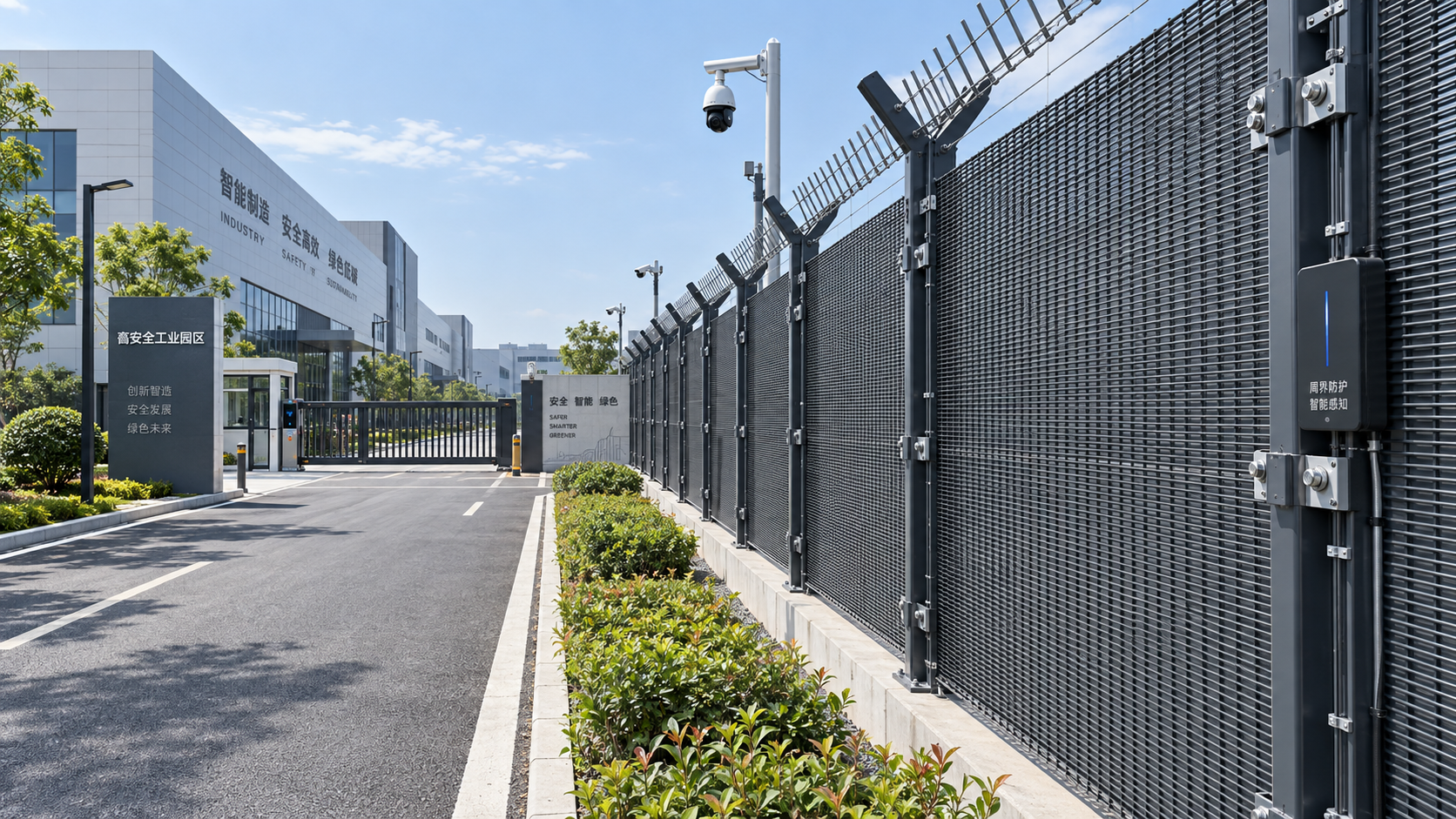
For fencing, the conversation shifts. Aperture size still matters, but resistance to bending, cut-through, and weather exposure is often more relevant. In outdoor installations, surface treatment can decide service life more than base metal alone. Hot-dip galvanized products and stainless options are often considered for corrosive settings, but the right choice depends on location, maintenance expectations, and cost tolerance over time.
The Parameters That Actually Change Performance
Several parameters are worth reading closely because they affect performance in ways that are easy to underestimate.
- Opening size: This controls passage, retention, reach-through, and visibility. In guarding, the opening cannot be considered separately from the distance to the hazard.
- Wire diameter or gauge: Thicker wire improves stiffness and durability, but it also reduces open area and can add weight.
- Open area: Especially important in filtration and ventilation. Two meshes with similar openings may behave differently if wire thickness changes the free flow area.
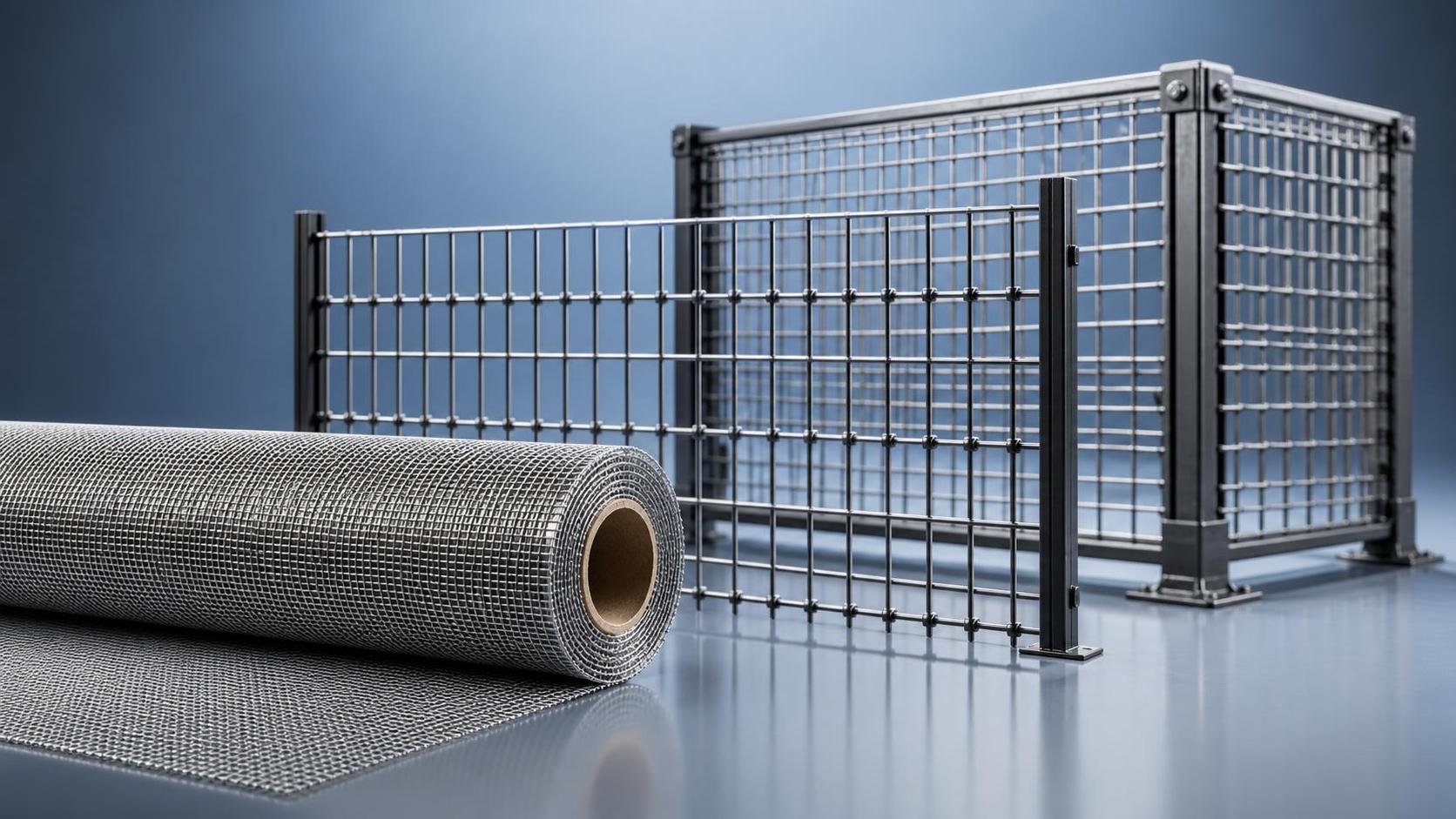
- Construction type: Woven, welded, crimped, or expanded products each behave differently under load and during fabrication.
- Finish and base alloy: These determine corrosion resistance, cleanability, and long-term appearance.
This is why a request such as “10 mm stainless wire mesh” is incomplete. It may describe an opening, a wire diameter, or neither, depending on how the request is phrased. In sourcing and specification work, ambiguity around dimensions causes unnecessary back-and-forth and, in some cases, wrong deliveries.
Filtration, Fencing, and Safety Are Not Interchangeable
A useful way to compare options is to look at what the mesh must allow and what it must prevent.
Safety use deserves extra caution. Operators sometimes assume stronger mesh is automatically safer. It is not that simple. A thick, durable panel with an oversized opening may still be unsuitable if fingers, hands, or tools can reach dangerous components. In machine guarding, selection often needs to be checked against the applicable safety framework for the region and the machine type. The mesh itself is only one part of the protective system.
Common Misunderstandings in Real Purchasing Decisions
One recurring misunderstanding is to compare products only by price per square meter. That tends to ignore service life, fabrication waste, replacement downtime, and installation labor. A cheaper mesh with inconsistent flatness or weak welds may cost more once fitting, tensioning, or early replacement is considered.
Another is assuming stainless steel solves every corrosion problem. Stainless grades perform differently, and the surrounding environment matters. Moisture, chlorides, cleaning chemicals, and temperature swings can all affect durability. Where corrosion risk is serious, the discussion should include the specific environment rather than relying on the word “stainless” as a guarantee.
There is also a tendency to over-specify fine mesh in filtration because finer sounds safer. In reality, over-fine media can reduce throughput, increase maintenance, and create process instability. The better question is what particle size or contaminant needs to be controlled, and whether the system can tolerate the pressure drop and cleaning frequency that come with tighter screening.
A Better Way to Make the Final Choice
A practical selection process usually comes down to five checks: the operating environment, the critical dimension, the mechanical demand, the maintenance expectation, and any safety or regulatory constraint. If one of those remains vague, the specification is still incomplete.
Good wire mesh selection is less about finding the “best” mesh than about avoiding mismatch. A mesh that performs well in a filter housing may fail quickly on a fence line; a panel suitable for site security may be unacceptable around rotating equipment. When users define what the mesh must pass, block, resist, and survive, the comparison becomes clearer and supplier discussions become far more productive.
Technical Specifications
- How to test melt flow consistency in batches of recycled plasticsAuthor :Polymers & Rubber Editorial Team
- When does a cast resin transformer need high-altitude derating?Author :Electrical Components Editorial Team
- How to verify Global Industrial Insights sourcing informationAuthor :Industrial Machinery Editorial Team
Expert Insights

Chief Security Architect
Dr. Thorne specializes in the intersection of structural engineering and digital resilience. He has advised three G7 governments on industrial infrastructure security.