When should industrial electric motors use variable-speed drives?
Author
Date Published
Reading Time
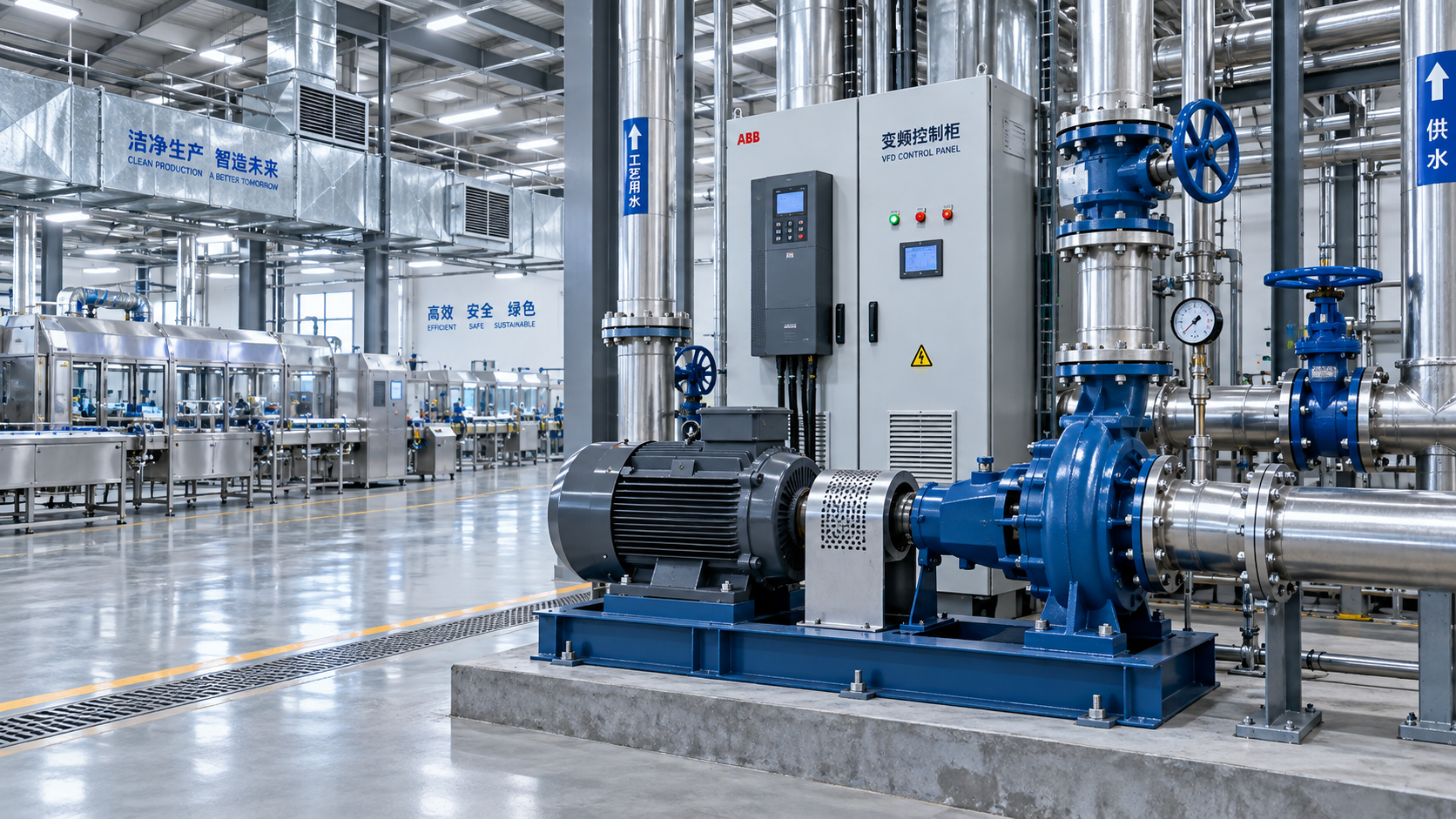
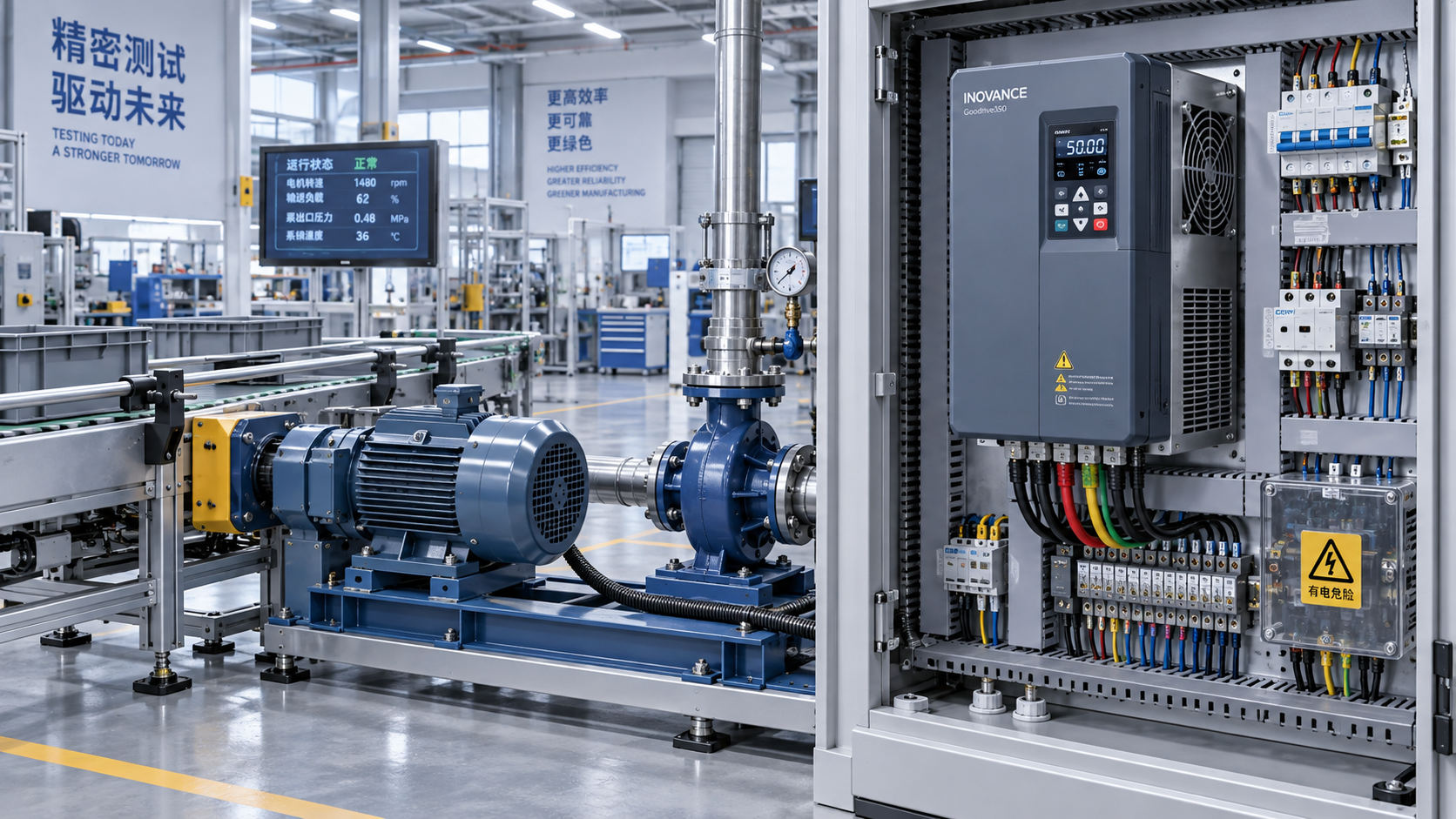
A process line that runs at one fixed output for months may not gain much from a variable-speed drive. A ventilation system that is repeatedly throttled, a pump that is controlled with a bypass valve, or a conveyor that must match changing production rates is different. In those situations, a variable-speed drive can reduce wasted energy, improve control, and remove some mechanical stress from industrial electric motors and the equipment they drive.
The practical answer is that industrial electric motors should use variable-speed drives when motor speed is a meaningful control variable rather than simply an on/off condition. The strongest case exists where demand changes during operation, where mechanical throttling or cycling is currently used to regulate output, or where controlled acceleration and deceleration improve the process. The decision should not be based on motor size alone. Load behavior, operating hours, required torque, motor condition, cable arrangement, and power quality all affect whether a drive is technically and economically justified.
Start with the load, not the motor nameplate
A motor does not create value from speed control by itself. The connected load determines whether reducing speed saves energy, improves process stability, or creates an operating problem. Technical evaluations should begin by identifying what the motor actually drives and how that equipment responds when speed changes.
Fan and centrifugal pump duties are usually the clearest candidates. Their flow changes approximately in proportion to speed, while power demand can fall much faster as speed is reduced. When an air-handling fan is being controlled with dampers or a pump is being controlled by partially closed valves, the motor may still run near full speed while the system deliberately adds resistance. A drive allows the system to produce less flow by turning more slowly instead. This is often preferable when reduced flow is needed for substantial portions of the operating schedule.
Other loads do not follow this pattern. Conveyors, mixers, extruders, crushers, positive-displacement pumps, hoists, and many machine tools often require roughly constant torque across their operating range. A drive may still be valuable because the process needs adjustable speed, synchronized sections, gentle starts, or controlled positioning. However, energy savings will depend on the actual load profile rather than the familiar fan-and-pump relationship.
Situations where a variable-speed drive usually earns its place
Demand is genuinely variable
The most persuasive application is one in which output varies by shift, product type, ambient conditions, occupancy, or process stage. Consider an extraction fan that runs at full speed during peak production but needs only partial airflow during cleaning or lower-volume operation. Running it at a reduced controlled speed may use less energy and reduce noise, while a damper-controlled system continues to incur pressure losses across the restriction.
The same reasoning applies to circulating pumps. A system that uses manual valve adjustments, pressure-reducing arrangements, or intermittent pump cycling may benefit from speed control if flow or pressure can be measured and used as a control signal. The drive should not simply be set to a lower fixed frequency without process review. The goal is to match speed to the required system duty while maintaining adequate flow, pressure, cooling, and equipment protection.
Mechanical starting is causing problems
Across-the-line starting can produce high inrush current and abrupt torque. In a lightly loaded fan, this may be acceptable. In a long conveyor, a large mixer, a pump with a filled pipeline, or a machine with belts, chains, gearboxes, and couplings, abrupt starting can create unwanted stress. A drive can ramp motor speed up in a controlled manner, reducing shock loading and allowing the acceleration profile to suit the machine.
This benefit is not identical to energy savings. A system may justify a drive mainly because it reduces belt slip, product disturbance, pressure surges, or nuisance trips. In pump applications, a controlled ramp can help limit water hammer, but ramp times must still be coordinated with pipeline characteristics and valve behavior. Extending a ramp excessively is not automatically safer; some loads require a minimum torque level to accelerate reliably.
The process needs repeatable speed settings
Some equipment works at a few known speed points rather than continuously changing demand. A mixer may need one speed for blending and another for finishing. A conveyor may need slower movement during inspection and normal movement during production. A drive provides repeatable speed commands without pulley changes, manual adjustments, or mechanical speed-control devices.
In these cases, the drive selection should focus on process control accuracy, feedback requirements, and the quality of the low-speed torque response. A simple scalar volts-per-hertz drive may be sufficient for a fan. A loaded conveyor, winding application, or speed-critical machine may need sensorless vector control, encoder feedback, or a drive capable of maintaining torque over a tighter speed range.
When a fixed-speed motor may be the better choice
Not every motor should receive a drive. A motor that operates near its intended load at one speed for most of its life, starts infrequently, and has no process-control requirement may be better served by a conventional starter. Adding a drive introduces electronics, commissioning work, enclosure requirements, possible harmonic effects, and maintenance responsibilities. These factors are reasonable when they solve a real operating issue, but they should not be treated as automatic upgrades.
A drive can also be a poor fit where the driven machine has a narrow approved speed range. Some pumps require minimum speed to protect seals, maintain lubrication, prevent recirculation, or satisfy a minimum-flow requirement. Certain compressors, gearboxes, blowers, and high-speed machines have manufacturer-defined operating limits. Reducing frequency without checking those limits can cause overheating, instability, inadequate lubrication, or mechanical damage.
There are applications where variable speed is possible but not useful. A pump that always operates at a stable, verified design point and has no throttling losses may see limited benefit. A short-duty motor that runs only briefly may not accumulate enough operating time for energy reduction to matter. Similarly, a motor that is severely oversized should not be assumed to become efficient simply because a drive is installed; the load, motor efficiency at partial load, and usable speed range still need review.
Motor compatibility is a technical gate, not a late-stage detail
Before specifying a drive, confirm that the existing motor is suitable for inverter operation. Modern motors are often designed with inverter use in mind, but site equipment may include older motors, repaired motors, special-purpose units, or motors with limited documentation. The concern is not merely whether the motor turns when connected to a drive. Repetitive voltage pulses, reflected-wave effects in long cable runs, bearing currents, and reduced cooling at low speed can affect service life.
Insulation capability deserves attention, especially where the motor is older, the drive output cable is long, or the supply voltage is high. Fast switching edges from the drive can create voltage stress at motor terminals. Depending on the installation, mitigation may involve an output reactor, a dv/dt filter, a sine-wave filter, or a different cable arrangement. The appropriate measure depends on drive characteristics, cable length, motor insulation condition, and the system voltage; it should not be selected by rule of thumb alone.
Cooling is another frequent oversight. A standard self-cooled motor relies on its shaft-mounted fan. At low speed, that fan moves less air while the process load may still require substantial torque. A conveyor or mixer that runs slowly under high load can therefore overheat even though the drive shows no immediate fault. Possible responses include limiting low-speed torque, limiting time at low speed, using a separately powered blower, or selecting a motor designed for inverter duty and the required constant-torque range.
Bearing protection may also be required on larger motors or installations where common-mode voltage can create shaft currents. The technical review should consider bearing insulation, shaft grounding arrangements, and whether the motor-drive combination has a known mitigation method. These details are especially important where unplanned downtime from bearing damage would be costly or difficult to diagnose.
Build the decision from operating evidence
A useful evaluation does not need to begin with a complex financial model. It begins with a clear record of how the equipment currently operates. Capture actual speed requirements, current draw, operating hours, flow or pressure conditions where relevant, start frequency, and the existing control method. Note whether operators use dampers, valves, bypass lines, mechanical speed changes, or repeated starts and stops to manage output.
- Define the duty cycle. Separate steady operation from periods of reduced demand, acceleration, standby, and peak loading. A drive has more potential where reduced-output periods are long enough to matter.
- Identify the load type. Determine whether torque decreases with speed, remains broadly constant, rises with speed, or has sharp breakaway and acceleration demands.
- Check the allowable operating envelope. Review minimum and maximum speed, lubrication limits, cooling requirements, cavitation risk, resonance zones, and process quality constraints.
- Review the motor and supply system. Record motor voltage, full-load current, service condition, insulation history where available, cable length, grounding arrangement, and supply capacity.
- Specify control behavior before hardware. Decide whether the drive will follow a local speed reference, pressure signal, flow signal, production command, or closed-loop feedback device.
- Plan protection and fallback operation. Consider overload settings, minimum-speed limits, fault response, bypass requirements, and what the process should do when a sensor or drive fault occurs.
Drive sizing is not the same as matching kilowatts
Motor power is a starting point, not the complete selection basis. The drive must provide sufficient continuous current for the motor and enough overload capacity for the load. A high-inertia fan may need a longer acceleration period or a drive with suitable overload capability. A conveyor starting under load may require significantly more starting torque than a lightly loaded centrifugal pump. Hoisting and braking applications may need a braking resistor, regenerative arrangement, or another method to manage energy returned during deceleration.
Derating conditions can change the selection. High ambient temperature, enclosure restrictions, altitude, switching frequency, contaminated air, and grouped drives in the same panel can affect thermal performance. Where the motor is deliberately oversized, selecting a drive solely from the motor nameplate can also lead to unnecessary cost; the actual required current and operating margins should be understood, while preserving adequate protection for the motor.
Input-side effects belong in the same review. Drives can introduce harmonic current and affect power quality, particularly where several units operate on a limited supply. Line reactors, DC chokes, harmonic mitigation equipment, transformer considerations, and supply short-circuit capability may be relevant depending on the installation. A technically sound project checks these issues before panel construction rather than after unexpected trips or overheating appear.
Control changes can create new failure modes
A variable-speed drive changes the control philosophy of the machine. That is often its main advantage, but poor control settings can replace one problem with another. A pressure-control loop that reacts too aggressively may hunt between speeds. A pump controller without a realistic minimum-speed limit may operate in an inefficient or damaging region. A conveyor that decelerates too quickly can cause product accumulation or mechanical slack. Settings should be commissioned against real operating behavior, including low-load and transition conditions.
Protective limits should be deliberate. Motor thermal protection, acceleration and deceleration times, current limits, stall prevention, skip frequencies, minimum process flow, and restart behavior all need to reflect the equipment. Skip-frequency settings can be useful where a machine has a known vibration or resonance range, but they should follow mechanical observation or established equipment guidance rather than be added arbitrarily.
Questions that often arise during selection
Can an existing standard motor run on a variable-speed drive?
Often it can, particularly within a moderate speed range, but suitability depends on insulation condition, motor age, cable length, load torque, and low-speed cooling. Review the motor documentation where available and assess the installation rather than assuming all standard motors have identical inverter capability.
Will a drive always reduce electricity use?
No. Savings are most likely when speed is reduced for meaningful periods on variable-torque loads such as centrifugal fans and pumps. A constant-torque machine running at nearly the same output may use a drive for control or soft starting with little energy reduction.
Is a soft starter enough for a pump or fan?
A soft starter can reduce starting current and mechanical shock, but it does not provide normal running speed control. It may be appropriate where only gentler starts are needed. A drive is more suitable when flow, pressure, airflow, or speed must be adjusted during operation.
Should the motor be oversized when using a drive?
Not automatically. The motor and drive should be sized for the actual torque, current, acceleration, cooling, and overload requirements. Oversizing without understanding the load can increase cost and may not resolve issues such as poor low-speed cooling or inadequate process control.
Technical Specifications
- How to verify a PPR pipes supplier before placing a bulk orderAuthor :Polymers & Rubber Editorial Team
- When should industrial electric motors use variable-speed drives?Author :Electrical Components Editorial Team
- Which roof tiles for a villa suit high-wind locationsAuthor :Construction Materials Editorial Team
Expert Insights

Chief Security Architect
Dr. Thorne specializes in the intersection of structural engineering and digital resilience. He has advised three G7 governments on industrial infrastructure security.
Core Sector // 01
Security & Safety
- When should industrial electric motors use variable-speed drives?Author :Electrical Components Editorial Team

- What to verify before choosing a motor drives manufacturerAuthor :Electrical Components Editorial Team

- How motor efficiency ratings affect lifetime energy costsAuthor :Electrical Components Editorial Team

- AC Electric Motors: Which Efficiency Class Fits Your Load Profile?Author :Electrical Components Editorial Team

- Electric Motors: IE Ratings, Efficiency, and Energy CostAuthor :Electrical Components Editorial Team