Electric Motors: IE Ratings, Efficiency, and Energy Cost
Author
Date Published
Reading Time
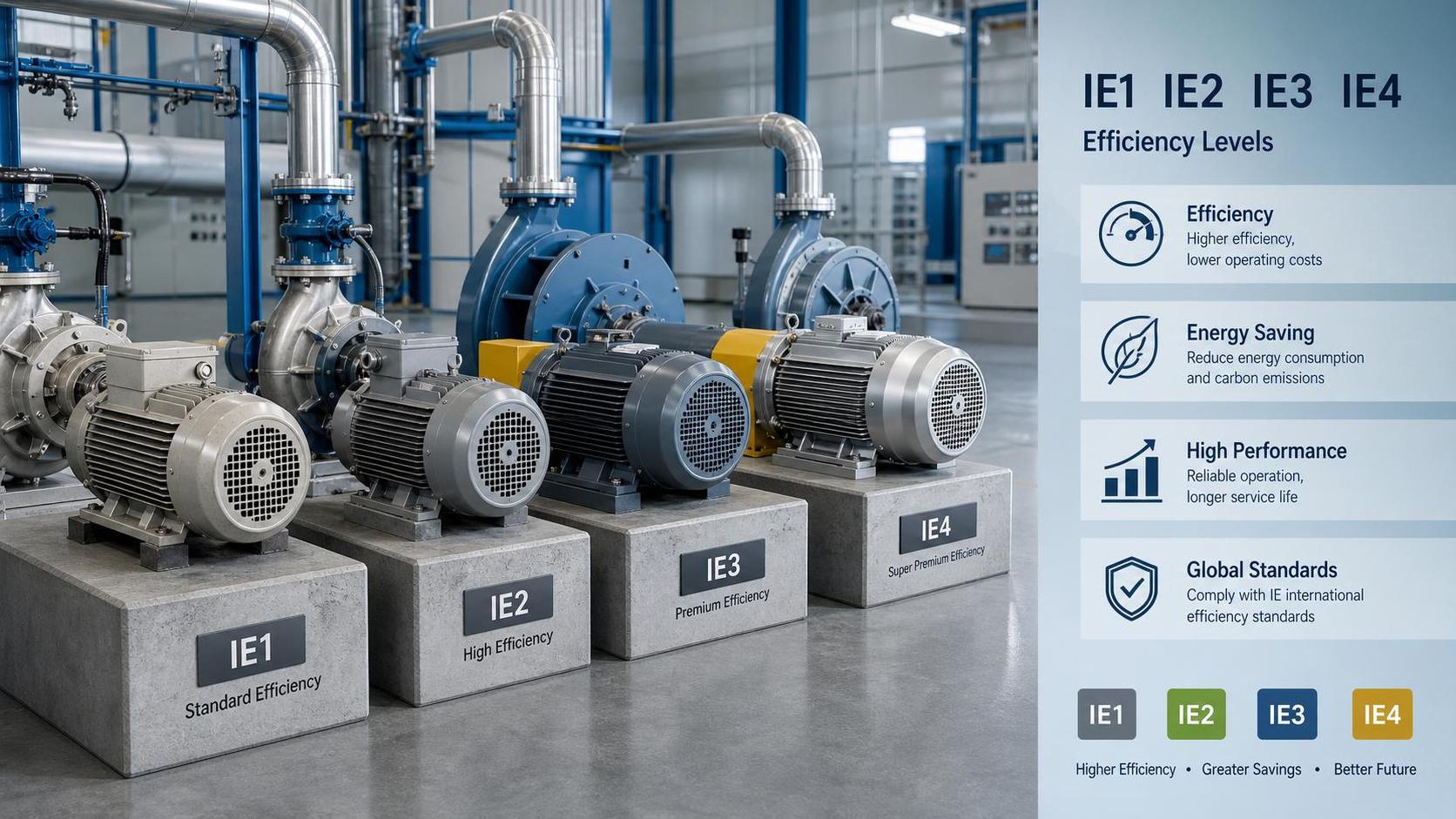
Why do IE ratings matter so much when buying electric motors?
Electric motors often run for years, so the purchase price is only part of the story. In many installations, electricity becomes the largest cost over the motor’s working life.
That is why IE ratings deserve attention early. They show how efficiently electric motors convert electrical input into mechanical output under standardized test conditions.
In simple terms, a higher IE class usually means lower wasted energy. Less waste can translate into lower operating expense, especially in continuous-duty systems.
For budget reviews, this changes the discussion. The choice is not only between two motor prices, but between two long-term cost profiles.
What do IE1, IE2, IE3, and IE4 actually tell you?
IE stands for International Efficiency. The classes are defined under IEC efficiency standards and help compare electric motors across markets, suppliers, and product lines.
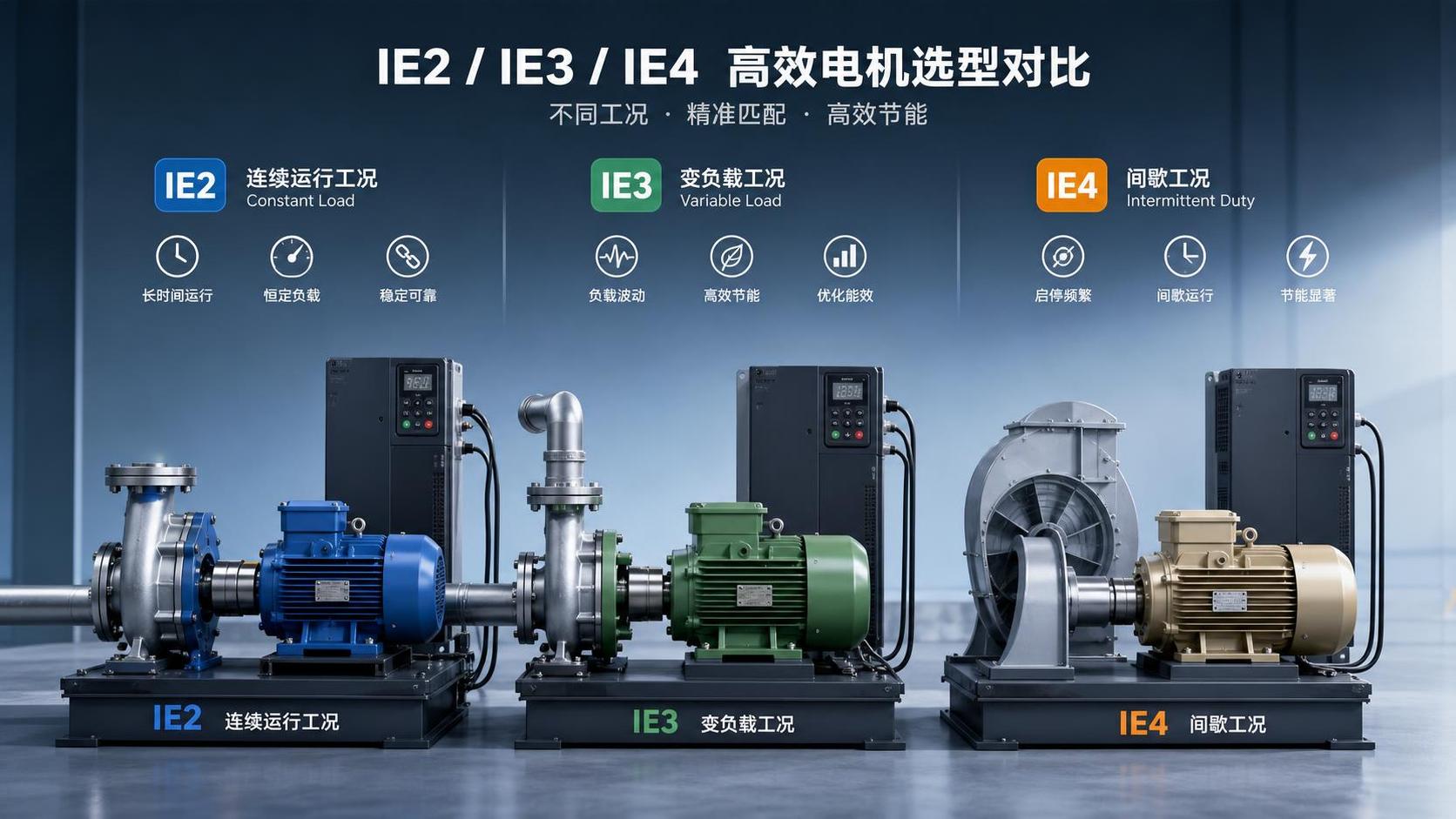
IE1 is the lower efficiency level. IE2 is better, IE3 is widely treated as a premium efficiency baseline, and IE4 pushes efficiency even further.
The exact percentage difference depends on motor size, speed, and design. Still, the commercial meaning is clear: moving up the scale usually reduces energy loss.
This is also where market context matters. Different regions tighten efficiency regulations at different speeds, so compliance and future replacement planning should be checked together.
A quick comparison table
When reviewing electric motors, the practical question is how each IE class affects total ownership cost rather than only headline efficiency.
Is a higher IE rating always worth the extra cost?
Not always. The right answer depends on running hours, local electricity prices, load profile, maintenance conditions, and expected replacement cycle.
A motor used occasionally may not recover the premium quickly. A motor driving pumps, fans, compressors, or conveyors every day usually tells a different story.
A useful rule is to compare annual energy cost with purchase price difference. In practice, many electric motors consume several times their purchase value in electricity.
That is why IE3 or IE4 motors often make sense in utilities, processing lines, HVAC systems, water handling, and building infrastructure.
What should be checked before approval?
- Annual operating hours and average load, not just rated power.
- Electricity tariff trends in the plant or target market.
- Local efficiency regulations and whether tighter standards are expected.
- Lead time, spare parts access, and whether supply chain risk changes by IE class.
Where do buyers misread electric motor efficiency?
One common mistake is focusing only on nameplate efficiency. Real savings depend on how electric motors are sized, loaded, installed, and controlled.
Oversized motors can run below their optimal zone. That reduces the expected benefit, even when the IE rating looks attractive on paper.
Another issue is ignoring system-level design. A high-efficiency motor paired with poor transmission, bad alignment, or unstable voltage may underperform financially.
Certification also matters. For cross-border sourcing, efficiency claims should be matched with test standards, product documentation, and regional compliance requirements.
How can IE ratings support a better total cost decision?
The more practical approach is to treat electric motors as lifecycle assets. Compare capex, annual power use, maintenance exposure, and expected service years in one view.
A simple internal review sheet can make decisions easier, especially when several suppliers offer similar frames, voltages, and output ratings.
This approach also fits broader market monitoring. Trade policy, energy prices, logistics, and standards updates can all shift the best timing for motor replacement.
What is the sensible next step before comparing quotations?
Start with three numbers: annual running hours, electricity cost, and expected service life. Those figures quickly show whether a low-price motor is actually the expensive choice.
Then compare electric motors by IE class, compliance status, lead time, and total delivered cost. A short payback often appears where usage is stable and energy prices are high.
If the operating profile is unclear, request duty data before approval. Better input produces better ROI calculations and avoids buying efficiency that the application cannot capture.
In the end, IE ratings are not just technical labels. They are a practical cost signal, and they deserve a place in every serious electric motors sourcing decision.
Technical Specifications
- How to test melt flow consistency in batches of recycled plasticsAuthor :Polymers & Rubber Editorial Team
- When does a cast resin transformer need high-altitude derating?Author :Electrical Components Editorial Team
- How to verify Global Industrial Insights sourcing informationAuthor :Industrial Machinery Editorial Team
Expert Insights

Chief Security Architect
Dr. Thorne specializes in the intersection of structural engineering and digital resilience. He has advised three G7 governments on industrial infrastructure security.
Core Sector // 01
Security & Safety
- When should industrial electric motors use variable-speed drives?Author :Electrical Components Editorial Team

- What to verify before choosing a motor drives manufacturerAuthor :Electrical Components Editorial Team

- How motor efficiency ratings affect lifetime energy costsAuthor :Electrical Components Editorial Team

- AC Electric Motors: Which Efficiency Class Fits Your Load Profile?Author :Electrical Components Editorial Team

- Electric Motors: IE Ratings, Efficiency, and Energy CostAuthor :Electrical Components Editorial Team