What drives the price of LED panel lights for office projects?
Author
Date Published
Reading Time
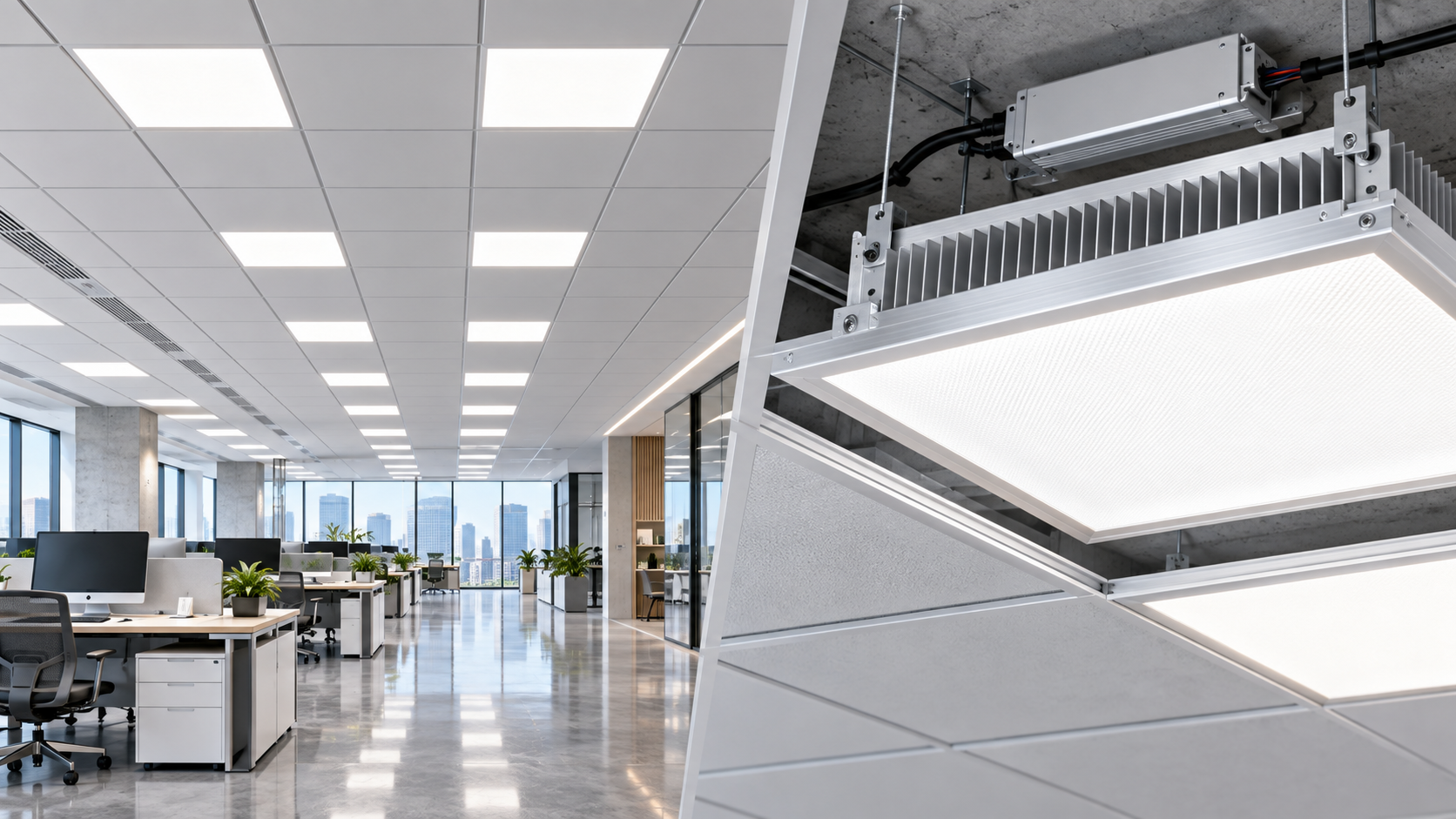
The quoted cost of an office panel fixture can look straightforward until two visually similar models produce very different totals. A low initial figure may cover only a basic luminaire, while a higher quotation may include a better driver, tighter optical control, documented compliance, compatible dimming, reinforced packaging, or a configuration that reduces installation work. The useful comparison is therefore the installed and operating cost of a defined lighting package, not the unit figure in isolation.
For a standard suspended-grid office ceiling, the largest price movements usually come from the LED package, housing construction, driver specification, control interface, required documentation, and the commercial conditions surrounding the order. Small specification changes in any of these areas can multiply across a large floor plate. A quotation is meaningful only when its assumptions about dimensions, luminous output, colour quality, controls, accessories, warranty terms, delivery point, and taxes are visible.
Light output is a cost variable, not a label
Two panels with the same nominal wattage do not necessarily provide the same useful light. Efficacy, optical losses, diffuser transmission, LED binning, driver efficiency, and thermal conditions all influence delivered lumens. A fixture that reaches a target wattage by reducing output is cheaper to build, but it may require a denser layout to meet the lighting design. Conversely, a panel with higher output may allow wider spacing or fewer fittings, subject to glare control and illumination uniformity.
Quoted lumen figures also need context. A value measured at the LED board is not equivalent to fixture output after the light passes through the diffuser and frame. Request the declared output for the complete luminaire, at its stated power and colour temperature. If an offer lists only chip lumens, it cannot be compared cleanly with a finished-fixture offer.
Office workspaces commonly need a balance between sufficient horizontal illumination and visual comfort. Increasing output without considering the optical system can create glare at desks or on monitor screens. A lower-cost panel with a bright, uneven diffuser may appear acceptable during a short sample review yet perform poorly in the installed ceiling. Where a glare rating is specified, confirm that the quoted variant, dimensions, diffuser, output level, and mounting arrangement are the same as those covered by the supporting photometric information.
Housing, diffuser, and heat management affect both price and service life
The metal frame is often treated as a cosmetic component, although it influences rigidity, heat dissipation, ceiling fit, and handling damage. A thinner housing can lower material and freight cost, but it may flex during installation or sit unevenly in a grid. Edge alignment becomes more noticeable where long ceiling runs create repeated lines of panels. Recessed installations may tolerate one construction, while surface-mounted or suspended installations expose the housing more clearly and often need stronger fixing points.
Diffuser selection carries similar trade-offs. Materials and surface treatments determine light transmission, dot visibility, colour appearance, yellowing resistance, and glare control. A highly transmissive diffuser can improve lumen output but may reveal the individual LED pattern if the optical chamber is shallow. A deeper optical cavity, denser diffuser, or better-designed light guide usually adds material or processing cost. The appropriate choice depends on ceiling height, viewing angles, task locations, and the visual standard expected in occupied areas.
Heat is a long-term pricing issue. LED boards and drivers degrade faster when enclosed without adequate thermal paths. A panel need not feel hot on its front surface to have elevated internal temperatures. Frame profile, board contact, thermal interface materials, driver position, ambient temperature, and ventilation above the ceiling all matter. Where panels are used in warm plenum spaces or operated for extended hours, a cheaper construction can shift cost from procurement to premature replacement and access work.
The driver often explains a large part of the quotation gap
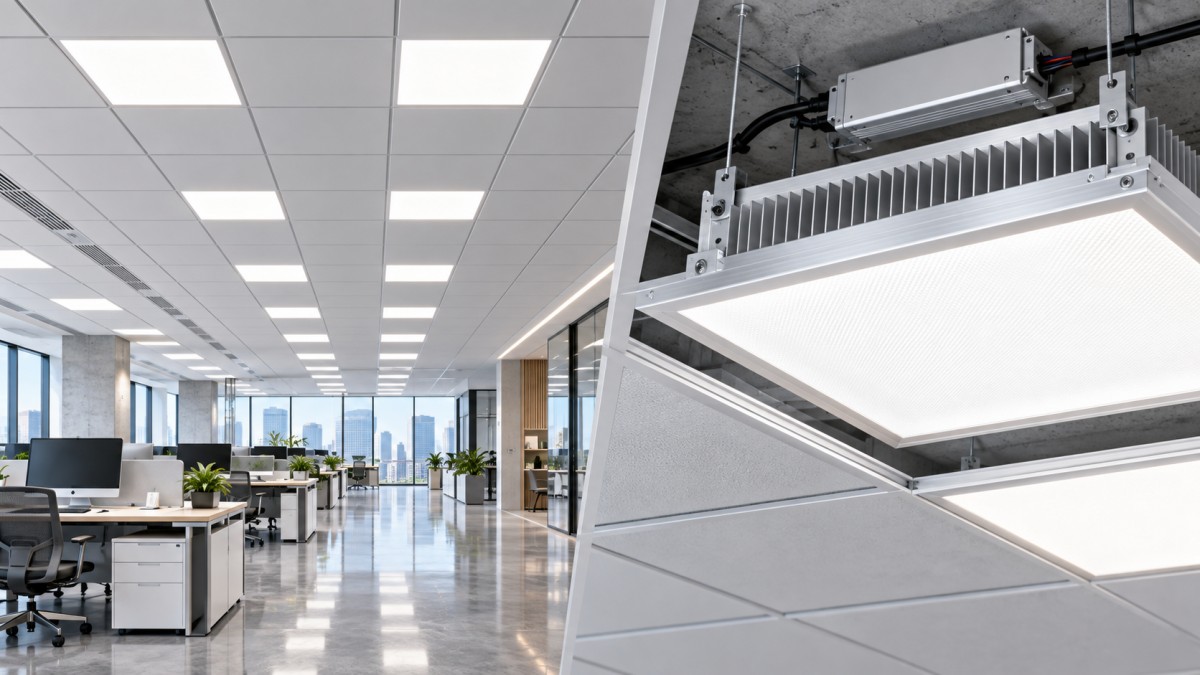
Drivers regulate the electrical supply to the LEDs, and their quality affects flicker, dimming behaviour, power stability, lifetime, and compatibility with building controls. A fixed-output driver for simple switched operation is less complex than one that supports a specified control protocol, emergency operation, tunable output, or sensor integration. It should not be assumed that every panel described as dimmable will work properly with the control equipment planned for the building.
Control compatibility must be written into the specification. The required interface, dimming range, expected response at low levels, commissioning arrangement, and any external modules should be identified before prices are compared. A driver may accept a control signal yet still show unstable dimming, visible flicker at certain settings, or uneven response among fixtures. These issues are especially disruptive after ceilings have been closed and workstations are occupied.
Flicker performance deserves separate review where computer-based work, cameras, video meetings, or high-speed imaging are present. A claim such as “flicker-free” has limited purchasing value without a defined test basis and operating condition. Driver behaviour can change with input supply quality, dimming level, temperature, and load. Treat broad marketing wording as incomplete technical information rather than proof of equivalent performance.
Dimensions and mounting method change the real project cost
A nominal panel size does not guarantee that the fixture will fit the selected ceiling system. Grid aperture, flange width, ceiling module tolerance, driver location, cable exit, and access above the ceiling should be checked together. A panel can fit the opening while leaving inadequate space for the driver, connector, or emergency component. Resolving that conflict late may require field modifications, remote driver boxes, additional cable work, or a change to another mounting method.
Recessed, surface-mounted, and suspended versions should be treated as distinct assemblies even when the illuminated face is similar. Surface frames, suspension kits, safety wires, remote drivers, and connector leads are frequently omitted from a base fixture price. Their cost is not limited to hardware: access, alignment, ceiling reinforcement, and finishing time can change as well. A price comparison that includes only recessed-grid panels against a surface-mounted requirement is not a cost comparison at all.
Emergency lighting introduces another boundary. An integral emergency module, a central emergency supply arrangement, and a separately located emergency fitting have different hardware, wiring, testing, and maintenance implications. The scope must state whether emergency conversion is included, where the test function is located, and what installation accessories are required. Leaving this unresolved until site work begins often causes a mix of incompatible fixtures.
Specifications that look alike may cover different performance
Colour consistency is easily overlooked when deliveries are split. Panels ordered at different times can have slightly different colour appearance even when the stated colour temperature matches. In open-plan offices, adjacent luminaires make those variations more visible. Keeping a defined approved sample, identifying the exact configuration, and controlling substitutions can avoid a ceiling that appears patchy after expansion or repair.
Required testing and compliance documentation can also alter the price. The relevant requirement depends on the country of installation, electrical system, building use, and contract conditions. Documentation should correspond to the offered configuration rather than a generic product family. A report for a fixed-output version does not automatically establish the same status for a dimmable or emergency variant. This distinction matters when product submittals are reviewed, shipments are cleared, or an installation is handed over.
Order structure can outweigh a small unit-price difference
Factory pricing responds to repetition. A single dimension, finish, LED specification, driver type, and packaging format generally costs less to produce than a schedule containing many lightly different variants. Custom labels, special cable lengths, non-standard colours, individual emergency options, and mixed control types create separate material planning and assembly steps. Those variations may be justified, but their cost should be visible rather than hidden in a blended rate.
Quantity is only one part of the commercial picture. A larger order with uncertain release dates may be harder to plan than a smaller confirmed production run. Deposit terms, raw-material validity periods, sample approval timing, inspection requirements, and permitted production tolerance can influence the final offer. A price held for a short period is not directly comparable with one that assumes later shipment under different material conditions.
Packaging has practical value beyond transit appearance. Panel lights have broad, relatively thin faces that are vulnerable to corner damage, diffuser scratches, and frame distortion. Stronger cartons, internal protection, palletization, and moisture control add cost and cube. Yet damaged panels discovered after delivery create sorting, replacement, disposal, and programme delays. The packing method should match the transport mode, number of handling points, warehouse conditions, and whether units will be distributed to several floors or sites.
Freight, tax, and site handling belong in the same cost view
The LED panel light price at the factory gate is rarely the amount assigned to the installed works. Freight is affected by volume as well as weight, so a slim package is not always the lowest landed-cost option if it increases breakage risk. International shipments can also incur insurance, port charges, documentation fees, inland delivery, duties, and local taxes. The quotation should identify the delivery term and the point at which these responsibilities transfer.
Lead time should be examined alongside freight method. A late ocean shipment followed by urgent airfreight for a small replacement quantity can erase an earlier saving. The same problem occurs when drivers, frames, or suspension kits travel separately from the panels. Packaging lists should make it clear which accessories are included per unit, which are packed separately, and whether spare parts are available in the same shipment.
At site level, receiving and storage conditions affect the cost of an otherwise sound product. Panels stored flat under excessive load can deform; cartons exposed to moisture may weaken; mixed model codes can lead to incorrect installation. Clear carton identification, matching schedules, and a controlled sample sign-off reduce the chance that a late discovery turns into a ceiling rework exercise.
Comparing quotations without flattening meaningful differences
Put each offer against one common fixture schedule before selecting a low figure. The schedule should define the mounting arrangement, nominal dimensions, complete fixture lumen output, power, colour temperature, colour rendering, optical requirement, driver and control type, input voltage, emergency provision where applicable, accessory scope, documentation, packaging, delivery term, and warranty basis. Any deviation should be listed separately. A supplier that proposes an alternative can then be evaluated as an alternative rather than appearing artificially equivalent.
Sample review should mirror the intended installation. A panel held in a showroom or energized on a bench cannot reveal every issue that appears in a ceiling: grid fit, driver clearance, glare at desk height, interaction with ceiling finishes, dimming response, and visual consistency with neighbouring units. A representative mock-up can expose whether the specified panel genuinely suits the room and installation method before the whole order is released.
Finally, distinguish an inexpensive product from an incomplete scope. A competitive figure is valuable when it covers the same performance, support components, quality controls, delivery obligations, and replacement exposure as the alternatives. Once those items are aligned, the remaining price difference becomes a usable commercial signal rather than a source of later variation claims.
- Last One:No more articles
- Next Article:Does E1 laminate flooring meet low-emission needs for bedrooms?Sep 27, 2026
Technical Specifications
- What drives the price of LED panel lights for office projects?Author :Electrical Components Editorial Team
- Does E1 laminate flooring meet low-emission needs for bedrooms?Author :Construction Materials Editorial Team
- How to assess an injection molding manufacturer’s quality controlAuthor :Industrial Machinery Editorial Team
Expert Insights

Chief Security Architect
Dr. Thorne specializes in the intersection of structural engineering and digital resilience. He has advised three G7 governments on industrial infrastructure security.
Core Sector // 01
Security & Safety
- What drives the price of LED panel lights for office projects?Author :Electrical Components Editorial Team

- LED Lighting Layout Tips for Warehouses and Production AreasAuthor :Electrical Components Editorial Team

- How to Compare LED Lighting Efficiency Beyond WattageAuthor :Electrical Components Editorial Team