How to Compare LED Lighting Efficiency Beyond Wattage
Author
Date Published
Reading Time
Wattage is still one of the most visible numbers on a box, but it is a weak shortcut for judging LED lighting. It only shows electrical input, not how effectively that power becomes usable light over time.
For sourcing, specification, and replacement planning, a better comparison looks at output, power quality, thermal behavior, and maintenance of performance. That matters even more now, as buyers track energy costs, certification demands, and supply chain risk together.
Why wattage no longer tells the full story
Traditional lamps trained the market to connect higher wattage with higher brightness. LED lighting changed that relationship. Two fixtures with the same wattage can produce very different light levels, optical distribution, and service life.
In practical terms, wattage is only one part of the energy equation. A product drawing fewer watts may still underperform if its driver losses are high, its heat dissipation is poor, or its light quality creates application problems.
This is why current market comparisons increasingly rely on measurable performance data instead of simple replacement claims such as “50W equivalent” or “same brightness at lower power.”
The core metrics behind LED lighting efficiency
The first number to review is luminous efficacy, expressed as lumens per watt. It shows how much visible light a lamp or luminaire delivers for each watt consumed.
Even so, lumens per watt should not be read alone. A high efficacy figure can look impressive in a datasheet while masking weak driver performance, unstable color output, or limited durability in enclosed fittings.
Metrics worth checking together
- Initial lumens and maintained lumens after operating hours
- Power factor, especially in commercial and large-scale installations
- Total harmonic distortion where power quality matters
- Correlated color temperature and color rendering performance
- Driver efficiency and dimming compatibility
- L70, L80, or other lifetime projections under stated conditions
Looking at these figures together gives a more realistic picture of LED lighting value than wattage alone. It also helps separate lab performance from likely field performance.
Efficiency is also about usable light
Not all lumens create the same result on site. Optical design affects beam angle, glare, uniformity, and how much light reaches the task area instead of being wasted.
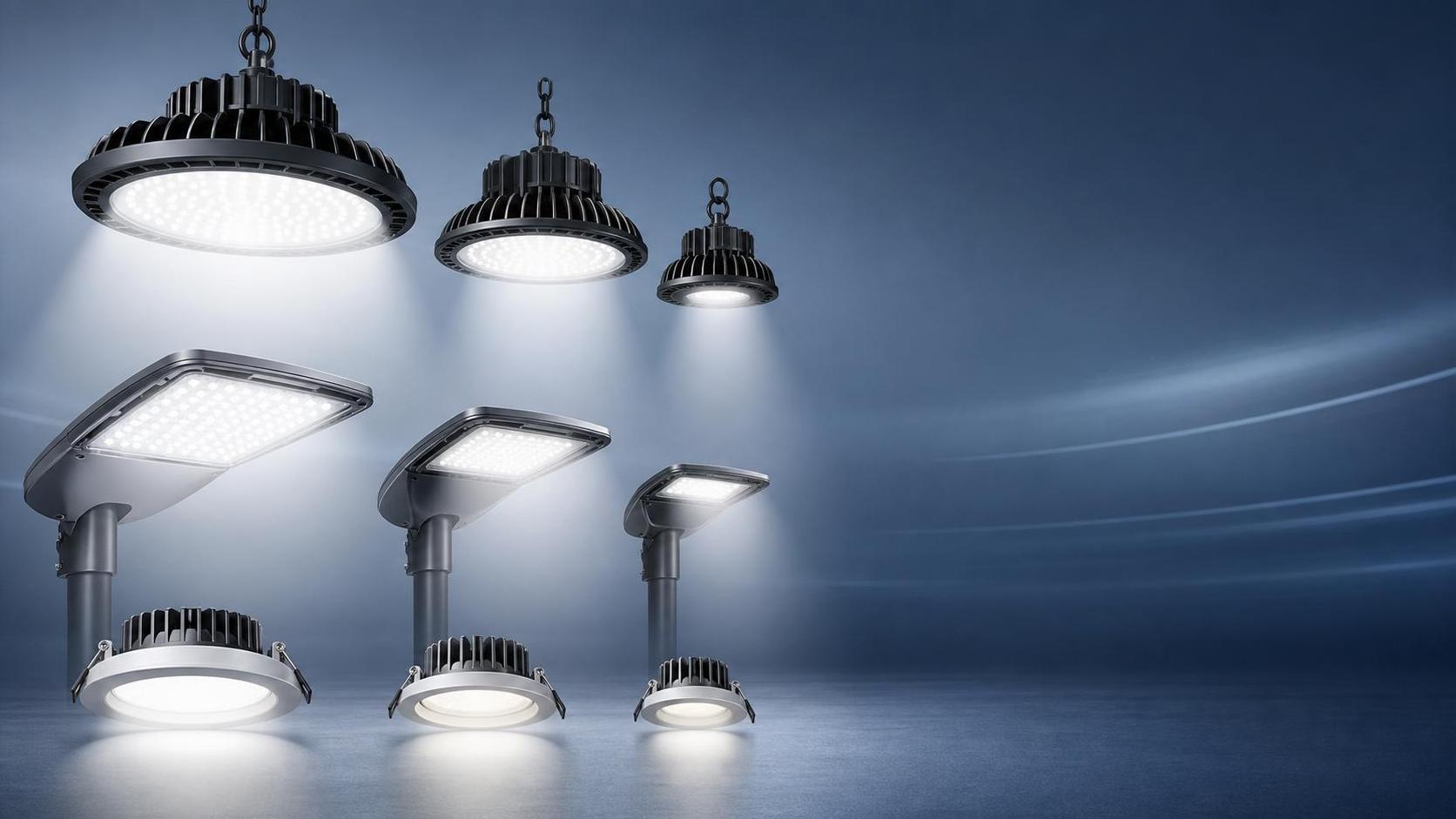
A warehouse high bay, a street luminaire, and a retail downlight may show similar efficacy on paper. Their useful efficiency can still differ sharply because the target surfaces, mounting heights, and visual needs are different.
That is why application-based comparison matters. In many projects, lower glare and better light distribution reduce fixture count or improve visual comfort, creating a stronger return than chasing the highest raw lumen figure.
Thermal management often decides long-term performance
LED lighting efficiency declines when heat is not controlled well. Junction temperature affects lumen maintenance, color stability, driver reliability, and overall lifetime.
This issue is often underestimated during supplier comparison. A product may test well when new, yet lose performance faster in hot climates, sealed luminaires, or long daily operating cycles.
Heat sink design, housing material, airflow assumptions, and driver placement all influence whether a fixture maintains efficiency after months or years in service. For this reason, ambient temperature ratings deserve close attention.
A quick comparison framework
Standards, certifications, and market context
Efficiency claims in LED lighting are more useful when backed by recognized testing and compliance documents. LM-79, LM-80, TM-21, CE, UL, DLC, and regional energy labels help verify how data was established.
This has become more relevant as global trade conditions shift. Import costs, energy regulations, rebate rules, and minimum efficiency thresholds increasingly shape which products remain commercially attractive in each market.
For industry tracking, technical evaluation now overlaps with policy monitoring and supplier assessment. A lamp with strong efficacy but uncertain certification status may create approval delays or replacement risk later.
How to compare options in real procurement work
A practical review starts with the application, not the catalog headline. Define illuminance target, operating hours, control needs, ambient conditions, and maintenance constraints before comparing LED lighting offers.
Then request complete performance data, not only a brochure. Photometric files, test reports, warranty terms, and driver details often reveal more than promotional efficacy figures.
- Compare system wattage, not chip-level claims
- Check performance at actual operating temperature
- Review lumen maintenance and failure assumptions
- Confirm certification validity for the destination market
- Estimate total cost using energy, labor, and replacement cycles
In many cases, the best choice is not the lowest wattage model. It is the option that balances efficiency, light quality, reliability, and compliance with the least downstream uncertainty.
A better next step
Comparing LED lighting beyond wattage leads to better technical and commercial decisions. It turns evaluation from a quick label check into a structured review of usable output, electrical behavior, thermal stability, and verified lifetime.
The next step is to build a simple comparison sheet for each project or sourcing round. When the same criteria are applied across products, stronger options become easier to identify, and weak claims become easier to filter out.
Technical Specifications
- How to test melt flow consistency in batches of recycled plasticsAuthor :Polymers & Rubber Editorial Team
- When does a cast resin transformer need high-altitude derating?Author :Electrical Components Editorial Team
- How to verify Global Industrial Insights sourcing informationAuthor :Industrial Machinery Editorial Team
Expert Insights

Chief Security Architect
Dr. Thorne specializes in the intersection of structural engineering and digital resilience. He has advised three G7 governments on industrial infrastructure security.
Core Sector // 01
Security & Safety
- What drives the price of LED panel lights for office projects?Author :Electrical Components Editorial Team

- LED Lighting Layout Tips for Warehouses and Production AreasAuthor :Electrical Components Editorial Team

- How to Compare LED Lighting Efficiency Beyond WattageAuthor :Electrical Components Editorial Team