LED Lighting Layout Tips for Warehouses and Production Areas
Author
Date Published
Reading Time
LED Lighting Layout Tips for Warehouses and Production Areas
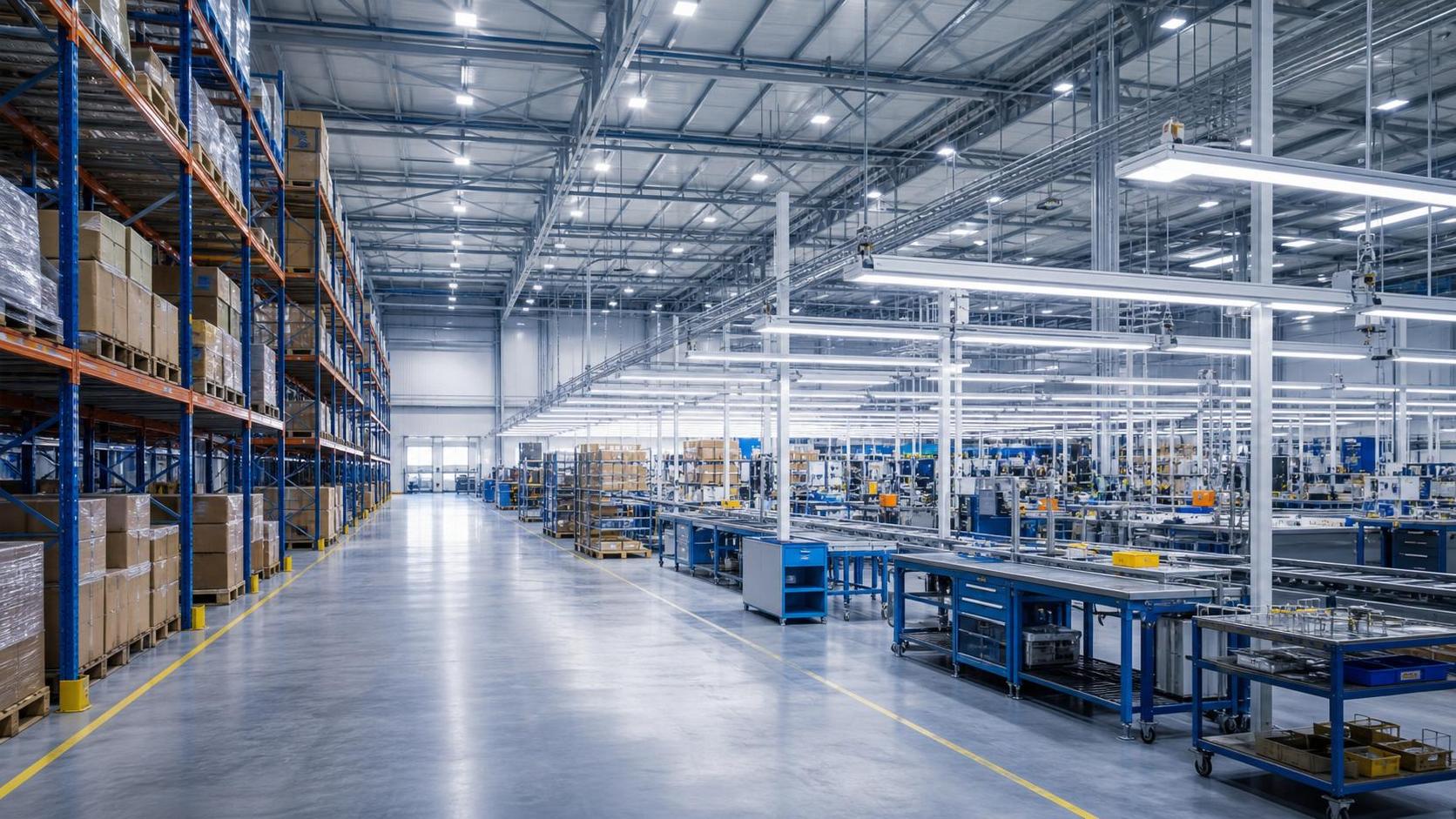
Effective LED lighting layout shapes safety, speed, and operating cost in busy industrial spaces.
In warehouses, it affects aisle visibility, picking accuracy, forklift movement, and stock checks.
In production areas, it supports inspection, assembly quality, and worker comfort across long shifts.
That means LED lighting decisions should start with layout logic, not fixture count alone.
Start with the task, not just the lux target
A common mistake is designing around average brightness and ignoring how the space is actually used.
Storage aisles, loading zones, packing benches, and machine stations need different LED lighting conditions.
For example, wide storage areas may accept broader uniform light.
Inspection tables often require higher illuminance, tighter control of glare, and better color rendering.
Before selecting fixtures, map activities by zone and rank them by visual demand, safety risk, and operating hours.
- Receiving and dispatch: prioritize visibility for labels, ramps, and vehicle movement.
- Racking aisles: support vertical sightlines and barcode reading.
- Production cells: match LED lighting to machine layout and quality checks.
- Maintenance zones: keep contrast strong around tools and service panels.
Match beam angle to ceiling height and aisle geometry
Ceiling height changes everything in an LED lighting plan.
High-bay spaces usually need fixtures with optics that keep light on the working plane.
If the beam is too wide, light spills onto upper racks and wastes energy.
If it is too narrow, dark gaps appear between rows and reduce uniformity.
Narrow aisles often benefit from aisle-focused optics.
These direct LED lighting along the travel path instead of flooding unused areas.
In lower production halls, a medium beam often gives better balance between coverage and comfort.
Practical spacing guidance
Use spacing rules from the fixture data sheet, then verify them against rack layout and obstructions.
Columns, ducts, conveyors, and tall equipment often break an otherwise clean lighting grid.
As a working rule, tighter spacing improves uniformity but may raise upfront cost.
Wider spacing lowers fixture count, yet it increases the risk of shadows and uneven LED lighting.
Control glare, shadows, and contrast
Brightness alone does not guarantee usable light.
Poor LED lighting placement can create reflected glare on metal surfaces and deep shadows near machinery.
That becomes a real issue in packaging, fabrication, and visual inspection tasks.
Choose fixture positions that reduce direct line-of-sight glare from normal working angles.
Where detailed work happens, combine general LED lighting with focused task lighting.
This approach usually delivers better visibility than simply adding more high-output fixtures overhead.
- Use diffused optics where operators look upward or across bright surfaces.
- Avoid placing fixtures directly behind tall machines or storage frames.
- Check shadow lines at picking faces, control panels, and worktables.
Choose the right color temperature and CRI
Color quality has a direct effect on perception, accuracy, and fatigue.
For most warehouses, neutral to cool LED lighting supports alertness and clear label reading.
For production lines, CRI deserves closer attention.
If workers inspect wires, coatings, printed marks, or material defects, low CRI can hide problems.
In practical terms, consistent color temperature across adjacent zones also matters.
Mixed LED lighting tones can make a facility look uneven and complicate visual adaptation.
Plan for controls, maintenance, and future changes
A strong LED lighting layout should still perform well after the building starts evolving.
Racks move, lines expand, and workflow patterns shift over time.
That is why control strategy belongs in the early design stage.
Motion sensors, daylight harvesting, and grouped switching can cut energy use without hurting visibility.
However, controls must match operations.
In fast-moving aisles, delayed response or poor sensor coverage can become a safety risk.
Also review maintenance access, driver location, cleaning intervals, and spare part availability.
Low-cost fixtures may weaken the total value of an LED lighting project if servicing becomes difficult.
A practical checklist before final approval
- Confirm lux targets by task, not by building average alone.
- Review beam angle against ceiling height and aisle width.
- Check LED lighting uniformity around racks, machines, and loading edges.
- Verify glare control for operators, drivers, and inspection staff.
- Align color temperature and CRI with the production process.
- Test controls under real operating conditions before full rollout.
Well-planned LED lighting supports safer movement, cleaner workflows, and more predictable energy performance.
The best results usually come from combining layout analysis, photometric checks, and site-specific operational review.
When those elements are aligned early, LED lighting becomes a practical asset instead of a late-stage correction.
Technical Specifications
- How to test melt flow consistency in batches of recycled plasticsAuthor :Polymers & Rubber Editorial Team
- When does a cast resin transformer need high-altitude derating?Author :Electrical Components Editorial Team
- How to verify Global Industrial Insights sourcing informationAuthor :Industrial Machinery Editorial Team
Expert Insights

Chief Security Architect
Dr. Thorne specializes in the intersection of structural engineering and digital resilience. He has advised three G7 governments on industrial infrastructure security.
Core Sector // 01
Security & Safety
- What drives the price of LED panel lights for office projects?Author :Electrical Components Editorial Team

- LED Lighting Layout Tips for Warehouses and Production AreasAuthor :Electrical Components Editorial Team

- How to Compare LED Lighting Efficiency Beyond WattageAuthor :Electrical Components Editorial Team