
China Issues 2027 ODS and HFC Refrigerant Quota Plan
Author
Date Published
Reading Time

On October 16, 2026, China’s Ministry of Ecology and Environment formally issued its 2027 plan for setting and allocating quotas for ozone-depleting substances (ODS) and hydrofluorocarbons (HFCs). The plan broadly maintains aggregate quotas at 2026 levels while introducing two application windows for quota adjustments during 2027. From an industry perspective, this combination could affect how quota holders, refrigerant distributors and downstream buyers coordinate supply: aggregate controls remain strict, while businesses gain a mechanism to request changes to their allocations.
Aggregate Limits Remain Broadly Steady as Adjustment Options Expand
The 2027 plan establishes the total quotas and allocation arrangements for ODS and HFCs. Aggregate quotas for both categories remain broadly consistent with 2026 levels, maintaining strict supply controls.
The plan also introduces a flexible quota adjustment mechanism. Enterprises may apply during two designated windows in 2027 for adjustments involving the same substance or different substances. The mechanism is intended to improve market allocation and support stable industry operations.
The supplied event summary does not specify quota quantities, the dates of the two application windows or detailed conditions for adjustments.
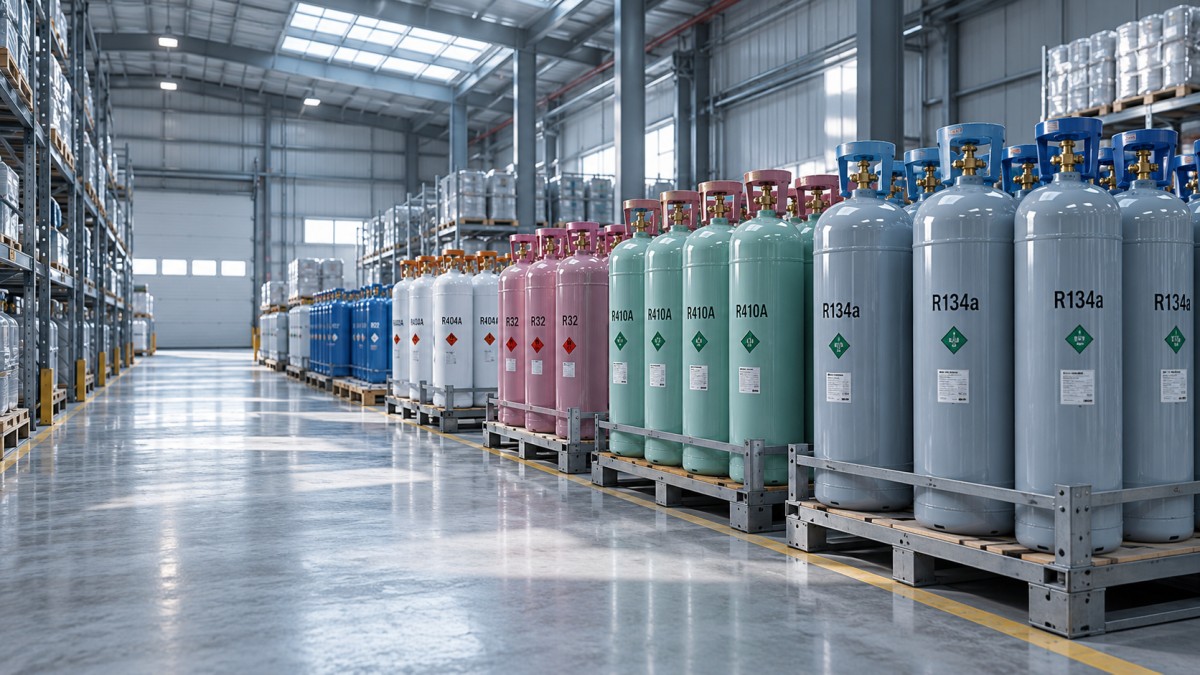
Allocation Flexibility Could Reshape Supply Planning
Quota holders may need to reassess their substance mix
Analysis suggests that enterprises holding quotas could have greater scope to align allocations with changing demand. However, broadly stable aggregate limits mean that the adjustment mechanism should not be interpreted as an announced expansion of overall supply. A practical issue for these businesses may be whether the substance mix covered by their allocations matches expected orders, and whether a request can be prepared within an available window.
Distributors may need firmer evidence behind supply commitments
For refrigerant distributors and trading businesses, the potential impact concerns procurement timing and confidence in supplier commitments. From an industry perspective, supply that depends on a future quota adjustment may carry different delivery uncertainty from supply supported by an existing allocation. Buyers could therefore benefit from clarifying whether an offer depends on an adjustment application and how that dependency affects the proposed delivery schedule.
Manufacturers and service providers may face substance-specific constraints
Analysis suggests that downstream manufacturers, equipment integrators and maintenance providers should assess availability by the substances they actually purchase. Broad stability in total quotas does not, by itself, establish the availability of each substance from each supplier. Procurement and project teams may therefore need to examine whether supplier allocations can support their planned consumption and delivery milestones. These are potential planning implications; the supplied information does not establish that shortages or delivery disruptions have occurred.
Prepare Procurement Decisions Around the Two Application Windows
Confirm dates and eligibility before relying on adjustments
As a practical recommendation, enterprises considering an adjustment should verify the official window dates, eligibility conditions and application requirements when reviewing the relevant documentation. The supplied summary confirms two windows but does not explain how applications will be assessed. Businesses should therefore avoid treating the ability to apply as confirmation that a requested adjustment will be granted.
Compare expected demand with existing allocations
Analysis suggests that quota holders could prepare by comparing expected orders with their allocations for each relevant substance. Downstream buyers could similarly review purchasing forecasts with suppliers to identify commitments that may depend on an adjustment. Such reviews would support planning without assuming that every allocation mismatch can be resolved through the new mechanism.
Make delivery assumptions explicit in purchasing discussions
As a commercial planning measure, buyers and suppliers could clarify which delivery commitments rely on existing allocations and which depend on a future adjustment. Where uncertainty exists, they could discuss order timing, delivery milestones and contingency arrangements. These are suggested business practices, rather than additional contractual or compliance requirements established by the supplied information.
Verify the scope of adjustments between substances
Enterprises considering adjustments involving different substances should examine the applicable conditions before incorporating them into procurement or production plans. The supplied summary does not establish conversion methods, adjustment limits or approval procedures. Analysis therefore supports treating cross-substance flexibility as an option requiring further verification, rather than assuming that allocations can be freely exchanged.
A Published Framework With Operational Details Still to Verify
At this stage, the announcement is best understood as an issued annual quota framework that combines continued aggregate restraint with greater allocation flexibility. The confirmed policy development is the introduction of designated opportunities to request adjustments. Its practical value for individual businesses will depend on the detailed conditions and how the mechanism operates.
From an industry perspective, useful follow-up evidence would include the application timetable, the conditions governing adjustments and enterprises’ experience of the process. Such information would help businesses assess whether the mechanism can address mismatches between allocations and demand. The supplied summary alone does not support a prediction about prices, approval outcomes or delivery performance.
Plan for Stable Limits and Conditional Flexibility
Analysis suggests that the immediate planning priority is to distinguish broadly stable aggregate quotas from the availability of particular substances through particular suppliers. The adjustment mechanism may help businesses respond to changing demand, but its contribution remains dependent on the applicable procedures and execution. Enterprises can treat the issued framework as a basis for planning while verifying the details needed before relying on an adjustment in procurement or delivery commitments.
Basis of Reporting and Points Requiring Verification
This article is based exclusively on the user-provided news title, event date of October 16, 2026, and event summary. Statements about the issuance of the plan, aggregate quota continuity and adjustment windows reflect that supplied information. Business implications and recommended preparations are identified as analysis or suggestions.
No specific official source link was provided in the input. The underlying announcement and implementation details therefore require continued verification through official ministry publications. Further attention should focus on application dates, adjustment conditions, procedural requirements, enterprise implementation and industry feedback.
Technical Specifications
Expert Insights

Chief Security Architect
Dr. Thorne specializes in the intersection of structural engineering and digital resilience. He has advised three G7 governments on industrial infrastructure security.
Core Sector // 01
Security & Safety
- China Issues 2027 ODS and HFC Refrigerant Quota PlanAuthor :Industrial Machinery Editorial Team

- Plasser & Theurer Opens €60m-Plus Rail Machinery Factory in LinzAuthor :Industrial Machinery Editorial Team

- How to verify Global Industrial Insights sourcing informationAuthor :Industrial Machinery Editorial Team

- When does industrial equipment downtime justify replacing a machine?Author :Industrial Machinery Editorial Team

- How Should Buyers Handle a Defective Industrial Washer Shipment?Author :Industrial Machinery Editorial Team

- Are Industrial Washers Subject to EU Compliance Checks?Author :Industrial Machinery Editorial Team