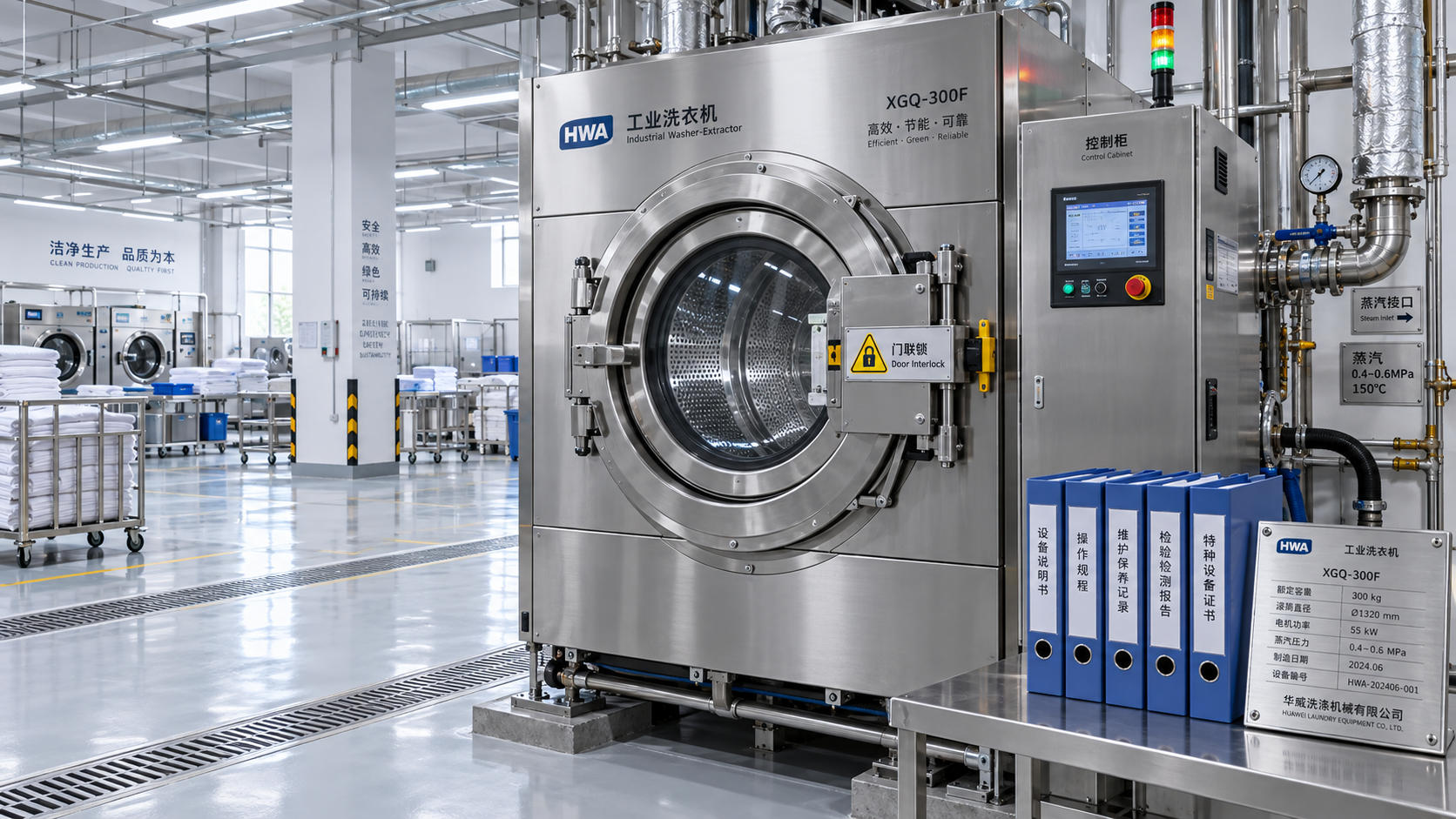
How Should Buyers Handle a Defective Industrial Washer Shipment?
Author
Date Published
Reading Time

How Should Buyers Handle a Defective Industrial Washer Shipment?
Receiving an industrial washer that is damaged, incomplete, or unable to meet the agreed specification is not a routine inconvenience. It can delay installation, hold up a production line, create unexpected freight costs, and put a buyer in the uncomfortable position of needing cooperation from both a supplier and a carrier.
For buyers asking, “How do I handle a defective washer shipment?”, the answer is not simply “request a refund.” The right path depends on what failed, when the problem was discovered, who controlled transport, what the purchase contract says, and whether the equipment can be repaired safely without affecting warranty coverage. The early hours after delivery often determine how strong the buyer’s claim will be.
Industrial washers may include parts that are especially vulnerable in transit: stainless-steel panels, pumps, heating elements, control cabinets, door seals, spray arms, baskets, conveyors, and electronic sensors. A dented outer panel may be cosmetic. A bent frame, cracked tank weld, wet electrical cabinet, or missing safety interlock is a very different matter. Treat the shipment as unaccepted until the condition is properly recorded.
Start at Delivery: Inspect Before the Evidence Disappears
The most useful evidence is usually created at the receiving dock, not days later after the machine has been moved, unpacked, or partially installed. If the crate is crushed, punctured, wet, leaning, re-taped, or visibly mishandled, note that condition on the delivery receipt before the driver leaves. A clean signature may be interpreted by a carrier as confirmation that no visible damage existed at delivery.
That does not mean buyers should refuse every shipment with a scratched pallet or a torn corner protector. Refusal can create storage, return, and customs complications, particularly for cross-border deliveries. The practical distinction is whether the exterior condition reasonably suggests that the washer itself may be compromised. If it does, sign as “received subject to inspection” where permitted, describe the visible issue briefly, and keep a copy of the signed record.
Photograph the shipment from several angles before unloading or opening it. Include the shipping label, crate markings, seal condition, package count, and any impact indicators if present. Then photograph the internal packaging and the machine itself as it is unpacked. Wide shots establish context; close shots show the actual defect. A short video of the unboxing process can also be useful when there is a dispute about whether damage happened before or after delivery.

Do not discard the crate, foam, braces, straps, or damaged pallet too quickly. Carriers and insurers may ask to inspect them. In a concealed-damage claim, the packaging often tells the story: shifted blocking, a broken skid, water staining, or metal fragments inside the crate can support a claim far better than a written complaint alone.
Separate Transit Damage From Manufacturing or Specification Defects
A defective shipment can involve several different problems, and buyers should name the problem accurately from the start. Calling every issue “shipping damage” may weaken the claim if the real concern is an incorrect configuration or a factory assembly fault.
Transit damage is usually visible or linked to handling: a cracked enclosure, bent door, damaged motor mount, broken display, loose wiring, or leakage caused by impact. A manufacturing defect may only appear during commissioning, such as a pump that does not maintain pressure, an electrical fault, poor weld quality, an unstable temperature-control system, or repeated error codes. Nonconformity is different again. The washer may function, but it may have the wrong voltage, heating arrangement, chamber dimensions, wash cycle, control language, drainage design, or accessory package.
This distinction affects who needs to respond. The carrier may be relevant for obvious freight damage. The supplier remains central when the machine does not match the purchase order, proforma invoice, approved drawing, technical data sheet, or agreed inspection record. If the transaction used an independent forwarder or a complex Incoterms arrangement, responsibility can become less intuitive. Buyers should check the contract rather than rely on assumptions about who “should” pay.
Create a Claim File Before Contacting Anyone
A well-organized claim file makes communication faster and reduces arguments about basic facts. It should contain the purchase order, contract or sales confirmation, packing list, bill of lading or airway bill, commercial invoice, delivery receipt, photographs, videos, serial number, and a written defect log. If installation has begun, record the date, installer, utility connections, and any fault messages shown by the controller.
The defect log does not need legal language. It needs precision. Write what was observed, where it was found, and whether the washer can be safely tested. “Machine damaged” is weak. “Control cabinet door is distorted; lower right hinge does not align; moisture is visible inside the cabinet; unit has not been energized” is much more useful.
Notify the Supplier Promptly, but Do Not Rush Into a Fix
Contact the supplier in writing as soon as the issue is identified. Keep the first notice factual and calm. State the order reference, delivery date, equipment model and serial number, the defect category, whether the unit has been installed or energized, and the remedy you are requesting at that stage. Attach a concise evidence package rather than sending dozens of unlabelled images.
It is usually reasonable to ask the supplier to confirm receipt of the claim, provide a technical assessment, and propose a remedy with a clear timetable. Possible remedies include replacement parts, remote troubleshooting, local technician support, a replacement machine, collection and return, repair reimbursement, price adjustment, or refund. The right remedy depends on operational risk, not just on the price of the damaged component.
For example, replacing a loose external guard may be sensible if the supplier can dispatch it quickly and the washer remains safe and compliant. Accepting a field repair for a distorted tank, damaged safety device, or compromised electrical system is less straightforward. A buyer should not allow a production deadline to push them into an undocumented repair that later affects warranty rights or creates a safety concern.
Avoid authorizing third-party repairs before the supplier responds unless there is a genuine emergency and the contract permits it. If an urgent local repair is unavoidable, document the condition beforehand, obtain a written quotation, retain failed parts, and notify the supplier immediately. Otherwise, the supplier may argue that the original condition cannot be verified.
Check the Contract, Incoterms, Warranty, and Claim Windows
A damaged industrial washer can trigger several parallel processes: a warranty claim with the manufacturer, a contractual nonconformity claim against the seller, a cargo claim against the carrier, and potentially an insurance claim. They should not be treated as interchangeable.
Review the agreed delivery term, risk-transfer point, inspection period, notice requirements, warranty exclusions, and dispute-resolution clause. Incoterms allocate certain obligations between buyer and seller, but they do not automatically settle every question about product quality or contractual remedies. The sales agreement and applicable law still matter. In international trade, notice deadlines can be short, especially for visible freight damage or concealed loss.
Buyers should also check whether the supplier arranged cargo insurance, whether the buyer’s policy covers the shipment, and whether a survey is required before goods are moved or repaired. Do not assume that insurance will cover a factory defect; cargo policies are generally concerned with insured transit risks, and coverage depends on the policy wording and circumstances.
Decide Whether to Hold, Repair, Replace, or Reject
The practical decision is often more nuanced than accepting or rejecting the entire shipment. A buyer should assess four questions: Is the machine safe? Can it be commissioned reliably? Will the proposed repair preserve warranty and expected service life? What will downtime cost compared with waiting for a replacement?
If the washer is unsafe, materially different from the ordered specification, or likely to fail soon after installation, placing it on hold is normally the prudent choice. Keep it protected from weather and unauthorized use, but do not put it into production merely to “see if it works.” Once equipment is used commercially, a supplier may contend that it was accepted, depending on the contract and local legal context.
If the issue is minor and the supplier offers a documented remedy, repair may be commercially sensible. The agreement should identify who pays for labor, travel, parts, freight, re-testing, and any return of damaged components. It should also confirm that the warranty remains valid after the repair. For a replacement unit, clarify whether the supplier will cover export packing, pickup, new freight, import handling, and reinstallation-related costs. These expenses can exceed the value of a small replacement part, so vague promises are not enough.
Prevent the Same Dispute on Future Orders
A defective shipment often exposes a weak point that existed before the goods left the factory: unclear specifications, inadequate export packing, missing pre-shipment inspection, uncertain handover responsibilities, or a receiving team without an inspection routine. The goal is not only to settle the current claim but to improve the next order.
For larger or customized industrial washers, buyers may want the purchase documents to define the model configuration, electrical requirements, included accessories, documentation, packaging standard, acceptance criteria, and procedure for reporting defects. A pre-shipment photo set, packing photos, serial-number list, and agreed factory test records can make later verification far easier. Where the project risk justifies it, an independent inspection before dispatch may be worth considering.
Supply-chain conditions also matter. Long transit routes, multiple transshipments, port congestion, and local handling limitations can change the risk profile even when the machine itself is well built. Buyers sourcing across borders should follow logistics developments, trade requirements, product standards, and changes in carrier practices that may affect delivery planning. Industry news and sourcing references are useful here not as a substitute for contract review, but as early warning signals before an order is placed.
Frequently Asked Questions
Should I refuse delivery of a damaged industrial washer?
Refusal may be appropriate when the damage is severe, the package condition suggests the equipment cannot be safely handled, or the wrong goods were delivered. For less obvious issues, accepting subject to inspection and documenting the condition may preserve more flexibility. The contract, delivery terms, and local carrier procedures should guide the decision.
Can I test the washer before making a claim?
Basic inspection is usually necessary, but do not energize or operate a unit with visible electrical damage, water ingress, structural distortion, or missing safety components. Notify the supplier first and ask for written commissioning guidance. Testing without authorization can complicate a later claim if it worsens the condition.
What if the supplier says the carrier is responsible?
Open or preserve the carrier claim if there is evidence of transit damage, but continue pursuing the supplier for any product nonconformity or warranty issue. The buyer’s immediate concern is a workable remedy; responsibility between supplier, carrier, and insurer can be resolved through the relevant contractual channels.
The strongest response to a defective washer shipment is disciplined rather than confrontational: protect the equipment, preserve evidence, give timely written notice, and insist on a remedy that matches the actual operational risk. A clear record from the receiving dock is often worth more than a long argument after the machine has already been unpacked, repaired, or put into service.
Technical Specifications
- Which local safety approvals apply to imported power suppliesAuthor :Electrical Components Editorial Team
- How to choose the right tempered glass panel for safety glazingAuthor :Construction Materials Editorial Team
- When do elastomers outperform thermoplastics in flexible seals?Author :Polymers & Rubber Editorial Team
Expert Insights

Chief Security Architect
Dr. Thorne specializes in the intersection of structural engineering and digital resilience. He has advised three G7 governments on industrial infrastructure security.