When do CNC machines justify their higher upfront cost?
Author
Date Published
Reading Time
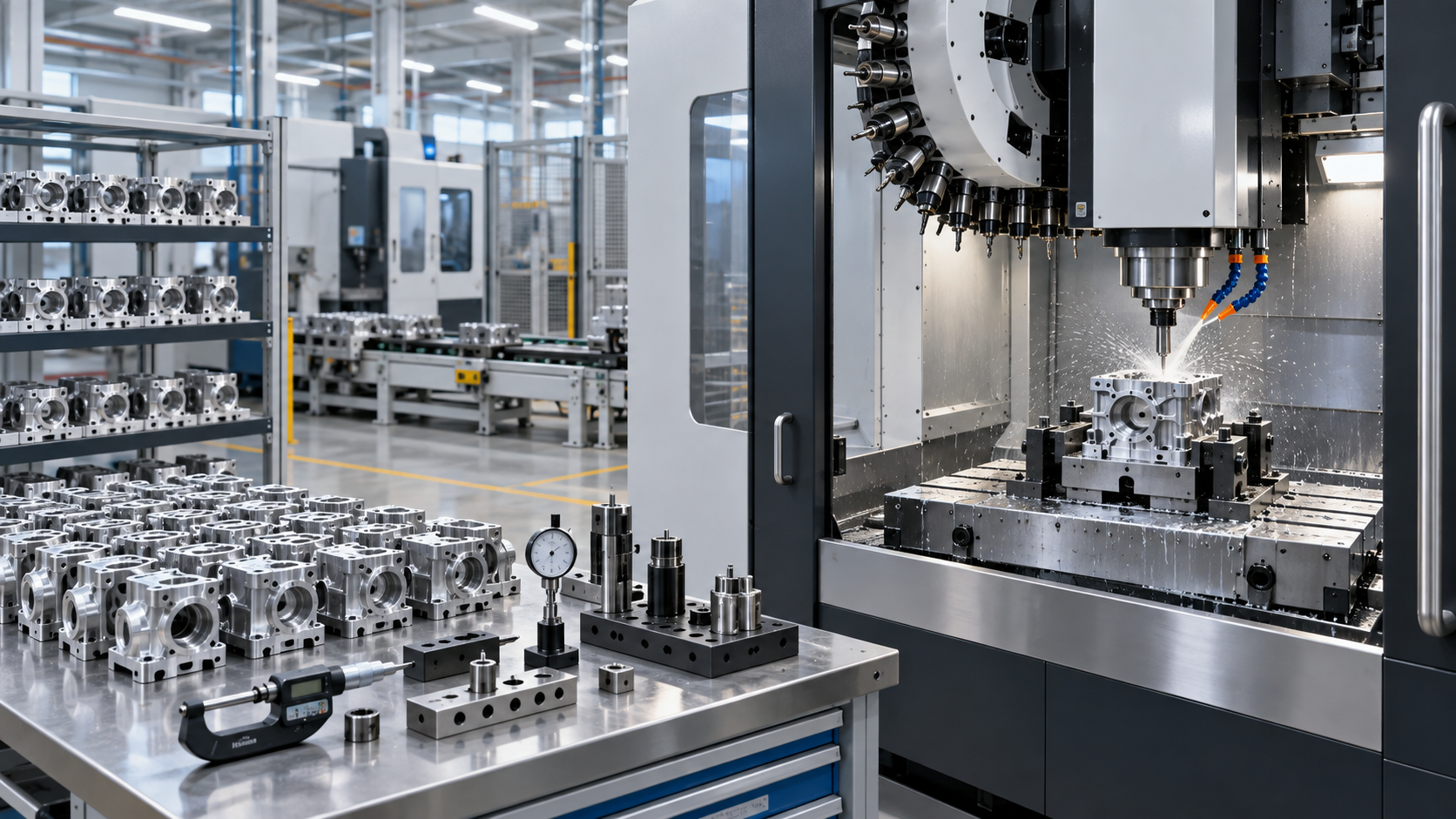
CNC machines often look expensive at the point of purchase because the visible price includes far more than a basic cutting, drilling, turning, or routing function. Buyers may be comparing a manual machine or low-cost semi-automatic alternative with a CNC unit that requires controls, servo systems, software, tooling, installation, training, safety integration, and sometimes new power or material-handling arrangements.
That comparison can be misleading. The real question is not whether CNC machines cost more upfront—they usually do. It is whether the business is currently losing enough time, labor, material, consistency, or sales opportunity for automation to pay for itself over the equipment’s working life.
For a small workshop with irregular one-off work, a higher-spec machine can become an underused asset. For a manufacturer repeatedly producing tolerance-sensitive components, cabinets, fixtures, metal parts, profiles, or customized batches, the same investment may solve several cost problems at once. The decision is therefore less about machine price and more about operating conditions.
The strongest justification: repeatable work with costly manual variation
CNC equipment is easiest to justify when a company performs the same—or closely related—operations repeatedly. Repetition does not necessarily mean mass production. A fabrication business may run short batches for different customers but still use the same hole patterns, edge profiles, turning operations, nesting routines, or machining sequences every week. In that situation, programming time is spread across many parts, while setup discipline and repeatability become increasingly valuable.
Manual methods can work well when an experienced operator is available and the part is simple. Problems start when output depends heavily on individual technique. Two operators may produce slightly different results. Measurements may be checked several times during a shift. Rework may not be formally recorded because it is treated as normal workshop activity. Yet those small delays accumulate into real cost, especially when downstream assembly, coating, welding, installation, or inspection depends on the part being right the first time.
A CNC machine does not remove all quality risk. Poor fixturing, worn tools, incorrect offsets, weak programming, unstable material, and inadequate inspection can still create defects. What it does provide is a more controlled process. Once a proven program, tool list, datum strategy, and clamping method are in place, the business is less dependent on repeated manual judgment for every feature of every part.
That is particularly relevant where customer drawings specify tight tolerances, where components must interchange during assembly, or where a distributor is sourcing parts for customers who expect consistent dimensions across multiple deliveries. The cost of a rejected shipment is rarely just the cost of remaking a component. It can include expedited freight, disrupted installation schedules, damaged supplier confidence, and internal time spent explaining what went wrong.
Volume matters, but volume alone is not enough
High production volume is a common reason to buy CNC machines, but it should not be treated as an automatic answer. A company can have high volume and still make a poor investment if the parts are too simple, labor is inexpensive and reliable, or the machine would sit idle between contracts. Conversely, a lower-volume producer may benefit from CNC capability when each job requires complex geometry, frequent dimensional verification, expensive materials, or a fast response to design changes.
The more useful measure is recurring machine hours. Decision-makers should look at how much time is currently spent on layout, positioning, cutting, drilling, changing tools, measuring, correcting errors, and moving parts between separate operations. If much of that time can be consolidated into a programmed workflow, the machine may create capacity without the business needing to add another shift or recruit a specialist operator immediately.
Capacity should be examined honestly. Some businesses calculate savings using a theoretical cycle time but ignore loading, unloading, program verification, fixture changes, tool replacement, cleaning, and material delays. The useful figure is not the fastest possible run in a supplier demonstration. It is the expected output during an ordinary production week, including the interruptions that experienced shop managers know will happen.
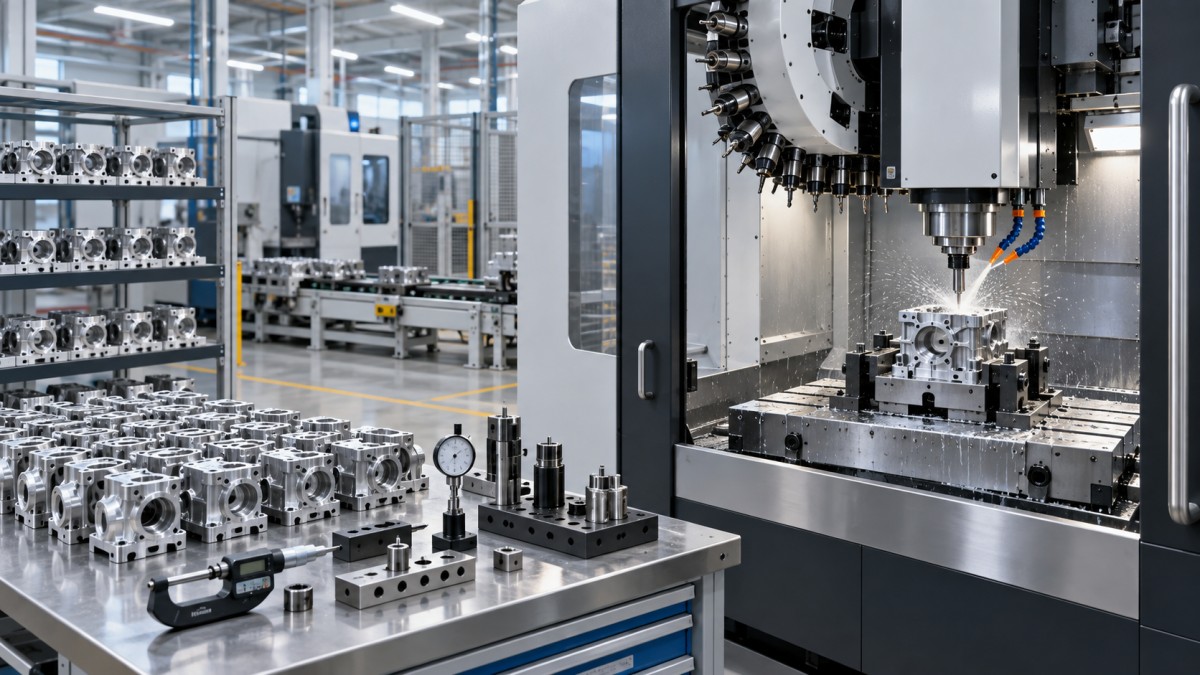
For mixed-job operations, flexibility can be more valuable than raw speed. A machining center with suitable travel, spindle capability, tool capacity, control support, and workholding options may allow a company to bring several outsourced operations in-house. That can reduce exposure to subcontractor lead times, but only if the business has enough stable demand and technical discipline to keep the equipment productive.
Labor savings are real only when labor can be redeployed
“One operator can run more work” is often true, but buyers should separate labor efficiency from direct headcount reduction. In many industrial businesses, skilled machinists, programmers, and setup technicians are difficult to replace. CNC automation may not reduce payroll immediately; instead, it lets scarce people spend less time on repetitive manual work and more time on setup, quality control, maintenance, prototype work, production planning, or customer-facing technical support.
That is still a financial benefit, especially when labor shortages are delaying orders. However, it should be modeled correctly. If an operator remains employed, their full wage should not be treated as a cash saving. The more realistic benefit may be additional throughput, less overtime, reduced reliance on temporary labor, fewer bottlenecks, or the ability to accept jobs that would otherwise be declined.
Training also deserves more attention than it receives in early quotations. A CNC machine is not productive merely because it has been delivered and powered on. Someone must understand programming or CAM workflows, setup procedures, tool management, offsets, alarms, preventive maintenance, and safe recovery after a stoppage. For an importer, contractor, or distributor evaluating equipment for a regional customer base, local technical support and language-appropriate documentation can matter as much as a small difference in purchase price.
Material waste can quietly make the investment worthwhile
Material cost is often underestimated in capital-equipment calculations because it appears in a different budget from machinery. This is a mistake when the business processes high-value metals, engineered timber, stone, composites, plastics, or large sheet formats. Better nesting, controlled toolpaths, consistent cut locations, and fewer setup errors can reduce avoidable scrap. The gain may be modest on each part, but it becomes meaningful when material prices are volatile or when unusable offcuts have little resale value.
The same principle applies to rework. A part that needs an extra operation may consume additional labor and tooling, but it can also delay an entire order. In contract manufacturing, the customer may only see the missed delivery date; they do not see the internal effort spent rescuing a job. CNC processes tend to be most attractive where the cost of getting a part wrong is disproportionately high.
Buyers should ask for a practical review of their own drawings and material formats rather than relying on generic claims about waste reduction. A supplier can often comment on work envelope, suitable cutting strategy, achievable nesting approach, or likely fixture needs. But actual savings depend on part mix, grain direction, kerf, clamp zones, tool selection, edge-quality requirements, and whether production planning can make use of the software workflow.
Use total cost of ownership, not the machine quotation alone
A lower-priced machine can become expensive if it creates long downtime, limited tooling choices, difficult service access, or incompatibility with the work a business expects to win next year. Equally, an over-specified machine can tie up capital while delivering no meaningful return. The right comparison is total cost of ownership against expected productive use.
Before approving a purchase, build a working model that includes the items below. It does not need false precision. A conservative estimate is usually more useful than a spreadsheet designed to make the project look attractive.
- Machine price, freight, insurance, import duties or local taxes where applicable, installation, commissioning, and site preparation.
- Toolholders, cutting tools, fixtures, measuring equipment, software, dust extraction or coolant systems, and material handling.
- Training time, program development, trial production, and the learning curve before normal output is reached.
- Expected maintenance, spare parts availability, service response, warranty limits, and the financial consequence of downtime.
- Current labor hours, overtime, scrap, rework, subcontracting, and lead-time pressure that the new process could realistically change.
- Residual value and whether the chosen configuration has a credible second-hand market in the buyer’s region.
For international buyers, landed cost deserves special scrutiny. A machine may be competitively priced at origin but become less attractive after shipping, port handling, inland delivery, electrical adaptation, customs procedures, installation travel, and the cost of obtaining replacement components. Supply-chain conditions can shift quickly, so procurement teams should confirm lead times and service commitments close to the order date rather than relying on an earlier quotation.
Operational signals that usually support a CNC purchase
A purchase becomes easier to defend when several operational signals appear together. Orders are being delayed because a manual process is a bottleneck. Skilled operators spend too much time measuring or correcting repeat work. Scrap is painful because materials are expensive. Outsourcing is necessary not for specialist capability but because internal capacity is insufficient. Customers increasingly request customized parts that are impractical to produce manually at consistent quality.
Another strong signal is a growing need for documentation and traceability. Certain supply chains require clearer process control, inspection records, revision management, or repeatable production from approved drawings. The specific compliance obligations depend on the product, sector, destination market, and contract terms, so buyers should verify applicable standards independently. Still, CNC workflows can make disciplined revision control and repeat production easier than paper-based, operator-dependent processes.
A weak justification is buying solely because competitors have CNC capacity. Competitors may have different product mixes, labor structures, financing arrangements, or customer commitments. It is also risky to assume that a machine will generate demand by itself. New capability can help sales teams quote more confidently, but only when the company knows which parts it can make profitably and can support those claims with sound production planning.
When waiting is the more disciplined choice
There are times when postponing the purchase is sensible. Demand may be too uncertain. The current product mix may change within months. A company may lack the personnel to program and maintain the machine. Site utilities may not be ready. Or the business may be trying to solve a scheduling problem that is actually caused by poor material availability, inaccurate forecasting, or weak job routing.
In these cases, outsourcing selected work, renting capacity, partnering with a local machining provider, or purchasing a more modest configuration can be a better first step. Those options may reveal the actual production requirements before capital is committed. They also help buyers distinguish between a genuine equipment gap and a temporary surge in orders.
The best purchasing decision normally begins with a small set of real jobs: parts already being produced, jobs currently outsourced, and quotations being lost because the company cannot meet a required tolerance, lead time, or price. Run those jobs through a realistic cost model. Include the inconvenient items—setup, training, freight, service, tooling, and downtime—not just the promised cycle time. If the machine still produces a credible return under conservative assumptions, higher upfront cost is no longer the main issue. It is a calculated investment in a process the business has already shown it needs.
Technical Specifications
- How precision metal fabrication reduces fit-up issues in assembliesAuthor :Metals & Fabrication Editorial Team
- When do CNC machines justify their higher upfront cost?Author :Industrial Machinery Editorial Team
- How to choose porcelain floor tiles for high-traffic areasAuthor :Construction Materials Editorial Team
Expert Insights

Chief Security Architect
Dr. Thorne specializes in the intersection of structural engineering and digital resilience. He has advised three G7 governments on industrial infrastructure security.
Core Sector // 01
Security & Safety
- When do CNC machines justify their higher upfront cost?Author :Industrial Machinery Editorial Team

- When a Waterjet Cutting Machine Is Better Than Laser or PlasmaAuthor :Industrial Machinery Editorial Team

- CNC Machines Buying Guide: Accuracy, Throughput, and ROIAuthor :Industrial Machinery Editorial Team

- What Causes CNC Machines to Lose Precision Over Time?Author :Industrial Machinery Editorial Team