What Causes CNC Machines to Lose Precision Over Time?
Author
Date Published
Reading Time
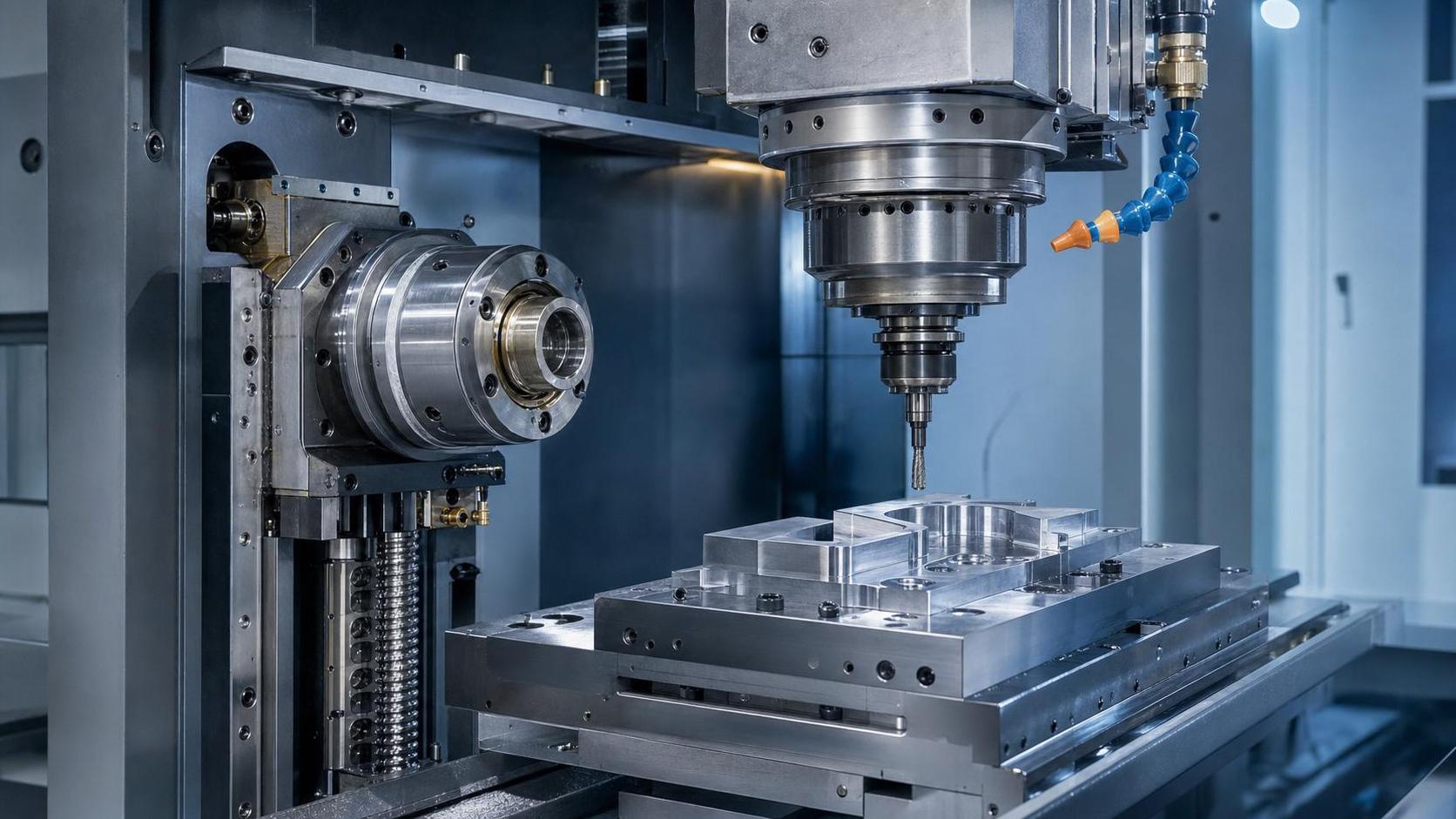
What Causes CNC Machines to Lose Precision Over Time?
Even high-performance CNC machines do not hold the same accuracy forever. Wear, heat, vibration, and missed maintenance slowly change how CNC machines behave in daily production.
At first, the drift may look minor. A few microns here, a slight taper there. Over time, those small changes become scrap, rework, customer complaints, and unstable process capability.
For maintenance work, the real question is not whether CNC machines lose precision. It is which source is responsible, how fast it is progressing, and what should be checked first.
Mechanical Wear Is Usually the First Suspect
Most CNC machines lose precision because moving parts wear under load. This is especially common in high-duty environments with long shifts, hard materials, and aggressive cutting programs.
Ball screws, linear guides, spindle bearings, tool holders, and couplings gradually develop play. Once backlash or vibration increases, repeatability drops even if the machine still looks normal.
More obvious signals include chatter marks, inconsistent surface finish, bore size variation, and axis positioning errors that appear after several hours of operation.
- Check backlash on each axis at regular intervals.
- Measure spindle runout before replacing cutting parameters.
- Inspect guideway lubrication and contamination levels.
- Listen for bearing noise during warm operation, not only at startup.
Thermal Growth Changes Machine Geometry
Heat is one of the most underestimated causes of precision loss in CNC machines. As the spindle, ballscrews, motors, and coolant system heat up, machine geometry shifts.
That shift may be small, but it affects alignment, tool center position, and dimensional stability. In tight-tolerance work, thermal movement can be enough to fail inspection.
The pattern matters. If parts are correct in the morning and drift later, thermal expansion is a likely cause. If errors stabilize after warm-up, the machine may need compensation review.
- Compare cold and warm machine accuracy results.
- Verify spindle chiller and coolant temperature control.
- Review thermal compensation settings in the control system.
- Keep shop temperature swings as small as possible.
Poor Lubrication and Contamination Accelerate Damage
Precision does not disappear overnight in most CNC machines. It is often worn away by poor lubrication, dirty oil, clogged lines, metal fines, and coolant intrusion.
When lubrication becomes inconsistent, friction rises. Friction creates heat, heat changes dimensions, and dry contact shortens the life of bearings, guides, and screws.
In actual service work, contamination often hides behind other symptoms. A noisy axis may look electrical, but the root cause can still be blocked lubrication or abrasive debris.
- Inspect lube pump cycles and delivery pressure.
- Check oil quality, filter condition, and reservoir cleanliness.
- Look for chips around covers, seals, and way protection.
- Confirm coolant is not leaking into critical moving assemblies.
Electrical and Control Issues Also Affect Precision
Not all precision loss in CNC machines comes from hardware wear. Servo tuning changes, encoder faults, unstable feedback, and loose electrical connections can distort motion accuracy.
A machine may still complete cycles normally while struggling with position lag, overshoot, or intermittent axis deviation. These problems often appear under speed or load changes.
Power quality can also matter. Voltage instability, grounding issues, and cabinet heat may weaken control performance and make CNC machines less repeatable over time.
- Review alarm history, servo load, and positioning logs.
- Inspect encoder cables, connectors, and feedback integrity.
- Check cabinet cooling fans and temperature buildup.
- Confirm grounding and incoming power quality.
Alignment Errors Build Up After Service or Impact
Sometimes CNC machines lose precision after a repair, a crash, a heavy workholding change, or a machine move. In those cases, alignment should be checked early.
Leveling, squareness, spindle alignment, turret indexing, and fixture accuracy all influence final part quality. A healthy axis cannot save a machine with distorted geometry.
This also means troubleshooting should follow a sequence. If geometry is wrong, replacing sensors or adjusting programs may only hide the real issue for a short time.
A Practical Troubleshooting Order
When CNC machines show accuracy problems, a structured check saves time. Start with the simplest evidence, then move toward deeper mechanical or control diagnosis.
- Confirm the defect pattern across parts, tools, and shifts.
- Separate cold-start behavior from warm-running behavior.
- Check tooling, holders, fixtures, and spindle runout.
- Measure backlash, repeatability, and axis movement quality.
- Inspect lubrication, contamination, and visible wear points.
- Review servo feedback, alarms, and machine parameters.
- Verify leveling, geometry, and recent service history.
This order helps reduce guesswork. It also prevents unnecessary parts replacement, which is costly and often delays the real correction.
Conclusion
CNC machines lose precision over time because wear, thermal growth, lubrication failure, contamination, control instability, and alignment errors slowly change machine behavior.
The most effective response is early detection and disciplined inspection. Watch trend changes, compare cold and warm results, and treat small deviations as useful warning signals.
In day-to-day maintenance, precision recovery usually starts with better diagnosis, not faster replacement. That approach extends service life and keeps CNC machines productive for longer.
Technical Specifications
- How to test melt flow consistency in batches of recycled plasticsAuthor :Polymers & Rubber Editorial Team
- When does a cast resin transformer need high-altitude derating?Author :Electrical Components Editorial Team
- How to verify Global Industrial Insights sourcing informationAuthor :Industrial Machinery Editorial Team
Expert Insights

Chief Security Architect
Dr. Thorne specializes in the intersection of structural engineering and digital resilience. He has advised three G7 governments on industrial infrastructure security.
Core Sector // 01
Security & Safety
- When does a high precision CNC machine justify its added cost?Author :Industrial Machinery Editorial Team

- When do CNC machines justify their higher upfront cost?Author :Industrial Machinery Editorial Team

- When a Waterjet Cutting Machine Is Better Than Laser or PlasmaAuthor :Industrial Machinery Editorial Team

- CNC Machines Buying Guide: Accuracy, Throughput, and ROIAuthor :Industrial Machinery Editorial Team

- What Causes CNC Machines to Lose Precision Over Time?Author :Industrial Machinery Editorial Team