When a Waterjet Cutting Machine Is Better Than Laser or Plasma
Author
Date Published
Reading Time
When a Waterjet Cutting Machine Is Better Than Laser or Plasma
Choosing the right cutting technology can directly affect cost, material flexibility, and production quality. In many industrial applications, a waterjet cutting machine offers clear advantages over laser or plasma, especially when working with heat-sensitive materials, thick sections, or complex shapes. For business decision-makers evaluating equipment or sourcing options, understanding when waterjet technology performs better can help reduce risk and improve long-term operational efficiency.
If you are comparing cutting processes for procurement or production planning, the useful question is not which technology is “best” in general. It is where each process starts creating cost, quality, or delivery problems. That is where waterjet usually earns its place.
Use this checklist before you rule waterjet out
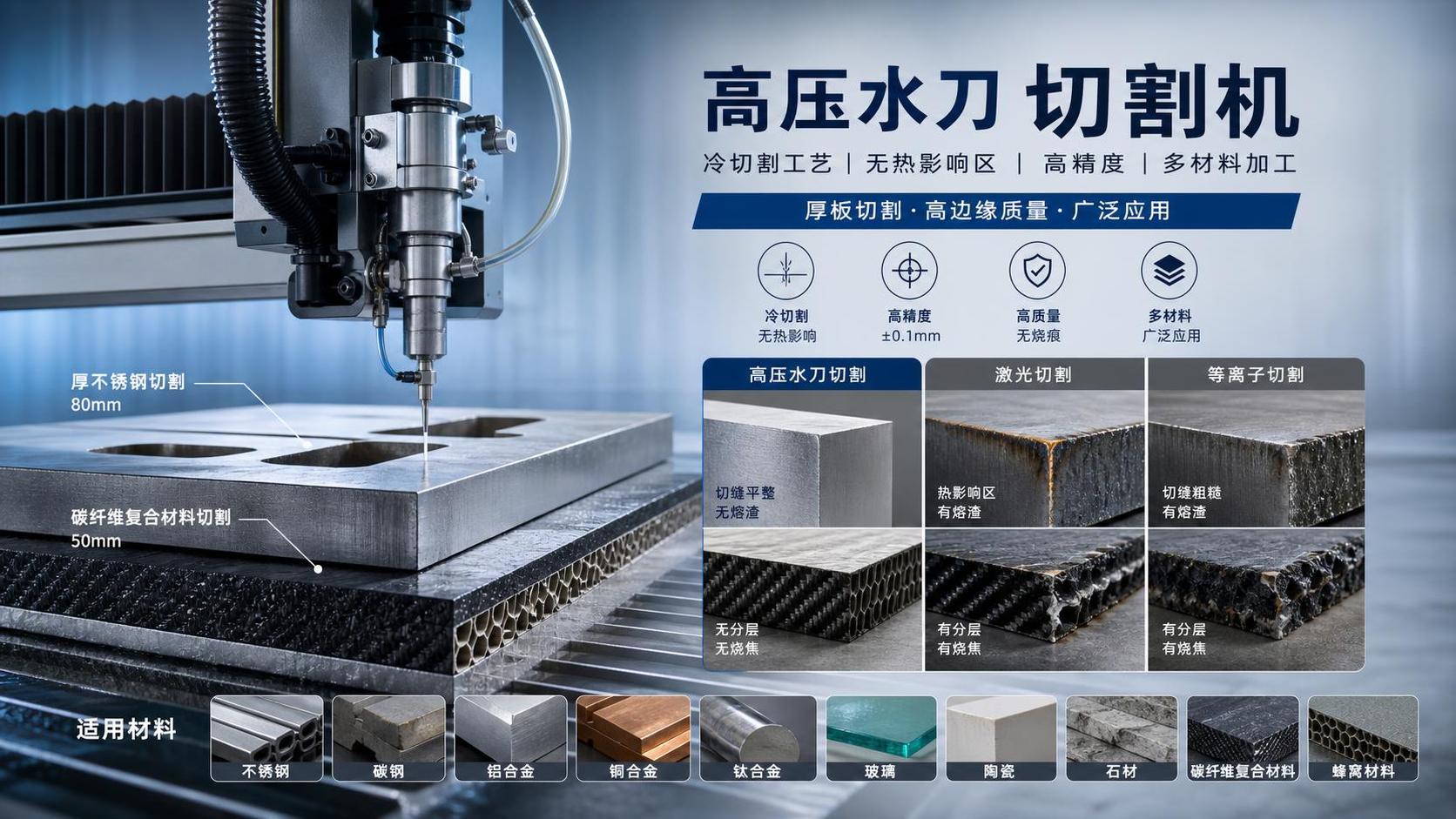
Your material cannot tolerate heat. This is one of the clearest decision points. Laser and plasma both use heat, which means heat-affected zones, possible warping, edge hardening, discoloration, or microstructural change depending on the material. A waterjet cutting machine is a cold-cutting process. If you are handling composites, rubber, foam, plastics, laminates, stone, glass, or metals where thermal distortion creates downstream scrap, waterjet deserves serious attention.
Buyers often underestimate the cost of post-cut correction. A part that needs flattening, edge cleanup, or rework after thermal cutting can erase an apparent machine-price advantage very quickly.
You need one process for many materials. Shops serving mixed demand usually feel this first. If your order book includes stainless steel this week, ceramic panels next week, and gasket material after that, waterjet offers flexibility that laser or plasma may not match in a single setup strategy. This matters for contract manufacturers, job shops, and import buyers sourcing for multiple end users. Fewer process changes usually mean less scheduling friction and lower risk when demand shifts.
Thickness is driving the decision. Plasma is often chosen for heavy plate because of speed, and laser can be excellent within its practical thickness range, but when you move into thicker sections and still care about cut quality or material variety, waterjet becomes more attractive. Exact thresholds depend on machine power, pump pressure, abrasive system, material type, and tolerance requirements, so they should be checked against supplier test cuts rather than brochure claims. If a vendor cannot provide verified sample performance on your actual material stack, treat that as a warning sign.
Your geometry is tight and edge quality matters. Intricate contours, internal corners, and nested parts can expose the weaknesses of thermal processes on some materials. Waterjet is often selected when buyers want to avoid burnt edges or secondary finishing. This is especially relevant if the cut edge is customer-facing, needs bonding later, or goes directly into assembly.
One practical check: ask whether your team is paying for cutting speed or for usable parts. Those are not always the same thing.
Where buyers make the wrong comparison
A common mistake is comparing hourly cutting speed alone. That works only if material type, rejection rate, edge finish expectations, energy use, consumables, and downstream labor are all similar. They rarely are.
For sourcing teams, this matters even more when buying from overseas. A low machine price can hide operating costs tied to abrasive consumption, pump maintenance, spare part lead times, or weak service support in your region. Those are not side issues. They affect uptime, and uptime is what buyers remember after installation.
Questions worth asking the supplier
Ask for sample cuts on your own drawings and your own materials. Not “similar.” Your own. If the decision is commercially important, send the actual workpiece thickness and note whether the edge will be welded, painted, laminated, sealed, or left visible.
- What materials has this machine been proven on in real production, not trade-show demos?
- How are taper control, nozzle wear, and cut consistency managed over long runs?
- Which wear parts are stocked locally, and what are the normal replenishment lead times?
- What water quality requirements apply? This is often overlooked and can affect pump life.
- Does the supplier provide documented training, installation support, and maintenance schedules?
If your project involves export markets, also confirm the electrical configuration, safety documentation, and any destination-specific compliance requirements with the supplier and local authority. Certification expectations vary by market, and anything beyond the supplier’s documented scope should be treated as 【待核实】.
When laser or plasma may still be the better choice
It is worth being blunt here. If you are cutting high volumes of thinner metal where speed is the main priority and thermal effects are acceptable, laser may be the more practical investment. If you are processing heavy plate where edge cosmetics are secondary and throughput matters more than fine finish, plasma can remain very competitive.
Waterjet is the stronger option when the cost of material damage, process inflexibility, or finishing problems is higher than the value of raw cutting speed.
A sensible buying filter
If you are still undecided, run a short evaluation in this order: material sensitivity, thickness range, edge quality target, part complexity, post-processing load, and local service availability. That sequence usually exposes whether a waterjet cutting machine is solving a production problem or just adding equipment cost.
For decision-makers, the best purchase is usually the one that creates the fewest surprises six months after commissioning. In applications where heat damage, mixed materials, and finish-sensitive parts are part of the daily workload, waterjet often wins that test.
Technical Specifications
- How to test melt flow consistency in batches of recycled plasticsAuthor :Polymers & Rubber Editorial Team
- When does a cast resin transformer need high-altitude derating?Author :Electrical Components Editorial Team
- How to verify Global Industrial Insights sourcing informationAuthor :Industrial Machinery Editorial Team
Expert Insights

Chief Security Architect
Dr. Thorne specializes in the intersection of structural engineering and digital resilience. He has advised three G7 governments on industrial infrastructure security.
Core Sector // 01
Security & Safety
- When does a high precision CNC machine justify its added cost?Author :Industrial Machinery Editorial Team

- When do CNC machines justify their higher upfront cost?Author :Industrial Machinery Editorial Team

- When a Waterjet Cutting Machine Is Better Than Laser or PlasmaAuthor :Industrial Machinery Editorial Team

- CNC Machines Buying Guide: Accuracy, Throughput, and ROIAuthor :Industrial Machinery Editorial Team

- What Causes CNC Machines to Lose Precision Over Time?Author :Industrial Machinery Editorial Team