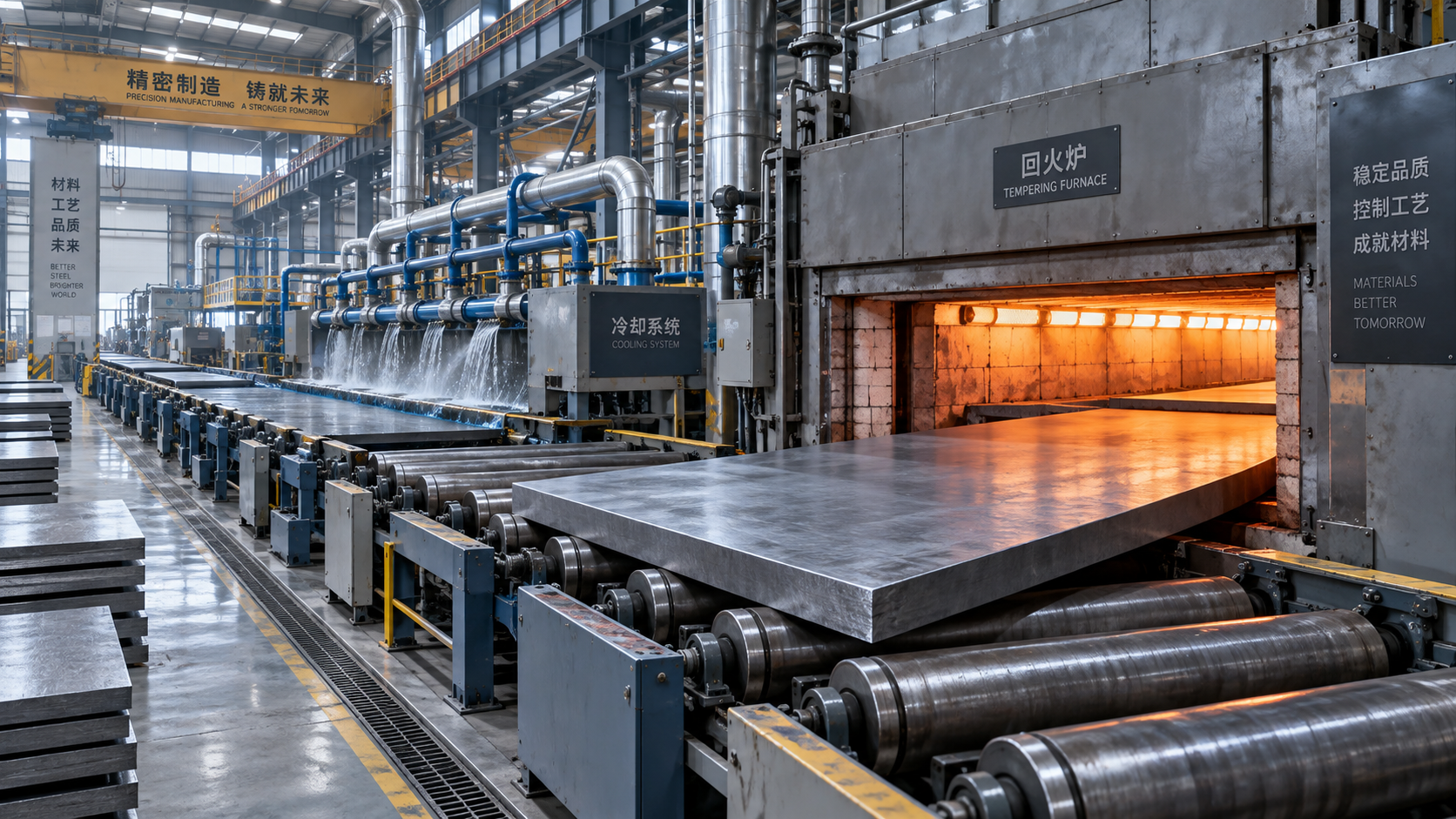
Hot-rolled vs. cold-drawn steel bars for precision machining
Author
Date Published
Reading Time
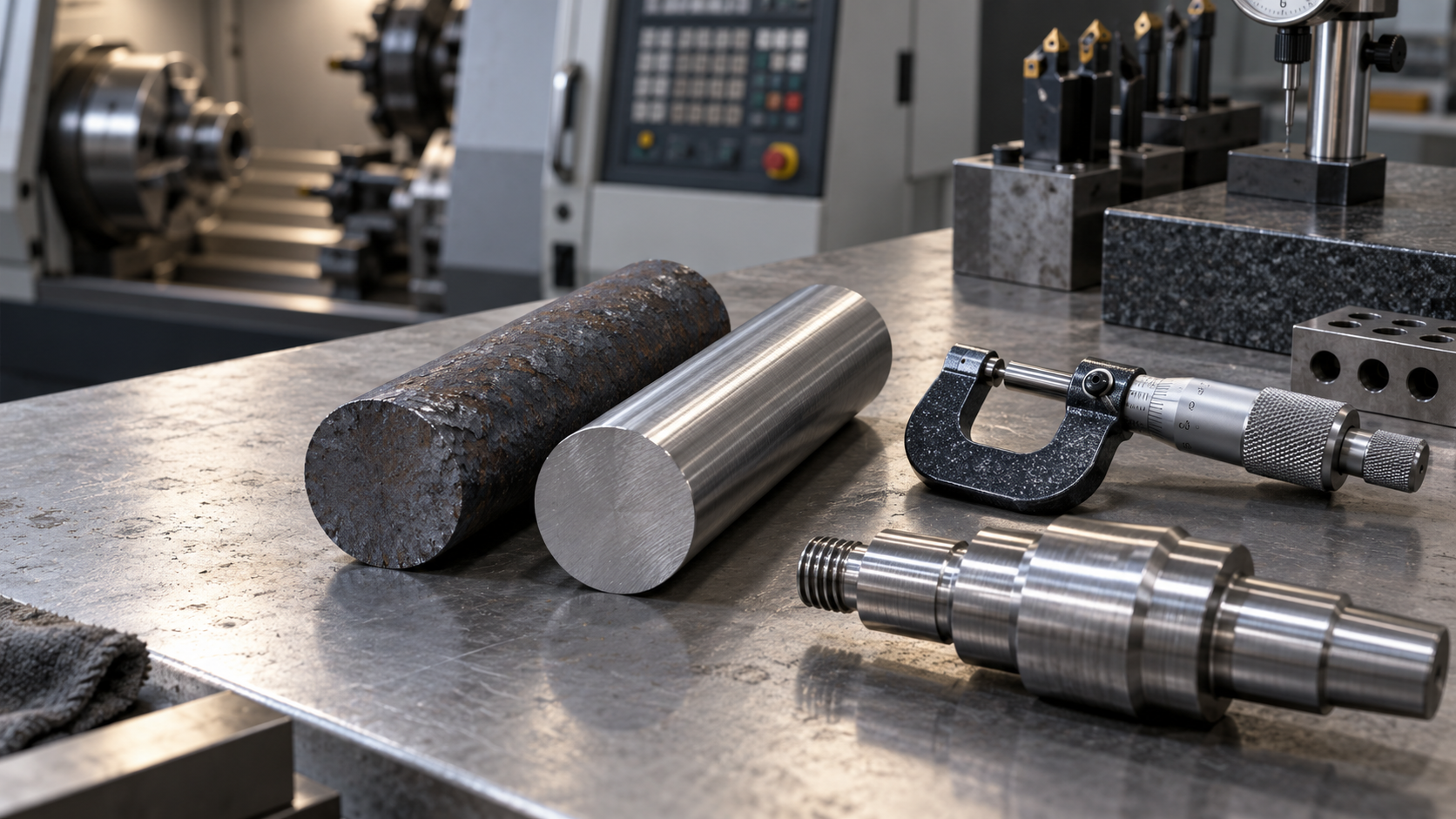
Choose cold-drawn steel bars when controlled stock dimensions, reliable feeding, and limited machining allowance are the main priorities. Choose hot-rolled stock when substantial material removal is planned and the process can accommodate scale, wider dimensional variation, and additional preparation. Neither route automatically produces a more accurate finished part: grade, heat treatment, residual stress, and machining sequence can outweigh the starting surface finish.
A turned shaft that bends after unclamping, or a milled component that moves after one face is removed, exposes the limits of selecting stock by appearance alone. Cold-drawn material can reduce preparation work but release residual stress during cutting. Hot-rolled material may cost less to purchase, yet require a larger starting section, more roughing, or straightening. The useful comparison is therefore between complete production routes, not just bar prices.
Separate the manufacturing route from the material specification
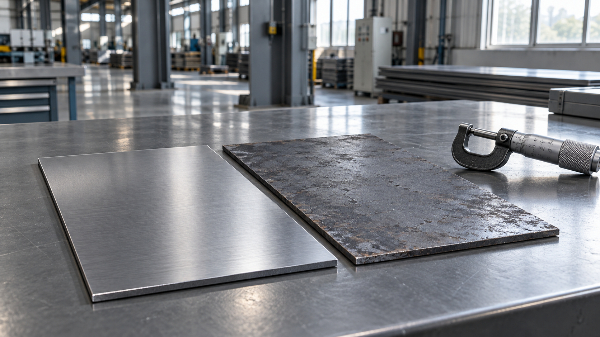
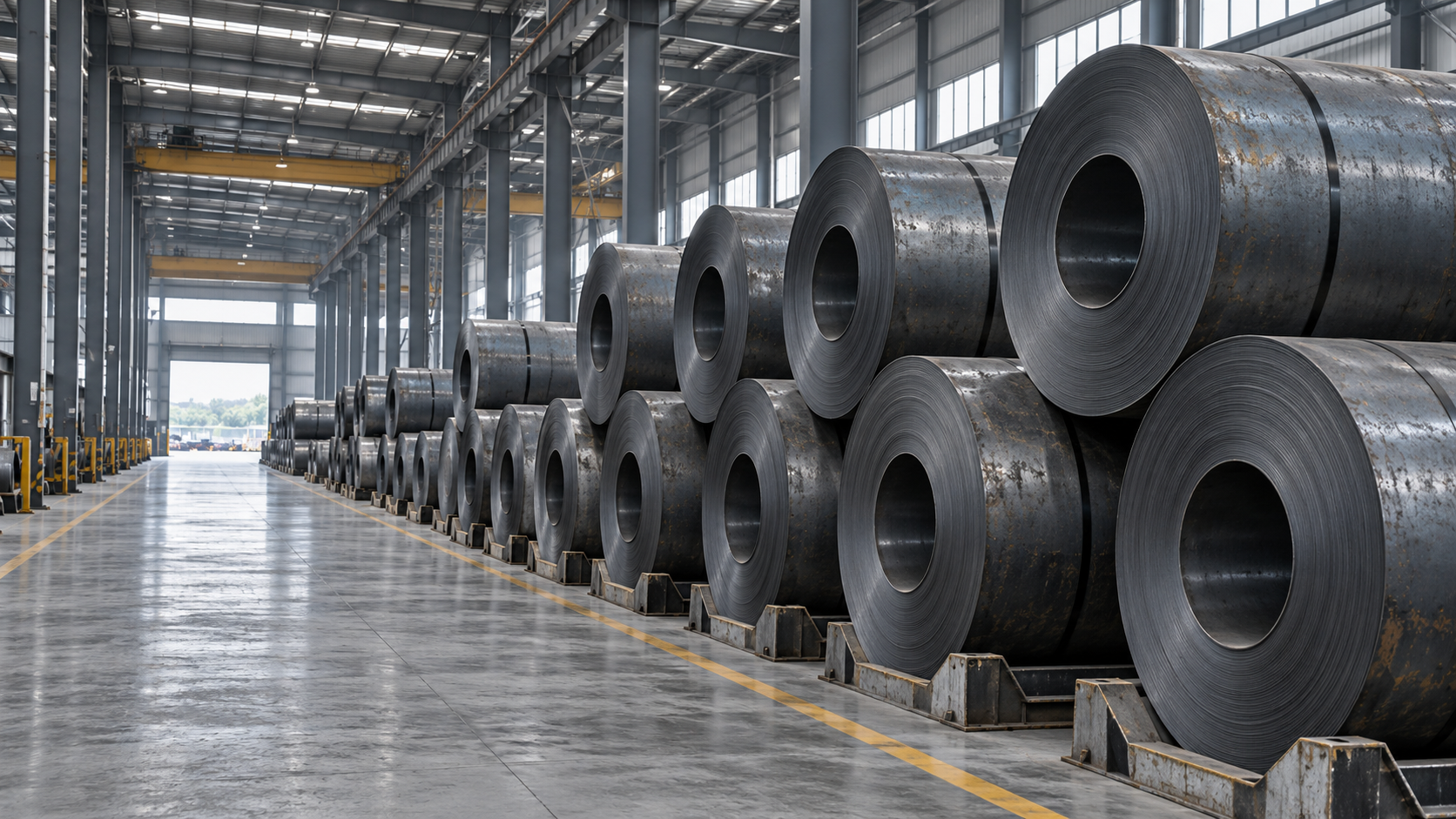
Hot-rolled bars are formed at elevated temperature and then cooled. Their surfaces commonly carry mill scale, and their dimensional and straightness tolerances are generally broader than those of cold-drawn products. The actual limits depend on section size, shape, manufacturing standard, and ordered condition.
Cold drawing pulls previously produced stock through a die at a temperature below the steel’s recrystallization range. This improves dimensional control and surface appearance while introducing cold work. Depending on grade and processing history, cold drawing generally raises strength and hardness and reduces ductility relative to the material before drawing.
“Cold-finished” is not always synonymous with “cold-drawn.” Turning, peeling, grinding, and polishing are other finishing operations. A bright bar may have been drawn, peeled, ground, or processed through several stages. Its appearance does not establish its residual-stress condition or mechanical properties.
Keep grade and delivery condition explicit during evaluation. Comparing a free-machining cold-drawn grade with a different hot-rolled engineering steel confounds chemistry with manufacturing route. Where practical, compare the same grade and verify any differences in hardness, heat treatment, and mechanical-property requirements before attributing cutting behavior to drawing or rolling.
The differences that affect the machining plan
The table describes tendencies, not acceptance limits. A tightly specified hot-rolled product may outperform loosely specified cold-drawn material on a particular requirement. Use the applicable dimensional tables and supplier commitments rather than treating the process name as a tolerance designation.
When a straight bar becomes a bent component
Residual stress is self-equilibrating within the starting section. Removing material changes that balance. A bar can arrive straight, run acceptably in the machine, and still curve after a deep pocket, long flat, or eccentric feature is machined. Clamping may temporarily conceal the movement until the part is released.
Cold drawing is therefore not a guarantee of dimensional stability. Slender shafts, thin walls, and strongly asymmetric removal deserve particular attention. Hot-rolled material is not automatically stress-free either: uneven cooling and straightening can leave stresses that become apparent during machining.
For distortion-sensitive geometry, assess a staged process: rough the part, release it from the fixture, measure movement, and then finish from stable datums. Balanced removal from opposing faces can reduce the imbalance created during cutting, although it cannot eliminate every source of distortion. Leave enough stock for finishing after any planned stabilization operation.
Stress relief may be appropriate, but the treatment must suit the grade, required properties, and subsequent operations. It can change hardness or reduce some benefits of cold work. Specify the required final condition rather than adding an unspecified heat treatment to solve movement discovered late in production.
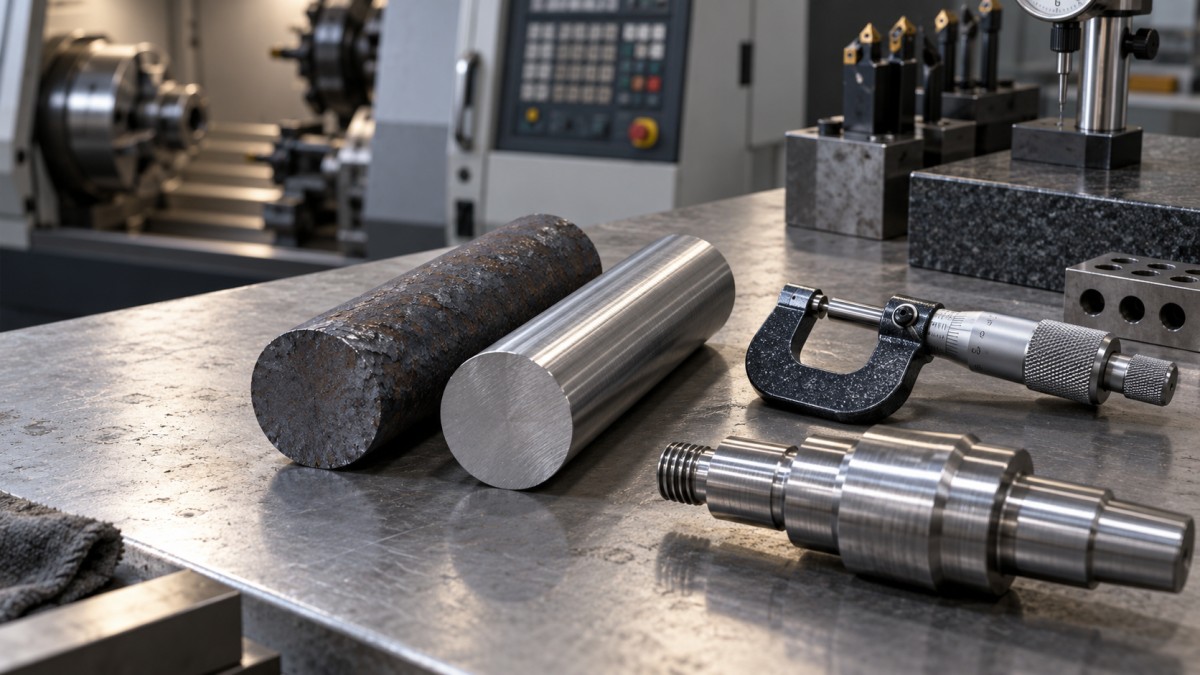
Separate material movement from workholding error during a trial. Measure after unclamping and after the part has returned to a consistent temperature. Chuck pressure, unsupported length, tool forces, and thermal growth can produce errors that resemble residual-stress release. A surface that is accurate while restrained is not proof that the free component meets the drawing.
Set machining allowance from the usable envelope
A nominal bar diameter does not define the largest fully cleaned-up component available from it. The usable envelope also depends on minimum actual size, ovality, straightness, surface condition, and the alignment established during the first setup. This distinction matters when attempting to purchase stock close to final dimensions.
For a round part, assess the minimum incoming section against the required finished diameter and the radial allowance needed for cleanup. Then consider whether bow, eccentric setup, or surface imperfections will consume additional stock locally. Do not treat half the nominal diameter difference as guaranteed machining allowance.
Cold-drawn stock is often attractive when only a light finishing cut is needed. However, retaining the supplied surface is acceptable only when its dimensional tolerance, roughness, surface integrity, and mechanical condition meet the component requirements. A bright surface is not automatically a bearing seat, sealing surface, or fatigue-qualified surface.
Hot-rolled stock becomes more attractive when the part already requires extensive roughing. In that situation, removing scale may add relatively little work compared with the total operation. Conversely, an oversized hot-rolled section can erase its purchase-price advantage when it adds substantial cutting time or forces an additional setup.
Feeding and gripping can decide the choice
Bar-fed turning introduces requirements beyond finished-part geometry. Diameter variation and straightness affect feeder operation, guide-bushing behavior, and grip consistency. Cold-drawn stock often provides a useful starting point, but its standard commercial condition may still be insufficient for a demanding machine configuration.
Confirm allowable stock diameter variation, straightness, surface condition, and bar-end preparation against the equipment requirements. For long rotating stock, follow the machine and feeder manufacturer’s support and speed limits; specifying a straighter bar does not replace proper support.
Better surface finish does not necessarily mean easier cutting
Machinability depends strongly on chemistry, microstructure, hardness, inclusions, and tool-workpiece interaction. The comparison cannot be reduced to “cold-drawn cuts better” or “hot-rolled is softer.” Drawing may improve consistency while increasing hardness. Depending on the material, that change can improve some aspects of chip behavior while increasing cutting forces or tool wear.
Mill scale on hot-rolled material creates a different challenge. Initial cuts encounter a hard, potentially abrasive surface, often with variable engagement. Tool grade, edge preparation, and depth of cut should suit that condition. Repeatedly skimming within an irregular scale layer can be less effective than a controlled pass that reaches sound material, where stock allowance and machine capability permit.
Compare the operations that dominate the actual part: drilling, threading, deep boring, and interrupted milling may respond differently from straightforward turning. Establish cutting parameters from the confirmed grade and hardness, then validate them on representative stock rather than transferring settings solely because the nominal grade matches.
Subsequent heat treatment can change the decision again. If hardening follows rough machining, transformation and thermal stresses may dominate final movement. The selection should then support the full roughing, treatment, and finishing sequence—not merely deliver the best as-machined dimensions before treatment.
Match the stock to the component geometry
- Short turned parts with limited removal: Cold-drawn material is often a strong candidate because tighter incoming dimensions can simplify gripping and reduce cleanup. Confirm that drawing-related hardness suits the cutting process.
- Large components machined extensively on all sides: Hot-rolled stock may be economical where sufficient allowance and roughing capacity already exist. Evaluate surface quality and the minimum usable section before ordering.
- Long shafts or thin, asymmetric components: Prioritize verified material condition and distortion trials over surface appearance. Consider whether stress-relieved, peeled, turned, or ground stock better fits the complete requirement.
- Parts using an unmachined outside surface: Specify that surface as a functional feature, including tolerances and integrity requirements. Neither manufacturing-route label establishes fitness for service.
A ground diameter may solve a size or finish problem without resolving internal stress. Likewise, stress-relieved stock may improve stability without meeting a demanding surface tolerance. These are separate purchasing requirements and should remain separate on the specification.
Compare cost per accepted part, then qualify the supply condition
Build the cost comparison around purchased material, cutting and handling time, tooling, outside processing, inspection, and scrap or rework. Use actual quotations and trial results. A lower price per unit mass can be misleading when the route needs a larger section, while a premium for cold-drawn stock is difficult to justify if nearly all of its controlled surface is removed.
Keep commercial risk visible as well. Compare available sizes, order quantities, lead times, and replacement availability. A process qualified on one delivery condition should not silently accept another simply because both are sold under the same grade name.
A useful purchase specification identifies the grade and governing standard, manufacturing and delivery condition, dimensions and tolerances, straightness, surface requirements, required mechanical properties, and inspection documentation. Add restrictions on process substitution where those differences affect qualification. Requirements for decarburization, seams, or other surface discontinuities should follow the component’s function and remaining machining allowance.
For the initial comparison, machine representative stock through the intended sequence and record incoming size, straightness, hardness, cutting behavior, and movement after roughing. Inspect finished dimensions after unclamping under consistent measurement conditions. Where repeatability matters, extend qualification beyond a single sample to assess lot-to-lot variation.
The final selection should identify the limiting requirement explicitly: cleanup envelope, feeder compatibility, cutting performance, or free-state dimensional stability. If cold-drawn stock satisfies the first three but moves beyond the finishing allowance, tighter incoming diameter is not the solution. If hot-rolled stock remains stable but requires excessive preparation, the next comparison should be against a more controlled delivery condition—not simply a cheaper bar quotation.
Facing technical bottlenecks in manufacturing or looking for more efficient industrial solutions? Leave your details below and let the engineering experts at GIi solve them for you.
“We respect your privacy. Your information is strictly confidential.”
Technical Specifications
- How to verify the consistency of PVC resin from a supplier in EuropeAuthor :Polymers & Rubber Editorial Team
- How to choose polyethylene grades in Saudi Arabia for film productionAuthor :Polymers & Rubber Editorial Team
- US Finds Imported Robots a Security Threat, Defers Tariffs for 180 DaysAuthor :Industrial Machinery Editorial Team
Expert Insights

Chief Security Architect
Dr. Thorne specializes in the intersection of structural engineering and digital resilience. He has advised three G7 governments on industrial infrastructure security.
Core Sector // 01
Security & Safety
- Canada Requires Stelco Jobs Plan Before Cleveland-Cliffs MeetingAuthor :Metals & Fabrication Editorial Team

- Hot-rolled vs. cold-drawn steel bars for precision machiningAuthor :Metals & Fabrication Editorial Team

- When to choose cold-rolled over hot-rolled carbon steel sheetAuthor :Metals & Fabrication Editorial Team

- Global Hot-Rolled Coil Markets Diverge by Region in October 2026Author :Metals & Fabrication Editorial Team

- Nippon Steel Plans $3 Billion Upgrade of U.S. Steel PlantsAuthor :Metals & Fabrication Editorial Team

- Global Steel Output Falls 0.2% to 142.4 Million Tonnes in September 2026Author :Metals & Fabrication Editorial Team

- Steel Dynamics Reports Record 3.8 Million Tonnes of Steel Shipments in Q3 2026Author :Metals & Fabrication Editorial Team

- How heat treatment affects the toughness of alloy steel platesAuthor :Metals & Fabrication Editorial Team