Are polished porcelain tiles too slippery for bathroom floors?
Author
Date Published
Reading Time
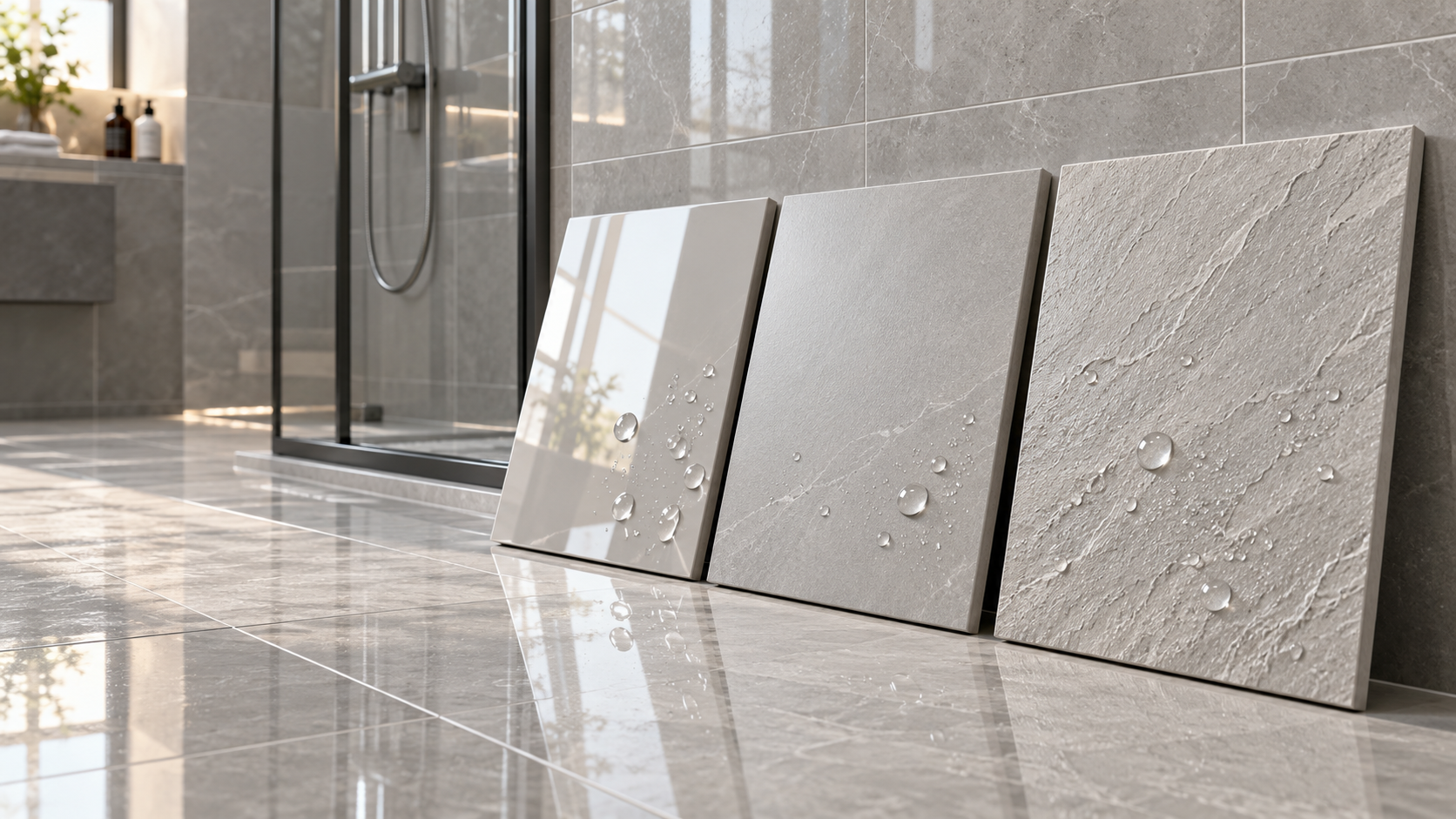
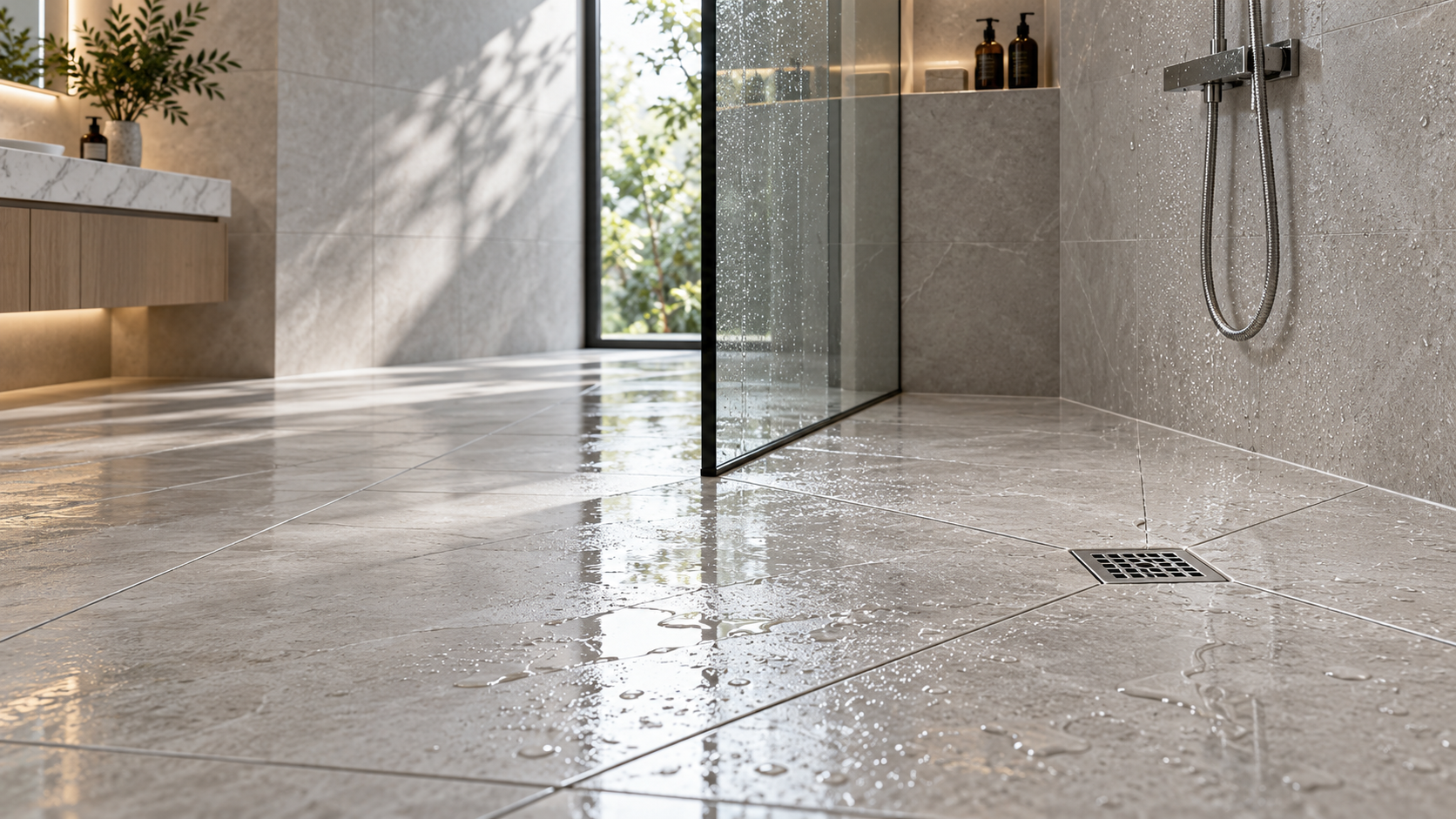
Polished porcelain tiles can be too slippery for bathroom floors, particularly where bare feet meet water, soap, or shampoo residue. They are generally a poor default choice for shower floors and bathrooms that stay wet. On a floor outside an enclosed shower, some products may be suitable, but the decision should depend on the exact tile’s intended use and wet slip-resistance information.
If you want a straightforward starting point, choose a matte or lightly textured porcelain floor tile with documented suitability for the conditions in your bathroom. Keep the polished finish for walls if you want the reflective look without making it the surface you walk on. A matte appearance alone, however, does not establish that a tile will provide adequate grip.
Why a polished surface becomes more difficult to walk on
Polishing creates a smooth, reflective surface. That finish can feel comfortable under dry feet, but water and cleaning residue can reduce traction between your foot and the tile. A floor that feels secure in a dry showroom may behave differently when you step out of a shower.
Porcelain’s low water absorption does not solve this problem. Water absorption describes how readily moisture enters the tile body; slip resistance concerns the interaction between the surface, your feet or footwear, and any contamination. A durable tile that absorbs very little water can still have a slippery surface.
Bathroom use adds several complications. People turn, reach for towels, stand on one foot while dressing, and move between wet and dry areas. Conditioner, body oil, and cleaning products can also leave films that change how the floor feels. These conditions make surface selection more consequential than it would be in a room normally used with dry shoes.
Gloss is a useful reason to investigate further, but it is not a reliable measurement. Two tiles with similar shine can have different surface characteristics, while a tile described as “satin” or “soft polished” may still be unsuitable for a wet floor.
Decide where the tile will actually get wet
A bathroom is not one uniform exposure area. The shower floor, the space beside a bathtub, and a separate toilet compartment can have very different requirements.
An open shower changes the assessment of the surrounding floor. Without a screen or threshold containing water, the route to the basin or door may regularly become wet. Treat that area according to how it functions, rather than assuming everything outside the shower drain area stays dry.
Children may splash beyond the shower enclosure, while someone with reduced balance may find sudden changes in traction difficult to manage. For a shared family bathroom or a bathroom intended for long-term accessibility, a surface with suitable wet-use performance is usually a more practical choice than a highly polished floor.
How to read slip-resistance information without overinterpreting it
Useful product documentation connects a test result to an intended application. A label that says only “anti-slip,” “bathroom suitable,” or “floor tile” leaves important questions unanswered. “Bathroom suitable” might refer to walls, and “floor tile” may describe suitability for areas that are normally dry.
Slip-resistance tests use different methods and conditions. Some measure friction as a test slider moves across a surface. Others assess performance on an inclined surface under specified conditions. Tests may involve footwear, bare feet, water, or another contaminant. Their results cannot simply be substituted for one another.
When comparing porcelain tiles, look for three things together: the test method, the conditions tested, and the manufacturer’s stated application. A dry result does not answer a wet-floor question. A result associated with shod use does not automatically establish suitability for a barefoot shower.
You may see dynamic coefficient of friction, often shortened to DCOF, in technical literature. Treat it as one piece of evidence about surface performance under a defined test. It does not reproduce every combination of soap, drainage, wear, cleaning residue, and human movement found in a bathroom.
The documentation must also match the exact finish you plan to buy. A collection can include polished, matte, structured, and mosaic versions with different surface properties. A favorable result for the textured version should not be applied to the polished version simply because both share the same color name.
If a retailer provides only a general brochure, ask for the technical sheet for the selected product and finish. A clear statement that a tile is intended for wet barefoot floors is more useful to this decision than an unexplained rating or a broad claim about the collection.
Polished, matte, or textured: what changes in everyday use?
Polished porcelain provides strong reflections and can emphasize marble effects or other decorative patterns. Its smooth surface can be straightforward to wipe, although water spots and streaks may be conspicuous. For bathroom floors, that appearance needs to be weighed against the product’s wet-use limitations.
Matte porcelain offers a less reflective appearance and may provide better traction, depending on its surface. It often creates a useful visual match with polished wall tiles from the same collection. Still, “matte” describes appearance rather than guaranteeing wet slip resistance.
Textured porcelain has surface relief that can help provide traction. More pronounced texture may also hold soap film and dirt, requiring more deliberate brushing or rinsing. The aim is to find an appropriate balance between grip, barefoot comfort, and realistic cleaning needs.
Partially polished finishes deserve careful attention because their names vary between suppliers. A sample may combine glossy high points with duller areas. Judge it through its application guidance and test information rather than assuming it sits safely between polished and matte.
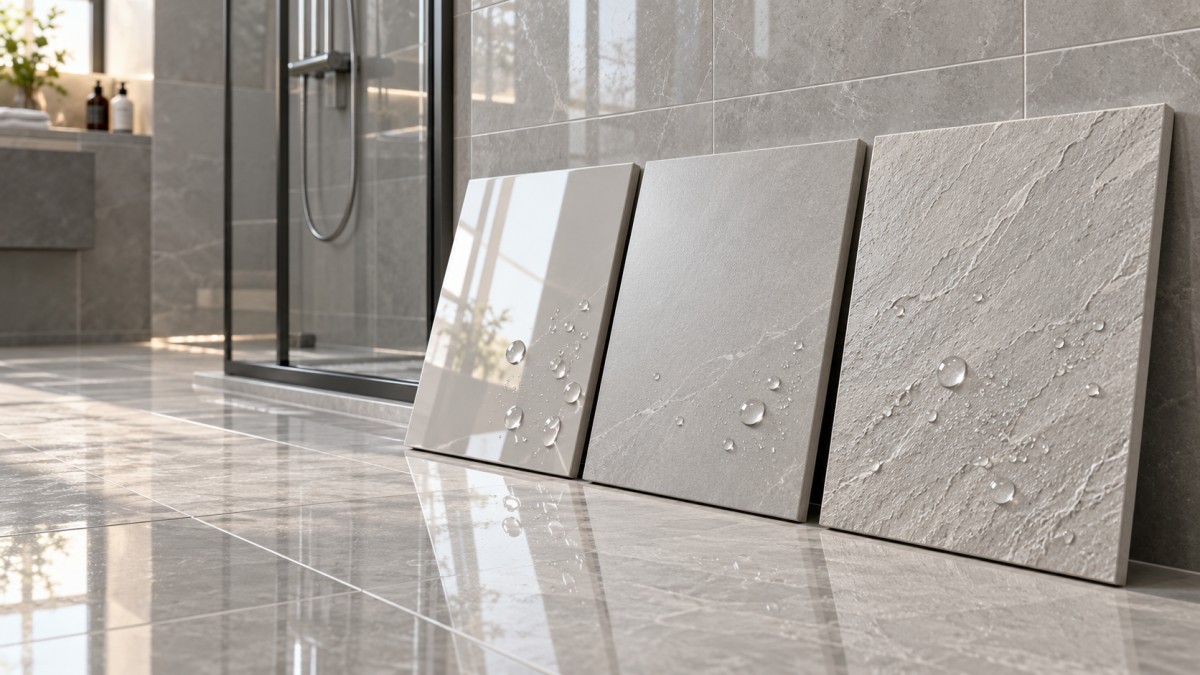
View samples together under lighting similar to your bathroom. A matte floor and polished wall can look coordinated even when their reflections differ. Examine the surface closely, feel whether its texture is comfortable, and consider how easily you could clean it. A showroom touch test helps assess finish and comfort; it cannot establish wet slip resistance.
Tile size, grout, and drainage also affect the result
Small tiles create more grout joints, which can interrupt a smooth walking surface and contribute to traction. They can also make it easier to form some shower-floor slopes. That does not make a polished mosaic automatically suitable: the tile surface, joint arrangement, grout, and intended application still matter.
Large tiles have fewer joints and can create a more continuous appearance. On a shower floor, their suitability depends partly on the drain layout and whether the installer can form the required slopes without awkward cuts or uneven edges. A format that works well with one drainage design may be difficult to use with another.
Drainage and installation should be considered alongside the surface specification. Water that collects in a low spot keeps the floor wet longer. Uneven tile edges can introduce a separate trip hazard. Neither suitable drainage nor careful installation can compensate for a surface that is inappropriate for its intended use.
Discuss the floor tile, drain, slopes, and transitions with the installer before ordering. This is especially useful for a level-access shower, where water containment and a comfortable route through the bathroom need to work together.
What if polished tiles are already installed?
Start by identifying whether the problem comes mainly from surface contamination, persistent water, or the tile’s finish. A floor that became noticeably slick after a change in cleaning product may have residue. One that has always felt slippery when wet may have a more fundamental suitability problem.
Clean with a product approved for the tile and follow its dilution and rinsing instructions. Avoid adding waxes, shine enhancers, or other films unless they are specifically part of an approved maintenance system. Porcelain does not generally need a coating simply because it is used in a bathroom; some polished products have particular protection requirements, so follow their care instructions.
Reduce water reaching the floor by addressing leaking screens, excessive splash, or drainage problems. A suitable bath mat can help at the shower exit, provided it grips the floor, lies flat, and is dried regularly. Loose towels and mats that slide introduce additional hazards.
Anti-slip treatments and coatings need careful consideration. Depending on the product, they may alter gloss, color, cleaning requirements, or warranty coverage. Any proposed treatment should be compatible with the exact tile, assessed on a spare piece, and supported by relevant performance information. A treatment is not automatically a permanent remedy.
If the floor remains difficult to use safely, replacing the affected area may be the more dependable option. This deserves particular attention inside a shower or where someone already struggles with balance.
What to ask before placing an order
Bring the supplier a clear description of the room: whether the shower is enclosed, where bare feet will be wet, and whether children or people with limited mobility will use it. Then ask:
- Is this exact finish intended for the bathroom floor area being specified?
- What wet slip-resistance information supports that application, and does it address barefoot use where relevant?
- Does the documentation apply to this product code, rather than another finish in the collection?
- What cleaning routine preserves the surface, and are any treatments required?
- Is there a coordinating matte or textured floor option if the polished version is unsuitable?
For a frequently wet bathroom, the most practical route is usually a documented wet-use floor surface paired with the polished look on walls. If you prefer polished porcelain underfoot, choose it only where the product information and actual room conditions support that decision. Resolve those points before ordering, while changing the finish is still easy.
Facing technical bottlenecks in manufacturing or looking for more efficient industrial solutions? Leave your details below and let the engineering experts at GIi solve them for you.
“We respect your privacy. Your information is strictly confidential.”
Technical Specifications
- How to verify the consistency of PVC resin from a supplier in EuropeAuthor :Polymers & Rubber Editorial Team
- How to choose polyethylene grades in Saudi Arabia for film productionAuthor :Polymers & Rubber Editorial Team
- US Finds Imported Robots a Security Threat, Defers Tariffs for 180 DaysAuthor :Industrial Machinery Editorial Team
Expert Insights

Chief Security Architect
Dr. Thorne specializes in the intersection of structural engineering and digital resilience. He has advised three G7 governments on industrial infrastructure security.
Core Sector // 01
Security & Safety
- Are slip resistant porcelain tiles suitable for wet bathrooms?Author :Construction Materials Editorial Team

- Are polished porcelain tiles too slippery for bathroom floors?Author :Construction Materials Editorial Team

- How flat should the subfloor be for large format porcelain tiles?Author :Construction Materials Editorial Team

- How to measure for cut-to-size marble before placing an orderAuthor :Construction Materials Editorial Team

- What to verify before placing an order with a ceramic tiles supplierAuthor :Construction Materials Editorial Team

- How to prevent outdoor porcelain tiles from cracking in freeze-thaw conditionsAuthor :Construction Materials Editorial Team

- How to assess quality consistency from a granite exporter in BrazilAuthor :Construction Materials Editorial Team

- Which compliance standards apply to imported granite for building projects?Author :Construction Materials Editorial Team