When is a recyclable thermoplastic elastomer suitable for seals?
Author
Date Published
Reading Time
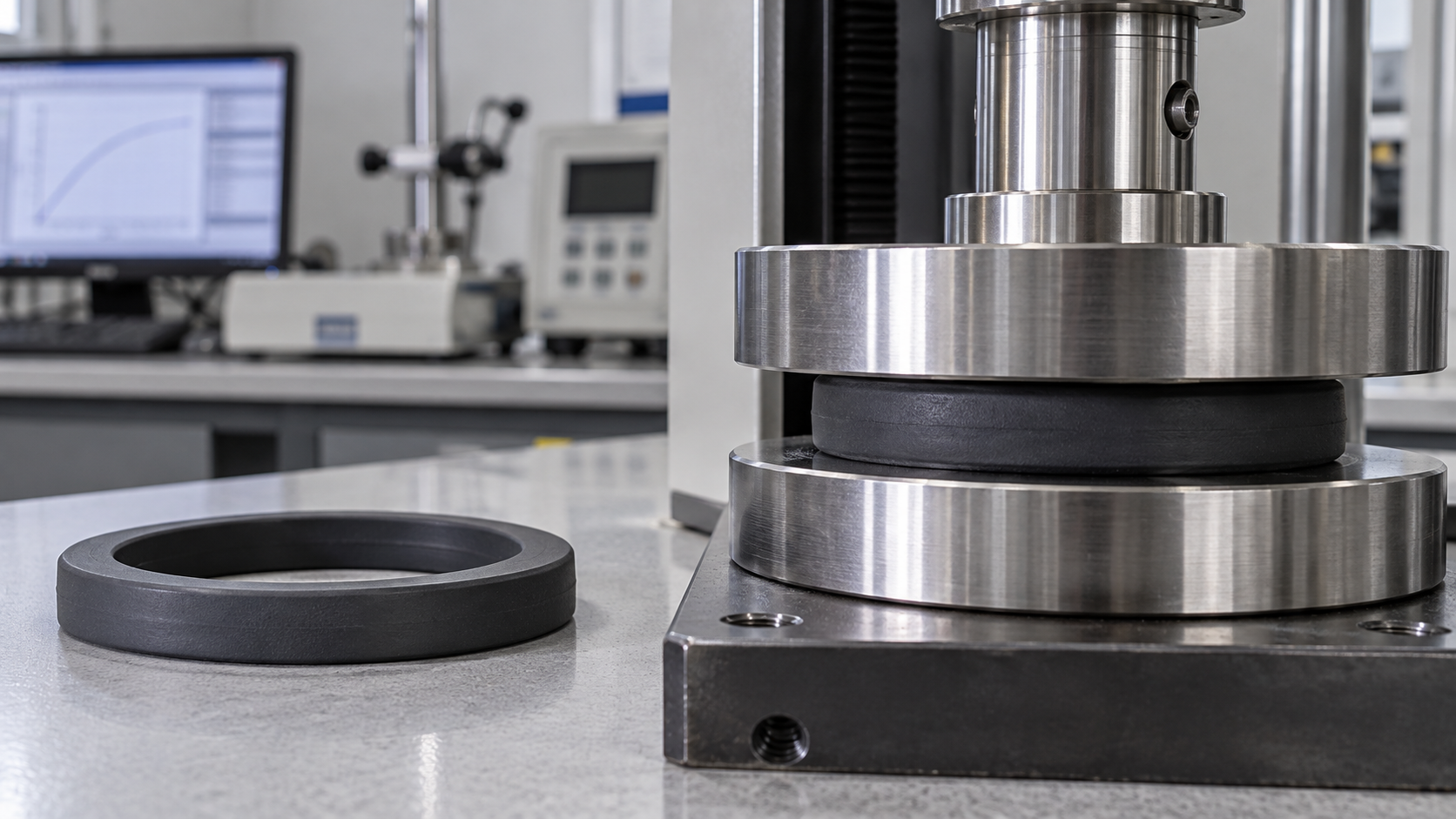
A recyclable thermoplastic elastomer can be suitable for seals when the selected grade maintains adequate sealing force throughout the required life, resists the fluids it contacts, and remains stable across the application’s temperature and pressure range. Static gaskets, enclosure seals, and some low-pressure fluid seals are reasonable candidates for evaluation. High-temperature, high-pressure, or demanding dynamic service calls for stronger evidence before replacing an established rubber compound.
The decision has two separate acceptance requirements: reliable sealing and a credible recycling route. A material’s ability to be remelted does not establish its resistance to leakage, and successful reuse of factory scrap does not prove that a contaminated seal can be recycled after service. Both requirements should be defined before material approval.
Start with the seal’s duty, then shortlist the material
“Thermoplastic elastomer” covers several material families with different behavior. Styrenic TPEs, thermoplastic vulcanizates, thermoplastic polyurethanes, and other thermoplastic elastomers cannot be treated as interchangeable. Even within one family, formulation, hardness, additives, and processing history can change sealing performance substantially.
Some TPV grades, for example, combine a thermoplastic phase with a dispersed crosslinked rubber phase. They can be processed thermoplastically, but their properties and recycling behavior still depend on the complete formulation. A broad label such as “recyclable TPE” provides too little information for engineering approval.
Begin by describing how the seal must work. A gasket held between rigid flanges faces different demands from a sliding lip seal or a repeatedly opened closure. The first may depend mainly on sustained contact force; the second adds friction and wear; the third requires recovery after repeated compression and release.
Useful screening information includes:
- Continuous operating temperature, short excursions, and the lowest startup temperature.
- Pressure differential, pressure cycling, and any clearance through which the seal could extrude.
- Contact fluids, their concentrations, and cleaning or sanitizing exposures.
- Installed compression, dimensional tolerances, surface condition, and joint movement.
- Required service life, allowable leakage, and the consequences of failure.
A static enclosure gasket with controlled compression and limited chemical exposure may offer a practical starting point. A compact seal exposed to hot oil, pressure pulses, and a moving shaft presents a much more demanding qualification problem. Neither application can be judged from hardness or a nominal temperature rating alone.
Replacement projects also require care. A geometry developed around a thermoset rubber may not suit a thermoplastic elastomer with different creep, recovery, friction, or thermal expansion. Material substitution may require changes to the groove, compression stops, or retention features.
Judge the ability to retain sealing force
For many static seals, the central question is whether enough contact pressure remains after prolonged compression. A new gasket may seal easily during assembly and still lose effectiveness after heat exposure, dimensional movement, or a period without maintenance.
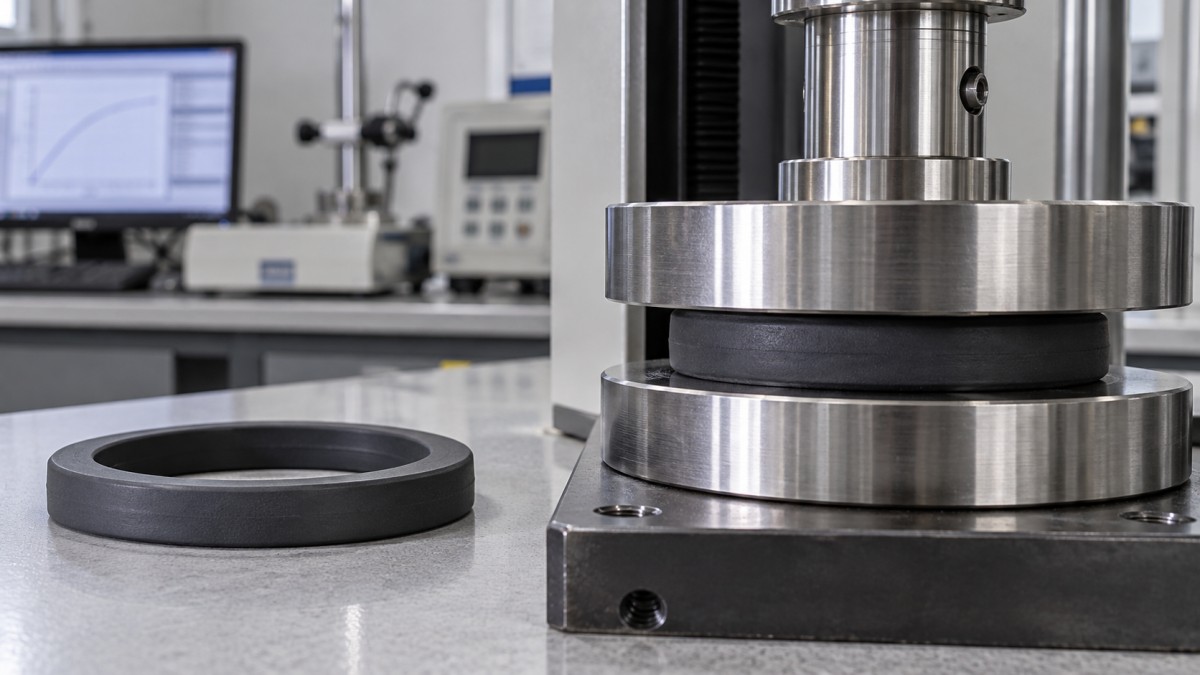
Compression set is a useful screening property. It describes the permanent deformation remaining after a specimen has been compressed under defined conditions and then allowed to recover. Lower values can indicate better recovery, but comparisons are meaningful only when the test method, temperature, duration, compression, and recovery conditions are comparable.
Compression set does not directly measure the force available to maintain a seal while the part remains compressed. Compression stress relaxation addresses that concern more closely by tracking the decline in force under sustained deformation. For long-life static seals, request both types of evidence where available, then validate leakage in the actual assembly.
Room-temperature data can be particularly misleading when the installed part runs warm. Thermoplastic elastomers can show increasing creep and force loss as temperature rises. A published upper service temperature may reflect a particular property threshold or exposure condition; it should not automatically become the continuous operating limit for a compressed gasket.
Consider a flange gasket that remains assembled during operation but must reseal after cooling. It needs sufficient force while hot and enough recovery to accommodate contraction afterward. A specimen that appears acceptable immediately after assembly may fail during thermal cycling, especially if flange movement reduces compression.
The opposite end of the temperature range matters too. A seal that becomes too stiff during a cold start may struggle to follow surface irregularities or joint movement. For a moving seal, the same change can affect friction and starting force. Qualification should therefore include the conditions under which leakage is most likely, rather than only the most convenient laboratory temperature.
Pressure adds another constraint. A soft compound may conform well to a surface but deform into an unsupported clearance. Increasing hardness can improve resistance to deformation while reducing conformity or raising assembly force. Groove support, clearance, and compression control must be assessed together with material properties.
For dynamic seals, extend the evaluation to friction, wear, lubrication, and heat generated at the contact surface. Some thermoplastic elastomers can perform well in selected moving applications, but tensile strength and abrasion data alone do not establish dynamic sealing life. Surface finish, motion, speed, and lubricant compatibility all influence the result.
Check exposure conditions against the exact grade
Chemical compatibility is often where a promising candidate becomes unsuitable. Resistance varies across TPE families and formulations, so a general statement that a material is “oil resistant” or “water resistant” is insufficient for a seal approval.
Identify the actual process fluid, including additives and contaminants. Lubricating oils can differ in formulation; cleaners can change in concentration; water service may include disinfectants or elevated temperatures. Where the seal encounters several media in sequence, the exposure history can matter as much as any single fluid.
Swelling is only one possible failure mechanism. A compound may soften, harden, shrink after drying, lose tensile properties, or release ingredients into the contacting fluid. Changes that appear small in an immersion specimen can alter contact pressure, friction, or retention in a tightly toleranced seal.
Ask for compatibility evidence that states the exposure temperature, duration, fluid composition, and measured changes. Hardness, volume, mass, and mechanical-property retention can support screening. For a critical application, follow this with testing of compressed seals, because an unstressed specimen does not reproduce the installed condition.
Hot water and steam deserve separate attention. Resistance to occasional splashing does not demonstrate suitability for repeated hot cleaning or steam exposure. Hydrolytic stability, thermal aging, and recovery after the cleaning cycle must be considered for the chosen grade.
Exposure outside the sealed system also matters. An outdoor gasket may need weathering and ozone resistance, while an indoor component may contact assembly lubricants, adhesives, or cleaning sprays. These secondary exposures are easy to omit from a material specification and can become the cause of premature failure.
Where food, drinking-water, medical, or other regulated contact requirements apply, obtain documentation covering the relevant grade and intended conditions of use. A material family’s reputation or a supplier’s general compliance statement does not establish that every formulation, color, or recycled-content version is acceptable.
Conventional rubber remains a useful benchmark. Depending on the compound and duty, EPDM, silicone, NBR, or FKM may offer a better balance of heat resistance, fluid compatibility, recovery, or service history. A thermoplastic elastomer becomes attractive when its demonstrated sealing performance combines with useful manufacturing benefits, such as molding integration or recoverable production scrap.
Establish what “recyclable” means for this seal
Thermoplastic processing creates opportunities to recover material, but the practical route depends on how the seal is manufactured, assembled, and discarded. Clean runners and rejected parts from a controlled molding operation are a different feedstock from used seals containing oil, adhesive, dirt, or mixed polymers.
For production scrap, establish whether the specific compound can be reground and reintroduced into the process. The permitted proportion and number of processing cycles should be supported by property and processing data. Repeated heat and shear can affect material performance, and a blend that molds successfully may still require separate sealing validation.
Post-use recycling requires additional evidence: collection, identification, separation, cleaning, and acceptance by a suitable recycler. A small gasket dispersed across many end products may be technically reprocessable yet difficult to recover economically. A defined return stream of removable seals offers a more credible route.
Assembly design can determine whether recovery is practical. Overmolding may reduce assembly work and improve retention, but a strong bond to an incompatible substrate can make separation difficult. Adhesives, inserts, and coatings introduce further complications. Evaluate the finished component and its likely waste stream, rather than the loose elastomer alone.
Also distinguish recyclability from recycled content. A seal made from virgin material can be recyclable, while a compound containing recycled feedstock still needs evidence of stable performance. Variability in the feedstock, contamination control, and changes in additives can influence consistency between production lots.
If recycling is part of the selection rationale, the supplier discussion should produce a specific account of what material is recovered, where it goes, and what quality limits apply. “Can be melted again” is an incomplete basis for an end-of-life claim.
Approve the grade through a staged qualification
A useful qualification process narrows uncertainty before committing to tooling or production. Start with an exact grade designation and an application specification. Supplier data should identify test conditions and distinguish typical values from guaranteed limits; otherwise, apparently comparable figures may describe different tests.
Shortlist candidates using compression behavior, temperature capability, fluid compatibility, and manufacturing requirements. Where possible, compare them with the incumbent compound under matching conditions. This helps show whether a proposed substitution has adequate margin and where assembly changes may be necessary.
Then test molded seals in representative hardware. Include tolerance extremes that affect compression, relevant thermal and pressure cycles, and exposure to service fluids. Measure leakage against a defined acceptance limit. For a reusable closure, add opening and reclosing cycles; for a dynamic seal, reproduce the relevant motion and lubrication.
Set acceptance criteria before testing. A part that passes an initial pressure check may still be unsuitable if leakage increases after aging, assembly force becomes excessive, or the seal cannot recover after maintenance. Accelerated testing can help compare candidates, but any prediction of service life needs a defensible connection to operating conditions.
Finally, qualify the manufacturing route. Processing conditions, shrinkage, flash, weld lines, and dimensional consistency can affect the finished seal. If production will include regrind or recycled feedstock, validate that formulation and process as part of the approval. Results from virgin material alone do not establish the performance of every later blend.
A recyclable thermoplastic elastomer earns approval when the finished seal meets the application’s leakage and durability requirements with adequate margin, and the proposed recovery route works for the actual component. Where evidence is incomplete, a bounded trial in an accessible, lower-consequence application can provide a sensible next step. Broader substitution should follow the conditions demonstrated by that qualification.
Facing technical bottlenecks in manufacturing or looking for more efficient industrial solutions? Leave your details below and let the engineering experts at GIi solve them for you.
“We respect your privacy. Your information is strictly confidential.”
Technical Specifications
- How to verify the consistency of PVC resin from a supplier in EuropeAuthor :Polymers & Rubber Editorial Team
- How to choose polyethylene grades in Saudi Arabia for film productionAuthor :Polymers & Rubber Editorial Team
- US Finds Imported Robots a Security Threat, Defers Tariffs for 180 DaysAuthor :Industrial Machinery Editorial Team
Expert Insights

Chief Security Architect
Dr. Thorne specializes in the intersection of structural engineering and digital resilience. He has advised three G7 governments on industrial infrastructure security.
Core Sector // 01
Security & Safety
- How to verify the consistency of PVC resin from a supplier in EuropeAuthor :Polymers & Rubber Editorial Team

- How to choose polyethylene grades in Saudi Arabia for film productionAuthor :Polymers & Rubber Editorial Team

- When is a recyclable thermoplastic elastomer suitable for seals?Author :Polymers & Rubber Editorial Team

- How to choose the right hardness for thermoplastic elastomersAuthor :Polymers & Rubber Editorial Team

- BASF, Chery and Coordinate Showcase EMB Brake-by-Wire System for Series ProductionAuthor :Polymers & Rubber Editorial Team

- India’s Bottle-Grade PET Resin Market Holds Steady on Festive DemandAuthor :Polymers & Rubber Editorial Team

- How to evaluate a TPE material supplier for batch consistencyAuthor :Polymers & Rubber Editorial Team

- Which appliance resins withstand repeated hot-water exposure?Author :Polymers & Rubber Editorial Team