Can soundproof doors and windows block low-frequency traffic noise?
Author
Date Published
Reading Time
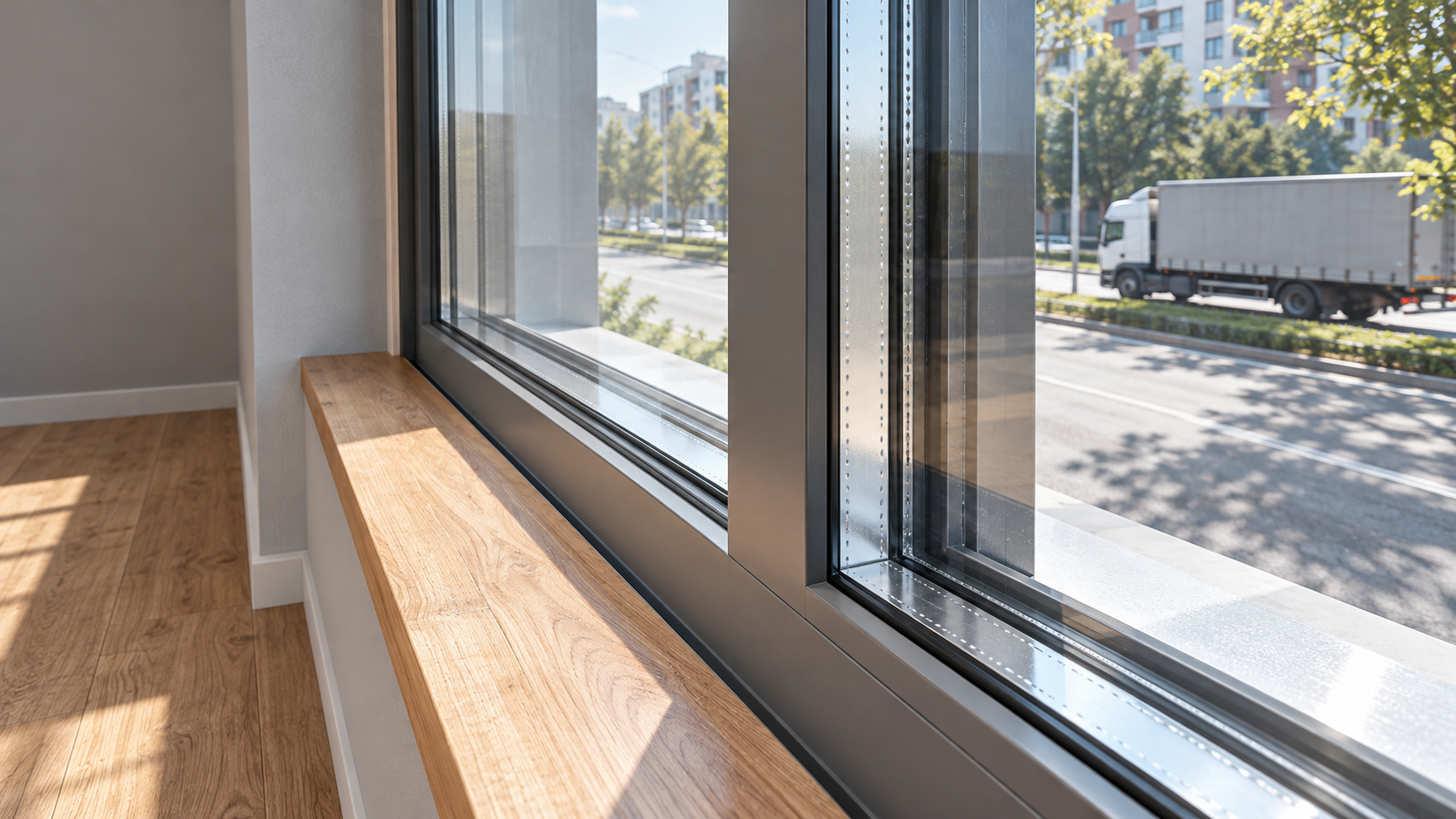
Soundproof doors and windows can reduce low-frequency traffic noise, but they rarely eliminate it. A well-designed, properly installed system can make passing trucks, buses, and accelerating vehicles less intrusive. The result depends on how much sound enters through the openings, how the products perform at low frequencies, and whether other parts of the building let the same rumble through.
For a homeowner deciding whether to invest, the first question is whether the windows or doors are the main entry path. The second is whether the proposed replacement has evidence of performance against traffic noise. A product that noticeably softens voices or tire hiss may still leave a deep engine rumble audible indoors.
Why traffic rumble survives after the windows close
Road traffic contains a mixture of sounds. Tire contact, horns, and engine noise occupy different parts of the frequency range. Heavy vehicles can produce a low-pitched component that remains noticeable after higher-frequency sounds have been reduced. The room may become quieter overall while individual truck passes still disturb sleep or concentration.
Low-frequency sound is difficult to control because doors, glass, and building surfaces can vibrate and transmit it. Adding weight can help, but performance also depends on stiffness, damping, air spaces, and resonances within the assembly. Two products with similar glass thickness can therefore perform differently against the same traffic.
There can also be more than one route into a room. Sound may pass through the glazing, leak around a sash, enter through a ventilation opening, or travel through adjoining walls and roof construction. Improving one route exposes the contribution of the others. This limits how closely a laboratory product rating can predict the improvement in a particular home.
A separate issue arises when traffic causes the building itself to vibrate. A rattling window may respond to airborne sound, loose hardware, or vibration transmitted through the structure. Better seals and glazing can address some of these effects, but replacing a window cannot be assumed to solve vibration arriving through the ground and building frame.
Work out whether replacement is likely to help
Start by listening during the conditions that cause the problem: truck acceleration, buses stopping nearby, or overnight freight traffic. Compare the sound near the window, beside the external door, and deeper inside the room. These observations can help locate obvious weaknesses, although room resonances make them an imperfect diagnostic tool.
Check that each opening closes fully. Worn seals, loose latches, distorted frames, and gaps beneath doors deserve attention before a complete replacement is specified. Air leakage can undermine otherwise capable glazing. Repairs may provide a useful improvement where gaps dominate, but they cannot overcome the transmission limits of the glass or door panel itself.
Pay particular attention to ventilation. A closed acoustic window offers little protection if an untreated vent provides an easy path from the road. If the room depends on open windows for fresh air or cooling, consider how it will remain comfortable with them shut. Any alternative ventilation system needs its own noise assessment, including sound entering through the duct and noise from its equipment.
For severe disturbance, an acoustic survey can help distinguish window transmission from other routes. Ask whether the assessment includes frequency information during representative traffic events. An overall average alone may obscure the low-frequency sound that prompted the complaint. Measurements also need enough context to distinguish road noise from indoor equipment or other background sources.
Which construction details deserve your attention?
Thicker glass can help, but thickness alone is an incomplete selection rule. Heavier panes generally resist airborne sound transmission better in some frequency regions. However, glass has frequency-dependent weaknesses, and a double-glazed assembly adds interactions between the panes and the enclosed air. Buying the thickest available glass without checking the complete assembly can be an expensive guess.
Different pane thicknesses can help avoid aligning some acoustic weaknesses. Laminated glass can add damping, particularly when its interlayer is designed for acoustic use. Neither feature guarantees strong reduction of deep traffic rumble. Ask how the exact proposed combination performs, including pane thicknesses, interlayer, cavity, frame, and opening arrangement.
The air space deserves similar scrutiny. A narrow insulating-glass cavity selected for thermal performance does not automatically provide the acoustic behavior needed for traffic noise. A double-glazed unit can have a resonance region where sound insulation is weaker. Triple glazing adds another pane and cavity, but its acoustic benefit depends on the design; the extra pane alone does not establish superiority.
Secondary glazing can be worth evaluating when the existing window is serviceable. A separate interior window can create a substantially deeper air space than an ordinary sealed glazing unit. With suitable glass, airtight construction, and appropriate detailing, that arrangement can improve sound insulation. The practical constraints include access to the original window, cleaning, condensation management, and any required escape route.
Frames and opening mechanisms matter because the glass is only part of the barrier. A system that closes against continuous compression seals may offer an advantage over one with less effective sealing, but the actual product evidence should decide the comparison. Check corners, meeting rails, hardware adjustment, and the joint between the frame and surrounding wall. A good glass specification cannot compensate for a persistent leak.
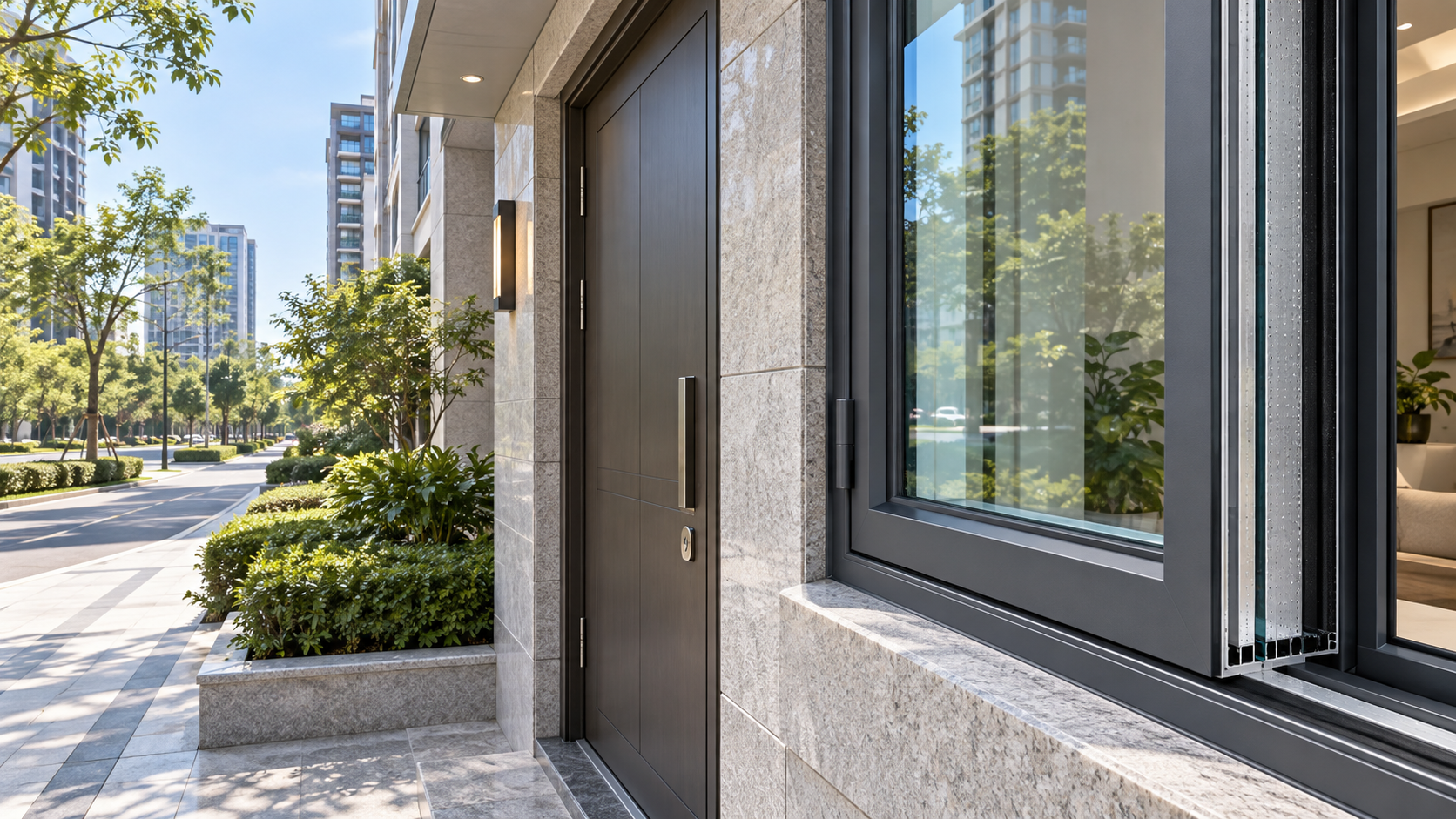
For exterior doors, assess the leaf, frame, perimeter seals, and threshold together. A substantial door panel may still perform poorly if sound passes beneath it. Glazed sections, letter slots, and pet doors can also weaken the assembly. An acoustic threshold or drop seal must make reliable contact when closed while accommodating everyday operation and applicable access requirements.
Read the acoustic rating behind the sales claim
Soundproof doors and windows are often advertised using a single decibel figure. Before comparing those figures, establish what each one describes. It could be a laboratory rating for glass alone, a result for a complete window, or a claimed difference measured under particular conditions. These figures are not interchangeable, and none should automatically be read as the reduction you will experience in your bedroom.
STC, or Sound Transmission Class, is a useful building-acoustics rating, but it gives limited insight into the deepest traffic rumble. OITC, or Outdoor-Indoor Transmission Class, includes lower frequencies and uses a transportation-noise reference spectrum, making it more relevant to many exterior-noise comparisons. Even OITC compresses a range of performance into one number, so it can conceal differences that matter at your property.
Where product reports use Rw, ask whether the traffic-related spectrum adaptation term Ctr is also provided. Reading Rw together with Ctr offers more relevant context for traffic noise than Rw alone. Keep comparisons within the same rating method; an STC value and an Rw or OITC value cannot be treated as equivalent scores.
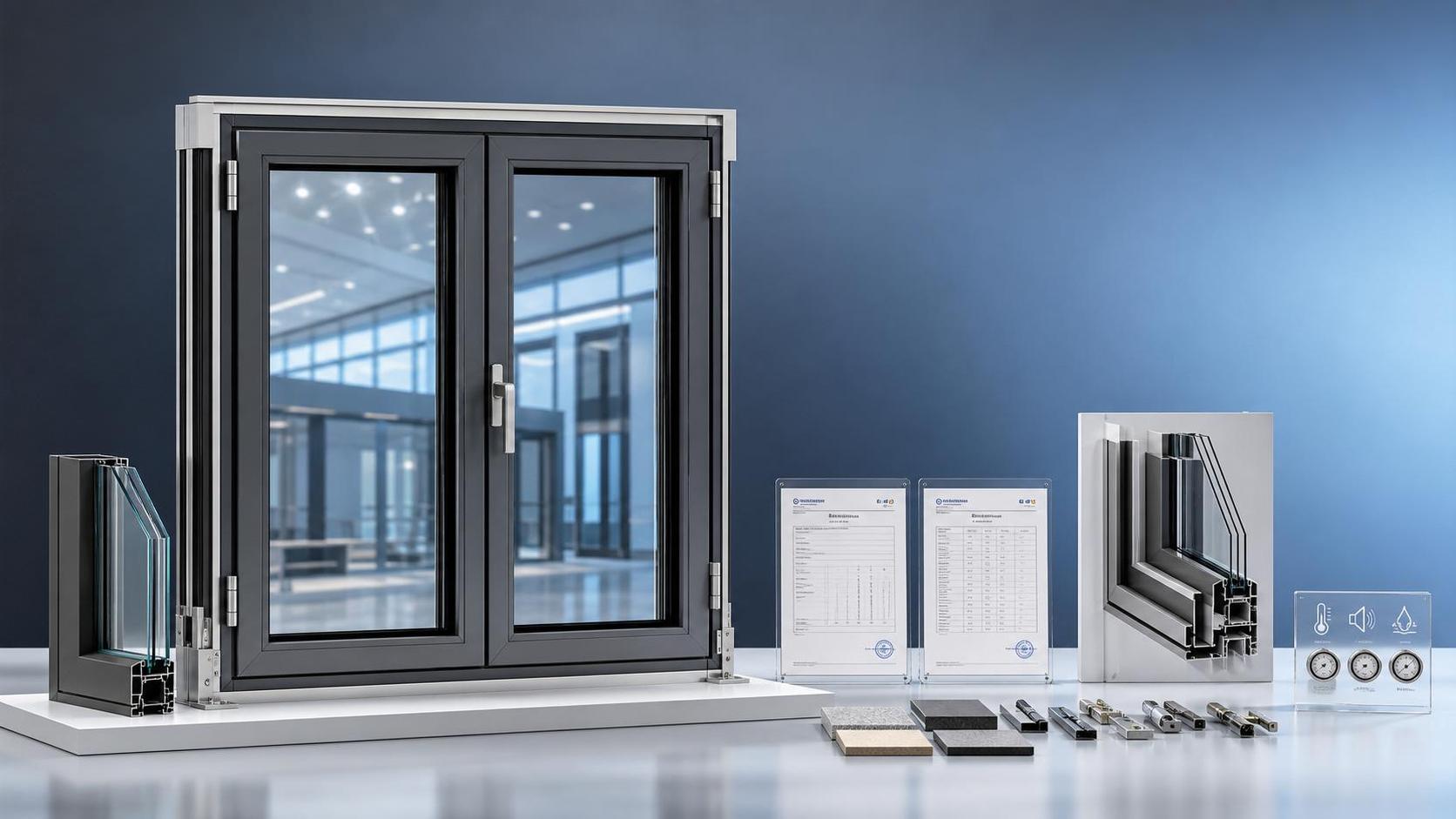
The most useful supporting evidence is the frequency-by-frequency sound insulation result, especially across the lower bands relevant to the disturbance. If the rumble extends below the frequencies covered by the report, that limitation should remain part of the purchase decision. A strong headline rating does not establish performance outside the test’s scope.
Request a report that matches the proposed construction as closely as possible. Useful questions include:
- Was the complete door or window tested, including its frame and seals?
- Does the tested opening style match the product being quoted?
- Are the glass composition, cavities, dimensions, and hardware representative of the proposed installation?
- Which frequencies were measured, and where does the assembly perform least well?
- Does the quotation include the installation details needed to achieve the intended acoustic result?
A fixed window test should not be assumed to establish the performance of an opening version. Likewise, a glass-only result leaves unanswered questions about the sash, frame, seals, and installation. Differences between the tested specimen and the offered product do not necessarily make the evidence useless, but they require an explanation.
Choose the upgrade around the room’s weakest route
If traffic noise is concentrated around a poorly sealed opening, repairing seals and closure hardware is a sensible first step. If the opening is already airtight but the glazing is a clear weakness, an acoustically specified replacement or secondary glazing may justify further investment. Where walls, roof sections, or vents contribute substantially, budget for those paths as part of the same decision.
Installation should be explicit in the quotation. The perimeter joint needs a suitable, continuous acoustic seal, and the frame must be fitted so the opening closes correctly. Trim can hide an unfinished gap, so appearance alone does not demonstrate acoustic quality. Ask who is responsible for inspecting the concealed joints and adjusting seals and hardware after fitting.
For a costly project or a serious sleep disturbance, agree on how success will be assessed before ordering. A laboratory product rating describes a controlled test; room performance includes the surrounding construction and site conditions. Any promised indoor outcome should explain the measurement method, relevant traffic conditions, and treatment of background noise. Otherwise, a numerical promise may be difficult to interpret or enforce.
Set a goal that reflects how the room is used. Making truck passes less disruptive in a bedroom may require a different level of intervention from improving comfort in a living room. Curtains and furnishings can reduce reverberation and change the room’s acoustic character, but they offer limited help against deep rumble entering through the building envelope.
The strongest case for investment is a room where the doors or windows are a major transmission path, the proposed assembly has relevant low-frequency evidence, and the installation addresses seals, perimeter joints, and ventilation. If a quotation offers only “soundproof” glass and a headline decibel claim, ask for those missing details before committing. They determine whether the purchase is likely to soften the traffic rumble that bothers you.
Technical Specifications
- India Plans Investment in 200,000 Tonnes of Annual Titanium Dioxide CapacityAuthor :Chemical Industry Editorial Team
- China Issues 2027 ODS and HFC Refrigerant Quota PlanAuthor :Industrial Machinery Editorial Team
- Which appliance resins withstand repeated hot-water exposure?Author :Polymers & Rubber Editorial Team
Expert Insights

Chief Security Architect
Dr. Thorne specializes in the intersection of structural engineering and digital resilience. He has advised three G7 governments on industrial infrastructure security.
Core Sector // 01
Security & Safety
- Can soundproof doors and windows block low-frequency traffic noise?Author :Construction Materials Editorial Team

- How to fix sliding doors and windows that are difficult to openAuthor :Construction Materials Editorial Team

- Which doors and windows for residential homes reduce outside noise?Author :Construction Materials Editorial Team

- Doors and Windows: Key Checks Before Project ApprovalAuthor :Construction Materials Editorial Team