Doors and Windows: Key Checks Before Project Approval
Author
Date Published
Reading Time
Why do doors and windows deserve a formal approval checklist?
Doors and windows often look like finishing items, yet they influence compliance, energy use, waterproofing, site safety, and maintenance budgets from day one.
That is why project approval should not rely on appearance, brochure claims, or a low initial quote.
In practical terms, poor decisions around doors and windows can delay handover, trigger rework, and weaken long-term asset value.
For commercial buildings, housing projects, and renovation programs, the better question is simple: what must be verified before approval is signed?
A useful review usually covers standards, material suitability, performance data, installation conditions, and lifecycle cost rather than purchase price alone.
Which performance checks matter most before selecting doors and windows?
Start with the performance requirements of the building, not the catalog category.
A coastal warehouse, a city office, and a hotel renovation may all need different doors and windows, even when dimensions look similar.
The core checks usually include air tightness, water tightness, wind load resistance, thermal insulation, acoustic performance, and fire or escape compliance where required.
- Check whether test reports match the actual system, not just a related series.
- Confirm opening type, glazing thickness, hardware grade, and seal design.
- Review local climate exposure, occupancy type, and code obligations.
- Verify whether thermal and acoustic targets depend on full assembly performance.
More common mistakes come from assuming frame material alone defines quality. It does not.
Well-designed aluminum doors and windows may outperform poorly specified uPVC or timber systems if details, seals, and installation interfaces are stronger.
How should materials and system design be judged in real projects?
Material choice should follow use conditions, maintenance expectations, and total ownership cost.
Aluminum is often preferred for durability and dimensional stability, especially in large openings or mixed-use developments.
uPVC can work well where thermal performance and budget control are priorities, but profile quality and reinforcement details must be checked carefully.
Timber may suit premium or heritage work, though maintenance planning becomes more important in humid or exposed locations.
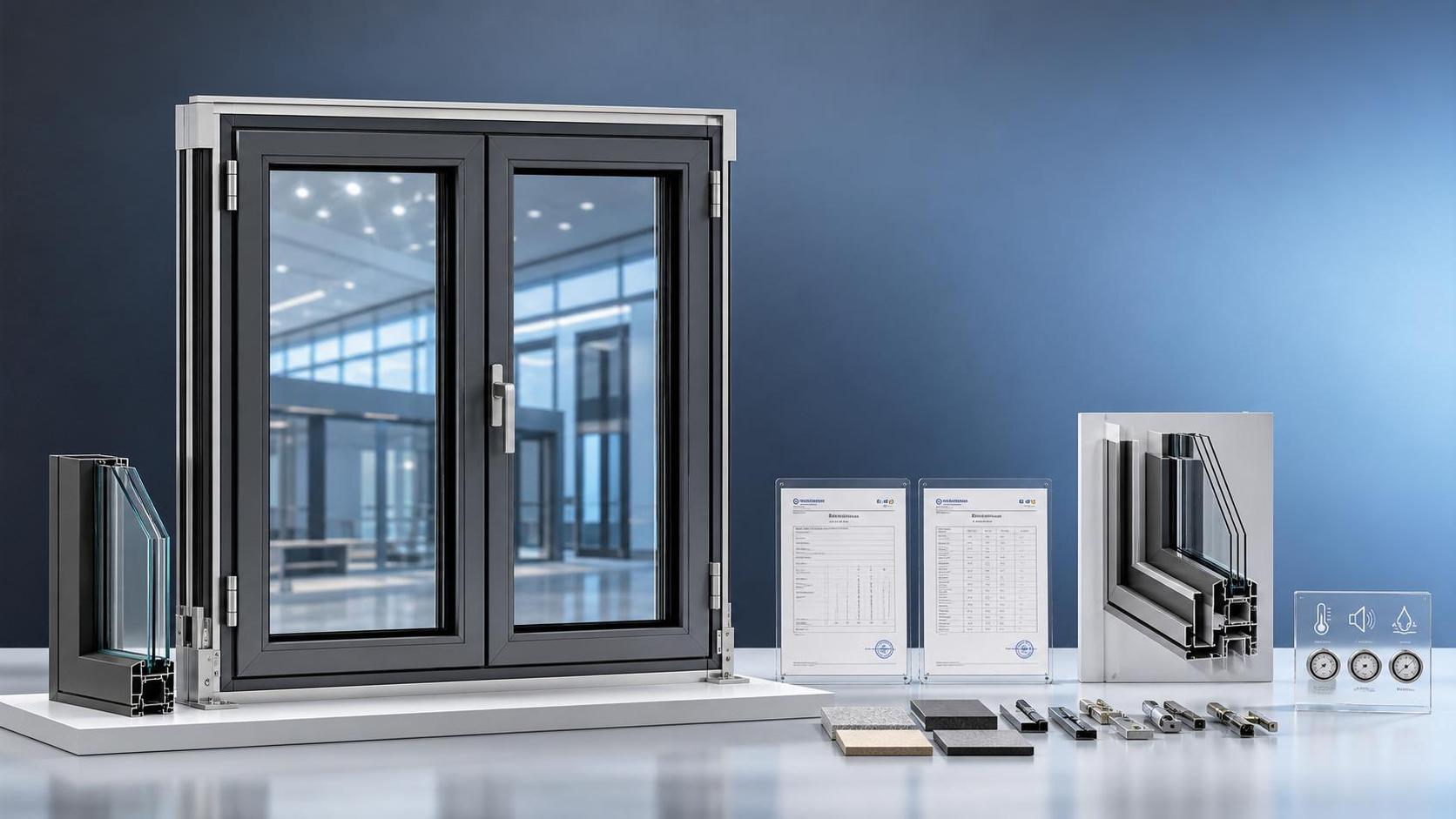
The frame is only part of the system. Glass type, spacers, coatings, locking points, hinges, drainage paths, and gasket quality all affect field performance.
To make review easier, the table below summarizes common approval questions for doors and windows.
Where do compliance and certification checks usually go wrong?
Problems usually begin when teams accept generic certificates without checking scope, date, market applicability, or issuing body credibility.
For doors and windows, approval should connect certification to the target market and the exact project requirement.
In cross-border sourcing, this matters even more because standards, trade policies, and product acceptance rules can vary sharply.
Need-to-check items often include labeling rules, safety glazing standards, fire documentation, environmental declarations, and restricted substance compliance.
It also helps to review supply chain stability. A compliant sample means little if later batches use different components or unverified subcontractors.
Is installation quality really as important as product quality?
Yes, because even strong doors and windows can fail when installed into uneven openings or paired with unsuitable sealants and fixings.
Many leakage complaints are not product defects. They come from poor interface detailing between frame, wall, insulation layer, and drainage path.
Before approval, it is worth asking for method statements, tolerances, inspection points, and responsibility boundaries between trades.
- Are mock-ups or sample installations required?
- Who checks alignment, anchoring, and sealing before finishes close the opening?
- Is there a plan for replacement glass, spare hardware, and warranty response?
These questions sound operational, but they directly affect approval confidence and post-handover risk.
How should cost, lead time, and maintenance be balanced before approval?
The lowest quote for doors and windows is often the most expensive decision after installation, especially when replacement parts, delays, or energy loss are considered.
A better comparison looks at delivered cost, testing evidence, installation readiness, expected service life, and maintenance frequency.
Lead time also deserves closer attention. Imported systems may face shipping risk, customs delay, or sudden policy changes that disrupt the schedule.
In actual sourcing decisions, the strongest option is often the one with stable documentation, predictable supply, and lower lifecycle uncertainty.
Before final approval, bring the review back to five checks: required performance, verified compliance, installability, supply reliability, and service cost.
That approach gives doors and windows a proper business evaluation instead of a cosmetic review.
The next practical step is to build a short approval matrix for each project, compare like-for-like systems, and confirm evidence before signing off.
Technical Specifications
- How to test melt flow consistency in batches of recycled plasticsAuthor :Polymers & Rubber Editorial Team
- When does a cast resin transformer need high-altitude derating?Author :Electrical Components Editorial Team
- How to verify Global Industrial Insights sourcing informationAuthor :Industrial Machinery Editorial Team
Expert Insights

Chief Security Architect
Dr. Thorne specializes in the intersection of structural engineering and digital resilience. He has advised three G7 governments on industrial infrastructure security.
Core Sector // 01
Security & Safety
- How to fix sliding doors and windows that are difficult to openAuthor :Construction Materials Editorial Team

- Which doors and windows for residential homes reduce outside noise?Author :Construction Materials Editorial Team

- Doors and Windows: Key Checks Before Project ApprovalAuthor :Construction Materials Editorial Team