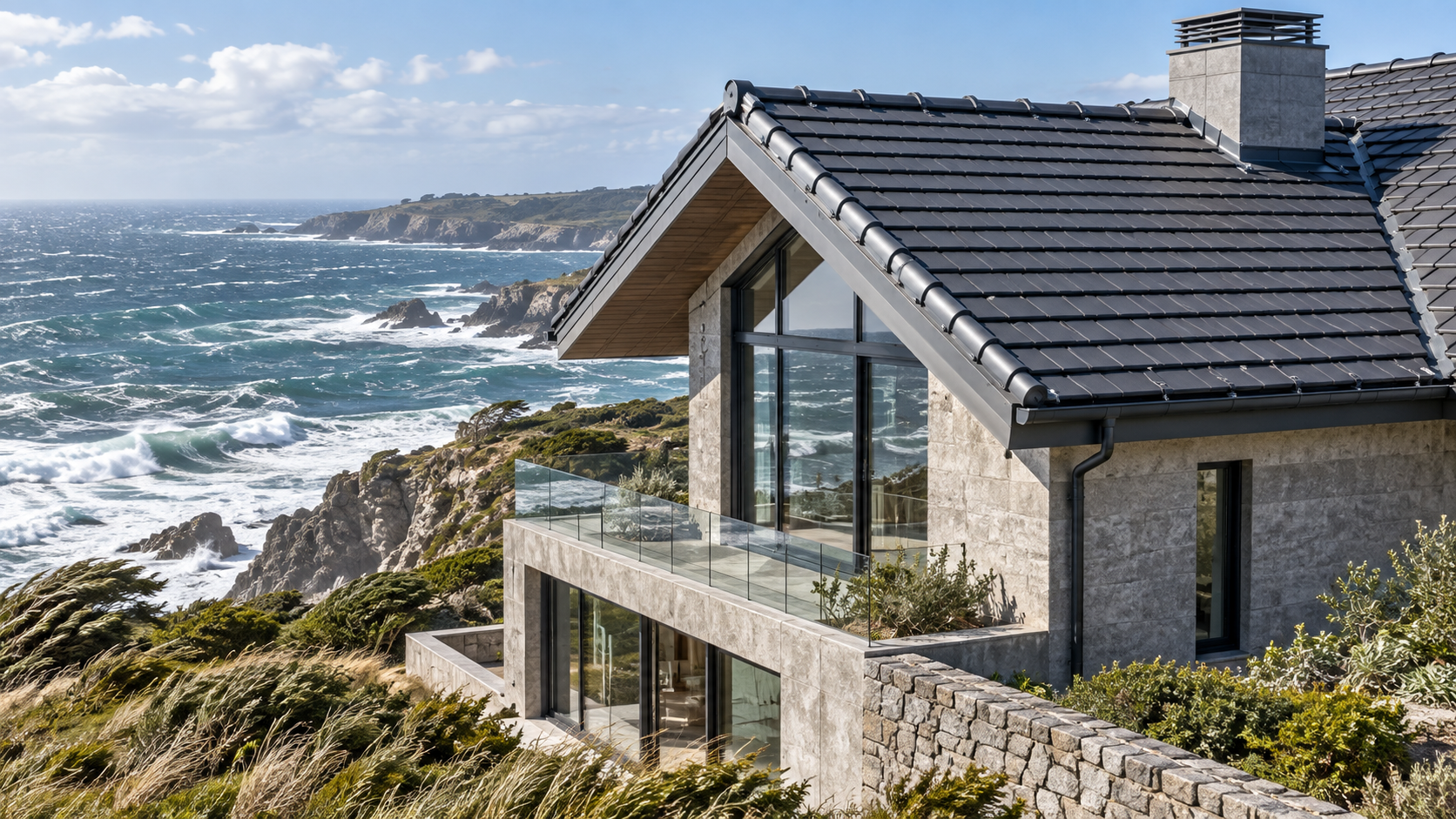
How to Choose Roof Tiles by Climate and Lifespan
Author
Date Published
Reading Time
How Climate and Lifespan Should Guide Roof Tile Selection
Choosing the right roof tiles is not only about curb appeal. It affects service life, indoor comfort, repair frequency, and overall ownership cost.
Weather puts constant pressure on a roof. Rain, snow, heat, wind, and salt air can shorten performance when the material does not match local conditions.
That is why roof tiles should be chosen with two filters in mind: climate exposure and expected lifespan. When both line up, maintenance becomes easier and replacement feels less urgent.
Start with Climate, Not Color
Many people begin with style. In practice, climate should come first, because roofing failure usually starts with water, temperature stress, or wind uplift.
A tile that performs well in dry heat may crack in freeze-thaw weather. Another option may resist storms but absorb too much heat in warmer regions.
Before comparing roof tiles, check four local conditions:
- Annual rainfall and drainage demand
- Snow load and freeze-thaw cycles
- Summer heat, UV intensity, and attic temperature
- Wind exposure, storms, and coastal salt air
This first step narrows choices quickly and prevents expensive mistakes.
Best Roof Tiles for Wet and Rainy Climates
In rainy areas, water shedding matters more than appearance. Roof tiles should resist moisture absorption and support reliable runoff on the roof slope.
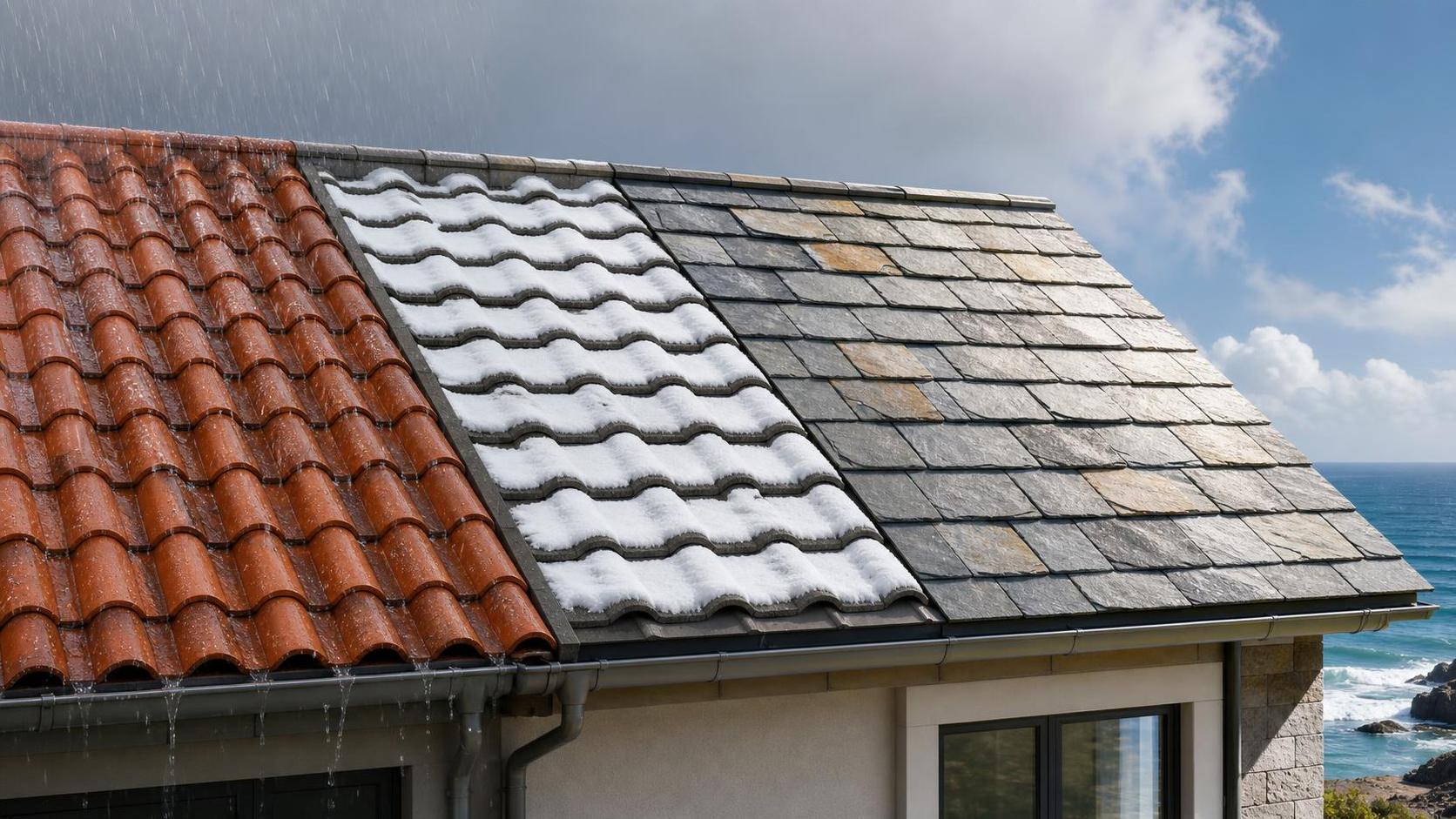
Clay and concrete roof tiles can work well when properly installed. Their profile helps move water away, especially on roofs designed for local rainfall intensity.
Slate is also a strong option. It offers excellent water resistance and a long lifespan, though weight and installation cost need careful review.
In these regions, avoid roof tiles with high absorption rates or inconsistent quality. Moisture entry can lead to staining, moss growth, and surface breakdown over time.
What Works in Snow and Freeze-Thaw Conditions
Cold climates are harder on roofing than many expect. Water enters tiny pores, freezes, expands, and gradually damages weak roof tiles.
For snowy regions, look for low water absorption, frost resistance, and proven cold-weather performance. Dense clay tiles and natural slate often perform better than porous alternatives.
Concrete roof tiles can also be suitable, but product quality matters. Poorly made units may age faster under repeated freezing and thawing.
Snow load is another factor. Heavier roof tiles need a structure that can safely handle both material weight and seasonal accumulation.
Choosing Roof Tiles for Hot, Sunny, and Coastal Areas
In hot climates, heat reflection and thermal stability become more important. Roof tiles that stay cooler can reduce attic temperatures and improve energy efficiency.
Light-colored clay roof tiles are often a practical choice. They handle UV exposure well and usually maintain color better than lower-grade coated products.
Concrete roof tiles can also perform well in strong sun, especially when paired with ventilation and reflective coatings designed for high-temperature regions.
Coastal areas add another challenge: salt-laden air. Here, roof tiles should resist corrosion around fasteners and maintain surface stability under constant humidity and wind.
Compare Lifespan Before Comparing Price
Short-term price can be misleading. A lower upfront quote does not always mean lower lifetime cost.
Typical lifespan ranges help frame the decision:
- Asphalt-style roofing products: around 15 to 30 years
- Concrete roof tiles: often 30 to 50 years
- Clay roof tiles: commonly 50 years or more
- Natural slate: often 75 to 100 years
Actual service life depends on installation quality, underlayment, ventilation, and maintenance. Even premium roof tiles can fail early if the system beneath them is weak.
A useful question is simple: how long do you plan to stay in the property? That answer often changes the best roofing decision.
A Practical Way to Make the Final Decision
To choose roof tiles with confidence, combine climate fit with lifespan and structural reality. That keeps the decision grounded and easier to defend.
- List your main climate risks across all seasons.
- Check whether the roof structure can support heavier roof tiles.
- Compare expected lifespan, not just purchase price.
- Review warranty terms and local installation experience.
- Ask for product data on absorption, frost resistance, and wind rating.
The best roof tiles are the ones that match the environment, last as expected, and fit the building without forcing constant repairs.
When climate and lifespan lead the process, the final choice is usually clearer, more cost-effective, and better suited to long-term living.
Technical Specifications
- How to test melt flow consistency in batches of recycled plasticsAuthor :Polymers & Rubber Editorial Team
- When does a cast resin transformer need high-altitude derating?Author :Electrical Components Editorial Team
- How to verify Global Industrial Insights sourcing informationAuthor :Industrial Machinery Editorial Team
Expert Insights

Chief Security Architect
Dr. Thorne specializes in the intersection of structural engineering and digital resilience. He has advised three G7 governments on industrial infrastructure security.