How much capital is needed to start a sanitary ware manufacturing plant?
Author
Date Published
Reading Time
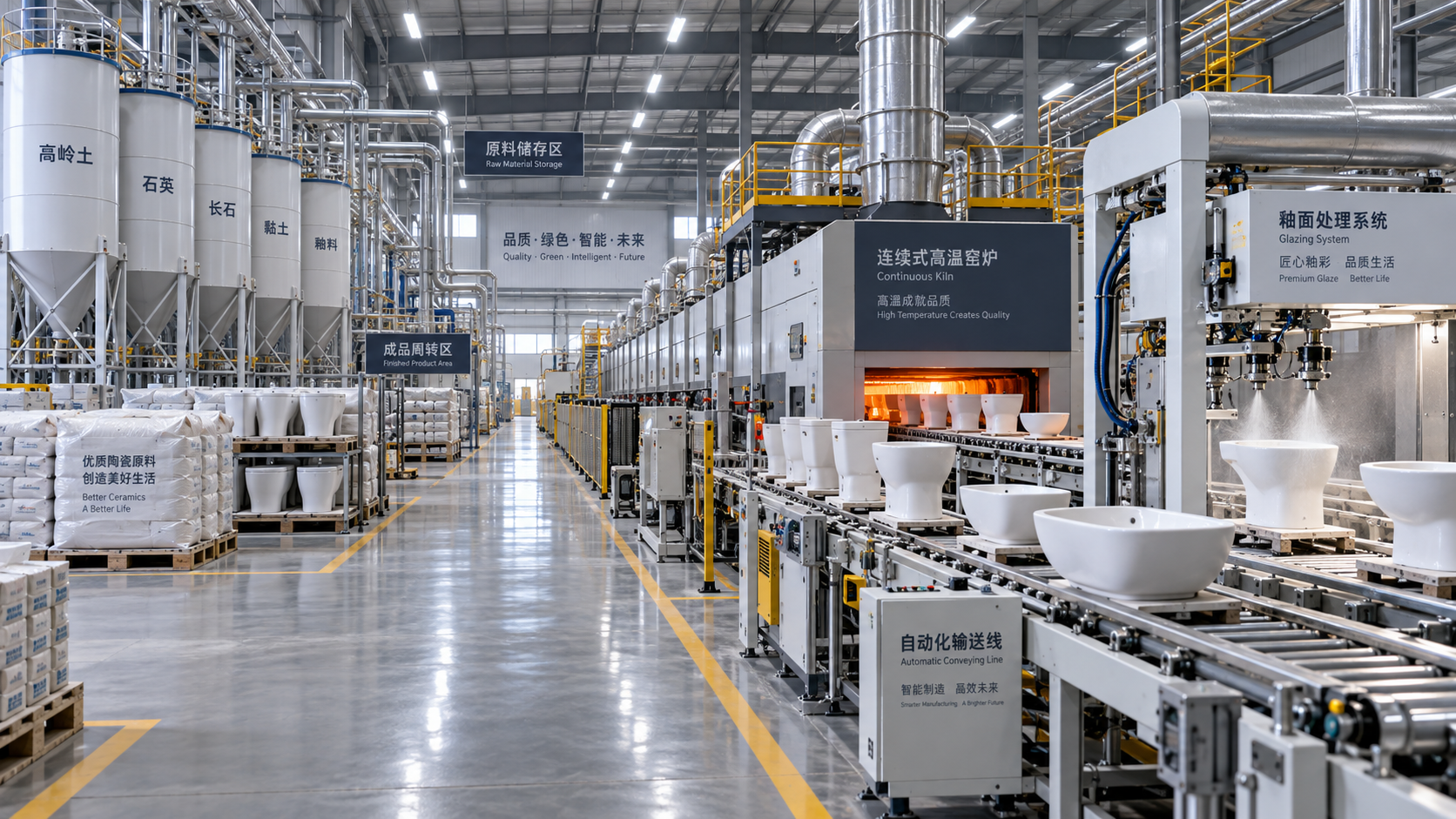
A sanitary ware plant can require anything from a limited pilot-scale investment to a large industrial commitment, but the deciding factor is not factory floor area alone. The capital requirement changes sharply with the product mix, firing technology, output target, automation level, local utility conditions, and the amount of cash tied up before the first commercial shipment.
For approval purposes, the most reliable answer is this: do not approve a single “plant cost” figure until the proposed production route and working-capital cycle are defined. A small operation assembling purchased components has a very different capital profile from an integrated ceramic sanitary ware plant that prepares its own body, casts ware, dries it, glazes it, fires it in kilns, inspects it, and manages finished-goods inventory. The sanitary ware manufacturing plant cost must therefore be built from a process-based budget, not from machinery quotations gathered in isolation.
Start by identifying what the plant will actually make
“Sanitary ware” may include ceramic toilets, wash basins, pedestals, bidets, urinals, cisterns, acrylic or composite bathtubs, shower trays, faucets, flush fittings, and assembled bathroom sets. These categories do not share the same production equipment, raw materials, curing or firing requirements, defect risks, or capital intensity.
A ceramic vitreous-china facility is usually among the more capital-intensive formats because it needs a controlled process from raw-material preparation through firing. Even a plant that buys prepared clay bodies still requires mould systems, casting equipment, drying capacity, glazing infrastructure, kilns, material handling, quality inspection, wastewater treatment, and a substantial support area for ware movement.
By contrast, a factory focused on assembling imported cistern mechanisms, seats, fittings, or purchased ceramic bodies may need less process equipment but can carry more exposure to supplier reliability, incoming quality variation, tariff changes, and component inventory. A project that combines several product lines may spread commercial risk, but it can also complicate tooling, warehousing, staffing, quality procedures, and spare-parts planning.
Before asking suppliers for a price, the investment team should settle several operating assumptions:
- Which products will be made in-house and which will be sourced or assembled?
- What annual output is required at normal utilization, rather than theoretical nameplate capacity?
- Will the plant produce standard domestic-grade products, project-grade products, or higher-specification export lines?
- Will moulds be designed for a limited stable range, or will frequent model changes be expected?
- Will the project include its own kiln operation, glaze preparation, laboratory, and wastewater system?
- What level of rejection, rework, and breakage can be tolerated in the financial model?
These choices determine the capital structure more than the exterior appearance of the building. A plant designed around a narrow, repeatable range may justify more automation. A plant intended to serve many changing project specifications often needs more flexible labour, more mould management, and higher inventory buffers.
The cost categories that are often underestimated
Initial quotations frequently focus on presses, casting machines, kilns, or finishing lines. That is understandable, because those items are visible and easy to compare. Yet the largest approval mistakes tend to occur in the surrounding costs that allow the equipment to run consistently.
In ceramic production, utility infrastructure deserves early scrutiny. Firing is not a minor operating detail. The available fuel type, energy cost structure, pressure stability, electrical reliability, emissions-control requirements, and connection timeline can change both capital expenditure and the ongoing cost base. A kiln supplier may quote the kiln itself, while gas regulation, exhaust handling, control systems, installation, refractory commissioning, and local connection work sit elsewhere in the project budget.
Water is another frequent blind spot. Clay preparation, glazing, cleaning, and wastewater management can create a need for storage, filtration, recycling, sludge handling, or discharge controls. The correct solution depends on local conditions and the selected process. It should not be treated as a late-stage facility add-on.
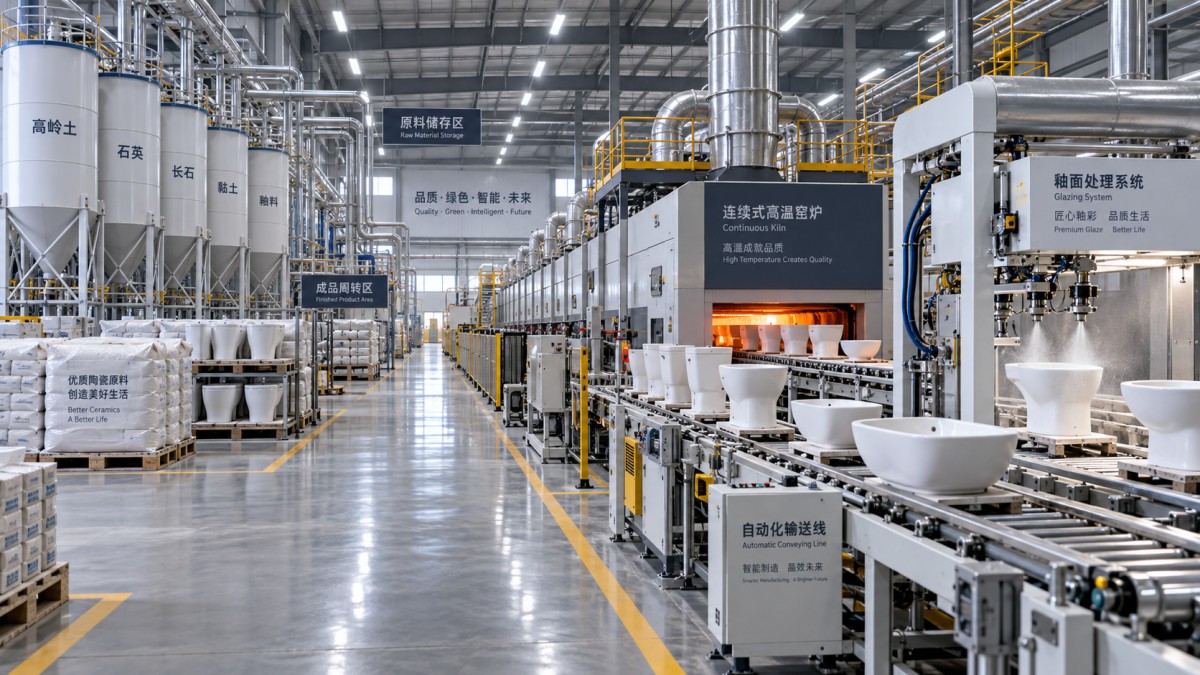
Use a production-flow budget rather than an equipment shopping list
A practical capital model follows the path of a product through the plant. This makes missing systems easier to spot and forces the financial model to reflect real operating dependencies.
- Material receiving and storage. Include unloading, covered storage, batch control, handling equipment, and protection against moisture or contamination where relevant.
- Body preparation. For integrated ceramic production, this may involve crushing, milling, blunging, sieving, magnetic separation, tanks, pumps, and slip storage. Plants buying prepared material may avoid part of this investment but accept supplier dependence.
- Forming and mould management. Consider casting lines, pressure-casting systems, mould racks, mould preparation, maintenance, and the quantity of moulds required to support target output. Mould cost is not a one-time line item if the range changes regularly.
- Drying, glazing, and firing. These stages influence product quality, throughput, energy demand, and rejection rates. Their capacity must be balanced; an oversized kiln cannot solve a bottleneck in casting or drying.
- Finishing and inspection. Grinding, hole finishing, visual inspection, leak testing where relevant, sorting, marking, and packing need space and trained staff. Products that pass firing may still fail final specification.
- Finished-goods storage and dispatch. Sanitary ware is bulky, fragile, and often stored by model, colour, grade, and order destination. Warehouse design affects breakage, picking time, and shipment accuracy.
This approach also exposes a common mismatch: a project may budget machinery around maximum output but reserve warehouse space and working capital for a much lower sales volume. The result is either blocked production, rushed dispatches, or an unplanned need for additional cash.
Separate fixed investment from the cash needed to survive ramp-up
Capital approval should distinguish between money spent to create the plant and money required to operate it through commissioning, qualification, and early sales cycles. These are different risks and should not be merged into one vague contingency line.
Fixed investment includes land or leasehold preparation, buildings, machinery, tooling, utility connections, installation, engineering, and pre-operational compliance work. Working capital includes clay, minerals, glaze materials, packaging, fuel, labour, maintenance consumables, spare parts, inland transport, export packaging where relevant, finished inventory, and customer receivables.
The ramp-up period is especially important for ceramic ware. Stable production cannot be assumed immediately after equipment installation. Product dimensions, glaze appearance, firing curves, mould performance, handling methods, and packing procedures may all require adjustment. During this period, output can be lower than planned while fuel, payroll, maintenance, and material consumption continue. A financial model that assumes immediate full yield can make an otherwise viable project appear cheaper than it is.
Working capital should be modelled against the actual commercial cycle: material lead time, production days, curing or firing cycle, inspection hold, warehouse dwell time, shipping time, distributor payment terms, and expected claims or returns. Where products are made for project orders, a deposit structure may reduce pressure. Where goods are supplied through distribution channels with long payment terms, the cash requirement can be materially higher.
Three plant concepts produce very different funding needs
Assembly-led or outsourced-body operation
This model purchases major components or ceramic bodies and focuses on inspection, fitting, packing, and distribution. It may reduce initial process-equipment spending and shorten setup time, but it shifts risk toward supplier qualification and purchased inventory. It is most suitable where brand control, local assembly, custom packing, or market access matters more than owning the full manufacturing process.
Mid-scale ceramic production with selective automation
This format produces a defined range of ceramic ware and usually balances labour with mechanized handling or forming. It requires meaningful investment in kilns, dryers, mould systems, utilities, and process controls. It can be appropriate when product volume is sufficient to support internal production, but the expected range is not so broad that tooling and inventory become unmanageable.
Highly automated integrated plant
An automated facility can improve consistency and reduce dependence on certain manual operations, but only when demand, product design stability, technical support, and maintenance capability justify it. Automation does not remove the need for experienced process control. It often raises the up-front requirement for engineering, installation, software integration, spare parts, training, and specialist maintenance. A lower direct labour forecast should not be used to justify this route unless the plant can sustain the required utilization.
Questions that should be resolved before financial approval
A useful approval review challenges the assumptions behind the sanitary ware manufacturing plant cost rather than merely checking whether quotations have been collected. The following questions usually reveal whether the project budget is mature:
- Are equipment capacities matched across forming, drying, glazing, firing, finishing, and packing?
- Does each machinery quotation state what is excluded, including installation materials, foundations, utility connections, commissioning, and operator training?
- Is there adequate room for raw materials, work-in-progress, mould storage, rejected ware, finished goods, and safe forklift movement?
- Has the energy model been based on local utility conditions rather than supplier assumptions alone?
- Are mould replacement, kiln maintenance, refractory work, and critical spare parts reflected in the funding plan?
- Does the sales forecast distinguish between products that can be made efficiently and products that are merely requested by buyers?
- Has the model allowed for inspection failures, breakage, sample development, and production stabilization?
It is also important to check the boundary between supplier responsibility and project responsibility. A “turnkey” description can mean very different things. One supplier may include installation supervision but not local labour, civil works, utility connections, or performance testing. Another may supply a process line but exclude warehouse equipment, packaging machines, laboratory tools, and environmental infrastructure. Comparing headline prices without a scope matrix can create a false saving.
How to make the estimate credible enough for a funding decision
Early estimates can be useful, but they should be presented as staged planning figures rather than final commitments. At concept stage, prepare a block layout, product list, capacity basis, process flow, utility assumptions, and preliminary working-capital cycle. Use these documents to obtain comparable supplier input.
At the next stage, require equipment suppliers to identify capacity conditions, energy consumption assumptions, installation scope, commissioning requirements, spare-parts recommendations, and exclusions. Civil, utility, and environmental packages should be estimated separately. This is where an apparently modest machinery budget may reveal a much larger total project requirement.
Before release of full capital, align the investment with a realistic operating plan. The required sales volume should be tested against the product range, distribution route, warehouse capacity, expected payment terms, and the plant’s likely yield during ramp-up. A plant may be technically capable of producing a high number of units while still lacking the order flow or cash cycle needed to run at an economical level.
The strongest approval case is therefore not the one with the lowest equipment quote. It is the one that shows a complete route from materials to collected revenue, identifies the exclusions that can increase cost, and reserves enough liquidity to keep the plant operating while production quality and sales volumes become stable.
Technical Specifications
- Which doors and windows for residential homes reduce outside noise?Author :Construction Materials Editorial Team
- How to select valves and fittings for corrosive fluid systemsAuthor :Industrial Machinery Editorial Team
- How much capital is needed to start a sanitary ware manufacturing plant?Author :Construction Materials Editorial Team
Expert Insights

Chief Security Architect
Dr. Thorne specializes in the intersection of structural engineering and digital resilience. He has advised three G7 governments on industrial infrastructure security.
Core Sector // 01
Security & Safety
- How much capital is needed to start a sanitary ware manufacturing plant?Author :Construction Materials Editorial Team

- Is water saving sanitary ware practical for high-use buildings?Author :Construction Materials Editorial Team

- How to Judge Ceramic Sanitary Ware Quality Before Large-Volume PurchaseAuthor :Construction Materials Editorial Team