Is water saving sanitary ware practical for high-use buildings?
Author
Date Published
Reading Time
Is Water Saving Sanitary Ware Practical for High-Use Buildings?
In a lightly used home bathroom, a water-efficient toilet or faucet is usually a straightforward choice. In an airport terminal, public school, shopping centre, hotel lobby, stadium, or busy office tower, the decision is less simple. Fixtures are used thousands of times, often roughly, and by people who have no reason to treat them carefully. A product that saves water on paper but creates queues, poor rinsing, blocked drains, or frequent maintenance calls is not an efficient solution in any meaningful sense.
That is why the practical question is not whether water saving sanitary ware works. Modern efficient toilets, urinals, faucets, and shower systems can work very well in high-use buildings. The more useful question is whether a particular combination of fixture, plumbing design, water pressure, user profile, cleaning regime, and local service support is right for the building.
For owners and facilities teams, the strongest projects are rarely those built around the lowest advertised flow rate. They are the ones that reduce water use while keeping washrooms reliable, intuitive, easy to clean, and economical to maintain over many years.
High traffic changes the definition of “practical”
A high-use building puts sanitary ware under conditions that residential products do not face. There may be peak periods during class changes, flight departures, event intervals, lunch hours, or hotel breakfast service. During those windows, one failed sensor faucet or slow-refilling cistern can affect dozens of users within minutes. The cost is not limited to water. It can include complaints, staff time, emergency cleaning, closure of a washroom area, and reputational damage.
This is why fixture selection should start with the usage pattern rather than a product catalogue. A university residence, for example, has different demands from an airport restroom. A residence may have longer and more varied use, including showers and personal hygiene. An airport needs fast turnover, resistance to misuse, easy cleaning, and a system that recovers quickly after peak demand. A premium hotel may also place more weight on perceived comfort and noise control than a transport hub would.
Water-saving products are practical when they fit those operating realities. They become troublesome when the building treats every washroom as if it has the same traffic, user behaviour, drainage condition, and maintenance capacity.
Where the savings usually come from
In commercial washrooms, the largest opportunity often lies in repeated short actions: handwashing and toilet flushing. A modest reduction in faucet flow can have a meaningful cumulative effect where hundreds of people wash their hands every day. Likewise, a properly specified dual-flush or reduced-flush toilet can lower water use without asking users to change their habits dramatically.
Urinals deserve a closer look because they are frequently installed in large numbers and may operate through flush valves, sensors, timed controls, or waterless designs. Each approach has trade-offs. Sensor-controlled flushing can avoid unnecessary flushes, but sensor placement, calibration, power supply, and cleaning practices matter. Waterless urinals can reduce direct water use substantially, yet they depend on disciplined servicing and suitable drainage conditions. In some buildings, the maintenance team is comfortable with that routine; in others, skipped cartridge replacement or unsuitable cleaning chemicals can quickly undermine the intended benefit.
Showers can be another major source of demand in gyms, accommodation, healthcare-related facilities, and leisure venues. Here, low-flow performance is not just about the stated flow figure. Spray pattern, pressure compensation, hot-water system capacity, and user perception all influence whether people take shorter showers or simply leave the control open longer. A shower that feels inadequate often produces the opposite of the intended result.
The lesson is fairly blunt: water consumption is a system outcome. Fixtures matter, but so do controls, user behaviour, pipework, pressure, hot-water generation, and maintenance.
Do low-flush toilets perform reliably?
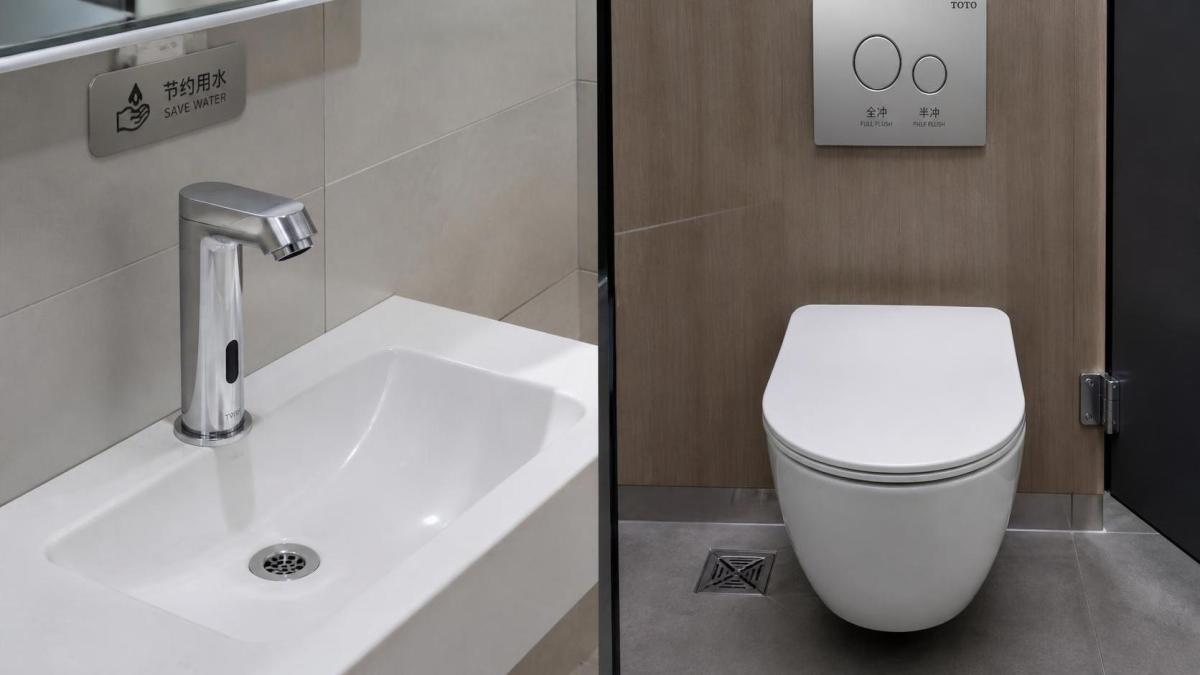
This is still the concern buyers raise most often, and it is a reasonable one. Older generations of low-flush toilets gained a poor reputation in some markets because clearing performance was inconsistent. Current products can be much better engineered, but buyers should not assume that every low-volume model will perform equally in a demanding public setting.
The bowl geometry, trapway design, flush valve, rim wash, drainage layout, and available pressure all affect real-world results. A toilet that works well in a showroom test may behave differently when installed on a long branch line, in a building with marginal pressure, or where users dispose of inappropriate materials. High-use locations also need components that can tolerate repeated actuation without becoming difficult to service.
Before selecting a low-flush WC, ask suppliers for the specific performance documentation applicable to the destination market, not just a broad sustainability claim. Check whether replacement flush valves, seals, push plates, and internal mechanisms are locally available. It is also worth asking the installer whether the existing drainage system has known issues. Reducing flush volume does not automatically cause drainage problems, but it can expose pipe gradients, blockages, or design weaknesses that a higher water volume previously masked.
Sensor faucets: efficient, but only when the details are right
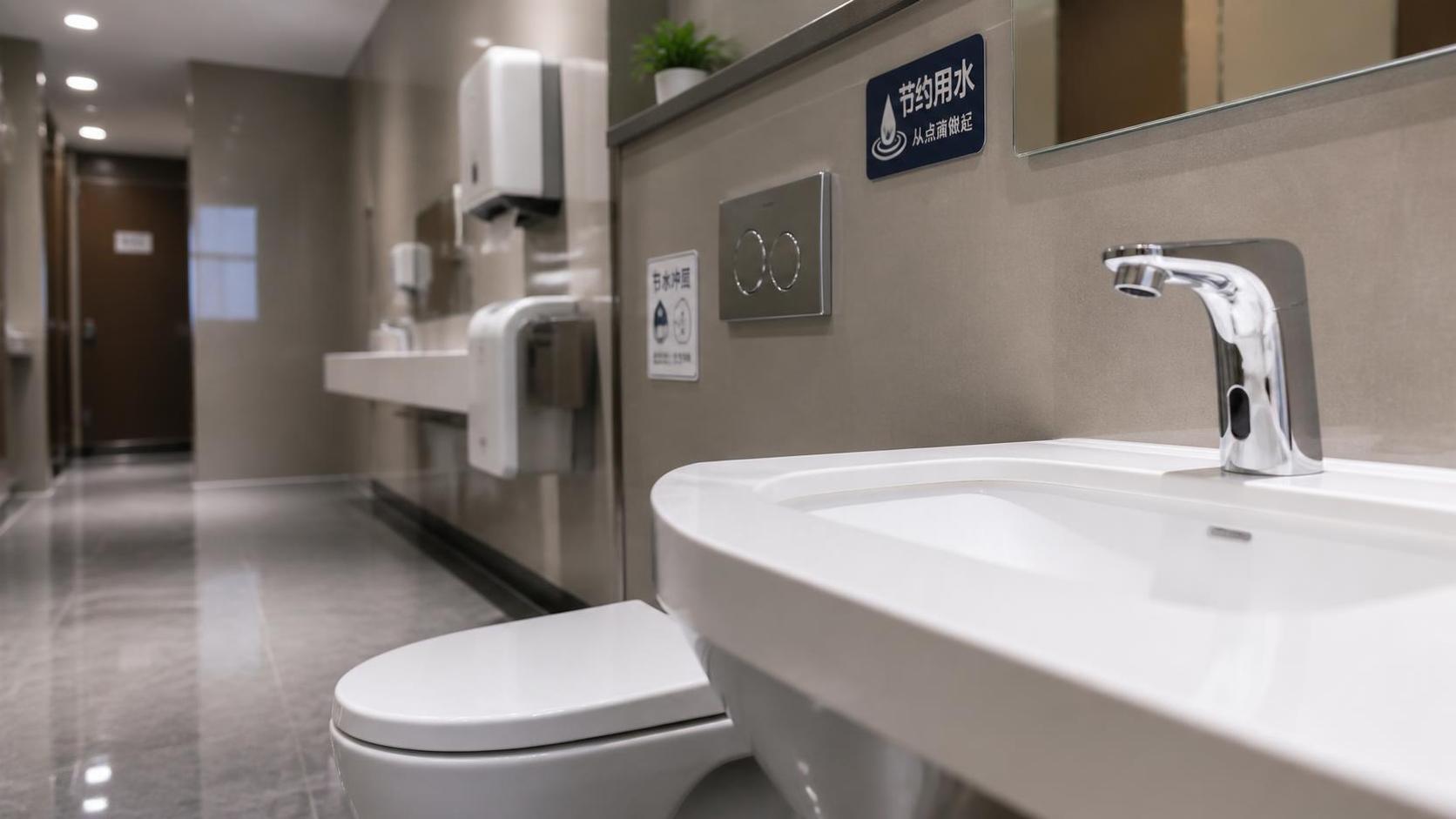
Touchless faucets are common in high-use washrooms because they can control runtime and reduce the chance of taps being left running. They can also support hygiene expectations in public environments. Yet they are not a universal upgrade. Facilities managers tend to judge them by a more practical measure: can they be cleaned, adjusted, repaired, and kept working during a busy day?
Poorly configured sensor taps can trigger too early, stop too soon, run when no hands are present, or fail to activate for some users. Battery-powered units simplify installation in some retrofit projects but introduce a replacement schedule that must be actively managed. Mains-powered systems avoid that particular task but require electrical planning and may complicate renovations. Either type should have accessible service components; a concealed control box behind a difficult wall finish may look neat at handover and become expensive later.
Aerators and flow regulators also need attention. In hard-water areas, mineral buildup can affect the stream and sensor performance. In buildings where water quality varies, filters, accessible strainers, and a realistic cleaning schedule may be more valuable than choosing the most aggressive flow restriction available.
A useful selection test: look beyond purchase price
The cheapest fixture is often not the lowest-cost choice. For high-use buildings, lifecycle cost matters more than the initial unit price, although it should be assessed honestly. A premium electronic fixture is not automatically justified simply because it carries a sustainability message. If spare parts are difficult to source, if technicians need proprietary tools, or if the feature set is excessive for the site, the operating cost can outweigh the water benefit.
For distributors, contractors, and buyers comparing products across markets, this is also where sourcing discipline matters. Product literature may use different test methods, flow descriptions, and terminology depending on the country of origin. Confirm the applicable local plumbing requirements, project specifications, and documentation before comparing one supplier’s claims with another’s. A lower listed consumption figure is not enough if the fixture cannot be legally installed or supported in the destination market.
Retrofitting is often harder than new construction
New-build projects can coordinate fixture selection with pipe sizing, electrical routes, access panels, drainage design, and control systems. Retrofit work is less forgiving. Existing wall boxes may not match new valves. Sensor taps may need power where none is available. A concealed cistern replacement may involve opening finishes that were not included in the early budget. Waterless systems may require a maintenance process the operator has never used before.
This does not mean retrofits are impractical. In fact, they can be the most sensible place to introduce water-saving sanitary ware because older fixtures may be inefficient or unreliable. The mistake is assuming that replacement is one-for-one. A short site survey should verify connections, dimensions, supply conditions, drainage, accessibility, and the availability of isolation valves. If the project includes many washrooms, trialling a small representative area first can reveal issues before they are repeated across the building.
The maintenance team should influence the specification
A washroom can be designed by architects and purchased by procurement, but it will ultimately be judged by cleaners and maintenance staff. Their experience is especially valuable in high-use properties. They know which cubicles receive the most abuse, where limescale accumulates, which spare parts disappear from stock, and whether cleaning crews have time for specialist routines.
Bring that knowledge into the selection process early. Ask whether sensor settings can be adjusted without replacing the unit, whether flush plates withstand heavy use, whether trap seals are easy to inspect, and whether cleaning chemicals are compatible with the specified finishes and internal components. A robust manual control may be preferable to a complex electronic system in one environment; elsewhere, timed or sensor control may prevent substantial waste. There is no single “best” fixture category.
So, is it a sensible investment?
Yes—provided the decision is based on operating conditions rather than marketing labels. Water saving sanitary ware is practical for high-use buildings when it offers dependable flushing or flow, matches the site’s plumbing infrastructure, can be serviced quickly, and does not make the user experience worse. These conditions are not especially glamorous, but they determine whether a water-efficiency project delivers lasting value or becomes a maintenance problem.
For a buyer evaluating options, start with the busiest washroom, not the easiest one. Review its usage peaks, water pressure, drainage history, cleaning routine, and local parts availability. Then compare fixtures on demonstrated performance and maintainability alongside water consumption. That approach is slower than selecting the lowest-flow product in a catalogue, but it is far more likely to produce a washroom that saves water without creating new operational headaches.
Technical Specifications
- How to verify Global Industrial Insights sourcing informationAuthor :Industrial Machinery Editorial Team
- Which thermoplastic elastomers stay flexible at low temperatures?Author :Polymers & Rubber Editorial Team
- Which Shore hardness suits soft touch TPE for handheld grips?Author :Polymers & Rubber Editorial Team
Expert Insights

Chief Security Architect
Dr. Thorne specializes in the intersection of structural engineering and digital resilience. He has advised three G7 governments on industrial infrastructure security.
Core Sector // 01
Security & Safety
- How much capital is needed to start a sanitary ware manufacturing plant?Author :Construction Materials Editorial Team

- Is water saving sanitary ware practical for high-use buildings?Author :Construction Materials Editorial Team

- How to Judge Ceramic Sanitary Ware Quality Before Large-Volume PurchaseAuthor :Construction Materials Editorial Team