What drives the cost of a renewable polydimethylsiloxane production plant?
Author
Date Published
Reading Time
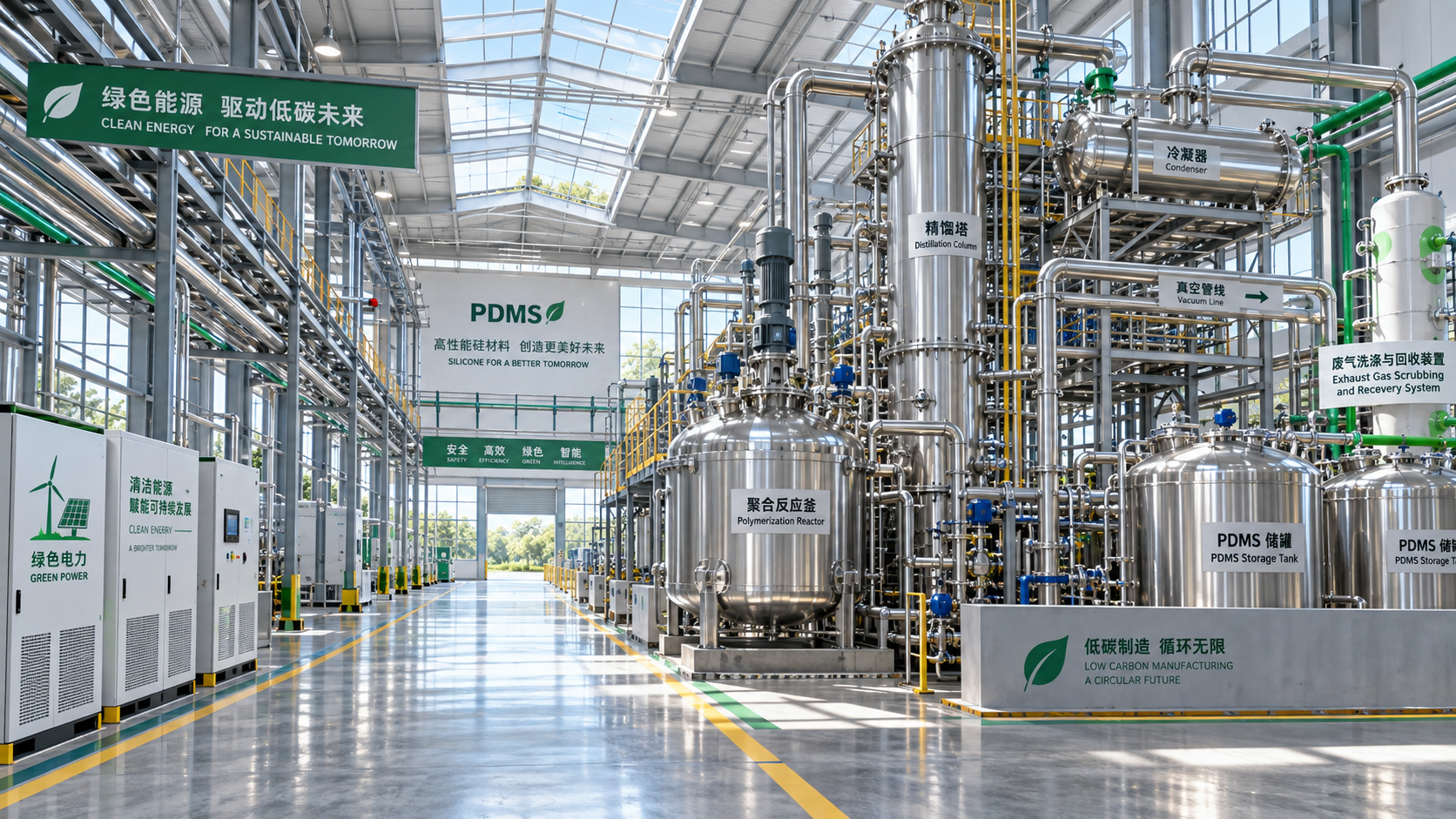
A renewable polydimethylsiloxane project can look attractive on paper until the cost model is built around the actual route to silicone intermediates. The largest mistake is to treat a renewable claim as a simple feedstock substitution. In most cases, the renewable polydimethylsiloxane production plant cost is driven by how renewable carbon, renewable energy, recycled silicon inputs, or certified mass-balance materials are introduced into a process that still requires demanding organosilicon chemistry, purification, and emissions control.
For a business evaluating a new plant, expansion, or toll-manufacturing option, the first decision is not “How much does the plant cost?” It is “Which product definition and production boundary are being funded?” A facility making finished renewable-content PDMS from purchased cyclic siloxanes has a very different capital profile from one producing chlorosilanes, cyclics, and polymer in an integrated site. Cost estimates become reliable only after that boundary is fixed.
Start by defining what “renewable” means in the proposed product
PDMS is a silicone polymer built around a silicon-oxygen backbone with methyl side groups. Conventional production typically depends on silicon metal, methyl chloride and chlorosilane chemistry, followed by hydrolysis, equilibration, polymerization, stripping, and finishing. A renewable positioning may relate to several different elements, each with different technical and commercial implications:
- renewable or lower-impact sources for carbon-containing inputs;
- renewable electricity or lower-carbon energy supplied to energy-intensive operations;
- recycled or lower-impact silicon-containing feedstock;
- mass-balance allocation of certified renewable feedstock within an existing chemical supply chain;
- recovery and reprocessing of silicone-containing materials into usable intermediates or compounds.
These pathways should not be grouped into one budget. A mass-balance procurement model may require supplier documentation, segregation rules where applicable, and audit-ready accounting, but it may avoid entirely new upstream chemistry. By contrast, an investment intended to manufacture renewable-origin methyl intermediates or recover silicon-bearing feedstocks can require process development, additional purification, waste handling, and a different utility design.
Before requesting quotations, establish the proposed claim, the acceptable certification route, the required level of traceability, and whether the facility will make base polymer, formulated silicone products, or both. A vague sustainability brief often produces supplier bids that cannot be compared fairly.
The production boundary determines the capital range
Plant scope is the strongest structural driver of capital expenditure. Buyers should map the process from incoming material to sellable product and identify which operations are owned, outsourced, or contracted under long-term supply arrangements.
A compact facility may appear less expensive because it excludes upstream conversion, solvent or monomer recovery, wastewater treatment, or dedicated emissions control. Those functions do not disappear; they are transferred to a supplier, shared industrial infrastructure, or a future expansion phase. The procurement team should record every exclusion and determine whether it creates a recurring operating charge, a supply dependency, or a compliance constraint.
Feedstock quality affects more than the purchase price
Renewable-input availability is often treated as an operating-cost issue, but it can change equipment selection and plant reliability. Feedstocks from alternative, recycled, or emerging supply routes may show broader variation in moisture, acidity, trace metals, halides, residual organics, or molecular distribution. In silicone chemistry, small impurity differences can affect catalyst performance, color, odor, viscosity stability, volatile content, and batch reproducibility.
A plant designed for tightly specified conventional intermediates may need extra receiving controls when the input stream is less uniform. This can add tank segregation, inert gas blanketing, drying systems, filtration, guard beds, analytical instruments, or intermediate purification. It may also reduce effective throughput if batches require more testing or rework.
Instead of accepting a feedstock description such as “bio-based” or “recycled,” request a specification package that covers variability as well as target values. The useful questions are practical:
- Which contaminants can be present, and at what alert limits?
- Are there seasonal, geographic, or batch-to-batch changes in composition?
- Will the material require drying, neutralization, distillation, or stabilization before use?
- Can off-spec material be returned, reprocessed, or blended without affecting the sustainability claim?
- Who bears the cost when certification documentation and physical deliveries do not align?
Feedstock contracts should address both specification compliance and volume flexibility. A low quoted input price has limited value if it creates prolonged downtime, high reject rates, or dependence on a single qualified source.
Utility design can change both installed cost and unit economics
Silicone production commonly requires controlled heating, cooling, vacuum, inerting, distillation, drying, and often substantial material recirculation. Energy use becomes especially important where renewable electricity is part of the product proposition or where energy costs are volatile. The question is not simply whether renewable power can be purchased; it is whether the plant’s load profile can be managed without compromising production.
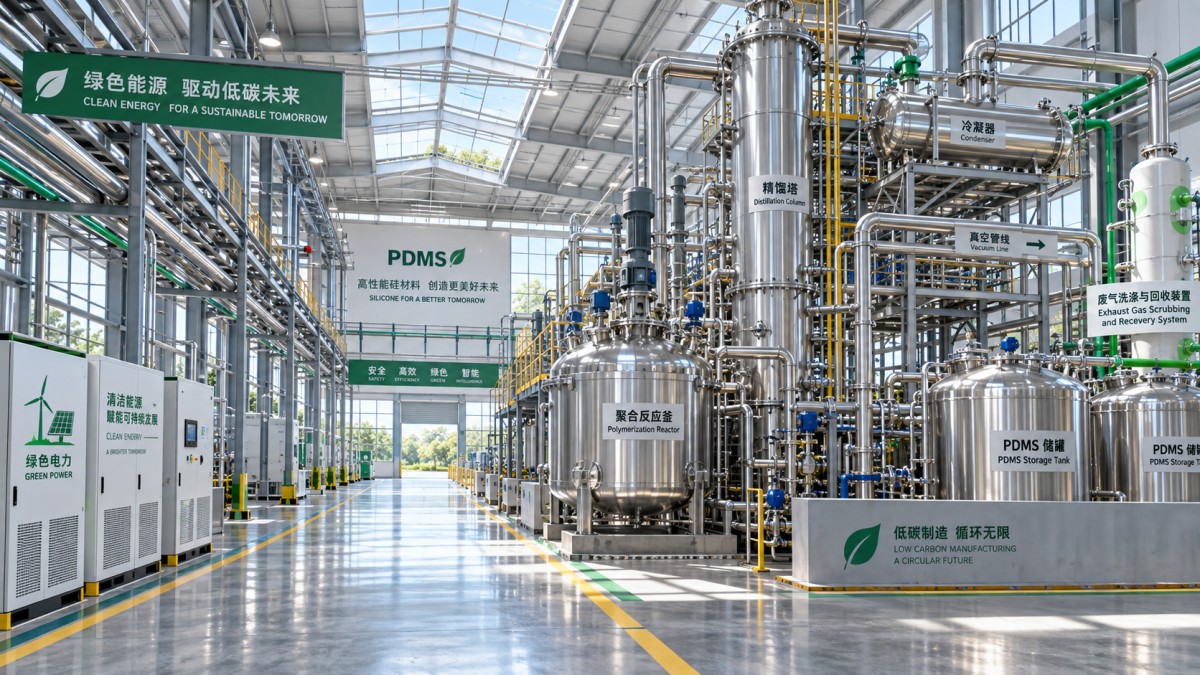
Distillation and stripping systems are frequent energy centers. A design that improves recovery of cyclic siloxanes or removes residual volatiles more effectively may need higher-quality steam, larger condensers, deeper vacuum, or additional heat integration. These additions raise upfront cost but can lower material losses and improve grade consistency. The economic value depends on plant utilization, feedstock cost, product specification, and the ability to sell recovered streams.
Evaluate utility requirements at the same level of detail as the reactor package. Review power quality, steam availability, cooling-water temperature, chilled-water requirements, compressed air, nitrogen supply, flare or thermal oxidation capacity, and backup arrangements. A project placed at a site with established utility and treatment infrastructure can avoid major standalone investments. A greenfield site may need to build these systems into the initial scope.
Environmental controls are core process equipment, not a contingency line
PDMS production and related organosilicon operations can generate volatile emissions, acidic or alkaline aqueous streams, residues, and materials requiring controlled storage and handling. The exact profile depends on the selected chemistry, catalysts, monomers, solvents, and purification route. A renewable feedstock does not automatically reduce these obligations.
Capital planning should identify emissions sources from tank vents, reactor vents, vacuum systems, distillation columns, loading stations, and packaging areas. The design may require condensers, adsorption, scrubbers, thermal treatment, closed-transfer systems, leak detection, or dedicated recovery equipment. Wastewater planning should also consider variability during cleaning, startup, shutdown, and off-spec processing rather than only normal steady-state operation.
Projects commonly become more expensive late in development when the environmental package is treated as a separate add-on. It is better to connect material balances, ventilation design, waste treatment, and operating permits from the beginning. This also helps determine whether recovered materials can be safely returned to the process or must be managed as waste.
Capacity should be chosen around qualified demand, not nameplate ambition
Economies of scale matter in continuous separation, utilities, laboratories, and site services. Yet an oversized plant can carry a heavy fixed-cost burden while buyers are still qualifying renewable PDMS grades. Silicone users may require testing for viscosity, volatility, purity, cure behavior, compatibility, odor, color, or performance in a specific formulation. Qualification can take longer than expected, especially where the product enters coatings, elastomers, personal care ingredients, release systems, electrical applications, or other demanding uses.
A more useful planning model separates nameplate capacity from expected saleable output. It should allow for startup losses, grade changes, cleaning, trial production, analytical holds, maintenance, and a realistic ramp-up period. The plant may be technically capable of producing a large volume, but its economic output is the volume that meets specification and has a qualified market.
Modular design can be valuable where demand is uncertain. A project might reserve plot space, utility connections, and control-system capacity for later expansion while installing only the processing equipment needed for an initial product slate. This approach is not automatically cheaper; small trains may have a higher unit cost. Its value lies in limiting exposure before feedstock supply and customer acceptance are proven.
Technology choice affects risk as much as equipment pricing
When comparing technology offers, the lowest equipment price does not necessarily represent the lowest project cost. The process must be evaluated for feedstock flexibility, impurity tolerance, catalyst consumption, recovery efficiency, cleaning frequency, control complexity, and maintainability. A novel route may promise a more compelling renewable story but still require validation at a meaningful operating scale.
Technology diligence should distinguish between chemistry that has been demonstrated in a laboratory, a pilot system, and sustained commercial operation. Key questions include whether the process has operated with representative renewable feedstock; how it behaves during startup and upset conditions; which components foul or corrode; and what happens to off-spec batches. If the route depends on proprietary catalysts, specialized absorbents, or a limited set of replacement parts, include supply security and lead times in the operating model.
Licensing and engineering scope also deserve scrutiny. Determine whether the package includes basic engineering only, or also detailed design support, commissioning assistance, operating procedures, training, performance testing, and control narratives. Gaps between process licensor, equipment vendor, and engineering contractor can create costly redesigns after orders have been placed.
Build the cost model in layers
Decision-makers benefit from a cost model that makes uncertainty visible rather than presenting one apparently precise total. The model should separate direct process equipment from the full installed project requirement.
- Process equipment: reactors, columns, heat exchangers, pumps, filters, storage, packaging systems, and laboratory tools.
- Installation and integration: piping, electrical work, instrumentation, automation, insulation, structural steel, foundations, and tie-ins.
- Site infrastructure: utilities, buildings, internal logistics, fire protection, wastewater handling, emissions control, and access systems.
- Project execution: engineering, permitting, construction management, commissioning, operator training, spares, and startup inventory.
- Working capital: renewable feedstock inventory, certification-related inventory management, packaging, receivables, and funds tied up during qualification.
The last category is often underestimated. Renewable materials may require separate storage, additional testing, and longer procurement commitments. Where customers need qualification samples before regular orders, cash can be committed well before the plant reaches stable utilization.
Compare ownership, tolling, and staged entry before committing to a plant
Building a dedicated plant is not the only way to enter the market. A tolling arrangement can test feedstock behavior and customer demand while limiting exposure to installed assets. It is especially relevant when the intended differentiation is in sourcing, formulation, certification, or customer-specific grade development rather than in proprietary polymerization technology.
Ownership may be justified when process control, security of supply, product purity, or scale economics are central to the business case. It can also make sense where available tolling capacity cannot meet contamination-control, traceability, or processing requirements. The key comparison is not only the tolling fee against internal conversion cost. Include logistics, minimum batch size, scheduling priority, intellectual-property controls, waste ownership, quality-release responsibility, and the cost of delayed production slots.
A staged approach can reduce avoidable risk: qualify the input stream, establish repeatable product specifications, validate market acceptance, then decide whether dedicated polymerization or upstream integration produces a defensible advantage. This sequence does not eliminate the need for investment, but it can prevent a large facility from being designed around assumptions that have not yet been tested.
Questions that should be answered before approving the project
The most credible renewable polydimethylsiloxane production plant cost estimate is one that can explain its boundaries and sensitivities. Approval materials should show how the project changes if feedstock quality tightens, renewable-input availability falls, energy costs shift, recovery efficiency differs from design assumptions, or commercial output ramps more slowly than nameplate production.
It should also make clear which sustainability claim the operation can support at launch, what documentation is required to maintain that claim, and whether the plant configuration protects product quality if certified and non-certified streams are both handled on site. Those questions connect capital spending to the real commercial proposition. Without them, a plant estimate is only an equipment budget, not a decision-ready investment case.
Technical Specifications
- Which doors and windows for residential homes reduce outside noise?Author :Construction Materials Editorial Team
- How to select valves and fittings for corrosive fluid systemsAuthor :Industrial Machinery Editorial Team
- How much capital is needed to start a sanitary ware manufacturing plant?Author :Construction Materials Editorial Team
Expert Insights

Chief Security Architect
Dr. Thorne specializes in the intersection of structural engineering and digital resilience. He has advised three G7 governments on industrial infrastructure security.
Core Sector // 01
Security & Safety
- What drives the cost of a renewable polydimethylsiloxane production plant?Author :Polymers & Rubber Editorial Team

- What Are Thermoplastic Elastomers and How Do They Compare with Rubber?Author :Polymers & Rubber Editorial Team

- How to Choose Thermoplastic Elastomers for Seals, Grips, and OvermoldingAuthor :Polymers & Rubber Editorial Team