How to Judge Ceramic Sanitary Ware Quality Before Large-Volume Purchase
Author
Date Published
Reading Time
How to Judge Ceramic Sanitary Ware Quality Before Large-Volume Purchase
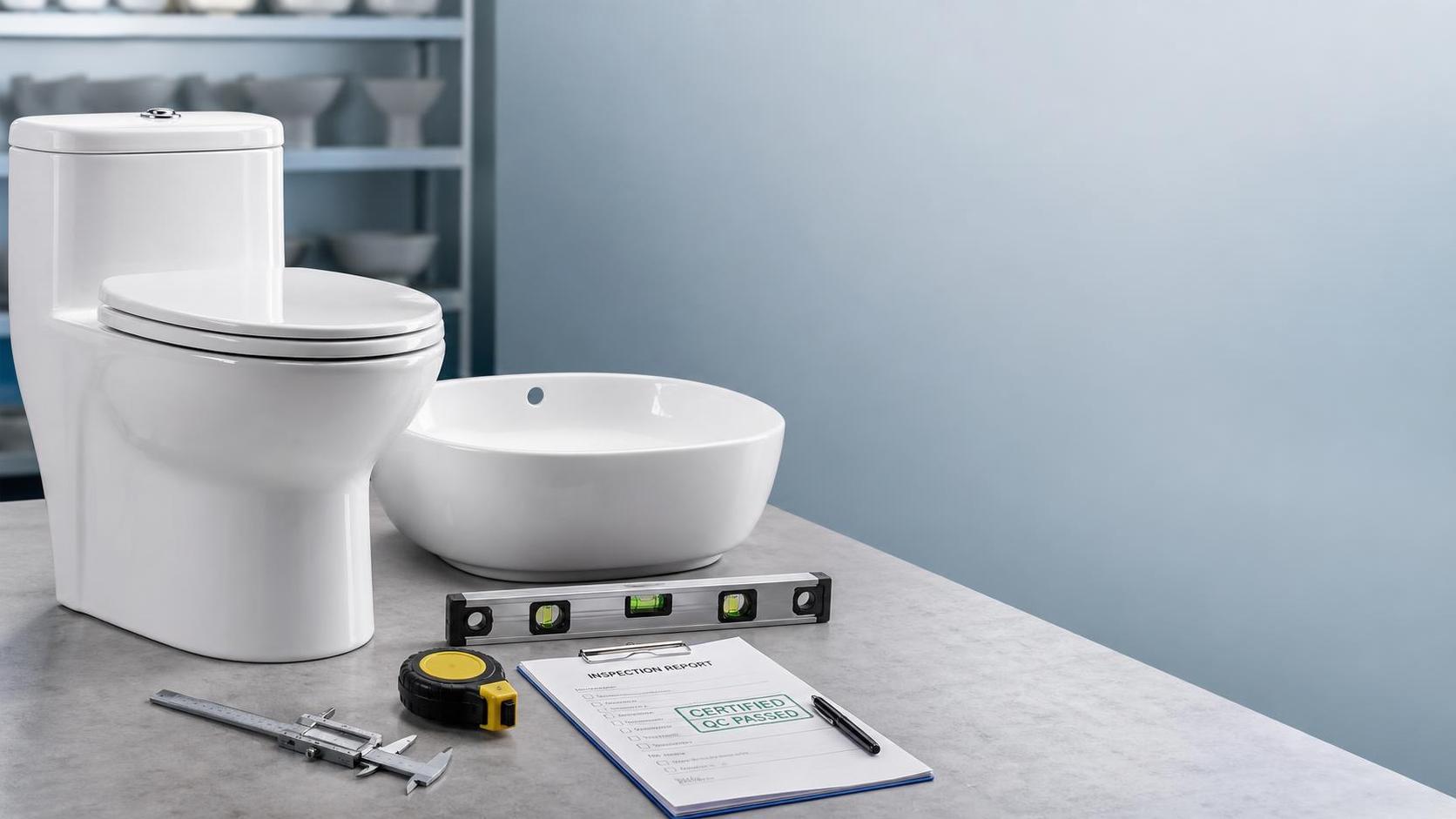
For procurement teams planning bulk orders, evaluating ceramic sanitary ware quality before signing a contract is essential to reduce defects, control costs, and avoid supply risks. From surface finish and water absorption to dimensional accuracy and certification compliance, understanding the right inspection points helps buyers compare suppliers more confidently and make better large-volume purchasing decisions.
If you are buying ceramic sanitary ware in volume, do not start with catalog photos, glaze color names, or showroom samples alone. Start with the failure points that usually turn into claims later: visible surface defects, unstable dimensions, poor flushing performance, cracked bodies after transport, and paperwork that does not match the shipment. Most bulk-buy problems are not dramatic. They are small quality deviations repeated across hundreds or thousands of pieces.
A practical checklist is more useful than a polished brochure, so here is the short list buyers actually need on the table before placing a large order.
Check the ceramic body before the glaze impresses you
The body quality decides whether the product stays stable through firing, handling, installation, and use. Ask the supplier what type of body they produce and what inspection records they keep for cracking, warping, and water absorption. For vitreous china sanitary products, buyers often use low water absorption as a basic indicator of firing quality, but the acceptable level should be checked against the product category and destination market standard rather than guessed.
A simple buyer habit helps here: inspect the underside, rear face, and hidden installation areas, not only the visible front. Suppliers usually finish display surfaces better. If hidden areas are rough, pinholed, or inconsistent from piece to piece, production control may also be loose in the visible areas once mass production starts.
Surface finish tells you more than color consistency
When checking glaze, look for pinholes, crawling, black specks, ripples, blistering, glaze cracks, and dull spots under normal light and side light. Side light matters because many defects disappear under bright showroom lighting. Run a hand over the rim, edges, and basin interior. A surface can look clean in photos and still feel uneven in person.
Also check whether the white tone or colored finish stays consistent across different production batches. For project orders, batch variation is a real cost issue. One container with a slightly different shade can create sorting delays, installation disputes, or replacement claims, especially in hotels, apartments, and commercial washrooms where products are installed side by side.
Do not treat dimensions as a formality
Dimensional accuracy is where many procurement teams lose money quietly. A toilet, basin, or pedestal that is only slightly off can still pass visual inspection but create trouble during installation. Check mounting hole positions, trap alignment, outlet size, bowl height, basin flatness, and wall-contact surfaces. If the product must fit vanity tops, concealed cistern systems, or standard rough-in dimensions, request measured drawings and compare them with physical samples.
Do not rely on one golden sample. Ask for several pieces from the same batch and measure them. Repeatability matters more than one perfect unit.
For toilets, flushing performance is not optional
A toilet can look solid and still perform badly in actual use. For bulk purchase, ask which market the model was designed for and which testing basis the supplier claims to meet. Requirements may differ by destination, and standards such as ASME, CSA, EN, or WaterMark-related compliance should only be accepted when supported by valid documentation for the exact model, not a general company statement. If the supplier references certification, verify scope and model coverage directly. If anything is unclear, mark it as 【待核实】.
Where possible, witness a flushing test on production samples, not only pre-production prototypes. Watch refill speed, siphon consistency, rim wash coverage, splash control, and whether performance changes after repeated cycles. A model that works once for demonstration is not enough for procurement approval.
Ask what is included, because missing parts distort the real unit cost
This sounds basic, but it causes constant confusion. Confirm whether the quoted ceramic sanitary ware includes seat cover, flushing mechanism, tank fittings, mounting kit, basin waste, overflow ring, fixing bolts, or only the ceramic body. One supplier may appear cheaper until you discover half the accessories are excluded or switched to a lower grade.
For procurement comparison, build a landed-cost sheet based on a complete installation set, not ex-factory ceramic only. That is usually where the “low unit price” stops looking attractive.
Packing quality matters if the route is long
Ceramics fail in transit more often than buyers like to admit. Ask for packaging specs, drop protection details, pallet method, carton strength, and loading photos from previous shipments if available. Export packing should be matched to the route, handling frequency, and whether the cargo will be palletized, floor-loaded, or reworked at transit hubs.
If you are shipping to regions with rough inland transport or multiple warehouse touches, spend time on packaging review early. Replacing broken ceramic sanitary ware after arrival is rarely cheap, and often impossible within the original project schedule.
Paperwork should match the exact product, not the supplier profile
- Request test reports, compliance documents, and certifications tied to the exact model number.
- Check issue date, issuing body, product description, and whether the document is still valid.
- Confirm labeling, carton marks, and country-specific import requirements with your broker or compliance team.
- If anti-dumping exposure, tariff treatment, or sanitary import rules are relevant in your market, verify them separately. These points can change and should be treated as 【待核实】 unless confirmed through current official channels.
Before the PO, lock the inspection method
Do not leave “quality as per sample” as the only control language in the order. Define inspection points in writing: appearance standard, allowed defect level, dimensions to be checked, accessory list, package method, logo marking, and batch traceability. If third-party inspection will be used, agree on timing and sample size before production finishes.
A supplier can be honest and still deliver inconsistent goods if the acceptance standard is vague. Clarity protects both sides.
The useful mindset is simple: judge ceramic sanitary ware the way it will fail in real purchasing, not the way it is presented in a showroom. Check body quality, glaze defects, dimensions, flushing performance, packing strength, included accessories, and document validity. Then compare suppliers on total risk-adjusted cost, not headline price. That is usually the difference between a smooth bulk purchase and months of replacements, claims, and awkward conversations after the containers land.
Technical Specifications
- How to test melt flow consistency in batches of recycled plasticsAuthor :Polymers & Rubber Editorial Team
- When does a cast resin transformer need high-altitude derating?Author :Electrical Components Editorial Team
- How to verify Global Industrial Insights sourcing informationAuthor :Industrial Machinery Editorial Team
Expert Insights

Chief Security Architect
Dr. Thorne specializes in the intersection of structural engineering and digital resilience. He has advised three G7 governments on industrial infrastructure security.
Core Sector // 01
Security & Safety
- How much capital is needed to start a sanitary ware manufacturing plant?Author :Construction Materials Editorial Team

- Is water saving sanitary ware practical for high-use buildings?Author :Construction Materials Editorial Team

- How to Judge Ceramic Sanitary Ware Quality Before Large-Volume PurchaseAuthor :Construction Materials Editorial Team