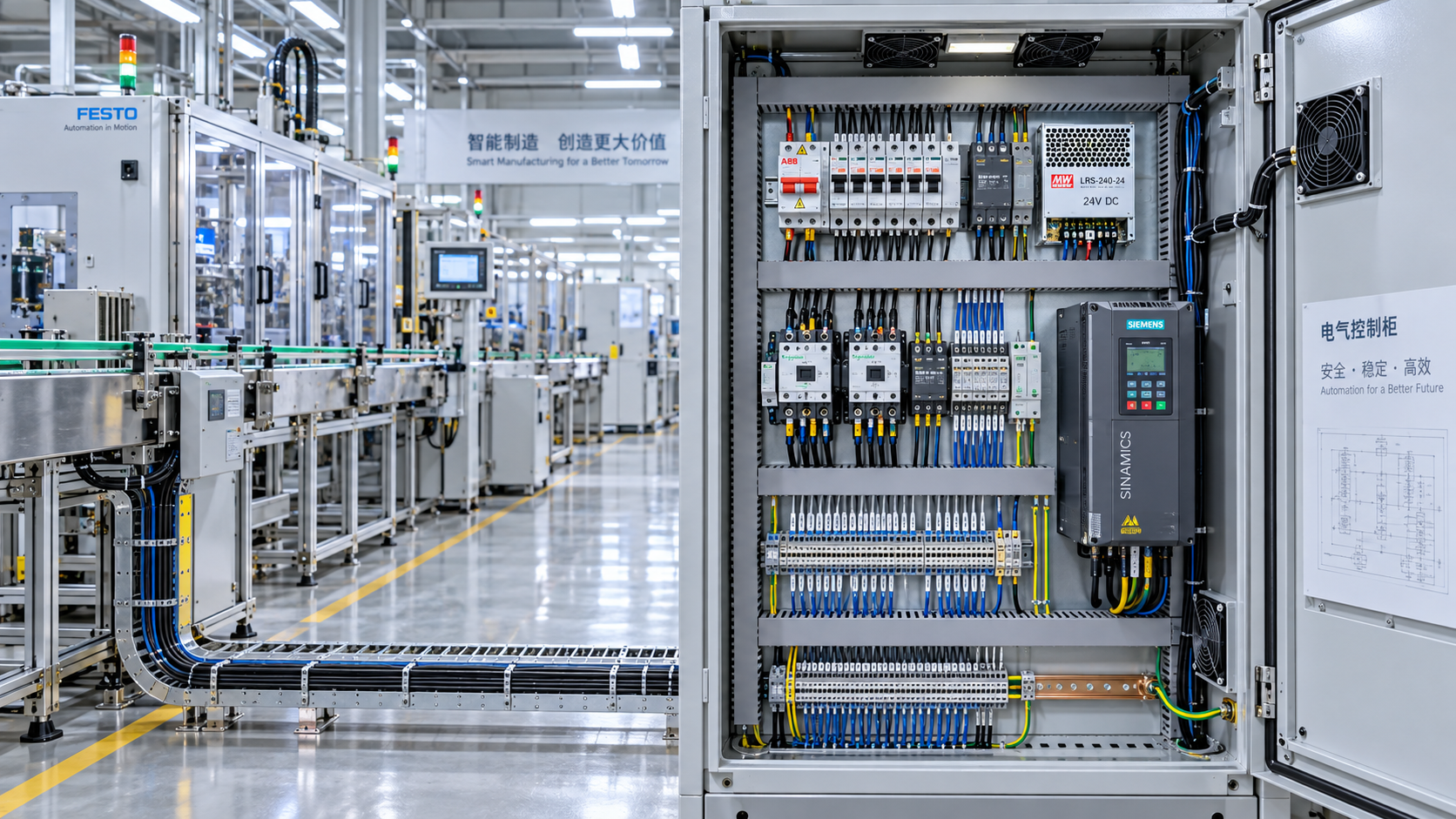
What to verify before choosing a control panel supplier
Author
Date Published
Reading Time
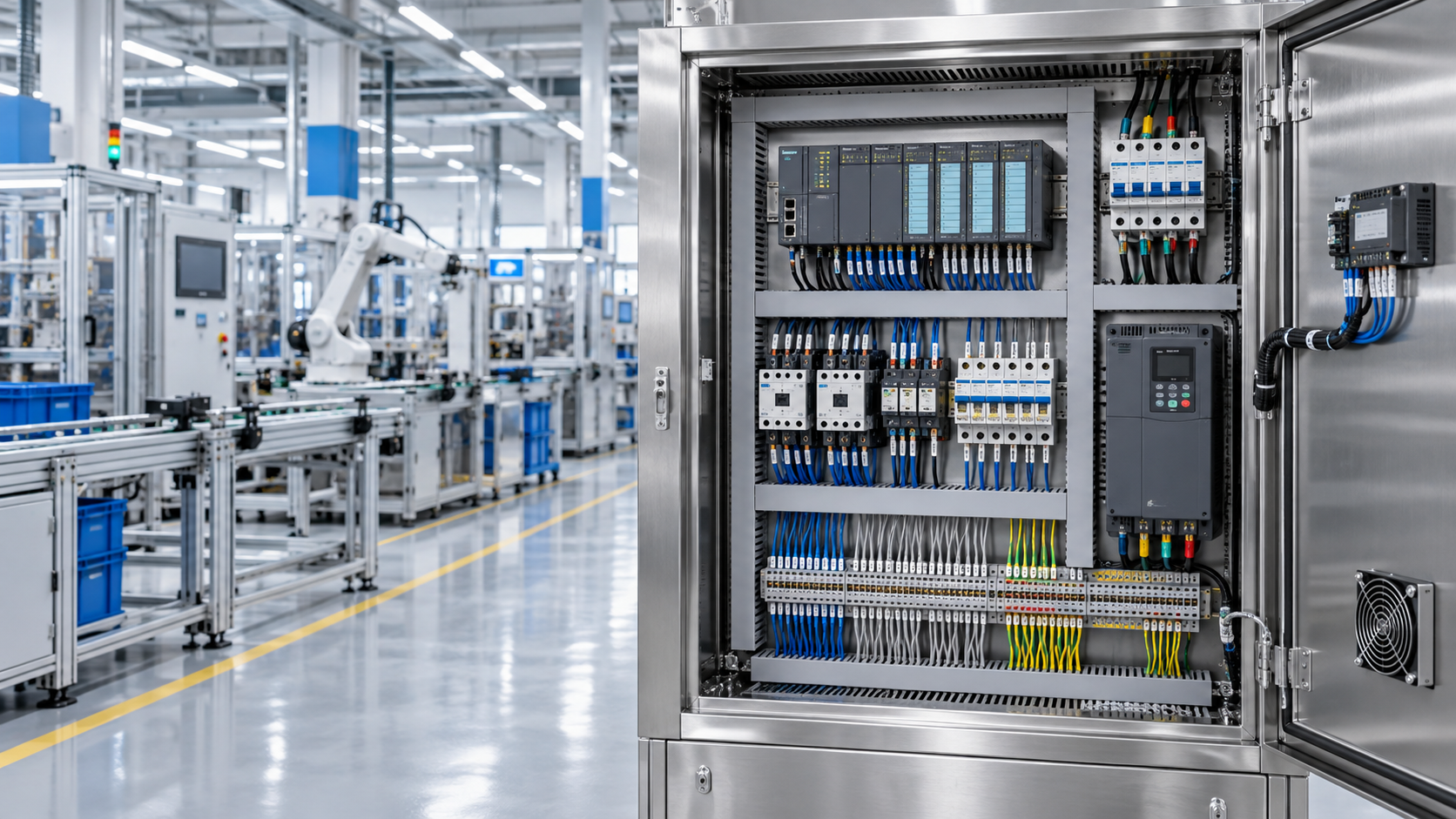
A control panel often arrives on site as one item in a much larger project. Yet when it is late, incorrectly documented, difficult to commission, or built around components that cannot be replaced locally, it can hold up an entire installation. For procurement teams, choosing a control panel supplier is therefore not simply a comparison of enclosure sizes and quoted prices. It is a decision about engineering discipline, delivery reliability, regulatory exposure, and the cost of keeping a system running years after handover.
This matters across industrial automation, water treatment, HVAC, energy systems, machinery, building services, and process plants. A panel may look similar externally whether it is built for a pump station, conveyor line, packaging machine, or motor control application. Behind the door, however, differences in design practice, component selection, wiring quality, testing, and documentation can have a major effect on safety and uptime.
Before issuing a purchase order, buyers should move beyond broad claims such as “custom-built,” “international standard,” or “competitive price.” The following verification points provide a more practical way to assess whether a supplier can support the project that is being purchased—not merely assemble a cabinet.
Begin with the actual scope, not the quotation total
Many sourcing problems begin before the supplier comparison starts. If the request for quotation is vague, each bidder may price a different interpretation of the requirement. One may include design engineering and factory testing; another may assume the buyer will provide final drawings. One may include a variable frequency drive, surge protection, and labeled spare terminals; another may leave them as options.
Create a scope sheet that identifies what the panel must do, where it will operate, and what interfaces it must support. At minimum, clarify the power supply, load types and ratings, control philosophy, communication protocol, enclosure environment, incoming and outgoing cable arrangement, installation location, and required documentation. If the panel will connect to an existing PLC, SCADA system, building management system, or remote monitoring platform, identify the protocol and point list early.
Ask every potential control panel supplier to state assumptions and exclusions in writing. A low price is only comparable when the underlying scope is comparable. This simple discipline can prevent later disputes over “not included” items that appeared obvious to one party but were never written into the order.
Check whether engineering capability is real and relevant
Panel assembly is not the same as panel engineering. Some suppliers are well suited to repeat orders based on proven drawings, while others can interpret process requirements, produce electrical designs, coordinate automation hardware, and manage custom control logic. Neither model is inherently wrong, but the buyer needs to match the supplier’s role to the project’s risk level.
For a custom or technically sensitive project, review sample deliverables rather than relying on a capability statement. Useful examples include single-line diagrams, control schematics, general arrangement drawings, bills of materials, terminal schedules, cable schedules, I/O lists, PLC architecture, and operating manuals. These documents reveal whether the supplier uses a consistent drawing standard and whether another engineer will be able to troubleshoot the panel later.
It is also worth asking who owns the design responsibility. Is the supplier expected to develop drawings from a functional description? Will they build strictly to buyer-issued drawings? Does a third-party consultant approve the design? A clear answer protects both cost control and accountability.
- Request the proposed design review process and approval milestones.
- Confirm how drawing revisions are tracked after technical changes.
- Ask whether the supplier can support panel expansion, additional I/O, or future feeder capacity.
- Verify whether software, PLC programs, passwords, and backup files will be handed over at project completion.
Future access to control software can be especially important. A panel that works perfectly at commissioning may become an operational burden if the site owner cannot obtain the latest program, network configuration, or password-controlled device settings.
Certification is a documentation question as much as a label question
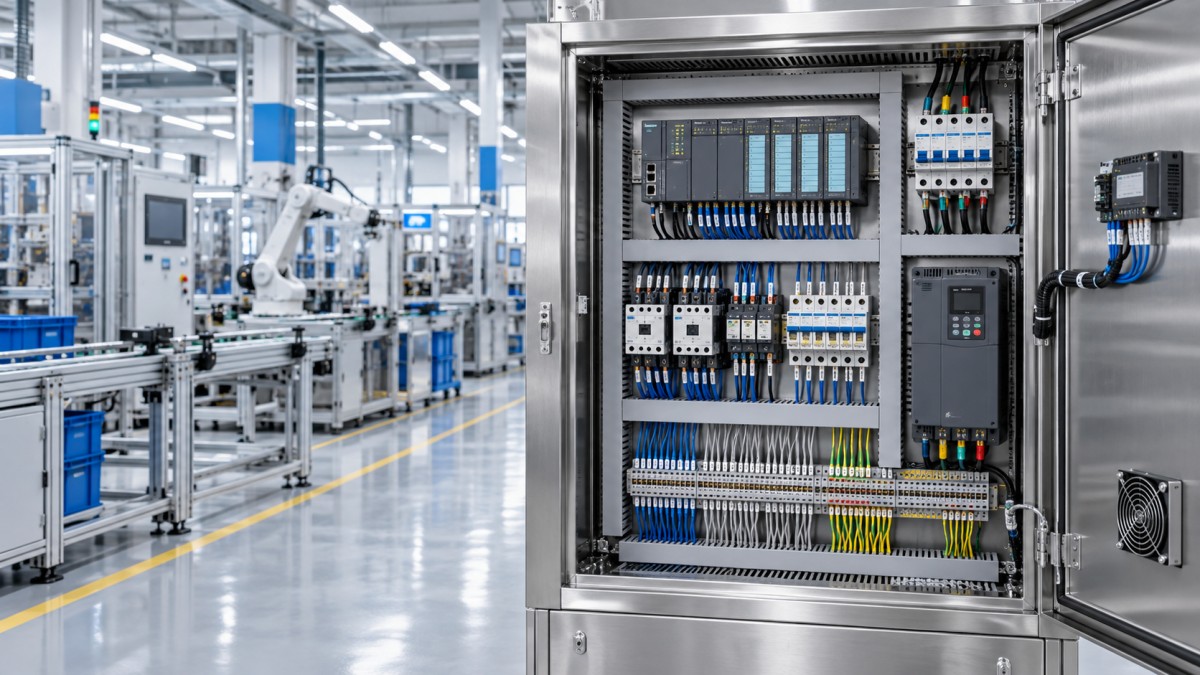
Compliance requirements depend on the destination market, application, voltage range, and end-user specifications. Buyers should avoid assuming that a supplier’s general certificate automatically applies to every panel they produce. The relevant question is whether the proposed panel, components, manufacturing process, and test records can meet the standard required for this particular shipment.
Ask the supplier to identify the applicable standards and explain how conformity will be demonstrated. Depending on the project, this may involve requirements related to low-voltage switchgear assemblies, industrial control panels, electrical safety, electromagnetic compatibility, ingress protection, hazardous locations, machinery integration, or regional market access. Requirements may differ for export to North America, Europe, the Middle East, Southeast Asia, or other markets.
Review certificates carefully. Check the legal company name, validity period, scope, issuing body, and whether the certificate applies to the manufacturing site that will build the equipment. For component-based claims, request the proposed make and model of critical devices such as breakers, contactors, relays, drives, power supplies, safety equipment, and PLC hardware. Substituting an unapproved component during procurement can create compliance or maintenance issues later.
For projects with stringent end-user or inspector requirements, involve the relevant authority, consultant, or certification body before fabrication starts. Discovering a requirement after the enclosure has been wired is usually more costly than resolving it during design review.
Look inside the panel: component policy and build quality affect lifecycle cost
Procurement teams often focus on the brand names in a bill of materials, which is sensible but incomplete. A reliable panel depends on how components are selected, arranged, wired, protected, and identified. Even a panel containing reputable parts can be difficult to service if cable routing is cramped, terminals are poorly labeled, heat dissipation has been overlooked, or spare capacity has not been planned.
Ask for a detailed bill of materials that distinguishes approved brands from acceptable alternatives. Confirm whether substitutions require written approval. In markets where local replacement availability matters, assess whether the selected component families can be sourced through the buyer’s regional distribution network. A lower initial price may not compensate for prolonged downtime caused by an unavailable drive, relay, or power supply.
During a factory visit, virtual inspection, or pre-shipment review, look for practical indicators of workmanship: consistent wire numbering, clear terminal identification, segregated power and control wiring, proper earthing, suitable cable ducts, secure mounting, adequate bend radius, sealed cable entries, and clean labeling. Ask how the supplier manages torque settings, wire ferrules, crimping tools, and internal quality checks. These are not cosmetic details; they influence fault finding, electrical safety, and the panel’s ability to withstand transport and site conditions.
Verify the manufacturing plan before accepting the promised lead time
“Delivery in six weeks” has little value without a credible route to production. Lead times are often affected by long-lead electrical components, enclosure availability, software integration, drawing approval delays, and the supplier’s existing workload. A dependable control panel supplier should be able to explain its schedule in stages rather than offering one optimistic completion date.
Request a simple production plan covering engineering release, procurement, mechanical assembly, wiring, software development where applicable, internal inspection, factory acceptance testing, packing, and dispatch. Identify which components are already in stock, which will be ordered after the deposit, and which parts carry supply-chain risk. If an equivalent component is proposed as a contingency, decide in advance whether it is acceptable.
Capacity should also be checked in relation to the order. A small workshop may produce excellent panels but struggle with a multi-unit project requiring synchronized delivery. Conversely, a larger manufacturer may have formal processes but provide less flexibility for small design changes. Ask about current production loading, quality staffing, test facilities, and the number of similar panels they can produce within the required timeframe.
Where project timing is critical, include contractual milestones for drawing approval, material readiness, factory acceptance testing, and shipment. Procurement should not carry the entire schedule risk when the buyer’s delayed approval is the actual reason fabrication cannot begin.
Factory acceptance testing should prove the agreed function
A panel can pass a basic power-on check and still fail to perform correctly in the field. The factory acceptance test, or FAT, is the buyer’s best opportunity to identify wiring errors, logic gaps, communication issues, incorrect labeling, and incomplete documentation before shipping.
The test plan should reflect the application. For a motor control panel, it may include starter operation, interlocks, overload settings, emergency stop functions, alarms, and drive parameters. For an automation panel, it may also include simulated field signals, I/O verification, PLC sequences, communication checks, and fail-safe behavior during power loss or network interruption.
Agree on FAT requirements before the build starts. Define who will witness the test, whether remote witnessing is acceptable, what test equipment will be used, how punch-list items will be recorded, and what documents must be issued after closure. If full-load testing is not practical at the factory, the limitation should be clear, along with the site testing still required during commissioning.
Do not overlook routine electrical checks. Insulation resistance, continuity, protective earth verification, phase arrangement, functional checks, and visual inspection records should be available where applicable. The exact testing regime will depend on the specification and governing standards, but the principle is constant: test evidence should be traceable to the delivered panel.
Price comparison needs a total-cost lens
When several quotations arrive, the lowest number can appear decisive—particularly when panel specifications are lengthy and budget pressure is real. But comparing totals without normalizing the scope can conceal material differences. The cost of adding missing engineering, upgraded components, extra terminals, shipping packaging, documentation, or site support after award may quickly outweigh the initial saving.
A useful comparison table separates the commercial offer into design, enclosure, major components, control hardware, testing, documentation, packing, logistics terms, commissioning support, warranty, and spare parts. It should also identify payment terms, quotation validity, currency exposure, taxes or duties, and any requirement for special inspection.
Buyers should be cautious about two opposite mistakes: rejecting a higher quote without understanding what it includes, or assuming that a high price automatically means low risk. The stronger offer is the one that is transparent, technically aligned, realistically scheduled, and supported by evidence.
After-sales support is part of the procurement decision
Control panels are expected to remain in service long after the original project team has moved on. When a fault occurs, the site may need a wiring diagram, replacement part reference, software backup, or technical response quickly. Before selecting a supplier, ask who handles post-delivery questions, what warranty process applies, and whether remote troubleshooting or on-site assistance is available for the destination region.
Documentation handover deserves particular attention. The final package should reflect the panel as built, including updated drawings, bill of materials, device settings, test reports, manuals, software backups where relevant, and a list of recommended spares. “As-built” accuracy is more valuable than a polished but outdated drawing set.
For repeat projects or distributed sites, evaluate whether the supplier can maintain revision control and provide consistent builds over time. A supplier that can support a standardized panel platform may reduce training, spares inventory, and maintenance complexity across multiple locations.
A practical final check before award
Before approving the purchase order, procurement teams should be able to answer a few direct questions: Is the functional scope unambiguous? Have required standards and destination-market obligations been confirmed? Are component brands and substitutions controlled? Has the lead time been tested against actual material availability and production capacity? Is the FAT plan sufficient for the application? Will the buyer receive complete as-built documents and usable software access?
If any answer remains uncertain, the right response is not necessarily to change suppliers. It may be to clarify the requirement, request additional evidence, or revise the commercial terms. The goal is not to find a flawless vendor; it is to select a control panel supplier whose capabilities, processes, and responsibilities are visible enough to manage risk with confidence.
In a market where supply chains, standards, and component availability can shift quickly, well-informed verification creates room for better purchasing decisions. It turns a panel order from a price-led transaction into a controlled investment in safe operation, predictable installation, and maintainable equipment.
Technical Specifications
- How to verify a PPR pipes supplier before placing a bulk orderAuthor :Polymers & Rubber Editorial Team
- When should industrial electric motors use variable-speed drives?Author :Electrical Components Editorial Team
- Which roof tiles for a villa suit high-wind locationsAuthor :Construction Materials Editorial Team
Expert Insights

Chief Security Architect
Dr. Thorne specializes in the intersection of structural engineering and digital resilience. He has advised three G7 governments on industrial infrastructure security.
Core Sector // 01
Security & Safety
- What to verify before choosing a control panel supplierAuthor :Electrical Components Editorial Team

- How to size electrical components for a reliable control panelAuthor :Electrical Components Editorial Team

- When does a custom control panel justify its engineering cost?Author :Electrical Components Editorial Team