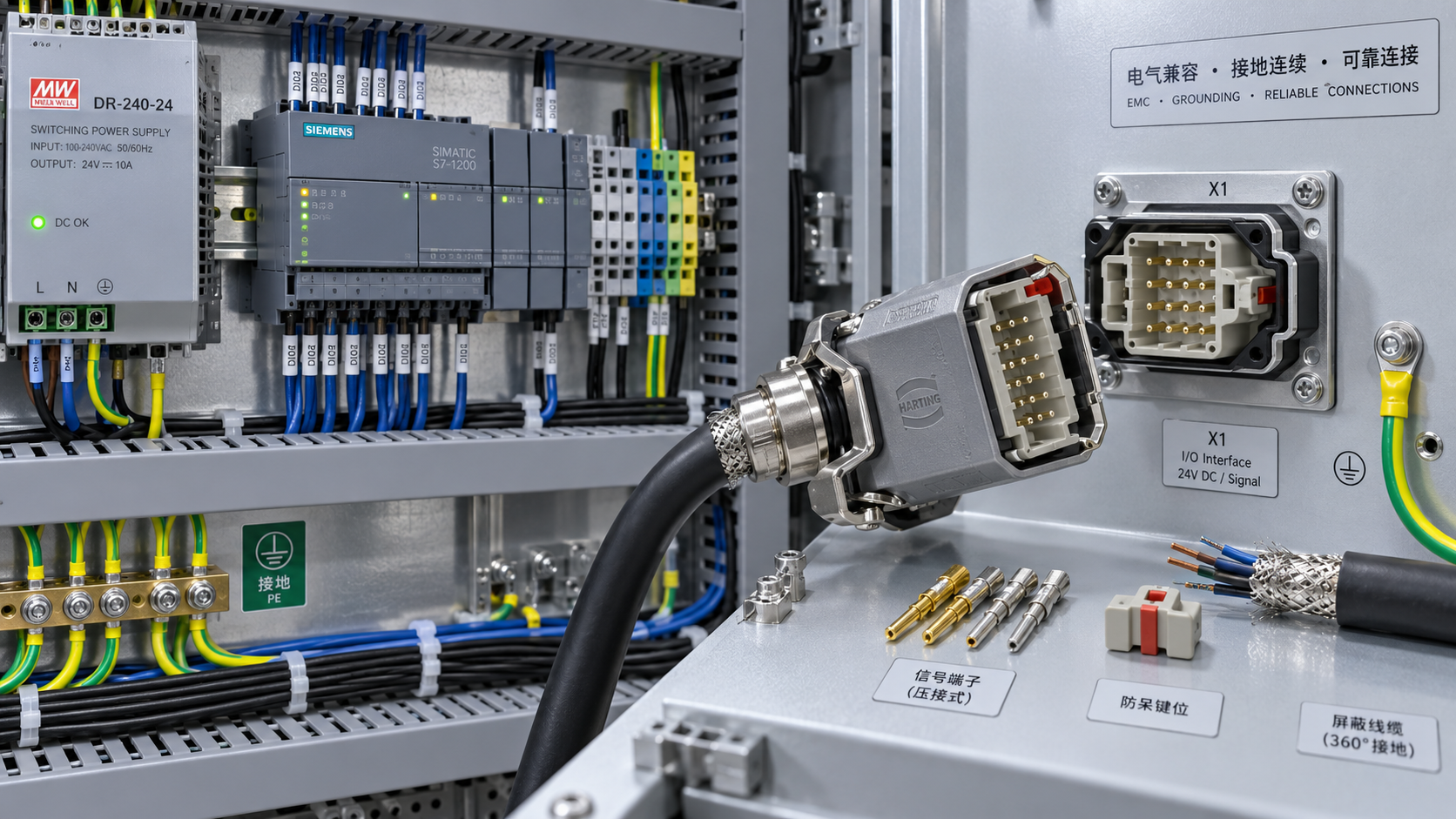
When does a custom control panel justify its engineering cost?
Author
Date Published
Reading Time

A custom control panel can deliver better workflow alignment, stronger data visibility, and tighter security than off-the-shelf software—but only when its business value exceeds the cost of design, development, maintenance, and integration. For a business evaluator, the difficult part is rarely recognizing that a tailored interface would be “nice to have.” The real question is whether it will remove measurable friction from operations, sourcing, compliance, reporting, or partner management.
That distinction matters. A polished dashboard may impress users during a demonstration, yet still become an expensive layer over broken processes. Conversely, a carefully scoped custom control panel can turn fragmented spreadsheets, supplier emails, freight updates, product documents, and approval chains into a working system that reduces delay and uncertainty. The investment is justified when the panel becomes an operating asset rather than a cosmetic software project.
Start with the cost of staying as you are
Many organizations evaluate custom development by asking, “What will it cost to build?” A more useful opening question is, “What is our current operating model already costing?”
For global buyers, distributors, contractors, and research-led teams, the hidden cost is often scattered across small tasks: staff re-entering data from supplier files, managers chasing approval status by email, procurement teams working from outdated price sheets, or compliance personnel searching through folders for certificates. No single frustration may justify a development project. Together, however, they can slow commercial decisions, increase errors, and make it difficult to see what requires attention.
A custom control panel becomes more compelling when those inefficiencies are recurring, cross-functional, and tied to commercial risk. Consider a business that follows supply-chain disruptions, price movements, shipping milestones, standards updates, and supplier documentation across multiple markets. If its teams repeatedly compile the same information manually before acting, the organization is not simply dealing with inconvenience. It is paying for a lack of operational visibility.
The assessment should include more than labor hours. Delayed buying decisions can mean missed purchasing windows. Poor document control can create customs, certification, or contractual exposure. Inconsistent supplier records can lead to avoidable disputes. When the current process makes these outcomes more likely, the value case for a tailored system becomes much stronger.
What a custom control panel should solve—and what it should not
A control panel is justified by the decisions it improves, not by the number of widgets it contains. Before approving engineering work, define the decisions that users need to make more quickly or more reliably. These may include whether to approve a supplier, release a purchase order, escalate a logistics exception, compare quotations, renew a certification, publish a market alert, or prioritize a sales lead.
In an industry information and business-connection environment, the panel may serve several roles at once. Editorial or research users may need to monitor trade policy changes and market developments. Commercial teams may need visibility into report downloads, company inquiries, referral traffic, or partner activity. Operations staff may need to validate profiles, manage submissions, track content status, and review access permissions. These workflows are connected, but they are not identical. A generic dashboard can display data; it may not reflect how each group actually works.
That said, not every requirement deserves custom code. Standard functions such as basic user management, routine analytics, common customer relationship management, document storage, or simple ticketing may be handled effectively through existing platforms. Building a custom version of a mature commodity feature is usually difficult to defend unless there is a clear integration, regulatory, security, or workflow reason.
The strongest projects are selective. They keep standardized capabilities where standard tools work well and invest engineering effort where the business has a distinctive process or a meaningful information advantage to protect.
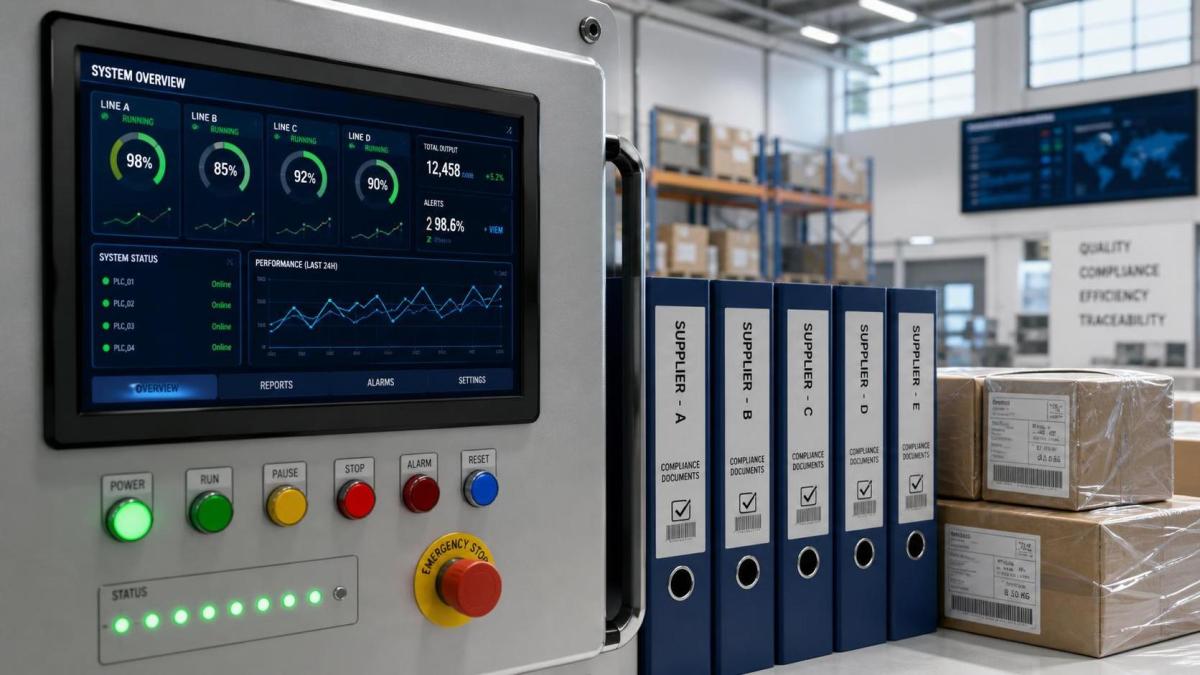
Signals that the engineering cost is likely justified
There is no universal revenue threshold at which a custom control panel suddenly makes sense. The decision depends on process complexity, risk, expected lifespan, and the availability of acceptable alternatives. Still, several signals tend to appear when customization is economically sound.
The workflow is genuinely differentiated
If your team follows a sequence that competitors, software vendors, or internal departments do not share, a tailored panel may be warranted. For example, a sourcing intelligence workflow might combine market-price alerts, supplier records, certification checks, trade-policy updates, internal comments, and inquiry routing before a buyer can recommend a partner. Forcing that sequence into several disconnected tools can create more work than it saves.
The key word is genuinely. “We have always done it this way” is not evidence of a differentiated workflow. The process should serve a real business need, be likely to remain in place, and produce better outcomes than a simpler method.
Errors have material consequences
Custom software is easier to justify where mistakes affect margin, compliance, safety, contractual obligations, or reputation. A panel that flags expired test reports, missing origin documentation, duplicate suppliers, abnormal price changes, or shipment exceptions can be valuable if users would otherwise discover the problem late.
In these cases, the financial case should not depend only on productivity. Better controls may prevent a small number of high-impact failures. Evaluators should be careful not to invent savings figures, but they can assess the nature of exposure: How often are records incomplete? Who can change critical data? Is there an audit trail? How long does it take to identify an issue? These questions often reveal whether a purpose-built control layer has strategic value.
Information must be unified, not merely viewed
Many organizations already have data in several places: a content management system, a CRM, spreadsheets, supplier databases, analytics tools, email, cloud storage, and logistics portals. A dashboard that merely shows a few charts may not justify major development. One that creates a governed operational view across these sources may.
For example, an industry media platform growing into lead capture and partner referrals needs more than traffic statistics. It may need to connect a company profile, the articles or reports that generated attention, the market category involved, inquiry status, account ownership, consent records, and follow-up history. If that information remains fragmented, revenue teams and editors may work from different versions of reality.
Users need role-specific action, not a one-size-fits-all interface
A good custom control panel does not give every user the same screen. A researcher may need source validation and topic monitoring. A commercial manager may need account activity and lead quality indicators. An administrator may need permissions, moderation queues, and audit logs. An external partner may need a limited portal for updating company information or downloading approved materials.
Role-based design becomes important when visibility itself is sensitive. Global trade and sourcing environments often involve commercial terms, supplier contacts, internal assessments, and restricted documents. Granular permissions can be more than a convenience; they can be a practical safeguard.
The panel supports a long-lived operating model
Custom development has a delayed cost: maintenance. If the workflow is temporary, experimental, or likely to be replaced within a year, building a bespoke platform may be premature. If it supports a durable operating model—such as a continuing media database, supplier network, content-led lead engine, or multi-market research process—the economics improve because the asset can deliver value over a longer period.
A practical way to compare build, buy, and configure
Rather than treating the choice as custom versus off-the-shelf, compare three realistic paths: buy a ready-made platform, configure or integrate existing software, and build a custom control panel. The middle option is often underestimated. Modern systems can be connected through APIs, automation tools, embedded analytics, and low-code interfaces. This may solve much of the problem without committing to a full engineering program.
Decision-makers should be suspicious of comparisons that focus only on initial implementation cost. Subscription fees, consulting work, manual workarounds, data migration, vendor lock-in, training, security review, and future change requests all influence total cost of ownership. Custom development may look expensive at the beginning and cheaper over time, or the reverse may be true. The point is to model the full operating horizon, not only the launch budget.
Build the business case around outcomes, not features
A feature list is useful for procurement, but it is a weak investment case. “A supplier scorecard,” “a notification center,” or “a reporting dashboard” says little about value on its own. Tie each proposed capability to a specific operational outcome.
- Instead of “centralized documents,” define faster verification of certificates and fewer searches across disconnected folders.
- Instead of “workflow automation,” define fewer manual handoffs before an inquiry reaches the right commercial owner.
- Instead of “price alerts,” define earlier review of material movements that may affect active sourcing decisions.
- Instead of “role-based access,” define controlled handling of sensitive supplier, buyer, and commercial information.
- Instead of “reporting,” define a consistent view of which content categories generate qualified partner interest.
This framing also exposes weak requirements. If a proposed feature cannot be connected to a user decision, a risk reduction, a revenue opportunity, or a recurring operational burden, it may be better left out of the first release.
A sensible evaluation uses both quantitative and qualitative evidence. Quantitative indicators might include time spent on reporting, number of manual transfers, approval cycle time, duplicate records, missed follow-ups, or frequency of document exceptions. Qualitative evidence matters too: user confidence in data, management’s ability to explain why a decision was made, and the ease of onboarding new staff. These are harder to price, yet highly relevant in complex commercial environments.
Scope discipline is where many projects succeed or fail
The most common mistake is attempting to replace every existing tool with one large, custom system. That approach creates a wide set of dependencies before users receive meaningful value. Requirements expand, stakeholders disagree, integrations multiply, and the project becomes difficult to govern.
A better approach is to identify a narrow control point: the workflow where fragmented information causes the greatest business friction. It could be supplier onboarding, market intelligence triage, content-to-lead attribution, compliance document review, or logistics exception management. Build a first version around that control point, with enough architecture to connect future modules but not so much complexity that delivery stalls.
For a media-driven industry platform, a practical first release might unify company profile review, content engagement signals, inquiry routing, and partner follow-up status. That provides a direct link between audience activity and commercial action. Deeper functions—such as predictive scoring, advanced benchmarking, or extensive self-service partner tools—can wait until the basic workflow is proven.
Questions to ask the engineering team before approval
Business evaluators do not need to prescribe technical architecture, but they should insist on clear answers. What systems will supply data to the panel, and which system remains the source of truth for each record? What happens when an integration fails? How will duplicate records be handled? Which users can view, edit, approve, export, or delete information? How will activity be logged?
Ask as well about the unglamorous realities: testing, accessibility, backups, monitoring, incident response, documentation, and support ownership. A custom control panel is not finished when the interface goes live. It requires ongoing attention as browser behavior, user needs, data sources, regulations, and internal processes change.
It is also worth asking what will not be built. A credible development plan includes boundaries. If every requested function is labeled essential, the business has not yet made the decisions needed to control scope.
The final decision: is it an interface, or an operating advantage?
A custom control panel justifies its engineering cost when it creates a durable advantage in how the organization sees, governs, and acts on important information. It should reduce recurring friction, support decisions that matter, protect against meaningful errors, and fit workflows that standard products cannot accommodate without costly compromise.
If the need is primarily visual, occasional, or based on a common process, buying or configuring existing software is usually the wiser route. If the panel will become the place where market intelligence, business relationships, compliance evidence, operational exceptions, and commercial follow-up converge, the investment deserves serious consideration.
The best decision is rarely driven by enthusiasm for customization. It comes from a disciplined recognition that the existing process is already expensive—and that a carefully bounded custom control panel can make the business more responsive, more accountable, and easier to scale.
Technical Specifications
- How to test melt flow consistency in batches of recycled plasticsAuthor :Polymers & Rubber Editorial Team
- When does a cast resin transformer need high-altitude derating?Author :Electrical Components Editorial Team
- How to verify Global Industrial Insights sourcing informationAuthor :Industrial Machinery Editorial Team
Expert Insights

Chief Security Architect
Dr. Thorne specializes in the intersection of structural engineering and digital resilience. He has advised three G7 governments on industrial infrastructure security.
Core Sector // 01
Security & Safety
- How do I prevent connector compatibility problems when upgrading control panels?Author :Electrical Components Editorial Team

- What to verify before choosing a control panel supplierAuthor :Electrical Components Editorial Team

- How to size electrical components for a reliable control panelAuthor :Electrical Components Editorial Team

- When does a custom control panel justify its engineering cost?Author :Electrical Components Editorial Team