Switchgear Standards That Matter in 2026 Projects
Author
Date Published
Reading Time
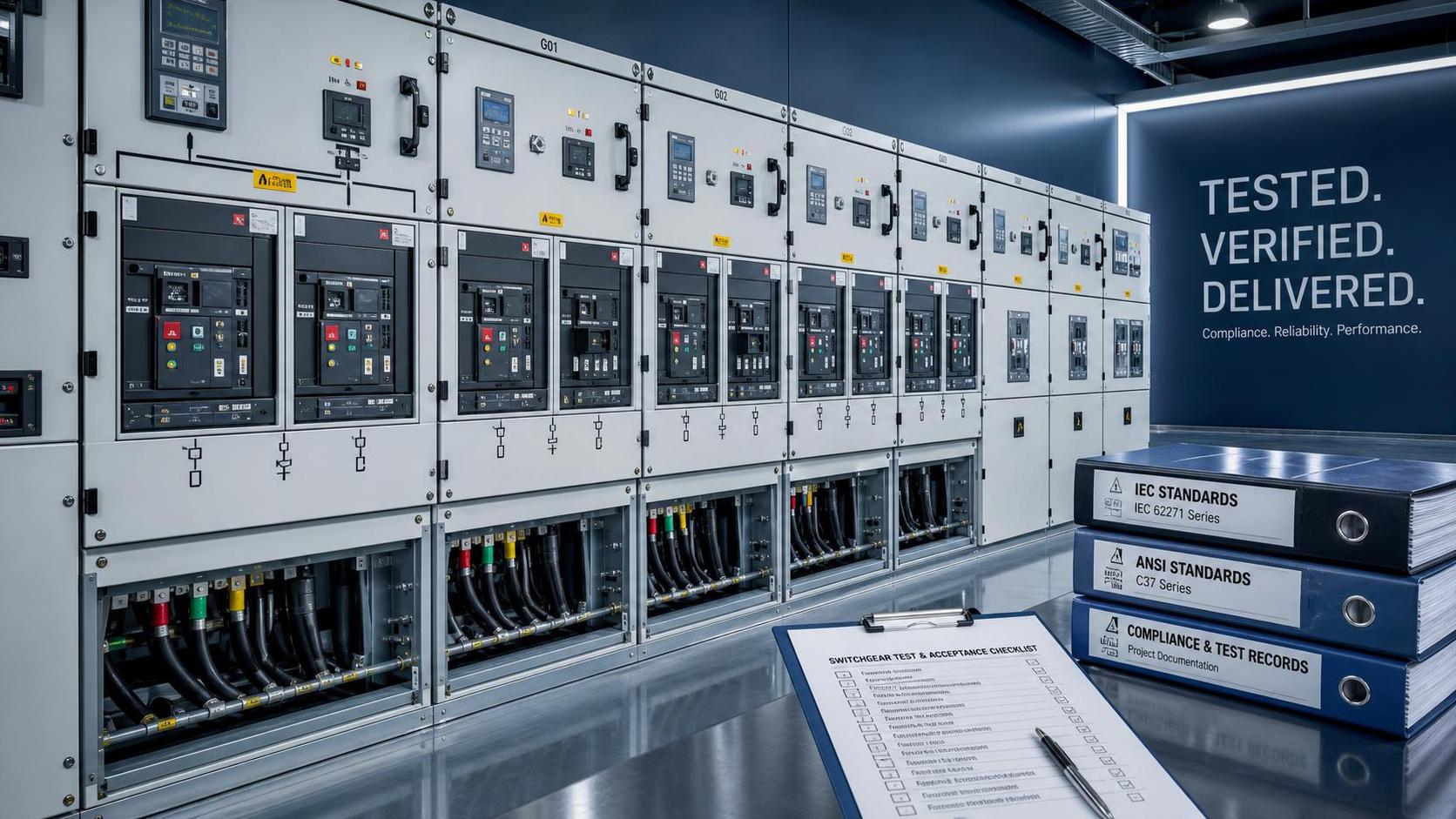
As 2026 projects shift from early design to firm procurement, switchgear standards are moving closer to the center of project risk. They affect safety approvals, factory acceptance, site installation, and long-term asset reliability.
That matters well beyond electrical engineering. For global sourcing, bid evaluation, and delivery planning, the right switchgear specification can prevent rework, customs delays, and costly mismatches between design intent and local compliance.
Why standards are becoming a 2026 project issue
Recent market conditions have made standards more visible. Lead times remain uneven, component substitution is more common, and cross-border procurement now faces tighter documentation checks.
At the same time, owners expect stronger resilience, clearer maintenance planning, and better evidence of tested performance. In practice, switchgear is no longer judged only by price and rating.
It is also judged by whether the equipment aligns with the standards required by the project location, utility expectations, insurance conditions, and internal technical rules.
The core standards behind most switchgear decisions
The first distinction usually sits between IEC and ANSI or IEEE practice. That choice influences ratings, test references, terminology, and sometimes the physical configuration of switchgear assemblies.
For many international projects, IEC 62271 is central for medium-voltage switchgear. It covers common specifications, testing expectations, and service conditions used across many markets.
On the low-voltage side, IEC 61439 often matters because it addresses assembly verification and performance requirements. It is frequently reviewed during consultant approval and factory documentation checks.
In North American or North America-influenced projects, ANSI, IEEE, and UL references can be decisive. UL 1558, UL 891, and related short-circuit requirements often shape acceptance for low-voltage switchgear.
The practical point is simple. A switchgear lineup that looks technically similar on paper may still fail approval if the governing standard family is wrong.
Certification is not the same as standard alignment
This is where many projects lose time. A product may carry certification marks, yet still miss project-specific requirements for internal arc classification, temperature rise limits, or seismic performance.
Certification proves a defined scope. Project compliance depends on whether that scope matches the actual operating duty, enclosure design, installation method, and jurisdictional approval path.
What buyers and project teams should check early
Switchgear standards become expensive when they are reviewed too late. A better approach is to translate standards into bid-stage checkpoints before technical comparison begins.
- Confirm the governing standard family in the tender documents and single-line design basis.
- Check rated voltage, current, frequency, and short-circuit withstand against local network conditions.
- Review internal arc classification, ingress protection, and service continuity requirements where relevant.
- Verify test reports, not just declarations, for the exact switchgear configuration being offered.
- Assess spare parts and replacement component availability across the project lifecycle.
These checks also support better sourcing decisions. They help separate compliant alternatives from offers that depend on undocumented assumptions or future engineering revisions.
Where specification risk usually appears
In real projects, switchgear problems often start with incomplete wording rather than major design mistakes. A few missing lines in the specification can change supplier interpretation significantly.
From a market perspective, this is also where supply chain intelligence becomes useful. Projects increasingly track standards, substitutions, and certification evidence alongside pricing and delivery windows.
Standards now influence lifecycle value, not only compliance
The strongest switchgear standards conversation in 2026 is not only about passing inspections. It is also about how the equipment performs after commissioning.
Well-specified switchgear supports safer maintenance access, clearer digital monitoring integration, and more predictable parts support. That directly affects outage planning and total operating cost.
This is especially relevant in data infrastructure, industrial plants, commercial developments, energy projects, and public facilities where downtime carries a large financial penalty.
A more practical way to read supplier offers
Look beyond compliance statements. Compare the offered switchgear by test scope, enclosure arrangement, protection architecture, maintainability, and local service capability.
That approach gives a clearer view of project value than unit price alone. It also reduces the chance of accepting low-cost equipment that becomes expensive during approval or operation.
How to prepare for the next decision
Before final procurement, it helps to align the design basis, standards matrix, and documentation list with the actual country, utility, and end-use environment.
Then compare switchgear options against those conditions, not against generic catalog descriptions. This creates a more reliable path for approval, delivery, installation, and future maintenance.
For 2026 projects, the better question is no longer whether switchgear meets a standard in general. It is whether the chosen standard set truly fits the project that must go live on time and stay reliable for years.
Technical Specifications
- How to test melt flow consistency in batches of recycled plasticsAuthor :Polymers & Rubber Editorial Team
- When does a cast resin transformer need high-altitude derating?Author :Electrical Components Editorial Team
- How to verify Global Industrial Insights sourcing informationAuthor :Industrial Machinery Editorial Team
Expert Insights

Chief Security Architect
Dr. Thorne specializes in the intersection of structural engineering and digital resilience. He has advised three G7 governments on industrial infrastructure security.