Terminal Blocks Selection Guide for Reliable Wiring
Author
Date Published
Reading Time
Terminal Blocks Selection Guide for Reliable Wiring
Choosing the right terminal blocks is essential for safe, stable, and efficient wiring in industrial, commercial, and control applications.
Selection is rarely about simple fit.
Current rating, voltage class, wire size, insulation performance, mounting style, and compliance all shape long-term reliability.
In real projects, weak choices often show up later as overheating, loose conductors, maintenance delays, or failed inspections.
This guide breaks down how to compare terminal blocks with more confidence and lower wiring risk.
Start with the Electrical Load
The first filter for terminal blocks is electrical demand.
Rated current and rated voltage must match the real operating environment, not just the nominal design value.
A control cabinet with heat buildup, load cycling, or dense wiring may need more margin than a simple indoor panel.
Check these points early:
- Continuous current under actual ambient temperature
- Voltage rating for the system category
- Short-term overload expectations
- Creepage and clearance needs
If the application includes motors, VFDs, or frequent switching, conservative sizing is usually the better decision.
Match Terminal Blocks to Wire Type and Size
Many wiring problems come from poor conductor compatibility, not from the terminal blocks themselves.
Wire range should cover both the largest and smallest conductors expected in production or field service.
Solid, stranded, and ferruled wires behave differently under clamping force.
That also means connection technology matters.
- Screw clamp types support broad usage and familiar assembly practices
- Spring clamp designs help in vibration-prone environments
- Push-in terminal blocks can speed repetitive panel wiring
When comparing terminal blocks, always confirm strip length, insertion force, and retightening requirements.
Review Mounting Method and Panel Layout
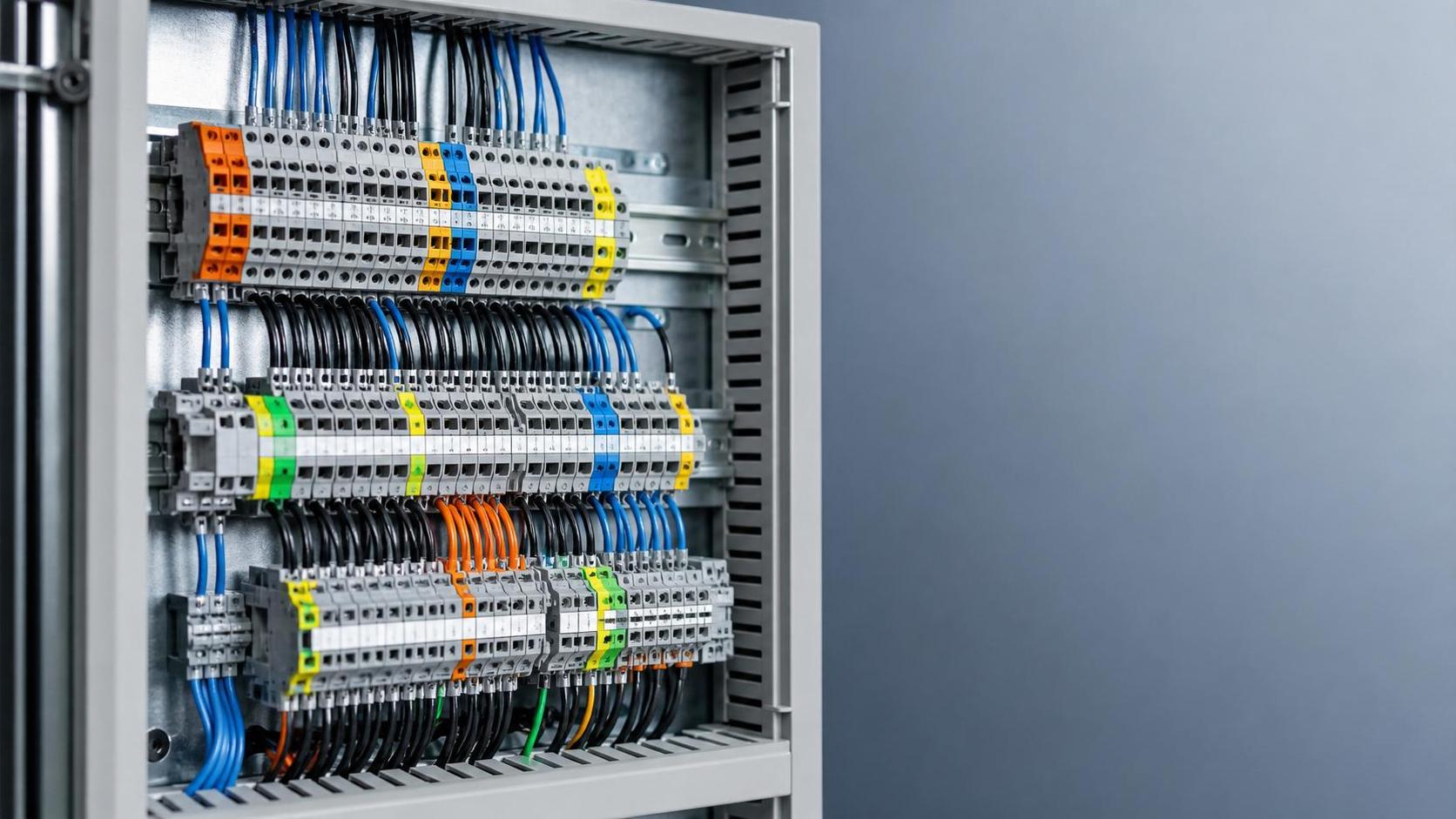
Terminal blocks must fit the electrical design and the physical workspace.
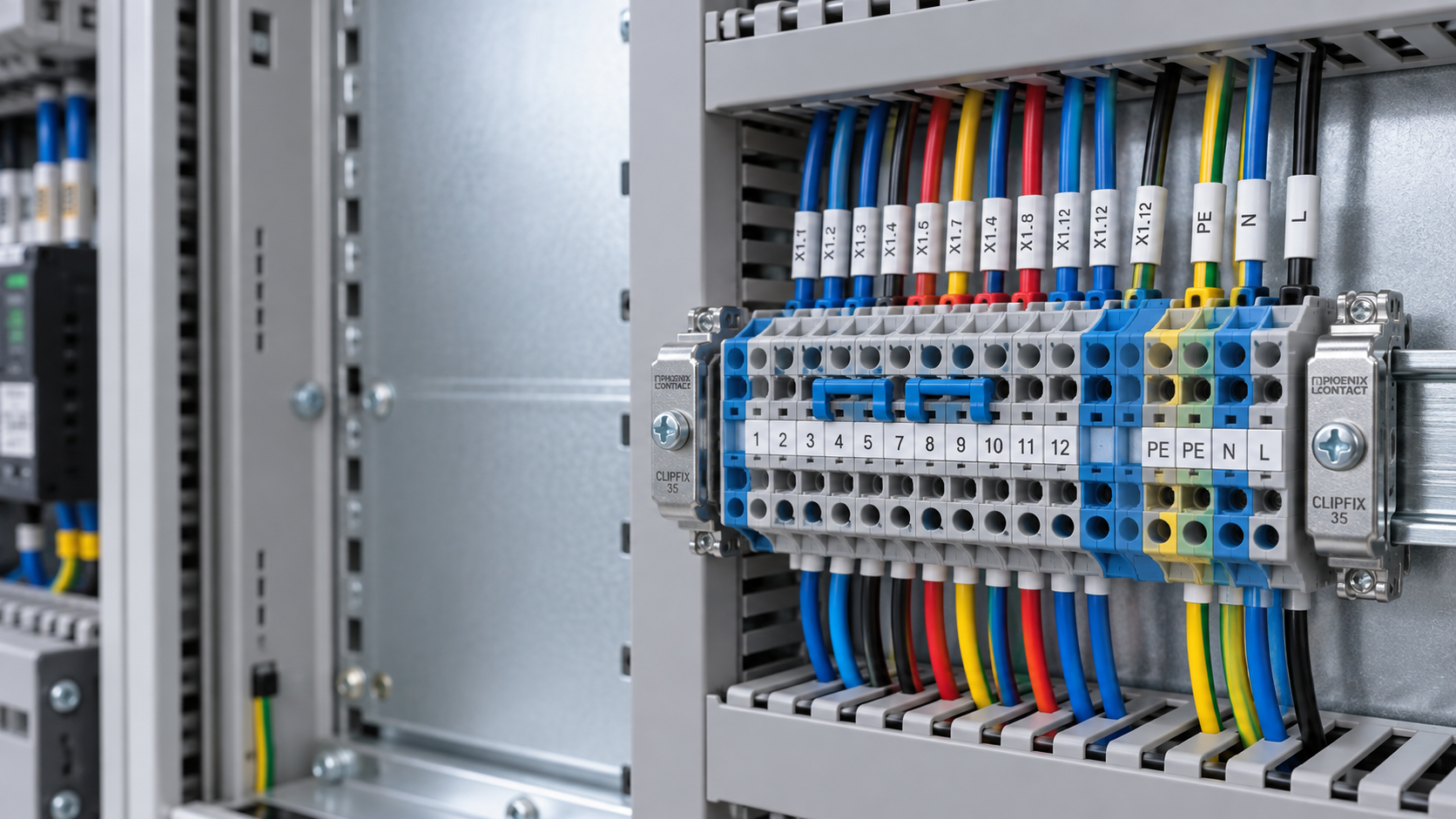
DIN rail systems remain common because they simplify installation, expansion, and maintenance access.
Still, width, spacing, marking area, and jumper options can vary a lot between series.
A compact footprint looks attractive, but dense layouts may reduce serviceability.
Before selecting terminal blocks, review:
- Available panel depth and side clearance
- Need for test points, end stops, and partition plates
- Future expansion space
- Ease of labeling during maintenance
In practical terms, a slightly larger terminal block may reduce service time across the system life cycle.
Consider Environment and Reliability Risks
Reliable wiring depends heavily on the operating environment.
Temperature swings, dust, moisture, chemicals, and vibration can all affect terminal blocks over time.
This is where material quality and housing performance become important.
From a risk standpoint, field conditions should drive the final choice more than catalog appearance.
Check Standards, Testing, and Traceability
For many buyers, compliant terminal blocks are easier to source than truly verified ones.
That gap matters during audits, export projects, and approval reviews.
Look for clear support around IEC, UL, CSA, RoHS, or other project-specific requirements.
Data sheets should include test values, conductor range, torque guidance, and temperature limits.
More importantly, the supplier should provide stable part numbering and batch traceability for repeat orders.
Compare Total Usability, Not Just Unit Price
Low-cost terminal blocks can become expensive when installation time, accessory availability, and failure rates are considered.
A practical evaluation usually includes more than product price.
- Assembly speed in panel production
- Availability of bridges, markers, and end covers
- Replacement consistency across batches
- Technical response from the supplier
This broader view helps separate usable terminal blocks from options that only look competitive on paper.
In sourcing decisions, smoother installation and fewer callbacks often justify a modest premium.
A Practical Selection Checklist
Before final approval, run terminal blocks through a simple comparison process.
- Confirm current, voltage, and derating needs
- Match wire type, size, and connection method
- Check panel fit and maintenance access
- Review environmental stress factors
- Verify standards, documents, and traceability
- Compare installed cost, not just purchase cost
Reliable wiring starts with disciplined comparison.
When terminal blocks are selected with electrical, mechanical, and operational realities in mind, the result is safer performance and fewer surprises after commissioning.
Technical Specifications
- How to test melt flow consistency in batches of recycled plasticsAuthor :Polymers & Rubber Editorial Team
- When does a cast resin transformer need high-altitude derating?Author :Electrical Components Editorial Team
- How to verify Global Industrial Insights sourcing informationAuthor :Industrial Machinery Editorial Team
Expert Insights

Chief Security Architect
Dr. Thorne specializes in the intersection of structural engineering and digital resilience. He has advised three G7 governments on industrial infrastructure security.
Core Sector // 01
Security & Safety
- What to check when sourcing industrial connectors from GermanyAuthor :Electrical Components Editorial Team

- When DIN rail terminal blocks need end stops to prevent looseningAuthor :Electrical Components Editorial Team

- How to Evaluate a Terminal Blocks Supplier for Quality and Lead TimeAuthor :Electrical Components Editorial Team

- High Current Connectors: Common Failure Causes and How to Prevent OverheatingAuthor :Electrical Components Editorial Team

- Terminal Blocks Selection Guide for Reliable WiringAuthor :Electrical Components Editorial Team

- Industrial Connectors Explained: Main Types, Ratings, and Typical ApplicationsAuthor :Electrical Components Editorial Team

- How to Choose Connectors for Vibration, Moisture, and Repeated Plugging CyclesAuthor :Electrical Components Editorial Team