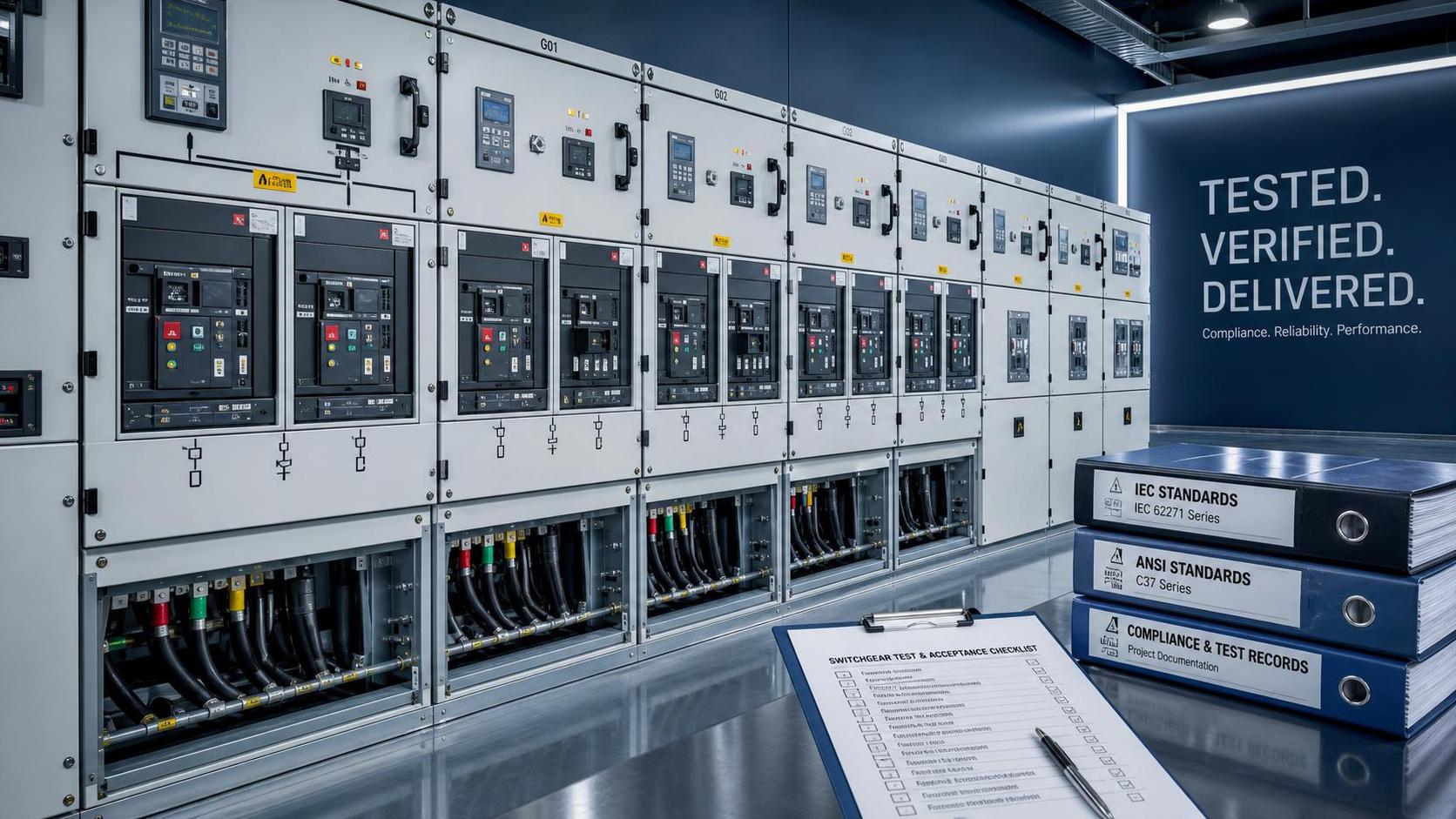
What Electrical Compliance Checks Matter Before Commissioning a New Panel?
Author
Date Published
Reading Time
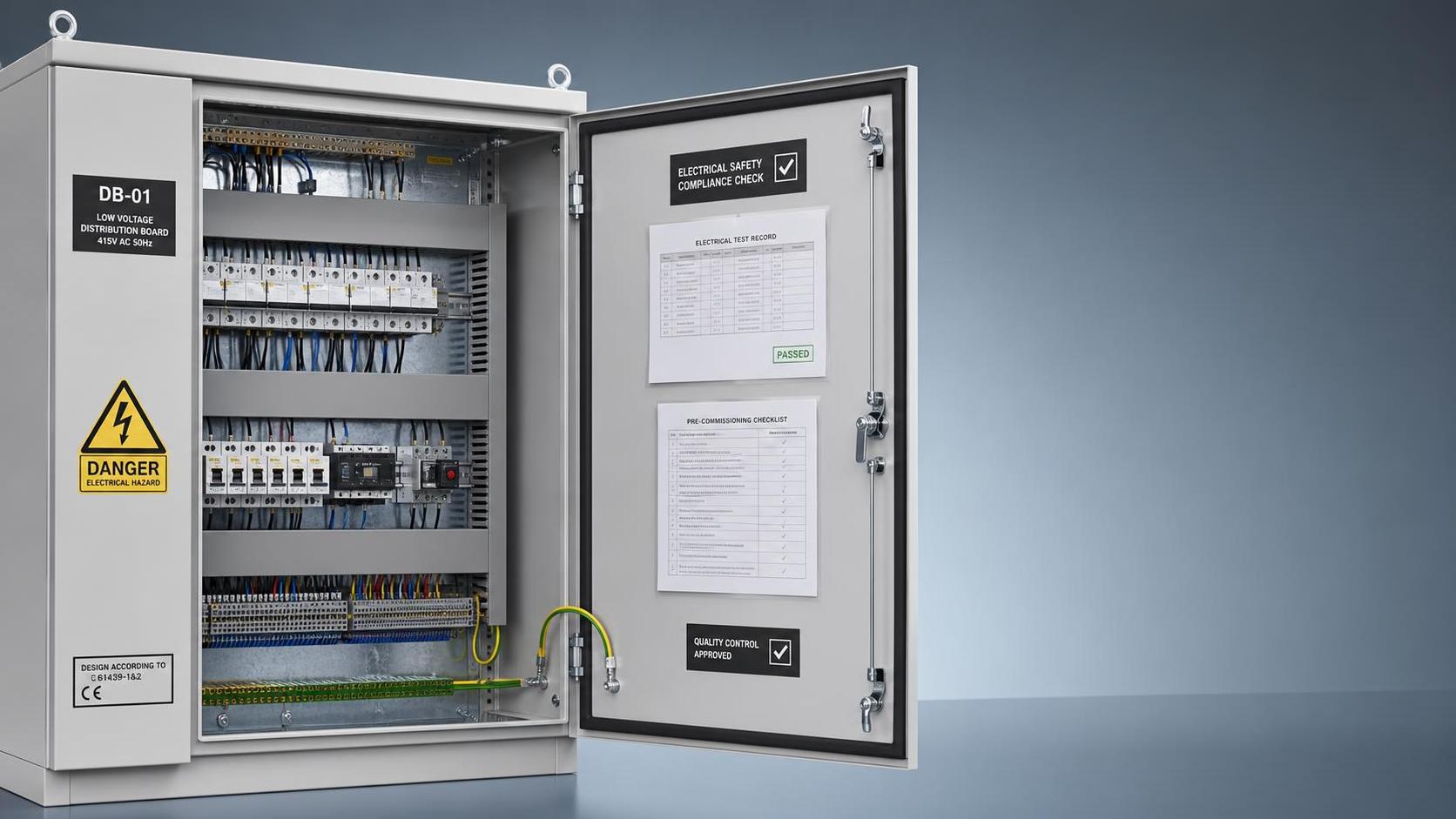
What should be checked before a new panel is commissioned?
Before commissioning a new panel, verifying electrical compliance is not just a formal step—it is critical to operational safety, inspection readiness, and long-term reliability. For quality control and safety managers, understanding which checks matter most can help prevent costly delays, hidden faults, and certification issues. This article outlines the key compliance points to review before energization, from wiring integrity and grounding to labeling, testing records, and applicable standards.
If you have been around factory acceptance, site installation, or handover inspections, you already know where trouble usually shows up: not in the glossy drawing set, but in the last few details nobody rechecked after assembly. A panel can look complete and still fail electrical compliance because a protective conductor is undersized, torque values were never recorded, or short-circuit ratings do not match the available fault level at site.
The practical way to approach this is to review the panel in layers: design suitability, build quality, protective measures, marking, and test evidence. That sequence usually exposes problems before energization instead of after it.
Start with the standard that actually applies
This sounds obvious, but it is where many projects drift. A low-voltage assembly for one market may be reviewed against IEC practice, while the buyer or authority expects UL 508A, NFPA 70, or a local electrical code. For switchboards, motor control centers, and distribution panels, the compliance route depends on product type, destination market, and installation context. If the panel is being exported, confirm the target-country requirement before sign-off. “Built to international standard” is not a compliance statement.
At minimum, check that the nameplate, technical file, and test references align with the declared standard. If they do not match, stop there and resolve it before moving to energization.
Verify the panel rating against the real installation conditions
A panel may comply on paper and still be wrong for the site. Compare the assembly rating with the actual supply voltage, frequency, system earthing arrangement, load profile, ambient temperature, ingress exposure, and available short-circuit current. This is one of the most important electrical compliance checks because it connects design assumptions to the real operating environment.
- Rated voltage and insulation level must match the system.
- Short-circuit withstand or SCCR must be suitable for the fault level at the point of installation.
- IP rating or enclosure type should fit the environment, especially for dust, washdown, or outdoor use.
- Temperature rise assumptions should not conflict with derating conditions such as enclosure crowding or poor ventilation.
If the available fault current study is missing, the short-circuit review is incomplete. Mark it as 【待核实】 rather than guessing.
Look closely at wiring, terminations, and segregation
This is where experienced inspectors spend time. Open the wiring ducts. Pull gently on a sample of conductors. Check that ferrules, lugs, and terminals are appropriate for the conductor type and size. Mixed wire classes landed badly in screw terminals are a recurring problem. So are field modifications that never made it back into the final drawing.
Pay attention to separation between power and control wiring, sharp bending, unsupported cable runs, and signs of insulation damage at gland entries. If the panel design calls for internal segregation or barriers, confirm they are actually installed. Missing internal covers are often treated as a minor assembly issue; during inspection, they are not minor.
Torque control deserves its own check. If the builder specifies tightening torques, there should be a record or controlled assembly practice behind it. A terminal that was “hand-tight” during workshop assembly is a common source of heat and nuisance failure later.
Grounding and bonding should be easy to prove
Protective bonding is one of the fastest ways to separate a serious build from a rushed one. The door, gland plate, removable panels, DIN rails where required, and exposed conductive parts should all be bonded according to the relevant standard and design intent. Do not rely on paint-cutting screws and assumptions.
What matters here is continuity you can verify. Check the protective conductor size, termination quality, and continuity test evidence. If the PE path is hard to trace, that alone is a warning sign.
Protective devices must match the coordination logic
Inspectors often focus on whether a breaker is present. The better question is whether the protective device is the correct one for the circuit, conductor, and fault scenario. Check ratings, settings, breaking capacity, fuse type, overload relay range, and any coordination study used in the design. Motor feeders, transformer circuits, and control power branches are frequent sources of mismatch.
If settings were changed during FAT or site troubleshooting, make sure the final values are documented. Commissioning teams sometimes leave temporary settings in place, which creates a compliance and safety problem the moment production starts.
Labeling, warnings, and documents are part of compliance
A panel that cannot be safely identified, isolated, or maintained is not ready, even if it powers up. Circuit labels should match the latest schematic. Device tags should be legible and durable. Safety warnings, arc flash labeling where required by local practice, supply identification, and isolation points should be visible without guesswork.
Then review the handover package. The useful minimum usually includes final drawings, bill of materials, test records, declarations or certificates where applicable, and operating or maintenance instructions. Missing as-built documentation causes more handover delays than many technical defects.
Do not skip routine verification records
For most panels, the compliance discussion is not complete without evidence of routine verification or equivalent required testing under the applicable standard. Depending on the standard and product category, this may include inspection of wiring and function, dielectric testing, protective circuit continuity, and verification of clearances or assembly arrangements. The exact list varies, so do not copy a checklist from another market and assume it applies.
When a supplier says, “we tested everything,” ask for the actual records. Dates, serial numbers, measured values, and sign-off names should be traceable to the panel in front of you.
A practical final check before energization is simple: if an external inspector, insurer, or client auditor walked in today, could the team prove that the panel is correctly rated, correctly built, correctly protected, and correctly documented? If the answer is uncertain in any one of those areas, commissioning should wait. That delay is usually cheaper than energizing a panel with a compliance gap you already suspected.
Technical Specifications
- How to test melt flow consistency in batches of recycled plasticsAuthor :Polymers & Rubber Editorial Team
- When does a cast resin transformer need high-altitude derating?Author :Electrical Components Editorial Team
- How to verify Global Industrial Insights sourcing informationAuthor :Industrial Machinery Editorial Team
Expert Insights

Chief Security Architect
Dr. Thorne specializes in the intersection of structural engineering and digital resilience. He has advised three G7 governments on industrial infrastructure security.