How to Evaluate a Polyethylene Manufacturer for Long-Term Supply Reliability
Author
Date Published
Reading Time
How to Evaluate a Polyethylene Manufacturer for Long-Term Supply Reliability
Choosing the right polyethylene manufacturer is more than a price decision for distributors, agents, and sourcing partners. Long-term supply reliability depends on production capacity, quality consistency, certification compliance, delivery performance, and communication transparency. In a market shaped by shifting demand, logistics pressure, and cost volatility, knowing how to evaluate a supplier properly can reduce risk, protect margins, and support stable business growth.
If you are buying for resale, one bad supplier decision usually shows up late: missed delivery, inconsistent melt flow, packaging problems, or paperwork that does not match the shipment. By then, the margin is already gone. When I look at a polyethylene manufacturer for long-term supply, I care less about the sales pitch and more about whether they can keep supplying the same material, in the same way, when the market gets tight.
Start with the grades, not the factory brochure
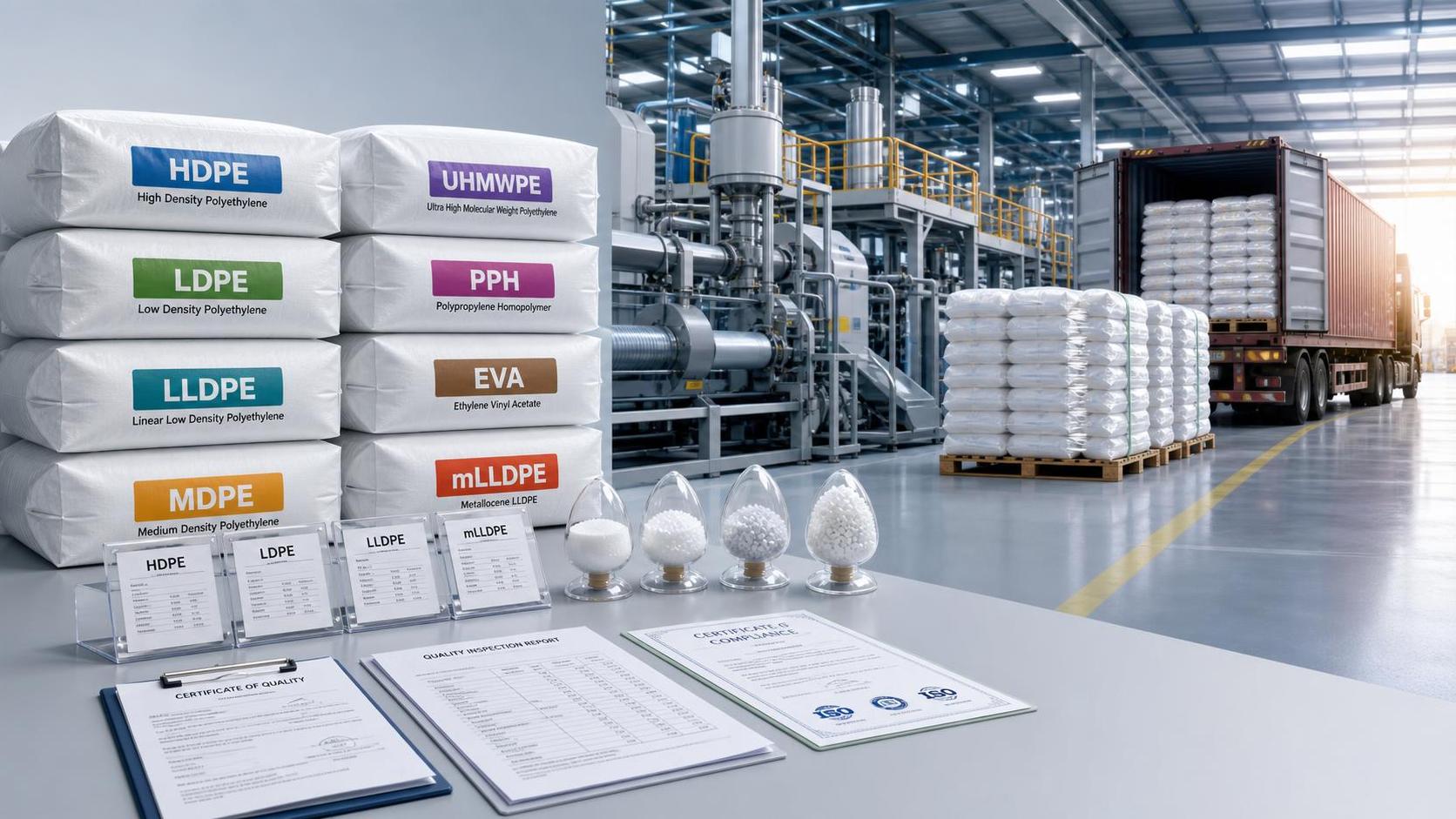
A common sourcing mistake is approving a supplier based on general product categories like HDPE, LDPE, or LLDPE without getting precise grade-level information. For distribution business, that is too loose. Ask for the exact grade list, typical applications, and the latest technical data sheet for each material you may buy. If your downstream customers run film extrusion, blow molding, injection molding, or pipe production, the manufacturer should be able to speak clearly about which grades fit which process.
If the supplier keeps shifting you from one “equivalent” grade to another, treat that as a warning. Grade substitution can be workable, but only with proper technical review and customer approval. In distribution, unofficial substitution creates claims.
Check whether production capacity is real and usable
A polyethylene manufacturer may quote large annual capacity, but that does not automatically mean your orders are secure. You need to know:
- Which grades are produced regularly versus occasionally
- Whether export orders get fixed allocation or only spot availability
- How often maintenance shutdowns affect output
- Whether they rely on tolling, third-party blending, or outside warehousing【待核实 if not disclosed】
What matters is not headline capacity. It is whether your target grade can be supplied quarter after quarter without renegotiation every time feedstock prices move.
Push hard on consistency
This is where many low-price offers fall apart. Ask for recent certificates of analysis for multiple lots, not just one ideal sample. You are looking for stability in the key values relevant to your application. Depending on the grade, that may include melt mass-flow rate, density, moisture, ash content, additive package, or mechanical properties listed on the technical data sheet.
You do not need laboratory perfection. You need evidence that the manufacturer controls variation. If every batch looks different on paper, your customers will notice it in production before you do.
Do not treat certifications as a box-ticking exercise
For export business, documentation problems can cost more than resin. Ask what management system and product-related documents the manufacturer can actually provide. ISO 9001 is commonly requested for quality systems, but buyers may also need declarations related to food contact, REACH, RoHS, or other destination-market requirements depending on end use and country. Those claims must be checked against real documents and scope, not just a line in a quotation.
Also verify whether the documents come from the manufacturer itself, an affiliated trader, or a third party. That distinction matters when a customs issue or customer complaint lands on your desk.
Look at delivery discipline like a logistics buyer would
Reliable supply is partly a factory issue and partly a shipping issue. Ask for their normal lead time by grade, minimum order quantity, packaging formats, loading method, and port options. A strong polyethylene manufacturer should be able to explain how they handle container shortages, booking delays, and document release timing.
Small detail, big consequence: check bag quality, pallet standards if applicable, labeling accuracy, and whether lot numbers on bags match shipping and quality documents. This is the kind of operational discipline that separates a real long-term supplier from a seller chasing the next deal.
Test how they behave when the conversation gets uncomfortable
Anyone can answer quickly when prices are falling and stock is available. The better test is how they respond to difficult questions. Ask what happens if a batch is rejected, if vessel schedules slip, or if a customer requests a repeat lot with tighter control. You are not only checking policy. You are checking transparency.
If answers stay vague, if technical staff never join the call, or if commercial terms keep changing verbally, expect trouble later. For agents and distributors, communication reliability is part of supply reliability.
Compare suppliers on commercial risk, not just resin price
A cheaper supplier who misses one shipment in peak season often becomes the expensive option. Cost control in resin buying is really about avoiding disruption, rework, and customer loss.
Before you commit, run a small but serious trial
Do not jump from quotation to annual volume. Start with a trial order that tests the full chain: order confirmation, document accuracy, shipment timing, packaging condition, lot traceability, and customer processing feedback. If possible, compare more than one lot over time rather than approving from a single sample.
For distributors, that trial should answer one practical question: can this manufacturer help you supply your own customers with fewer surprises? If the answer is unclear, keep them in the backup pool, not the core supplier list.
The most reliable polyethylene manufacturer is usually not the one with the smoothest presentation. It is the one that can show stable grade control, credible paperwork, realistic lead times, and consistent communication when conditions are not ideal. That is the supplier worth building around.
Technical Specifications
- How to test melt flow consistency in batches of recycled plasticsAuthor :Polymers & Rubber Editorial Team
- When does a cast resin transformer need high-altitude derating?Author :Electrical Components Editorial Team
- How to verify Global Industrial Insights sourcing informationAuthor :Industrial Machinery Editorial Team
Expert Insights

Chief Security Architect
Dr. Thorne specializes in the intersection of structural engineering and digital resilience. He has advised three G7 governments on industrial infrastructure security.
Core Sector // 01
Security & Safety
- How to test melt flow consistency in batches of recycled plasticsAuthor :Polymers & Rubber Editorial Team

- Which thermoplastic elastomers stay flexible at low temperatures?Author :Polymers & Rubber Editorial Team

- Which Shore hardness suits soft touch TPE for handheld grips?Author :Polymers & Rubber Editorial Team

- Should Buyers Lock In Polypropylene Prices for Six Months?Author :Polymers & Rubber Editorial Team

- Why Do Polypropylene Prices Differ by Region?Author :Polymers & Rubber Editorial Team

- What Drives Polypropylene Price Changes in Packaging and Injection Molding?Author :Polymers & Rubber Editorial Team

- How to Evaluate a Polyethylene Manufacturer for Long-Term Supply ReliabilityAuthor :Polymers & Rubber Editorial Team

- Polypropylene Material Properties: Where PP Works Well and Where It Does NotAuthor :Polymers & Rubber Editorial Team