Air Compressor Maintenance Checklist to Reduce Downtime
Author
Date Published
Reading Time
Why maintenance priorities change across operating environments
Keeping air compressors reliable is rarely about one universal checklist. The same machine behaves differently in a dusty workshop, a humid coastal plant, or a multi-shift packaging line.
That is why an effective air compressor maintenance checklist should start with operating conditions, not only rated specifications. Downtime usually begins with small deviations that routine checks can catch early.
In practical use, service teams look for pressure stability, oil condition, air quality, drain performance, belt wear, filter loading, and abnormal temperature rise. These points matter everywhere, but not with equal urgency.
For industry-focused reporting and sourcing research, this distinction also matters. Maintenance standards influence lifecycle cost, replacement timing, spare parts demand, and even supplier credibility in global trade discussions.
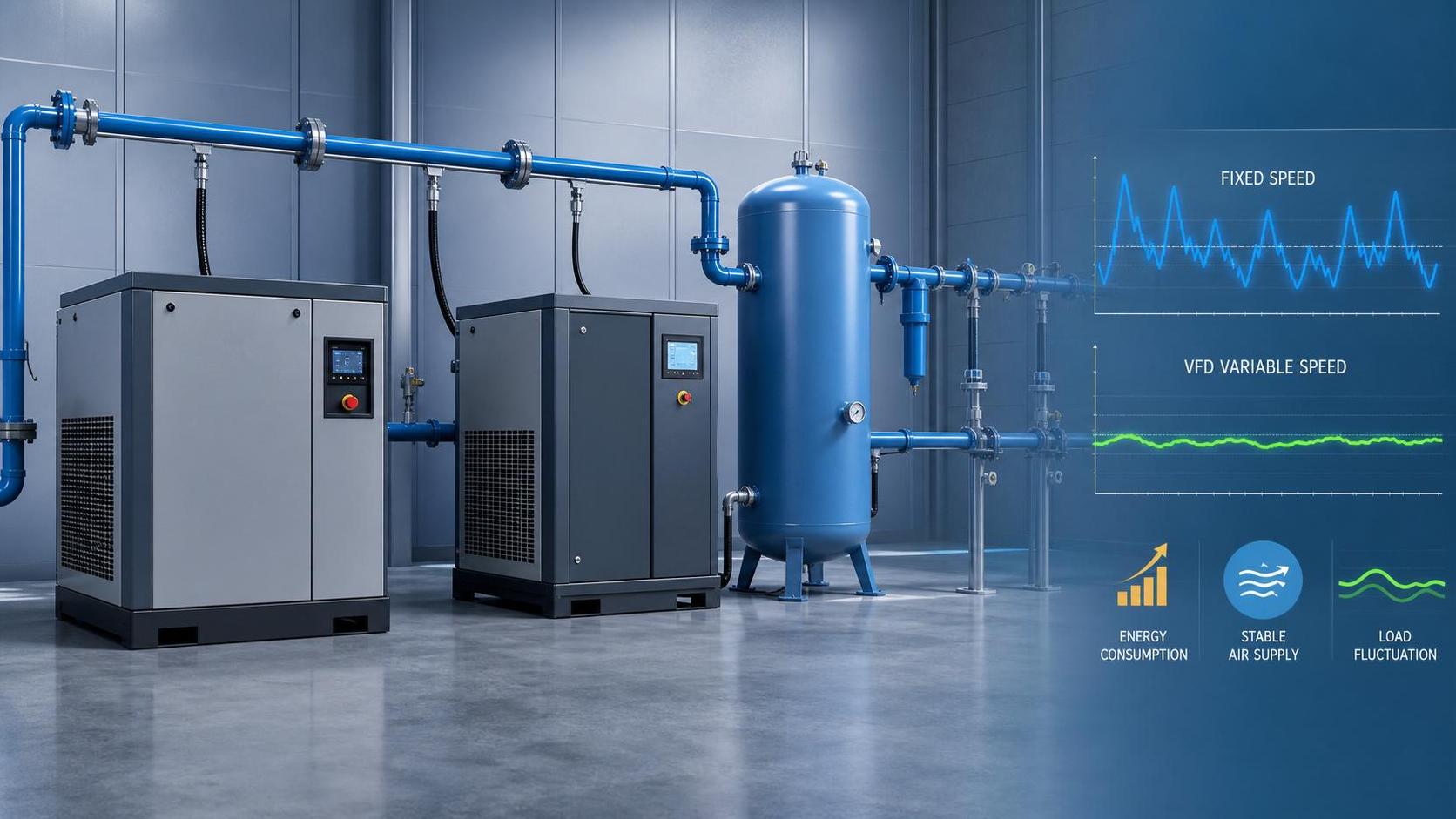
In high-duty production lines, consistency matters more than occasional peak output
When air compressors support continuous tools, conveyors, or automated actuators, pressure fluctuation becomes the first warning sign. Operators often notice product inconsistency before they suspect the compressor itself.
In this setting, the maintenance checklist should give priority to intake filters, lubricant level, separator condition, motor load, and cooling airflow. Small airflow restrictions can quickly become heat-related shutdowns.
It is also worth tracking how often the unit loads and unloads. Frequent cycling may point to undersized storage, leaks, or controls drifting out of calibration rather than a simple mechanical fault.
Typical checks in continuous-duty applications
- Inspect discharge temperature trends, not only single readings.
- Listen for valve chatter, belt slip, and uneven motor sound.
- Confirm drain traps work reliably during long operating hours.
- Check pressure drop across filters and dryers.
In dusty or outdoor sites, contamination usually drives maintenance frequency
Construction, mining support, metalworking, and outdoor utility work place air compressors under a different kind of stress. Here, dirt ingestion and moisture variation often shorten service intervals more than runtime alone.
A standard air compressor maintenance checklist may say to replace filters at fixed hours. In dirty environments, that schedule is often too slow. Visual inspection and pressure differential tell a better story.
Hose connections, vibration mounts, and drain systems also need closer attention. Portable units may survive transport shock, but repeated movement increases the chance of loosened fittings and hidden air leaks.
More importantly, contaminated air can damage downstream tools long before the compressor fails. That makes filtration checks a productivity issue, not just a maintenance issue.
Clean-process environments focus on air quality, not only machine uptime
Food packaging, electronics assembly, laboratories, and finishing lines place tighter demands on compressed air quality. In these settings, a running compressor is not enough if oil carryover or moisture affects the process.
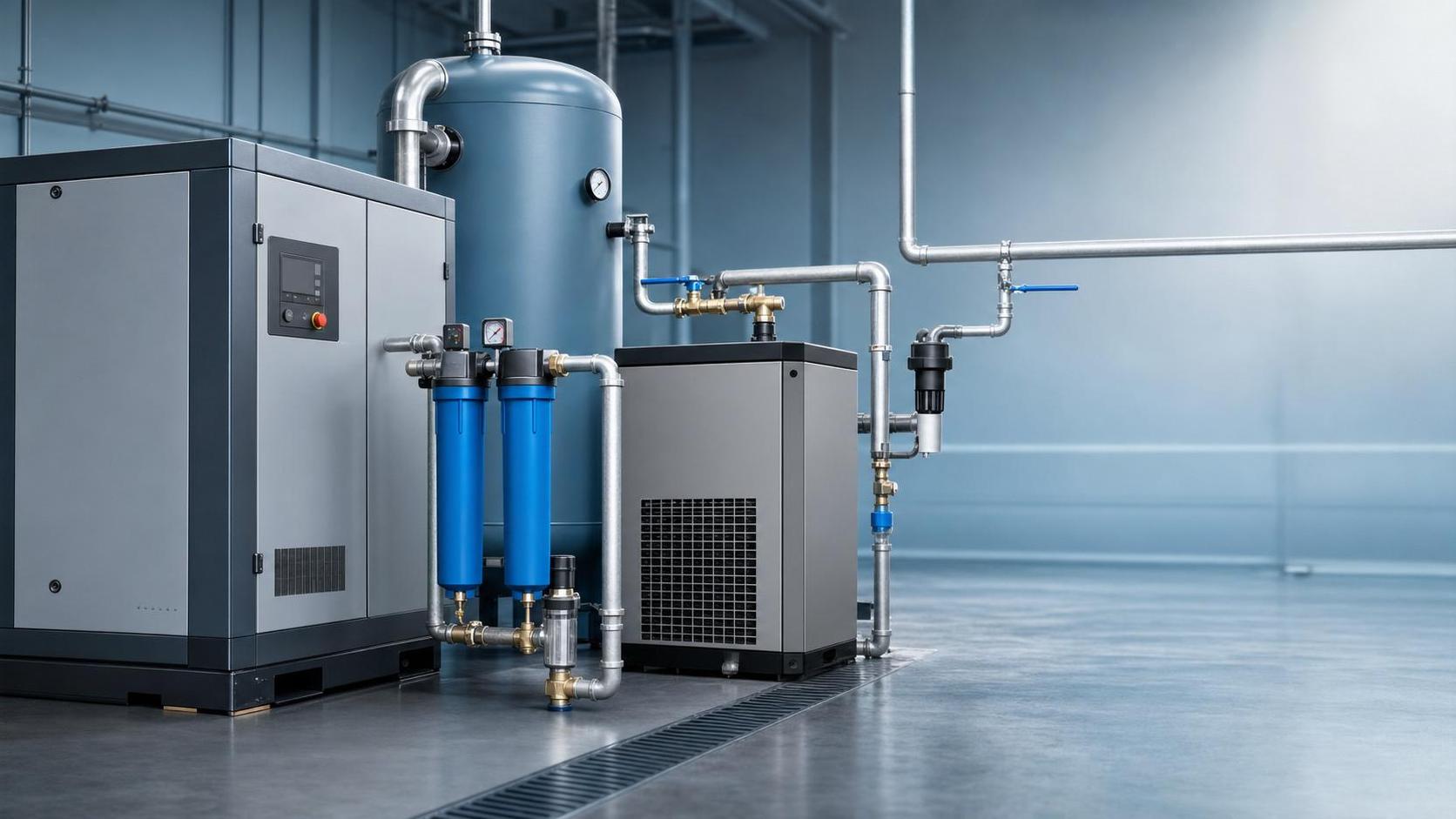
The maintenance checklist should therefore extend beyond the compressor block. Aftercoolers, dryers, condensate drains, coalescing filters, and point-of-use filtration need regular review as one connected system.
This is where many maintenance routines become too narrow. Teams may change oil on time but ignore dew point performance or filter saturation, which creates quality losses before a shutdown ever happens.
Different air compressors need different judgment, even with similar workloads
Reciprocating and rotary screw air compressors do not age in the same way. Piston units often reveal problems through noise, vibration, and valve wear. Screw units more often show gradual efficiency loss.
That difference affects checklist design. For piston systems, it helps to track belt tension, fastener security, and discharge temperature swings. For screw systems, separator performance and oil analysis become more useful.
It is also sensible to compare maintenance records against spare parts lead times. In global supply chains, service planning now depends as much on parts availability as on mechanical wear patterns.
Where maintenance plans often go wrong
A common mistake is treating all air compressors as if runtime hours alone determine service intervals. Ambient dust, heat, humidity, and load variation can change actual maintenance needs much faster.
Another misjudgment is focusing on compressor purchase cost while overlooking filtration media, lubricants, separator elements, and drain reliability. Downtime cost often grows from these smaller items.
It is equally risky to inspect the compressor but ignore the full compressed air path. Leaks, blocked dryers, and neglected receivers can make a healthy machine appear undersized or inefficient.
A practical way to build the next checklist
Start by grouping air compressors by duty pattern, environment, and air quality requirement. That creates a more useful maintenance baseline than using one service sheet across every installation.
- Record temperature, pressure, and cycling trends weekly.
- Match filter and lubricant intervals to site conditions.
- Review downstream dryers and drains with the same discipline.
- Flag parts with long replacement lead times early.
The most reliable air compressor maintenance checklist is the one shaped by actual operating conditions. Once those conditions are clear, downtime risks, service priorities, and replacement decisions become much easier to judge.
Technical Specifications
- How to test melt flow consistency in batches of recycled plasticsAuthor :Polymers & Rubber Editorial Team
- When does a cast resin transformer need high-altitude derating?Author :Electrical Components Editorial Team
- How to verify Global Industrial Insights sourcing informationAuthor :Industrial Machinery Editorial Team
Expert Insights

Chief Security Architect
Dr. Thorne specializes in the intersection of structural engineering and digital resilience. He has advised three G7 governments on industrial infrastructure security.