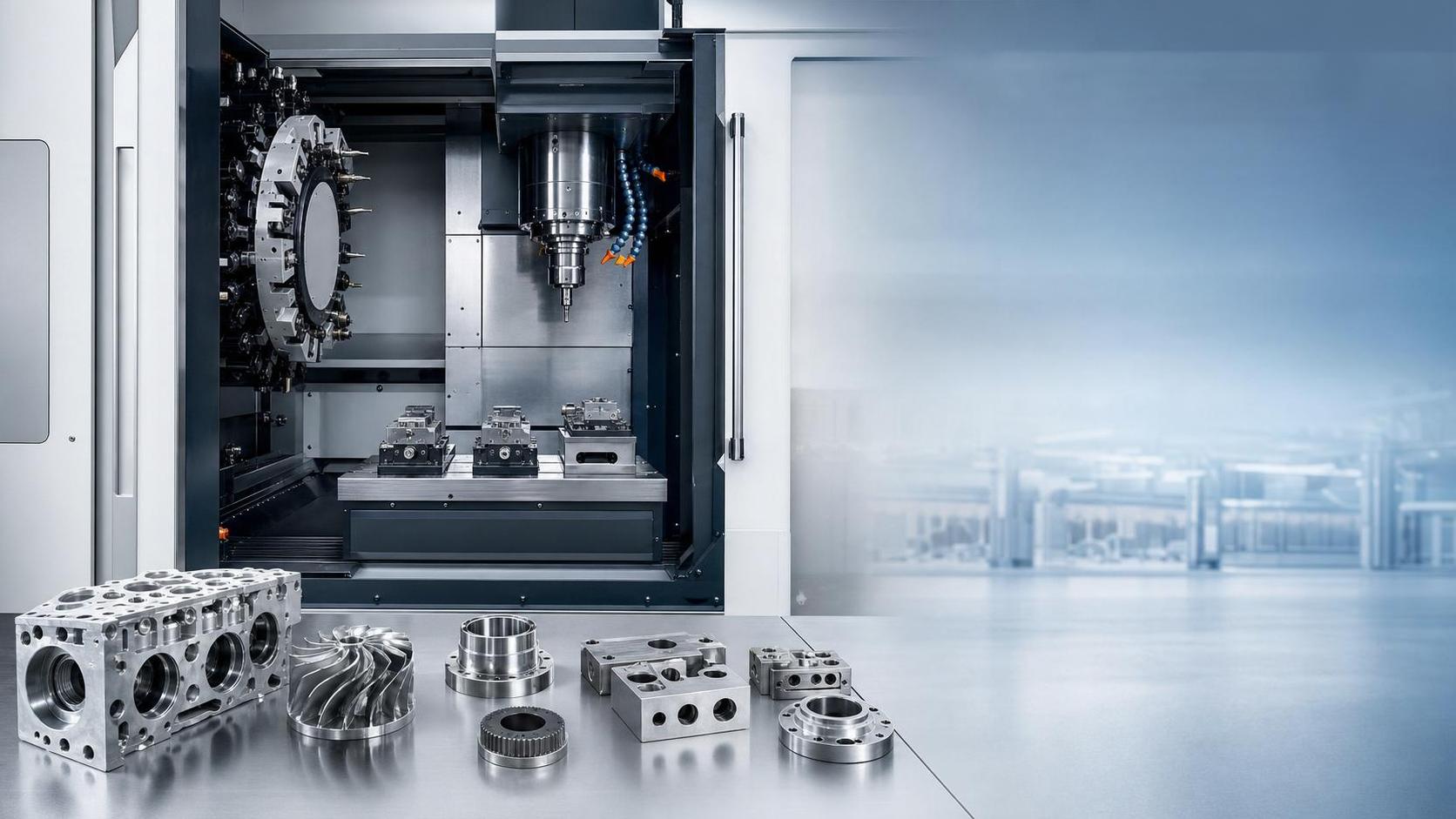
Is a 5-axis CNC milling machine worth the extra cost over 3-axis?
Author
Date Published
Reading Time
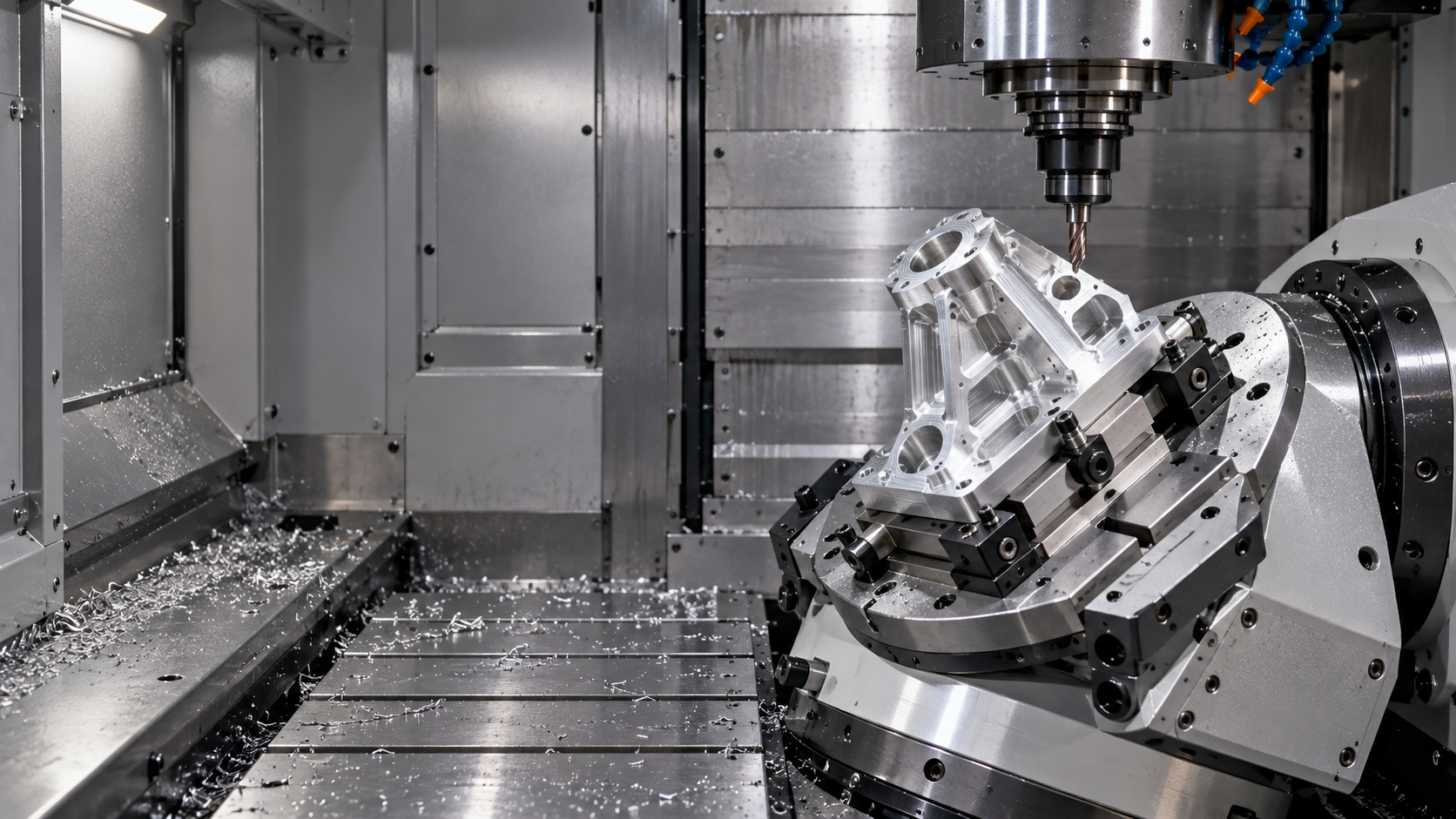
A part that looks straightforward on a drawing can become expensive on the shop floor. It needs machining on several faces, an angled hole requires a dedicated fixture, and every transfer creates another opportunity for misalignment. This is where a 5-axis CNC milling machine starts to look attractive—but a higher purchase price does not automatically buy a better return.
Five-axis machining is worth the extra cost when fewer setups, better tool access, and additional production capacity generate enough measurable value to cover the full investment. For predominantly flat, accessible parts, a capable 3-axis machine may deliver a lower cost per accepted component. The decision rests less on the number of axes than on the work your business can reliably put through them.
Start with the parts, not the machine specification
Before comparing quotations, examine a representative selection of current orders and realistically expected future work. Identify how often parts are repositioned, where fixtures become complicated, and which features require outsourcing. These details reveal whether five-axis capability solves a recurring cost problem or merely adds flexibility that will rarely be used.
A useful distinction is often lost in sales discussions:
- 3-axis milling: The cutting tool moves along three linear axes. Access to additional faces normally requires repositioning the workpiece or adding suitable workholding.
- 3+2 machining: Two rotary axes position the part or tool at an angle, then remain stationary during a conventional three-axis cut. This suits many multi-face components.
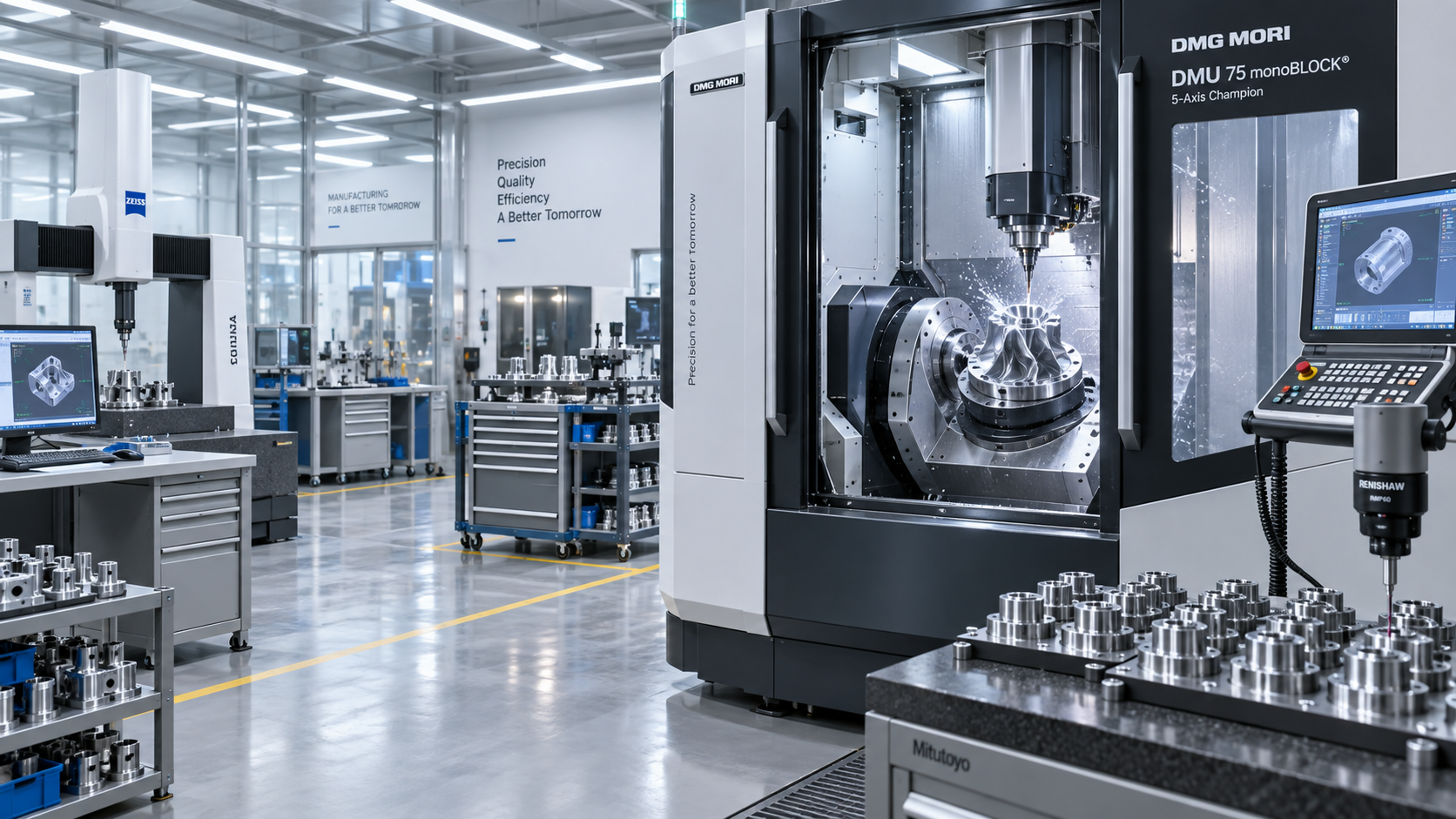
- Simultaneous 5-axis machining: Linear and rotary axes move together during cutting, allowing continuously changing tool orientation for complex surfaces and difficult access.
Many businesses seeking “five-axis capability” primarily need 3+2 positioning, not continuous five-axis cutting. That distinction affects machine selection, CAM requirements, programming effort, and the strength of the investment case. Some machines also require additional software options to enable particular functions, so verify what the quoted configuration actually includes.
A bracket with angled holes may benefit substantially from indexed machining. An impeller or a complex contoured component may justify simultaneous motion. A plate with pockets and holes on one face may gain very little from either.
Where the extra investment can earn its keep
Repeated setups are consuming capacity
Each setup involves more than an operator tightening a vise. There is fixture preparation, datum establishment, program verification, first-piece inspection, and sometimes waiting for the right person or equipment. On small batches, these activities can outweigh cutting time.
Consolidating several operations into fewer setups can reduce labor and shorten lead times. It can also eliminate intermediate inventory waiting between operations. However, “one setup” should not be assumed: gripping surfaces, cut-off operations, inaccessible features, and inspection requirements may still demand another operation.
Tool access is limiting productivity
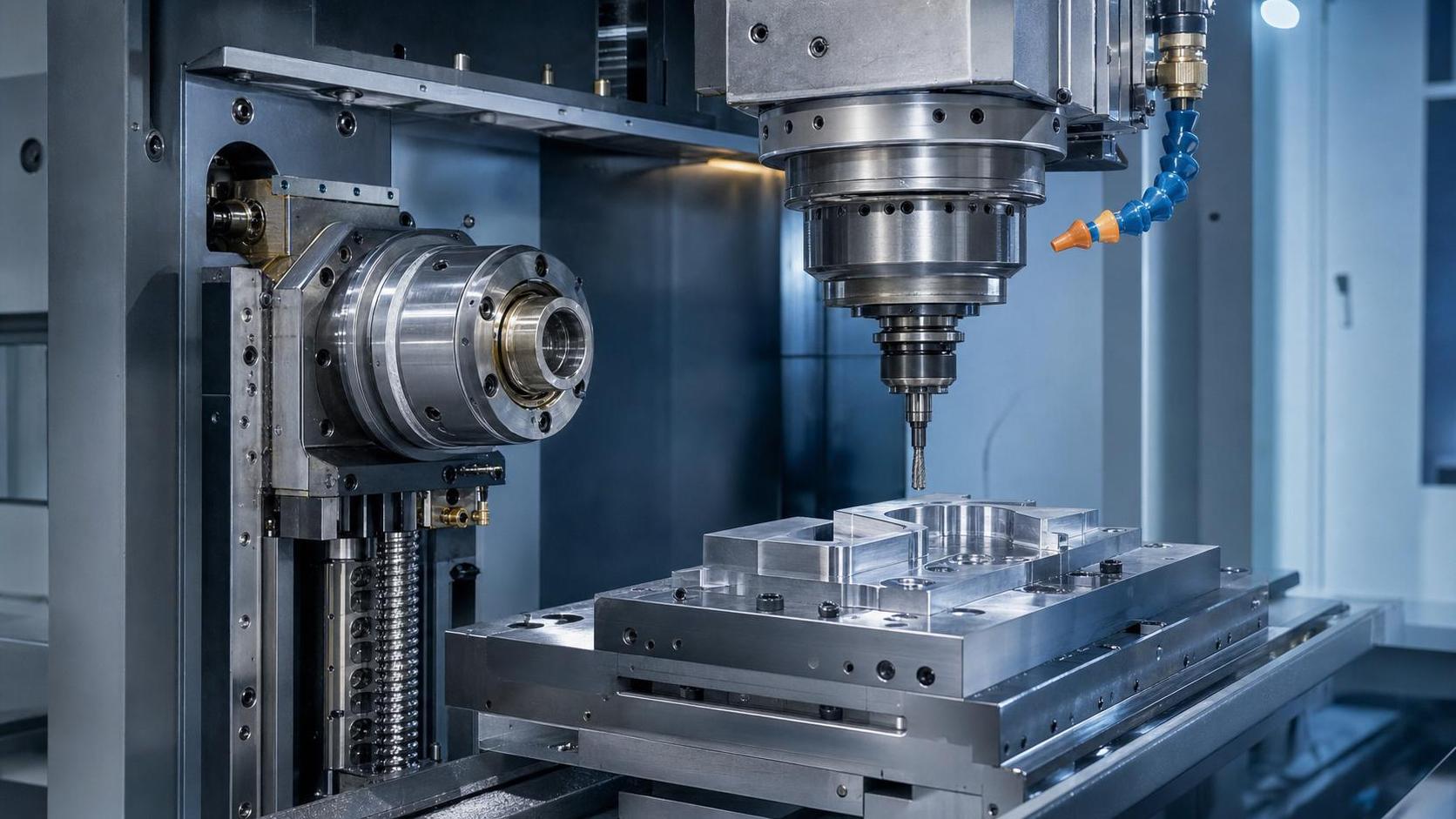
Tilting the workpiece or spindle can allow a shorter cutting tool to reach a feature that otherwise requires a long extension. Shorter tools generally offer better stiffness, which can improve cutting stability and surface finish under appropriate conditions.
This benefit matters in deep cavities, angled surfaces, and components with obstructed access. It does not mean every five-axis toolpath is faster. Conservative collision clearances, rotary-axis limits, and complex motion can increase cycle time. Compare complete, validated machining processes rather than assuming that more simultaneous movement means more output.
Repositioning is threatening dimensional consistency
When related features are machined in the same clamping, there are fewer opportunities for datum-transfer errors. This can be valuable when positional relationships between faces are difficult to maintain across separate fixtures.
Yet a five-axis machine is not inherently more accurate than a three-axis machine. Rotary-axis positioning, pivot-point calibration, thermal behavior, workholding rigidity, and tool-center-point control all affect results. Tight-tolerance procurement should specify the required part capability and inspection method, not rely solely on brochure accuracy figures.
When a 3-axis CNC milling machine remains the better purchase
There is no commercial prize for owning capability that sits unused. A well-selected 3-axis CNC milling machine can be the stronger investment when parts have accessible geometry, established fixtures, and stable production requirements.
High production volume does not automatically favor five axes, either. Dedicated fixtures, pallet systems, or multiple simpler machines may produce a stable part family more economically. Conversely, high-mix, low-volume production can strongly favor five-axis positioning because setup reduction has value even when individual batches are small.
Consider resilience as well. Two simpler machines may provide scheduling flexibility and some redundancy. A single advanced machine can concentrate several operations efficiently, but its downtime may interrupt the entire production route.
The price premium is only part of the cost
There is no dependable universal percentage for how much more a five-axis machine costs. Comparisons vary with machine size, construction, spindle specification, controls, automation, support, and included options. A premium three-axis machining center and an entry-level five-axis machine may overlap in purchase price without offering equivalent performance.
Ask suppliers to quote against the same production requirement, then build a total-cost comparison covering the following items:
- Installation and infrastructure: Freight, rigging, foundations where required, electrical supply, compressed air, coolant systems, and commissioning.
- Software and process development: CAM licenses, post-processors, machine simulation, control options, and program prove-out.
- Workholding and tooling: Low-profile fixtures, suitable holders, probing systems, presetting, and tool measurement.
- People: Programmer and operator training, production time lost during learning, and access to experienced technical support.
- Lifecycle expenses: Preventive maintenance, calibration, software support, replacement parts, financing, and expected downtime.
Five-axis workholding deserves particular attention. A compact fixture may improve access but provide less support than a conventional arrangement. The quoted table size is not the same as the usable machining envelope once the part, holder, fixture, spindle, and rotary motion are considered.
For imported equipment, include applicable duties, taxes, delivery terms, local conformity requirements, and service arrangements. A competitive factory price can lose its advantage if commissioning is delayed or a critical replacement component must travel internationally.
Build the business case around accepted parts
The most useful comparison is cost per accepted part at the required delivery performance, not machine price or cutting time alone. Include setup labor, machining, inspection, tooling, rework, scrap, and outside processing. Apply the same costing assumptions to both alternatives.
For the investment decision, a simple starting point is:
Simple payback period = incremental installed investment ÷ annual net incremental benefit.
The annual benefit should include realizable savings and credible additional contribution, less added operating costs. Treat released capacity carefully: an idle hour saved is not automatically cash earned. It becomes financially useful when it reduces overtime, avoids another purchase, replaces outsourcing, or supports profitable orders.
Consider this illustrative calculation—not a market-price estimate:
- Incremental installed investment over the three-axis alternative: $150,000.
- Annual setup and handling savings that genuinely reduce paid labor or overtime: $24,000.
- Annual avoided outside-processing costs, net of internal production costs: $18,000.
- Additional annual software, maintenance, and support expenses: $12,000.
The resulting annual net benefit is $30,000, giving a simple payback of five years. If verified additional orders generate another $20,000 in annual contribution using otherwise unused capacity, payback falls to three years. Do not count that contribution again as an hourly capacity saving.
This calculation excludes financing, taxes, residual value, and the time value of money. Use discounted cash flow for the final investment review, particularly when the projected return is close to your company’s threshold.
Run a downside scenario too. Reduce expected demand, allow for a slower programming ramp-up, and include realistic downtime. If the purchase only works under full utilization from the first month, the business case is fragile.
Make the supplier prove the production route
A demonstration on an attractive sample part is not enough. Ask shortlisted suppliers to evaluate a representative component from your actual workload, with permission and appropriate confidentiality protection.
The trial should establish the full process: fixture concept, tool list, programming requirements, setup time, cycle time, inspection results, and any secondary operations. Record whether timing includes probing, tool changes, loading, and the operations needed to finish the part completely.
For tolerance-critical work, agree on material, thermal conditions, measurement methods, and repeatability expectations. A successful first piece does not establish sustained production capability. Where justified, request a run that demonstrates consistency over an agreed period or quantity.
Before issuing the purchase order, resolve four practical questions:
- Who is responsible for the post-processor and machine-model validation?
- What training and production-startup assistance are included?
- Which service resources and spare parts are available locally?
- What acceptance criteria, warranty conditions, and exclusions appear in the contract?
Buy the capability your order book can support
A five-axis CNC milling machine is most compelling when multi-face work, difficult tool access, and repeated setups are persistent constraints—not occasional inconveniences. Its value becomes stronger when the business has capable programmers, suitable inspection resources, and enough profitable demand to use the capacity released.
Choose three axes when the geometry is straightforward and the economics remain favorable after comparing complete production routes. Consider outsourcing when complex work is intermittent or demand remains uncertain; it can reveal the true cost and frequency of five-axis requirements before capital is committed.
The right upgrade should survive a representative part trial, a complete installed-cost quotation, and a conservative financial model. If it cannot pass those tests, the extra axes may be technically impressive without being worth the extra money.
Facing technical bottlenecks in manufacturing or looking for more efficient industrial solutions? Leave your details below and let the engineering experts at GIi solve them for you.
“We respect your privacy. Your information is strictly confidential.”
Technical Specifications
- How to verify the consistency of PVC resin from a supplier in EuropeAuthor :Polymers & Rubber Editorial Team
- How to choose polyethylene grades in Saudi Arabia for film productionAuthor :Polymers & Rubber Editorial Team
- US Finds Imported Robots a Security Threat, Defers Tariffs for 180 DaysAuthor :Industrial Machinery Editorial Team
Expert Insights

Chief Security Architect
Dr. Thorne specializes in the intersection of structural engineering and digital resilience. He has advised three G7 governments on industrial infrastructure security.
Core Sector // 01
Security & Safety
- Is a 5-axis CNC milling machine worth the extra cost over 3-axis?Author :Industrial Machinery Editorial Team

- U.S. Metalworking Machinery Orders Surge to $733 Million in August 2026Author :Industrial Machinery Editorial Team

- When does a high precision CNC machine justify its added cost?Author :Industrial Machinery Editorial Team

- When do CNC machines justify their higher upfront cost?Author :Industrial Machinery Editorial Team

- When a Waterjet Cutting Machine Is Better Than Laser or PlasmaAuthor :Industrial Machinery Editorial Team

- CNC Machines Buying Guide: Accuracy, Throughput, and ROIAuthor :Industrial Machinery Editorial Team

- What Causes CNC Machines to Lose Precision Over Time?Author :Industrial Machinery Editorial Team