
Metal Fabrication Methods for Custom Parts Compared
Author
Date Published
Reading Time
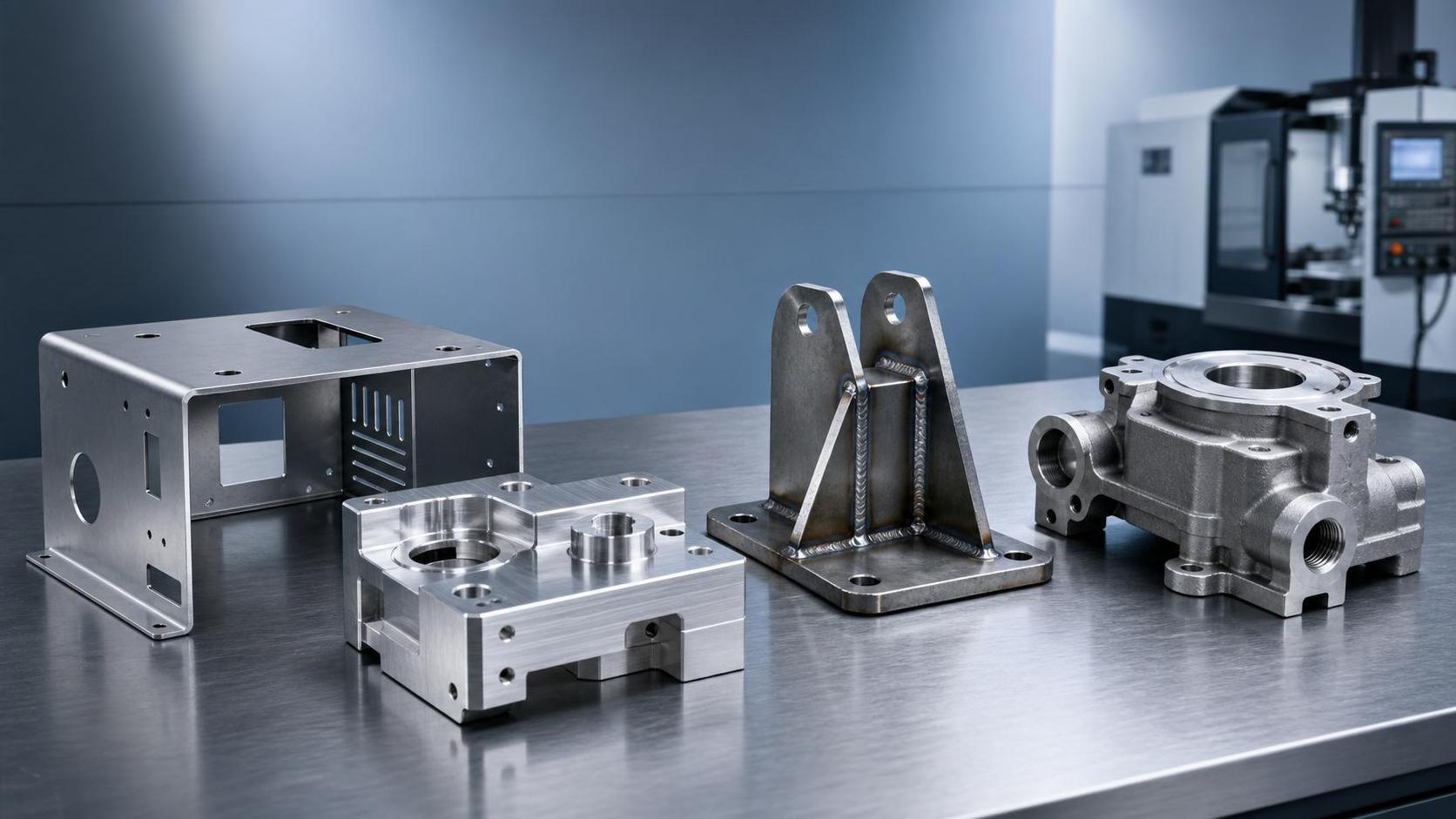
Where metal fabrication choices start to change
Choosing among metal fabrication methods is rarely a technical exercise alone. Cost, delivery pressure, quality consistency, and regional supply conditions often pull in different directions.
In practical sourcing, the best metal fabrication route depends on how a part will be used, how often it will be reordered, and which standards must be met.
That matters even more when freight volatility, certification checks, and shifting production capacity affect supplier coordination. A method that looks cheaper on paper may create downstream delays.
For custom parts, the comparison usually comes down to four common options: cutting and bending sheet metal, CNC machining, welding-based fabrication, and casting followed by finishing.
Actual use conditions usually decide the method
Different applications create different priorities. An enclosure for electrical equipment does not need the same process logic as a structural bracket or a precision connector.
In lighter assemblies, repeatability and surface finish often lead the discussion. In load-bearing parts, weld integrity, material thickness, and inspection access tend to matter more.
There is also a volume question. Some metal fabrication methods make sense for prototypes and low-volume orders, while others become economical only after tooling and setup are absorbed.
When sheet metal fabrication fits better
Laser cutting, punching, and bending are often preferred for cabinets, guards, panels, housings, and mounting parts. These parts usually need speed, stable dimensions, and manageable unit cost.
This route works well when geometry is mainly two-dimensional before forming. Design features such as holes, slots, flanges, and cutouts are easy to standardize across repeated orders.
A common mistake is to ignore bend allowance, flat pattern efficiency, or coating requirements. Those details affect scrap rates, finish quality, and whether parts still assemble correctly after painting.
When CNC machining becomes the safer choice
CNC-based metal fabrication is better suited to parts with tight tolerances, complex pockets, threaded features, or critical mating surfaces. It is common in industrial equipment, tooling, and motion systems.
The trade-off is straightforward. Machining usually improves precision and feature control, but material removal time raises cost, especially on larger parts or harder alloys.
In cross-border sourcing, machining also demands better drawing discipline. Missing GD&T, unclear surface roughness, or unspecified inspection points can turn a capable supplier into a risky one.
Welded assemblies solve a different problem
Frames, skids, supports, and heavy brackets are often built through welding-based metal fabrication. Here the real issue is not only shape, but how the part behaves under load and during installation.
More attention should go to heat distortion, weld sequence, joint accessibility, and post-weld finishing. Large assemblies can look simple while hiding difficult dimensional control issues.
This is where standards matter. If a project requires traceable material certificates or qualified weld procedures, supplier screening has to begin earlier than many teams expect.
The demand gap becomes clearer in side-by-side comparison
A direct comparison helps separate appearance from actual fit. Similar-looking custom parts may require very different metal fabrication methods once tolerances, loading, and order rhythm are reviewed.
Where sourcing decisions often go wrong
One frequent misread is comparing metal fabrication options by unit price only. That hides fixture cost, rejection risk, packaging complexity, and the time needed for corrective communication.
Another issue is treating prototype logic as production logic. A machined prototype may validate fit quickly, yet a formed or cast version could be the better long-run choice.
Environmental exposure is also underestimated. Corrosion, vibration, chemical contact, and outdoor storage can change the preferred material-process combination more than geometry does.
- Check whether drawings reflect the final coating, weld finish, and assembly sequence.
- Confirm which dimensions are critical after forming, welding, or heat input.
- Review certification needs before quoting, especially for export-sensitive sectors.
- Separate prototype urgency from repeat-order economics.
A practical way to match method, risk, and lead time
A useful approach is to map each custom part against five filters: geometry, tolerance, load, finishing, and reorder pattern. That quickly narrows the right metal fabrication route.
If two methods appear viable, compare them through total delivery risk rather than process familiarity. In many projects, communication quality and process control matter as much as equipment capability.
The next step should be concrete. Sort parts by application condition, define critical dimensions, note compliance requirements, and then request quotations against the same technical baseline.
That process makes metal fabrication decisions faster, easier to audit, and less vulnerable to cost surprises when market conditions or supplier availability shift.
Technical Specifications
- How to test melt flow consistency in batches of recycled plasticsAuthor :Polymers & Rubber Editorial Team
- When does a cast resin transformer need high-altitude derating?Author :Electrical Components Editorial Team
- How to verify Global Industrial Insights sourcing informationAuthor :Industrial Machinery Editorial Team
Expert Insights

Chief Security Architect
Dr. Thorne specializes in the intersection of structural engineering and digital resilience. He has advised three G7 governments on industrial infrastructure security.
Core Sector // 01
Security & Safety