Steel Plates: Thickness, Grade, and Cost Trade-Offs
Author
Date Published
Reading Time
Why do steel plates require a trade-off, not a simple spec match?
Choosing steel plates is rarely about finding the strongest option at the lowest price. Thickness, grade, and delivered cost move together, and one change often affects fabrication, freight, and lead time.
In practical buying decisions, the better question is whether the plate meets structural, wear, or pressure requirements without creating avoidable downstream cost. That is where many comparisons become more realistic.
Steel plates also sit inside a wider market context. Trade policy shifts, mill capacity, shipping disruptions, and certification availability can all change the final economics, even when the nominal plate price looks attractive.
How much does thickness really change total cost?
Thickness affects more than tonnage. Thicker steel plates usually increase raw material spend, but they can also change cutting speed, welding volume, handling requirements, and transport weight.
For example, selecting a thicker plate to create a safety margin may seem reasonable. Yet if the design does not need it, fabrication time rises and the final assembly becomes heavier to move and install.
On the other hand, going too thin can shift cost into rework, stiffeners, or shorter service life. In wear environments, under-specifying thickness often looks cheap only at the quotation stage.
A more balanced review usually checks four items together:
- design load or wear allowance
- cutting and welding hours
- shipping weight and packing limits
- expected service interval
Is a higher grade always worth paying for?
Not always. Higher-grade steel plates can deliver better strength, toughness, abrasion resistance, or low-temperature performance, but the premium only makes sense when those properties are actually required.
A common mistake is paying for advanced performance in a mild-service application. Another is choosing a lower grade without checking code compliance, impact testing, or forming behavior.
In real sourcing work, grade selection often depends on the failure risk. If a plate sits in a pressure vessel, bridge component, mining chute, or offshore structure, the grade decision carries more consequence.
Where the application is less demanding, the smarter move may be a standard structural grade with stable availability. That can reduce mill lead time and widen the supplier base.
A quick decision table for steel plates
The comparison below helps frame where thickness and grade usually create value, and where they simply add cost.
What should be checked before comparing plate quotations?
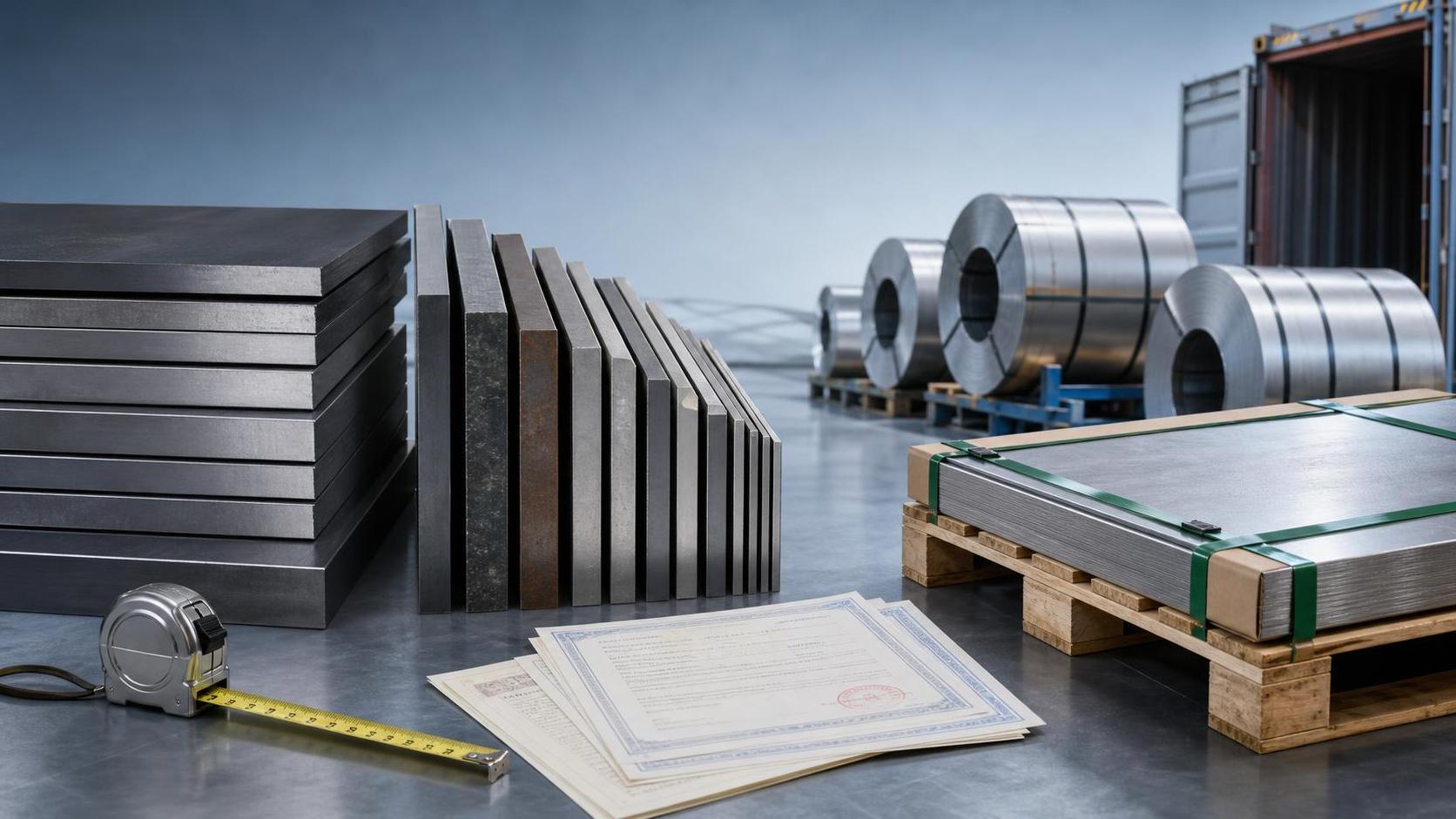
Many quote comparisons fail because the offers are not technically equal. One supplier may price steel plates with full test certificates, while another excludes extra inspection, cutting tolerance, or surface condition.
It helps to confirm the commercial and technical baseline before discussing price. That avoids the familiar problem of choosing the cheapest offer, then paying later for compliance gaps.
- plate standard, grade, and thickness tolerance
- required dimensions and cut-to-size scope
- MTC, third-party inspection, and traceability level
- origin restrictions, tariffs, and export documentation
- delivery term, packaging, and port handling risk
In a volatile market, steel plates with stable logistics and predictable paperwork can be more economical than lower-priced material facing customs delays or certification disputes.
Where do buyers usually misjudge steel plates?
One frequent error is focusing on price per ton only. Steel plates should be judged by installed cost and service performance, not by base material price in isolation.
Another mistake is assuming equivalent grades from different mills behave the same in fabrication. Formability, flatness, surface condition, and actual delivery schedule can vary enough to affect project timing.
There is also a compliance risk. If the end use involves construction, energy, transport, or heavy equipment, standards and certificates must align with project documents, not just general market practice.
More careful sourcing usually treats steel plates as part of a system. Material performance, fabrication efficiency, logistics exposure, and replacement cycle should all be reviewed together.
So how should the final choice be made?
A useful approach is to narrow the decision to two or three technically acceptable steel plates, then compare them using total landed cost, fabrication impact, and expected life in service.
If the application is safety-critical or exposed to wear, it often makes sense to protect performance first. If the duty is standard, supply stability and documentation quality may deserve more weight than premium grade upgrades.
The most reliable next step is simple: define the real operating condition, verify standards, check supplier documentation, and model the cost beyond the mill quote. That process usually leads to better steel plates decisions than chasing the lowest number on the first offer.
Technical Specifications
- How to test melt flow consistency in batches of recycled plasticsAuthor :Polymers & Rubber Editorial Team
- When does a cast resin transformer need high-altitude derating?Author :Electrical Components Editorial Team
- How to verify Global Industrial Insights sourcing informationAuthor :Industrial Machinery Editorial Team
Expert Insights

Chief Security Architect
Dr. Thorne specializes in the intersection of structural engineering and digital resilience. He has advised three G7 governments on industrial infrastructure security.
Core Sector // 01
Security & Safety
- How heat treatment affects the toughness of alloy steel platesAuthor :Metals & Fabrication Editorial Team

- Alloy Steel Plates vs Carbon Steel: Which Performs Better Under LoadAuthor :Metals & Fabrication Editorial Team

- Steel Plates: Thickness, Grade, and Cost Trade-OffsAuthor :Metals & Fabrication Editorial Team