Stainless Steel Grades Guide for Corrosion and Strength Needs
Author
Date Published
Reading Time
Stainless Steel Grades Guide for Corrosion and Strength Needs
Choosing a stainless steel grade is rarely a simple strength question. In most projects, corrosion exposure, fabrication method, service life, and budget all move together.
That is why stainless steel selection should start with operating conditions, not only with a familiar grade name or a supplier’s default offer.
The main families look similar on paper, but their real performance changes fast in chloride environments, high temperatures, and heavy-load applications.
A clear comparison helps reduce failure risk, avoid overspecification, and support better sourcing decisions when supply, lead time, and certification also matter.
What separates one stainless steel grade from another
Every stainless steel grade is defined by chemistry and structure. Chromium builds corrosion resistance, while nickel, molybdenum, carbon, and nitrogen shift strength and stability.
The most common groups are austenitic, ferritic, martensitic, duplex, and precipitation-hardening stainless steel. Each group solves a different engineering problem.
- Austenitic grades, such as 304 and 316, offer broad corrosion resistance and good formability.
- Ferritic grades, such as 430, are lower cost but less suitable for severe corrosion duty.
- Martensitic grades add hardness and wear resistance, often for blades, shafts, and valves.
- Duplex stainless steel combines higher strength with improved chloride resistance.
- Precipitation-hardening grades support very high strength in demanding mechanical service.
From a buying perspective, the right grade depends on where failure would happen first: pitting, cracking, deformation, wear, or cost pressure.
Common stainless steel grades and where they fit
304 stainless steel remains the baseline choice for general industrial equipment, tanks, architectural parts, and indoor processing environments.
It balances price, weldability, and availability well. Still, it can struggle in salt-rich air, brine contact, or chemical cleaning cycles with chlorides.
316 stainless steel improves on that weakness. Its molybdenum content gives stronger resistance to pitting and crevice corrosion in more aggressive media.
For marine fittings, food processing washdown zones, pharmaceutical equipment, and coastal installations, 316 is often the safer commercial choice.
430 stainless steel works when appearance matters but corrosion demands are limited. It is common in appliances, decorative trim, and mild indoor service.
2205 duplex stainless steel enters the discussion when both strength and chloride resistance are critical. It is widely used in offshore, desalination, and chemical service.
17-4 PH stainless steel is different again. It supports high strength after heat treatment, making it useful for pumps, shafts, aerospace parts, and structural components.
How to compare corrosion and strength without overbuying
In practice, many specification errors come from buying too low or too high. Both create cost and reliability problems.
A useful screening method is to compare four factors first: chloride exposure, temperature range, required yield strength, and fabrication route.
- If chlorides are low, 304 stainless steel may be enough.
- If washdown, seawater mist, or chemical splashing is present, 316 or duplex deserves review.
- If section thickness must stay low under load, duplex or 17-4 PH may reduce weight.
- If welding is extensive, confirm the grade’s heat-affected-zone behavior and filler compatibility.
This also means mechanical strength should never be read alone from a datasheet. Corrosion loss, residual stress, and fabrication quality can change field performance fast.
When the service environment is uncertain, testing coupons or reviewing similar installed cases often provides better guidance than nominal grade comparisons.
Sourcing checks that support better stainless steel decisions
Material selection does not end with grade choice. Supply chain details can change actual performance and project risk.
- Verify standards such as ASTM, EN, or JIS against the required application.
- Check mill test certificates, heat numbers, and traceability before approval.
- Review surface finish, pickling condition, and passivation requirements.
- Confirm whether imported stock is dual-certified, such as 304/304L or 316/316L.
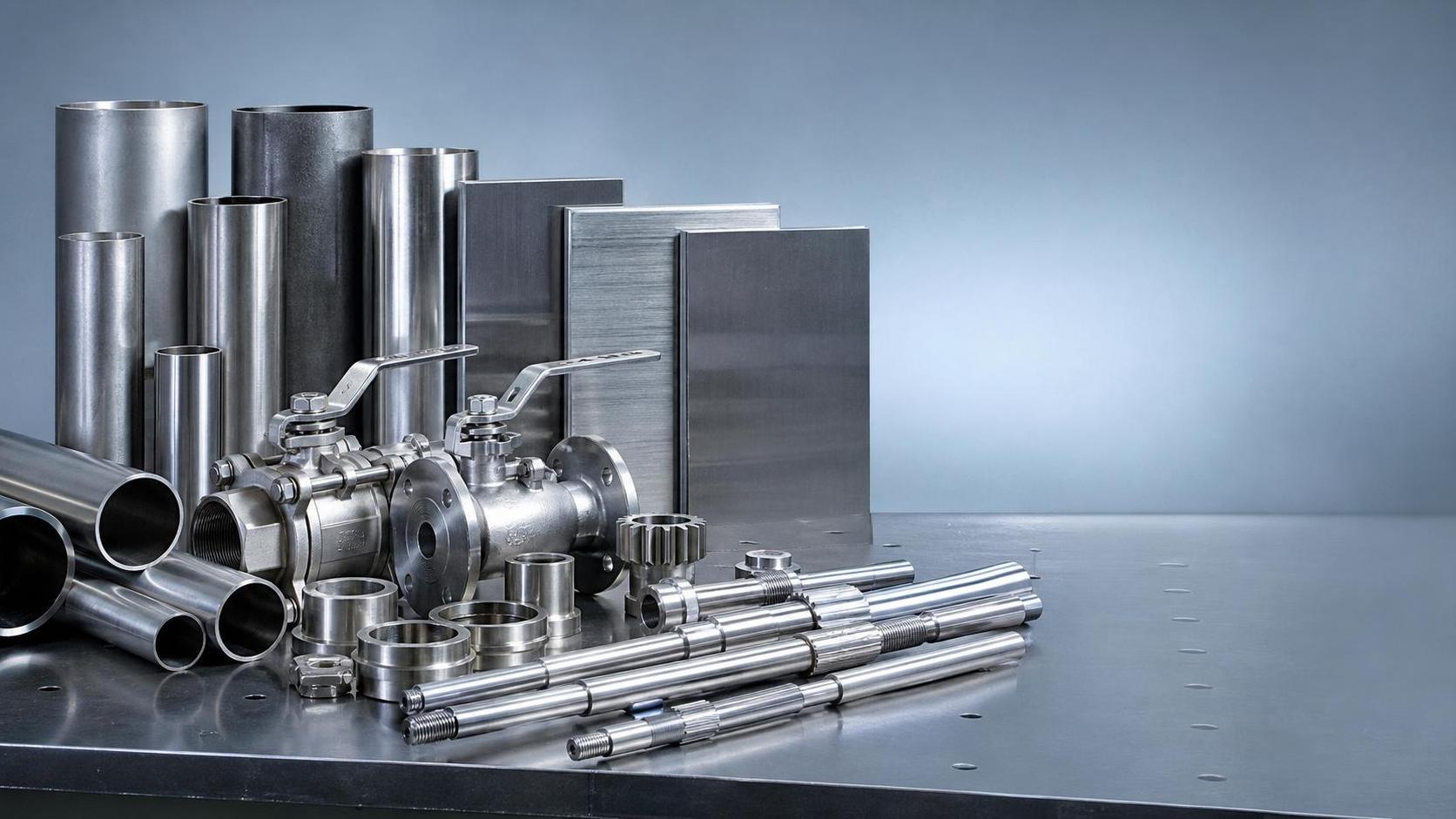
- Compare lead times for plate, pipe, bar, and forged forms separately.
Recent market shifts make this more important. Price swings in nickel and molybdenum can quickly change the gap between common stainless steel grades.
That can tempt substitution, but equivalent performance is never guaranteed unless chemistry, process route, and certification are checked together.
A practical selection path
A strong stainless steel decision usually follows a simple path. Define the environment, rank the failure risks, shortlist grades, then validate supply quality.
For general service, 304 often stays competitive. For harsher corrosion, 316 is usually the next logical step. For higher strength, duplex or 17-4 PH may justify the cost.
The best result comes from matching stainless steel grades to real exposure, fabrication needs, and sourcing evidence, rather than choosing by habit alone.
Technical Specifications
- How to test melt flow consistency in batches of recycled plasticsAuthor :Polymers & Rubber Editorial Team
- When does a cast resin transformer need high-altitude derating?Author :Electrical Components Editorial Team
- How to verify Global Industrial Insights sourcing informationAuthor :Industrial Machinery Editorial Team
Expert Insights

Chief Security Architect
Dr. Thorne specializes in the intersection of structural engineering and digital resilience. He has advised three G7 governments on industrial infrastructure security.
Core Sector // 01
Security & Safety
- Which stainless steel coil properties should be verified before delivery acceptance?Author :Metals & Fabrication Editorial Team

- What should you verify before choosing a stainless steel coil supplier?Author :Metals & Fabrication Editorial Team

- Stainless Steel Grades Guide for Corrosion and Strength NeedsAuthor :Metals & Fabrication Editorial Team

- When Stainless Steel Costs Less Over the Full Service LifeAuthor :Metals & Fabrication Editorial Team