Common Marble Problems and How to Prevent Stains and Etching
Author
Date Published
Reading Time
Why does marble stain or etch so easily in daily use?
Marble looks durable, but it is more reactive than many people expect. Its surface is porous, and most varieties contain calcium carbonate.
That means two different problems often appear together. Stains soak into the stone, while etching happens when acidic liquids dull the finish.
Coffee, wine, cooking oil, citrus juice, vinegar, soap residue, and hard water are common causes. In busy kitchens and wash areas, small spills become long-term marks fast.
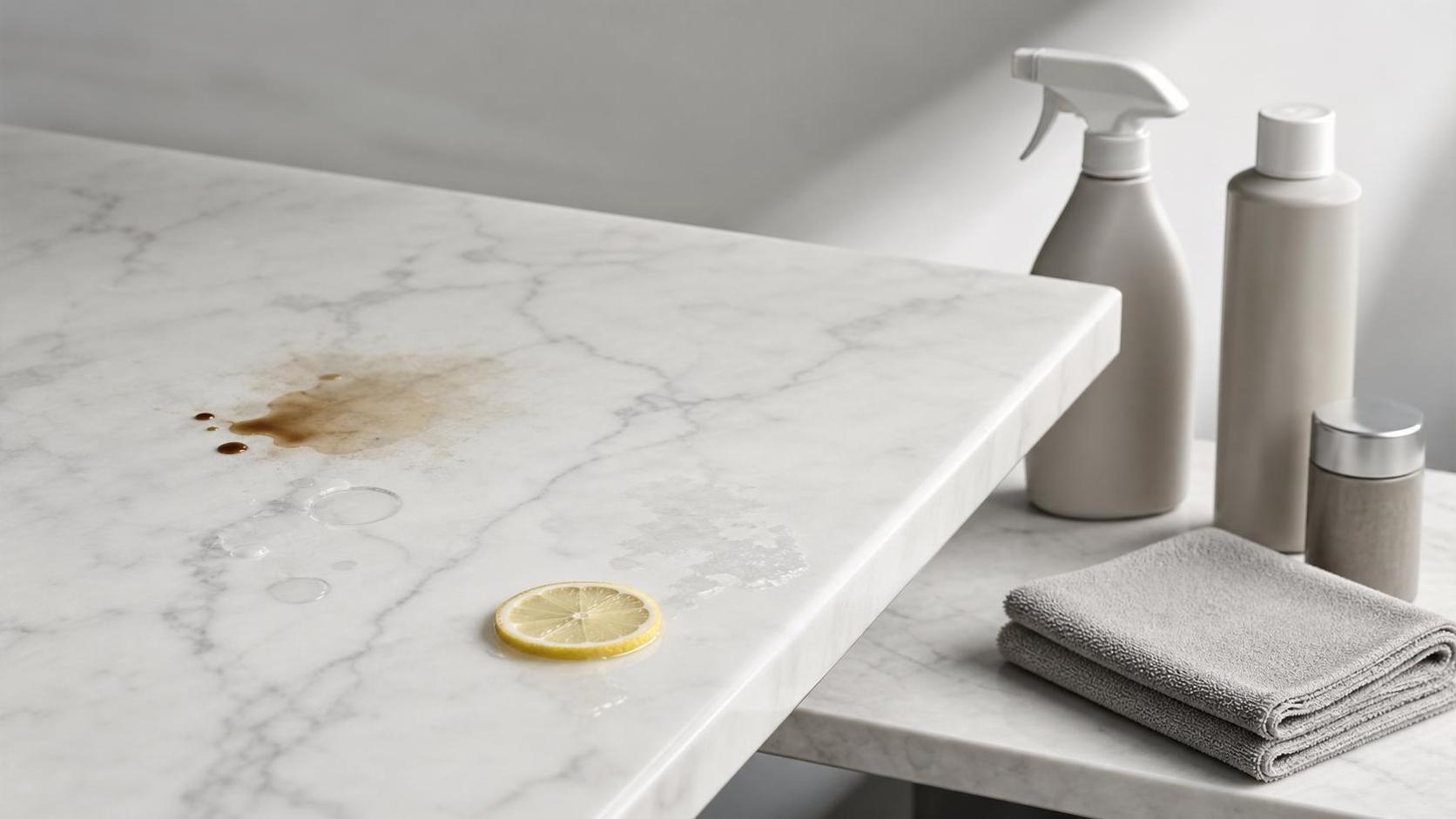
In practical use, many people confuse staining with etching. A dark spot usually means absorption. A pale or rough patch usually means the marble surface has been chemically changed.
This distinction matters because prevention and repair are not identical. A cleaner that lifts oil may help a stain, but it will not restore a dulled etched area.
What usually damages marble first: spills, cleaners, or wear?
The honest answer is all three, but not in the same way. Spills create the most visible incidents, while wrong cleaners and abrasion cause slow, cumulative damage.
Acidic food and drink often trigger etching within minutes. Oil and colored liquids may leave deeper marble stains if they are left overnight.
Meanwhile, bleach, bathroom descalers, and strong multipurpose sprays can strip sealers or react with polished marble. Repeated mopping with harsh products also reduces shine.
Wear matters more on floors and service counters. Grit carried by shoes works like sandpaper, especially near entrances and work zones.
A quick comparison helps separate the risks before choosing a marble care routine.
Is sealing marble enough to stop stains and etching?
Not completely, and this is one of the biggest misunderstandings around marble maintenance. A quality sealer slows absorption, but it does not make marble acid-proof.
So yes, sealing helps reduce marble stains. No, it will not prevent etching from lemon juice, wine, or aggressive cleaning chemicals.
A better way to think about sealer is time. It gives more time to clean a spill before it penetrates the stone.
Frequency depends on stone finish, traffic, and exposure. A polished indoor vanity may need less attention than a kitchen island used every day.
One simple field check is the water-drop test. If water darkens the marble quickly, the protective barrier may be weakening.
Before resealing large areas, confirm the product suits natural stone and leaves no residue. Market sourcing varies, so checking technical data matters more than brand claims alone.
Which cleaning habits actually protect marble over time?
The most effective marble care routine is simple, consistent, and gentle. Overcomplicated treatment plans often fail because they are not followed daily.
- Blot spills instead of rubbing them across the surface.
- Use a pH-neutral cleaner made for stone.
- Choose microfiber cloths or soft mop heads.
- Place mats near entrances and pads under small appliances.
- Dry wet areas after washing to reduce water marks.
In actual operations, consistency beats intensity. Weekly deep scrubbing cannot undo daily exposure to acids, grit, and standing moisture.
It also helps to separate cleaning zones. A bathroom product safe for ceramic tile may still damage marble around sinks, walls, and shower ledges.
When should a mark be treated at home, and when is professional repair smarter?
Minor marble stains can sometimes be treated with a stone-safe poultice or cleaner, especially when the source is known and the affected area is small.
Etching is different. Once the finish is altered, cleaning alone will not bring the polish back. That usually requires honing or repolishing.
Professional help makes more sense in a few situations:
- The mark keeps returning after cleaning.
- Large floor sections look cloudy or uneven.
- The marble has multiple finishes or visible vein contrast.
- Downtime and replacement costs would be higher than repair.
For installations tied to project delivery or property turnover, documenting the stone type, finish, and previous treatment can reduce trial-and-error later.
What is the most practical way to prevent future marble problems?
Start with a short prevention standard rather than reacting to each new stain. That means listing approved cleaners, spill response time, resealing checks, and traffic protection points.
For most marble surfaces, the winning approach is not expensive. It is early wiping, acid awareness, routine dust removal, and periodic sealer evaluation.
When comparing maintenance options, judge them by surface compatibility, labor demand, reapplication cycle, and the risk of visible finish change.
Marble can stay polished and durable for years, but only when everyday care matches the stone’s limits. The next useful step is to review each area, identify the main exposure risks, and build a cleaning and inspection schedule around them.
Technical Specifications
- How to test melt flow consistency in batches of recycled plasticsAuthor :Polymers & Rubber Editorial Team
- When does a cast resin transformer need high-altitude derating?Author :Electrical Components Editorial Team
- How to verify Global Industrial Insights sourcing informationAuthor :Industrial Machinery Editorial Team
Expert Insights

Chief Security Architect
Dr. Thorne specializes in the intersection of structural engineering and digital resilience. He has advised three G7 governments on industrial infrastructure security.
Core Sector // 01
Security & Safety
- How to measure for cut-to-size marble before placing an orderAuthor :Construction Materials Editorial Team

- What to verify before placing an order with a ceramic tiles supplierAuthor :Construction Materials Editorial Team

- How to prevent outdoor porcelain tiles from cracking in freeze-thaw conditionsAuthor :Construction Materials Editorial Team

- How to assess quality consistency from a granite exporter in BrazilAuthor :Construction Materials Editorial Team

- Which compliance standards apply to imported granite for building projects?Author :Construction Materials Editorial Team

- How to choose ceramic tiles for bathroom floors with better slip resistanceAuthor :Construction Materials Editorial Team

- When are porcelain wall tiles the right choice for shower walls?Author :Construction Materials Editorial Team

- How to choose porcelain floor tiles for high-traffic areasAuthor :Construction Materials Editorial Team