
What Do Pigments Do in Coatings, Plastics, and Inks?
Author
Date Published
Reading Time
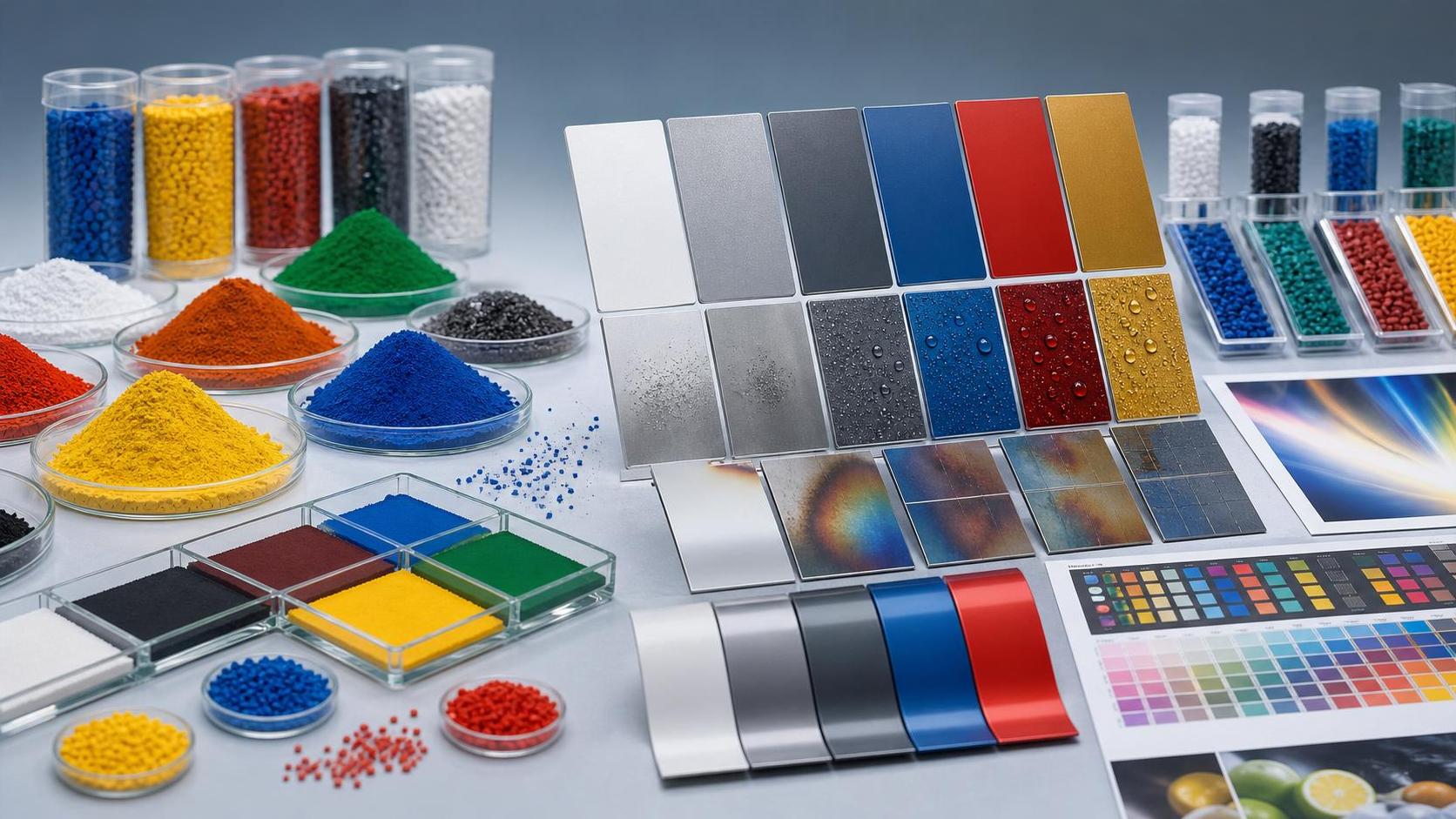
Pigments do far more than add color. In coatings, plastics, and inks, they shape opacity, weatherability, heat stability, surface appearance, and even how a product ages in service.
That makes pigments a technical and commercial topic at the same time. Color performance affects product quality, but supply shifts, compliance rules, and pricing cycles also influence sourcing decisions.
For anyone tracking industrial materials, pigments offer a useful lens on product performance and market movement. Small formulation changes can alter durability, print quality, and replacement frequency across end-use sectors.
What pigments actually do
At the most basic level, pigments are solid particles dispersed in a medium. Unlike dyes, they do not dissolve. Their function depends on particle size, chemistry, and how well they distribute.
Color is only the starting point. Pigments can block light, scatter radiation, improve hiding power, protect polymers from UV damage, and support consistent branding across batches and regions.
Some pigments are selected for brightness and tinting strength. Others are chosen because they resist solvents, migration, chalking, or high processing temperatures.
Why the industry keeps watching pigments
Pigments sit close to several pressure points in global trade. Raw material availability, environmental standards, freight disruption, and energy costs can all affect supply and price stability.
Regulatory scrutiny also matters. Heavy metal restrictions, food-contact requirements, toy safety rules, and packaging standards can narrow acceptable pigment options in different markets.
This is why pigments appear often in market tracking and product knowledge coverage. They connect formulation science with certification, regional policy, and downstream demand.
How pigments work across coatings, plastics, and inks
Coatings
In coatings, pigments influence color uniformity, gloss control, corrosion protection, and outdoor durability. Titanium dioxide is widely used for opacity, while other pigments provide color depth or functional protection.
Exterior paints, industrial finishes, and protective coatings all place different demands on pigment choice. Lightfastness and chemical resistance often matter as much as shade accuracy.
Plastics
In plastics, pigments must survive melt processing without degrading. They also need compatibility with the polymer system to avoid warping, blooming, plate-out, or uneven dispersion.
Packaging, consumer goods, pipes, films, and automotive parts each create different performance expectations. A pigment that works in polyethylene may not behave the same way in engineering plastics.
Inks
In inks, pigments drive print density, transparency, rub resistance, and color consistency. Dispersion quality becomes especially important because poor particle distribution can reduce sharpness and increase waste.
Packaging inks, publication inks, digital systems, and specialty printing all use pigments differently. Migration limits and substrate adhesion may be just as important as visual appearance.
Key performance differences worth comparing
Two pigments can look similar on a shade card but behave very differently in production. Looking beyond color helps avoid costly substitution errors.
Where business risk usually appears
The biggest mistakes usually come from assuming pigments are interchangeable. A lower-cost grade may weaken weather resistance, shift undertone, or fail a regional compliance check.
Documentation can also be uneven. Technical data sheets may highlight color strength but say less about migration, VOC-related concerns, or long-term exposure performance.
Another issue is supply concentration. Some pigment categories depend on a narrow producer base, which raises exposure to shutdowns, trade barriers, or abrupt freight changes.
A practical way to assess pigments
A useful review starts with the end-use environment. Indoor decorative paint, food packaging ink, and UV-exposed plastic trim each require a different balance of cost and performance.
- Check substrate, process temperature, and expected service life.
- Compare lightfastness, chemical resistance, and dispersion behavior.
- Review certifications and restricted substance declarations early.
- Track regional price trends and alternative supply sources.
- Validate replacements in real production conditions, not only lab shade matches.
That approach makes pigment selection more reliable and easier to explain internally. It also supports better decisions when market volatility forces substitutions.
What to watch next
Pigments will stay important as coatings, plastics, and inks move toward tighter compliance and more specialized performance targets. Demand for safer chemistries and stable supply is unlikely to ease.
The next step is to build a clearer comparison framework: performance data, regulatory fit, source diversity, and landed cost. That gives a stronger basis for evaluating pigments across applications and markets.
Technical Specifications
- How to test melt flow consistency in batches of recycled plasticsAuthor :Polymers & Rubber Editorial Team
- When does a cast resin transformer need high-altitude derating?Author :Electrical Components Editorial Team
- How to verify Global Industrial Insights sourcing informationAuthor :Industrial Machinery Editorial Team
Expert Insights

Chief Security Architect
Dr. Thorne specializes in the intersection of structural engineering and digital resilience. He has advised three G7 governments on industrial infrastructure security.