How to Choose Laminate Flooring Wear Ratings for High-Traffic Commercial Areas
Author
Date Published
Reading Time
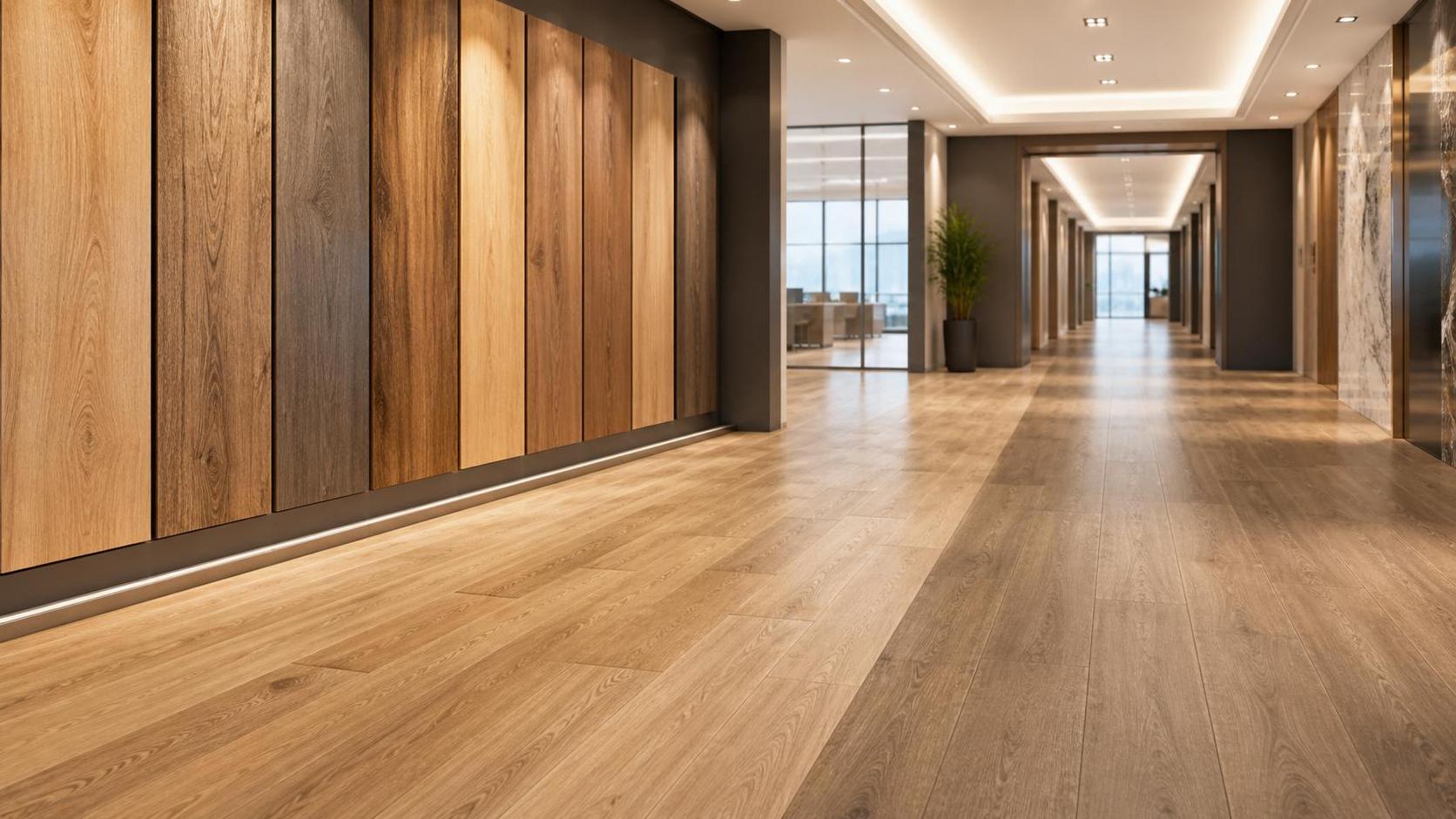
Choosing a wear rating for laminate flooring is not a minor specification line in commercial planning. In busy retail zones, office corridors, education spaces, and hospitality settings, the wrong rating can shorten service life, raise maintenance pressure, and weaken the visual standard of the whole project.
That matters even more in a market where buyers compare lifecycle cost, certification, logistics timing, and replacement risk at the same time. Wear ratings help turn laminate flooring selection from a style decision into a performance decision.
What the wear rating actually measures
For commercial laminate flooring, the wear rating indicates how well the surface layer resists abrasion from foot traffic, dirt, carts, and repeated cleaning. It does not describe every aspect of quality, but it is one of the most useful starting points.
Most buyers will see AC ratings, usually from AC1 to AC5, and in some cases AC6. Higher numbers generally indicate stronger resistance to surface wear under more demanding conditions.
In practical terms, laminate flooring with a low AC rating may still look acceptable at handover, yet lose appearance faster when exposed to constant pedestrian flow or tracked-in debris.
A quick view of common ratings
The rating should still be checked alongside the product standard, test method, and supplier documentation. Labels alone are not enough in international sourcing.
Why this issue gets more attention now
Commercial fit-out budgets are under pressure from freight volatility, labor cost increases, and tighter operating margins. That shifts attention from initial material price to replacement frequency and maintenance cost.
At the same time, global buyers are comparing more suppliers across regions. Product data sheets, certification claims, and wear class declarations do not always align clearly, especially across different markets.
For that reason, laminate flooring wear ratings have become part of a broader due diligence process. They connect product knowledge with sourcing risk, compliance confidence, and long-term asset planning.
Matching ratings to the actual traffic pattern
High traffic does not mean the same thing in every building. A reception lobby, a chain store aisle, and a classroom corridor generate different wear patterns, even when visitor counts appear similar.
What matters is not only how many people pass through, but how they move, what they carry, and how often dirt or moisture enters from outside.
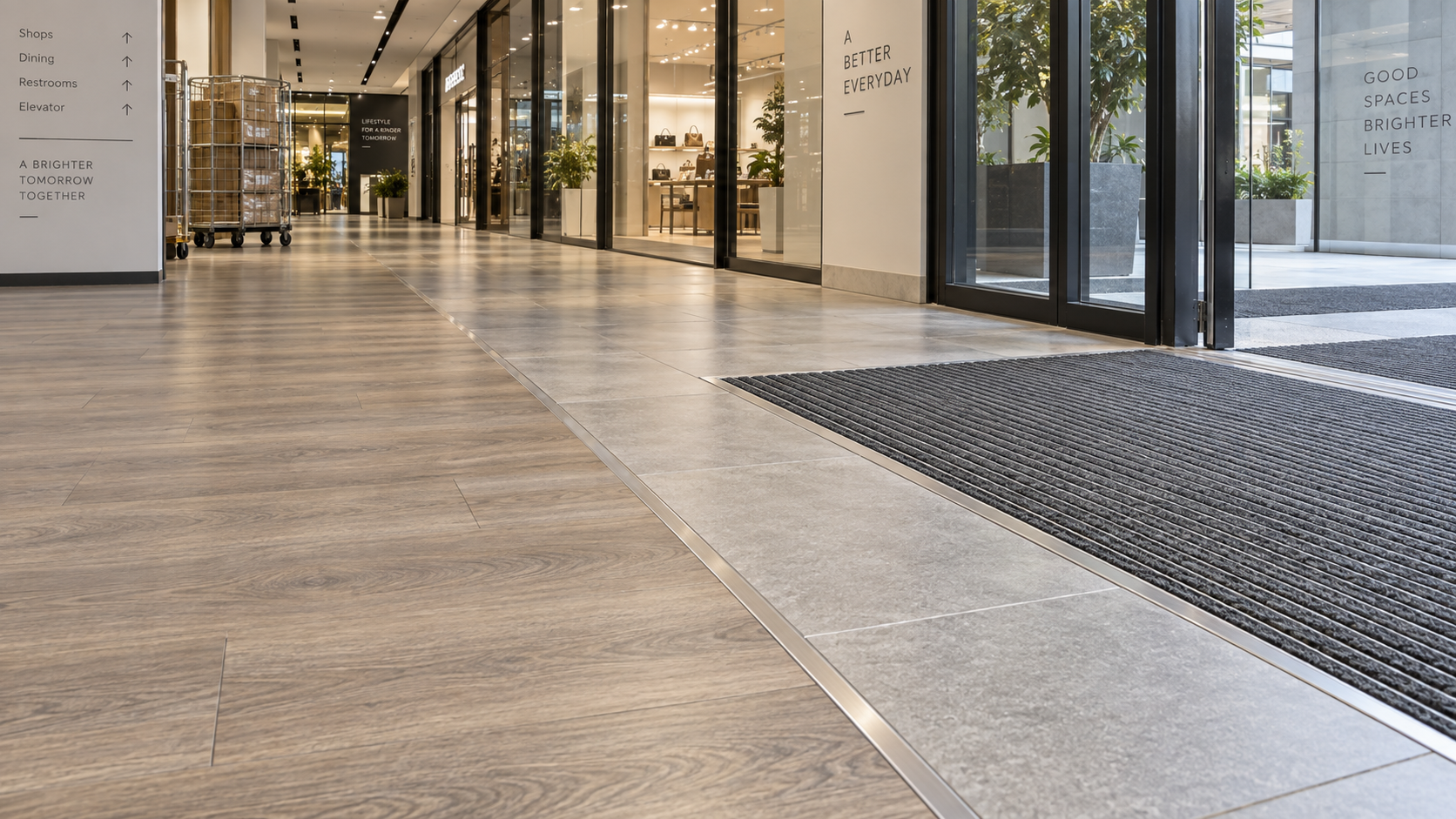
- Retail entrances face grit, pivoting foot movement, and concentrated wear near displays.
- Offices often see rolling chairs, repeated cleaning, and traffic around lift cores.
- Hotels may need stronger laminate flooring in corridors than in guest rooms.
- Schools and clinics usually need attention to both abrasion and daily maintenance demands.
In many of these settings, AC5 laminate flooring is a safer baseline. AC4 may still work in secondary zones where traffic is steady but not severe.
Wear rating is important, but not sufficient alone
A higher wear rating does not automatically guarantee better project performance. Surface durability must be read together with core density, edge sealing, thickness, slip resistance, and installation system.
Moisture is a common blind spot. In commercial entrances or food service areas, water exposure may damage joints before the wear layer fails.
Acoustics can also influence product choice. Multi-level offices, education buildings, and hospitality projects often require underlayment compatibility and impact sound control.
This is why laminate flooring decisions should be made as a package of performance criteria, not as a single numeric comparison.
Questions worth asking suppliers
- Which test standard supports the declared wear rating?
- Is the product intended for general or heavy commercial use?
- What warranty terms apply in high-traffic interiors?
- How does the surface perform under frequent cleaning?
- Are matching trims and replacement planks available for future maintenance?
How procurement teams can reduce selection risk
A reliable laminate flooring specification usually starts with zoning. Instead of applying one product everywhere, divide the project into entrance, circulation, service, and low-impact areas.
Then compare total installed cost against expected replacement cycles. A lower-cost board may lose its advantage if sections need early renewal in visible traffic lanes.
Sample review also matters. Request test reports, installation guidance, and large-format samples that show texture, gloss retention, and edge construction under realistic lighting.
Where imports are involved, lead time and batch consistency should be checked early. Commercial laminate flooring projects can be delayed by shade variation, incomplete accessories, or missing compliance paperwork.
A practical way to move forward
The best wear rating is the one that fits the real traffic profile, maintenance routine, and replacement tolerance of the site. For many high-traffic commercial areas, that points toward AC5 laminate flooring, but the final decision should still reflect the full operating context.
A useful next step is to map each area by traffic intensity, confirm the required standards, and compare suppliers on both product data and fulfillment reliability. That approach creates a clearer basis for specifying laminate flooring with fewer surprises after installation.
Technical Specifications
- How to test melt flow consistency in batches of recycled plasticsAuthor :Polymers & Rubber Editorial Team
- When does a cast resin transformer need high-altitude derating?Author :Electrical Components Editorial Team
- How to verify Global Industrial Insights sourcing informationAuthor :Industrial Machinery Editorial Team
Expert Insights

Chief Security Architect
Dr. Thorne specializes in the intersection of structural engineering and digital resilience. He has advised three G7 governments on industrial infrastructure security.
Core Sector // 01
Security & Safety
- Is solid wood flooring suitable for kitchens with changing humidity?Author :Construction Materials Editorial Team

- Does E1 laminate flooring meet low-emission needs for bedrooms?Author :Construction Materials Editorial Team

- Which flooring materials hold up best in high-traffic commercial spaces?Author :Construction Materials Editorial Team

- What Should Buyers Check Before Importing Wood Flooring?Author :Construction Materials Editorial Team

- Is Demand for Imported Wood Flooring Growing in Europe?Author :Construction Materials Editorial Team

- Laminate Flooring vs Wood Flooring: Which Option Fits Rental Renovations?Author :Construction Materials Editorial Team

- How to Choose Laminate Flooring Wear Ratings for High-Traffic Commercial AreasAuthor :Construction Materials Editorial Team

- Engineered Wood Flooring vs Solid Wood Flooring: Pros, Limits, and Best UsesAuthor :Construction Materials Editorial Team