
What makes plastic packaging cost more than standard alternatives?
Author
Date Published
Reading Time
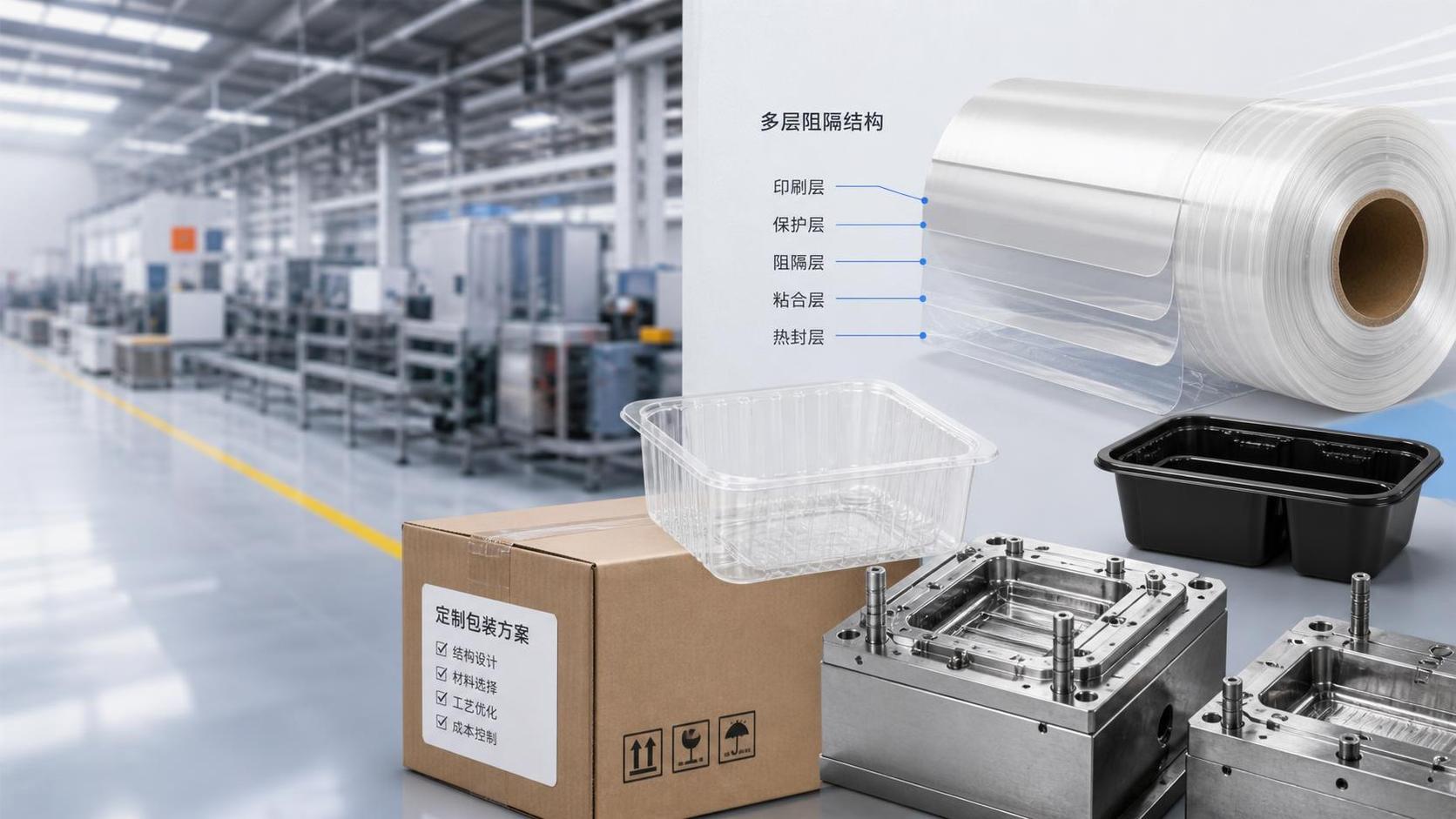
The higher price of plastic packaging is rarely explained by resin alone. A basic stock bag, bottle, tray, or container can be inexpensive, but the quote changes quickly when the package must protect sensitive goods, run reliably on filling equipment, meet market-entry requirements, carry printed branding, or arrive in a specific format for distribution.
For purchasing teams, the useful comparison is not simply “plastic versus paper, glass, or a standard pack.” It is whether a packaging specification delivers the required protection and operational performance at the lowest total cost. A cheaper alternative that leaks, causes line stoppages, increases freight volume, or leads to damaged inventory is not necessarily the lower-cost option.
Material price is only the starting point
Most plastic packaging is based on commodity resins, but those resins do not behave like a fixed-cost input. Their pricing can move with feedstock markets, regional supply availability, production outages, shipping conditions, and demand from other converting sectors. Two suppliers may therefore quote different prices for seemingly similar packaging even before design or processing differences are considered.
The resin grade also matters. A standard film or rigid container may use a relatively simple material structure. A package for food, chemicals, cosmetics, pharmaceuticals, or moisture-sensitive industrial parts may require a different polymer grade, additional layers, or carefully selected additives. These choices can improve stiffness, clarity, sealing behavior, impact resistance, or protection against oxygen, moisture, light, grease, and aroma transfer. Each capability adds cost because it changes both the material bill and the manufacturing process.
A common purchasing mistake is to compare package weight without comparing the function delivered per unit of material. A lighter package may cost less in resin terms but offer poor puncture resistance. A heavier structure may appear expensive but reduce product loss and handling damage. Weight is useful for comparison only when the material type, format, and performance requirement are broadly equivalent.
Barrier and protection requirements often create the largest gap
“Standard” packaging is generally designed for ordinary containment and short distribution cycles. Premium plastic packaging is usually priced around a risk the buyer is trying to control. That risk may be product spoilage, moisture absorption, loss of fragrance, contamination, corrosion, breakage, tampering, or leakage during transport.
For example, a dry product may need protection from humidity, while a liquid product may need a secure closure and a structure that resists cracking. A food product with a long route to market may require a higher-barrier film and reliable heat seals. These are different specifications, even when the finished packs look similar from a distance.
Barrier performance is often created through multilayer coextrusion, lamination, coatings, specialty films, or combinations of plastic with other materials. More layers can improve protection, but they also increase converting complexity, quality-control demands, and sometimes recycling limitations. Buyers should avoid asking only for “high barrier.” The supplier needs to know what the package must resist, how long the product will be stored, and what handling conditions it will face.

Custom tooling changes the economics of a package
Custom plastic packaging can include a proprietary bottle shape, a non-standard closure, a fitted insert, a unique tray cavity, or a pouch with specific dimensions and seal geometry. These details may be commercially worthwhile, but they move the purchase from stock supply toward a manufacturing project.
Tooling, printing plates, color matching, pilot runs, and approval samples are fixed costs. They do not disappear because the first production order is small. At higher volumes, those costs are distributed across more units and the price per pack becomes more favorable. At lower volumes, a stock container plus an applied label can be financially more sensible than a fully custom printed or molded solution.
Customization also carries a sourcing risk that is easy to overlook: ownership and transferability of the tooling. Before placing an order, establish who owns molds, dies, artwork files, and approved color standards; where they are stored; and whether they can be released if production moves. A low initial tooling quotation is less attractive if it creates avoidable supplier dependence later.
Print and appearance can cost more than buyers expect
Packaging decoration is not a single feature. A simple one-color mark on a standard surface is very different from multi-color printing, full coverage graphics, metallic effects, transparent windows, matte-and-gloss combinations, or printing that must align precisely with a closure, zipper, or formed shape.
Graphic complexity affects setup, ink or film selection, production speed, inspection, waste during changeover, and rejection risk. Tight color expectations can add another layer of control, especially when packaging is sourced across several factories or regions. The issue is not that branded packaging is inherently overpriced; it is that a visually sophisticated specification needs to be evaluated as a manufacturing requirement, not treated as a minor artwork change.
When cost pressure is high, separate the elements that influence shelf recognition or legally required information from purely decorative elements. A simplified print plan may preserve the commercial purpose of the package while reducing setup and conversion cost. It can also make future artwork revisions less disruptive.
Compliance is part of the purchased product
Plastic packaging intended for direct contact with food, beverages, cosmetics, medical-related goods, chemicals, or other controlled products may need suitable material declarations, traceability, migration-related support, or other market-specific documentation. The exact requirement depends on the product, destination, and intended use, but the purchasing implication is consistent: compliance cannot be added casually after production.
Packaging suppliers price this work through material selection, controlled production practices, documentation, and the effort required to maintain consistent records. A quote that appears lower may omit documentation, use a different material grade, or assume an end use that does not match the buyer’s actual application.
Ask for the intended-use assumption behind the quote. “Food packaging,” for example, is not a complete specification. The supplier may need to know whether the product is dry, fatty, acidic, hot-filled, frozen, or used under other demanding conditions. Clear information at the request-for-quotation stage prevents a later price increase caused by an incomplete brief.
The lowest unit price can increase freight and handling costs
Plastic is often selected because it is light and less breakable than rigid alternatives, but transportation efficiency varies widely by design. Empty bottles with poor nesting, bulky trays, low pallet density, and fragile-looking lightweight structures can create higher freight, warehouse, and handling costs even when their unit price is competitive.
Imported packaging should be evaluated by landed cost rather than ex-works price alone. Include packaging density per carton, cartons per pallet, pallet stability, container utilization, protective outer packaging, port handling exposure, and the likelihood of damage in transit. A collapsible pouch or nested container may carry a higher conversion price but lower transport cost. Conversely, a rigid pack may be the right choice when it improves filling efficiency, product presentation, or downstream handling.
There is also a practical trade-off between downgauging and robustness. Reducing material may lower the purchase price, yet excessive reduction can lead to deformation during stacking, punctures during distribution, or inconsistent running on automated equipment. The best specification is usually the lightest one that still performs reliably in the real supply chain.
Order volume, SKU count, and production scheduling matter
Plastic packaging production rewards repeatability. A supplier can usually price more efficiently when it can run one material, one color set, and one format for a meaningful production batch. Frequent artwork changes, many regional variants, small release quantities, and short-notice delivery requests add planning and changeover costs.
This does not mean buyers should automatically commit to oversized inventory. Obsolescence from packaging redesigns, label changes, or slow-moving products can outweigh a volume discount. The more useful question is whether demand can be consolidated intelligently: fewer near-identical formats, shared components across product lines, or a forecast that gives the supplier enough visibility to plan material purchases and production slots.
How to compare quotes without buying the wrong package
A meaningful RFQ should give every supplier the same functional brief. If one supplier quotes a single-layer stock film and another quotes a multilayer barrier structure with tested sealing requirements, the two figures are not competing prices. They are prices for different risk profiles.
Use the following sequence before making a decision:
- Define the product and distribution conditions. Identify contents, fill method, storage period, transport environment, and the failures that would be unacceptable.
- Separate mandatory requirements from preferences. Protection, compatibility, seal integrity, and required documentation belong in the mandatory category. Decorative enhancements and non-essential custom shapes should be evaluated separately.
- Normalize the quote. Compare material structure, dimensions, weight, closure or sealing method, print scope, packing configuration, tooling, lead time, documentation, and commercial terms.
- Calculate landed and operating cost. Consider freight, storage, filling-line performance, scrap, damage, and the cost of carrying inventory, not only the unit price.
- Approve samples against the real use case. A pack that looks acceptable on a desk may fail after filling, stacking, transit, or exposure to the product itself.
The most frequent error is specifying a package by appearance alone: “same as the current one” or “similar to this sample.” That approach leaves material grade, wall thickness, seal performance, tolerances, and packing method open to interpretation. It can generate attractive initial quotes followed by quality disputes, change requests, or unexpected cost additions.
When a standard alternative is the better purchase
Standard packaging is often the better choice when the product is stable, the distribution route is short, branding can be handled with a label or sleeve, and volumes do not justify custom tooling. It is also useful for launch-stage products, where demand and final artwork may still change.
Pay more for a specialized plastic pack when the additional protection, usability, transport efficiency, or market presentation solves a defined business problem. The reason should be visible in the specification: fewer failures, better product preservation, a required filling process, lower logistics exposure, or a clear route-to-market need. If the extra feature cannot be tied to one of those outcomes, it is a strong candidate for removal during value engineering.
Plastic packaging becomes expensive when it is asked to do more than contain a product. A disciplined buying decision identifies exactly what it must do, prices each requirement separately, and avoids paying for performance that the product or supply chain does not need.
Technical Specifications
- How to verify Global Industrial Insights sourcing informationAuthor :Industrial Machinery Editorial Team
- Which thermoplastic elastomers stay flexible at low temperatures?Author :Polymers & Rubber Editorial Team
- Which Shore hardness suits soft touch TPE for handheld grips?Author :Polymers & Rubber Editorial Team
Expert Insights

Chief Security Architect
Dr. Thorne specializes in the intersection of structural engineering and digital resilience. He has advised three G7 governments on industrial infrastructure security.
Core Sector // 01
Security & Safety