Marble vs Granite: Which Surface Performs Better Indoors?
Author
Date Published
Reading Time
Marble vs Granite: Which Surface Performs Better Indoors?
Choosing between marble and granite can shape how an indoor space looks, feels, and performs over time.
Both are natural stone, but they behave differently under daily use.
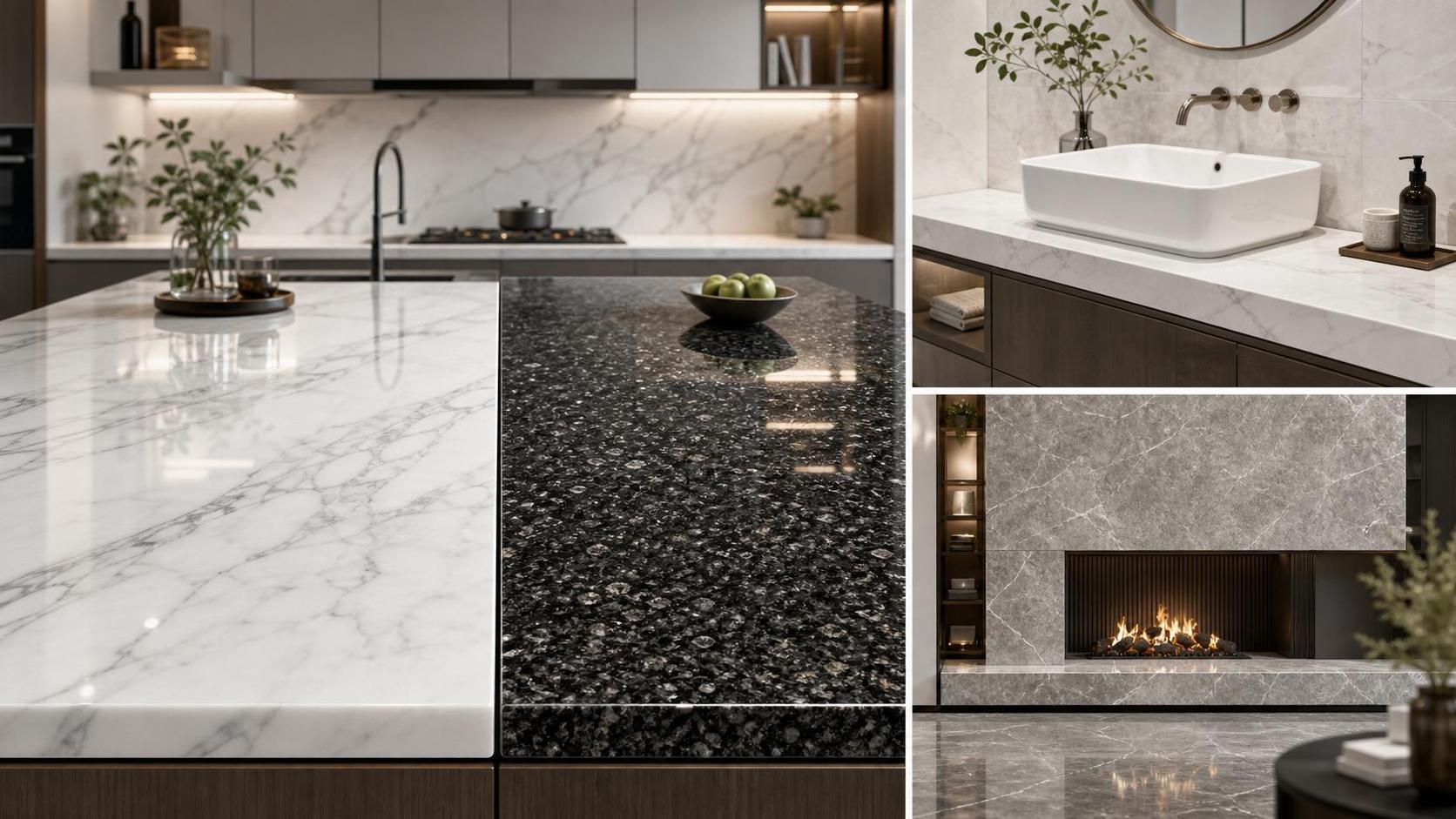
Marble is known for soft veining, bright depth, and a refined finish.
Granite usually wins attention for hardness, stain resistance, and easier upkeep.
The smarter choice depends on where the surface goes and how much maintenance feels realistic.
How Marble and Granite Differ at a Glance
Marble forms from limestone under heat and pressure, which gives it a smoother, more porous structure.
Granite is igneous rock, packed with interlocking minerals that make it denser and tougher.
That basic geological difference explains most indoor performance results.
- Marble offers a more classic, high-end visual effect.
- Granite handles impact, scratches, and spills more confidently.
- Marble usually asks for more regular sealing and care.
- Granite often fits busy households better.
Appearance: Where Marble Still Leads
If visual impact matters most, marble often feels more distinctive indoors.
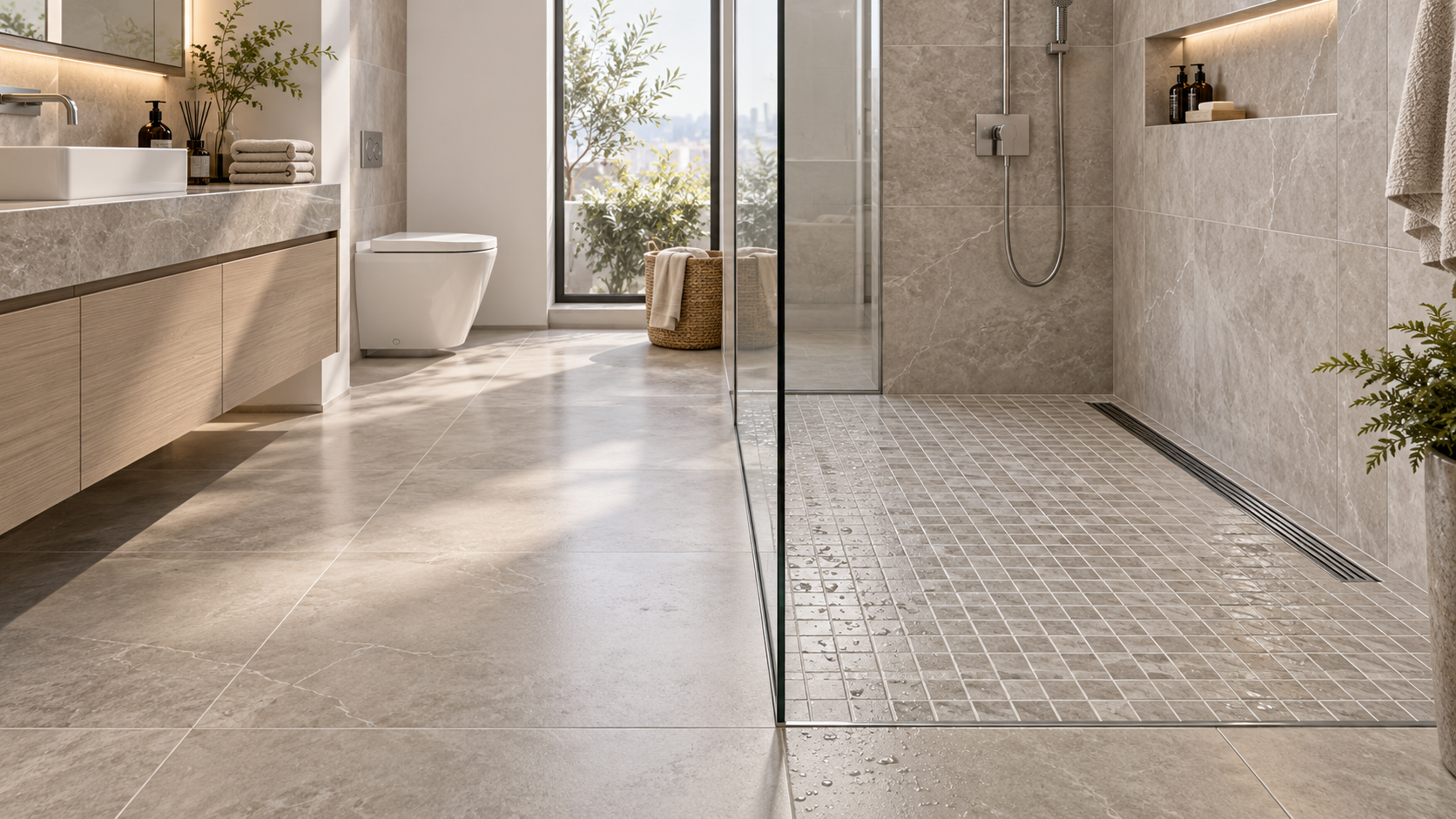
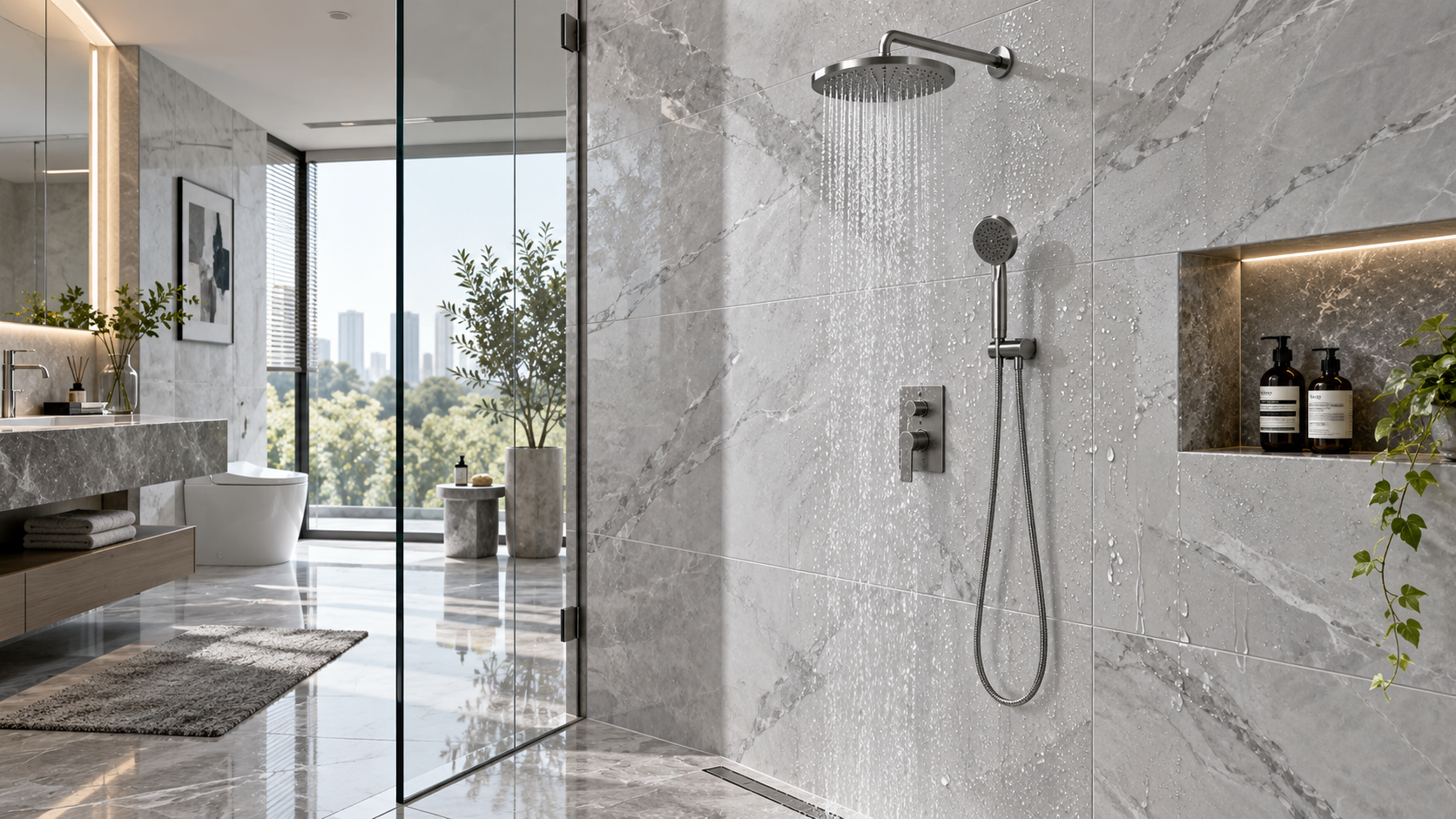
Its veining creates movement that works especially well in bathrooms, fireplace walls, and statement floors.
White marble remains popular because it reflects light and adds a calm, upscale mood.
Granite tends to look more granular and visually active.
Some buyers prefer that natural variation, especially in kitchens with wood or darker cabinetry.
Still, for pure elegance, marble usually has the edge.
Durability: Granite Performs Better Under Pressure
Granite is generally the stronger indoor surface when daily wear is the main concern.
It resists scratching better than marble, which matters on kitchen countertops and utility areas.
Marble can etch when exposed to acidic liquids like lemon juice, vinegar, or some cleaners.
That etching is not always a stain, but it changes the finish and becomes visible in strong light.
Granite also handles heat well, though trivets are still a good habit.
For indoor durability alone, granite is usually the lower-risk decision.
Maintenance: Marble Needs More Attention
Maintenance is where many marble decisions become harder after installation.
Marble is porous, so sealing matters if the goal is to reduce staining from water, oil, soap, or cosmetics.
Even sealed marble can still etch, so care routines must stay consistent.
Granite also benefits from sealing, but the maintenance cycle is often more forgiving.
For indoor spaces that see spills, food prep, or frequent cleaning, granite usually saves time and stress.
Best Indoor Uses for Each Surface
The best comparison is not marble against granite everywhere.
It is marble or granite in the specific room where performance matters.
This is where a mixed-material approach often makes the most sense.
Cost and Long-Term Value
Price varies by origin, slab rarity, thickness, and finish, so broad cost claims can mislead.
Many marble options cost more because appearance drives demand.
Granite can range widely too, but often delivers stronger practical value in active interiors.
Long-term value is not only purchase price.
It also includes maintenance effort, repair risk, visible aging, and whether the surface still suits the room after years of use.
How to Decide with Less Regret
A practical decision usually comes down to three questions.
- Will the surface face acids, oils, heavy traffic, or sharp tools?
- Is regular sealing and careful cleaning realistic?
- Is visual luxury more important than easy ownership?
Choose marble when the indoor goal is beauty first and wear is limited.
Choose granite when the space must perform well every day with fewer maintenance concerns.
For many interiors, the best answer is not marble vs granite in absolute terms. It is using each stone where it performs best.
Technical Specifications
- How to test melt flow consistency in batches of recycled plasticsAuthor :Polymers & Rubber Editorial Team
- When does a cast resin transformer need high-altitude derating?Author :Electrical Components Editorial Team
- How to verify Global Industrial Insights sourcing informationAuthor :Industrial Machinery Editorial Team
Expert Insights

Chief Security Architect
Dr. Thorne specializes in the intersection of structural engineering and digital resilience. He has advised three G7 governments on industrial infrastructure security.
Core Sector // 01
Security & Safety
- How to measure for cut-to-size marble before placing an orderAuthor :Construction Materials Editorial Team

- What to verify before placing an order with a ceramic tiles supplierAuthor :Construction Materials Editorial Team

- How to prevent outdoor porcelain tiles from cracking in freeze-thaw conditionsAuthor :Construction Materials Editorial Team

- How to assess quality consistency from a granite exporter in BrazilAuthor :Construction Materials Editorial Team

- Which compliance standards apply to imported granite for building projects?Author :Construction Materials Editorial Team

- How to choose ceramic tiles for bathroom floors with better slip resistanceAuthor :Construction Materials Editorial Team

- When are porcelain wall tiles the right choice for shower walls?Author :Construction Materials Editorial Team

- How to choose porcelain floor tiles for high-traffic areasAuthor :Construction Materials Editorial Team