Which resin types suit composite parts exposed to high temperatures?
Author
Date Published
Reading Time
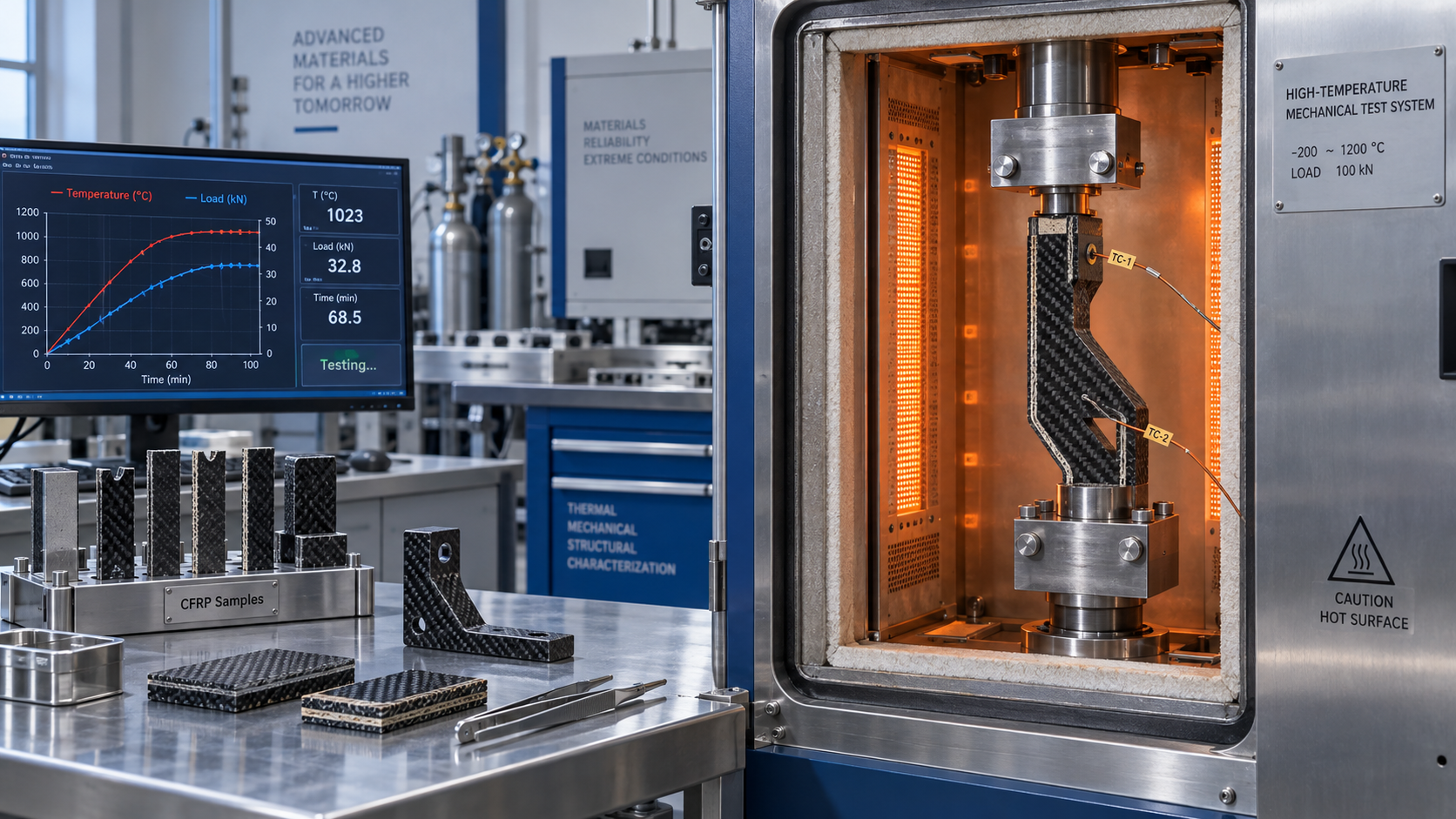
High-temperature epoxies suit composite parts when the required strength, stiffness, and creep resistance remain adequate at the actual service temperature. Cyanate esters become attractive when thermal stability must be combined with low moisture uptake and suitable electrical properties. Bismaleimides support demanding structural applications beyond the practical capability of many epoxies, while polyimides address more severe thermal exposure with greater processing demands. Phenolics deserve consideration where flame resistance, smoke behavior, and controlled charring dominate the specification.
These resin types cannot be ranked by a single temperature rating. A lightly loaded heat shield, a bolted structural bracket, and an antenna radome impose different requirements even at the same temperature. The useful starting point is the temperature history of the part, the load it carries while hot, and the property that would cause failure if it deteriorated.
Define the thermal exposure before comparing resin families
Separate continuous operating temperature from short excursions. A material that survives a brief temperature spike without visible damage may lose stiffness or accumulate irreversible degradation during sustained exposure. Record dwell duration, heating and cooling rates, cycle count, and whether mechanical loads remain applied during the hottest interval.
The surrounding environment changes the comparison. Hot air promotes oxidation; an inert atmosphere changes that degradation pathway but does not prevent thermal decomposition. Moisture conditioning can reduce the glass transition temperature of susceptible systems. Steam, process fluids, or cleaning chemicals add compatibility requirements that a dry-air heat test does not capture.
Use the temperature at the composite itself. Nearby equipment ratings and fluid temperatures do not necessarily represent the laminate temperature. Radiant heating, contact with metal fasteners, insulation, and uneven airflow produce local hot spots. Thick sections also develop temperature gradients, creating internal stresses during rapid heating or cooling.
For a loaded component, specify which properties must remain above an acceptance threshold: compression strength, interlaminar shear strength, bearing strength, dimensional stability, or creep resistance. Longitudinal tensile strength alone gives an incomplete picture because reinforcing fibers can retain substantial capacity while the matrix and fiber interface deteriorate.
Where the main resin types fit
The table identifies screening priorities, rather than interchangeable grades. Toughening agents, catalysts, resin blends, reinforcement sizing, and cure schedules create substantial differences within each family. Selection must eventually move from the family name to a specific formulation and laminate process.
High-temperature epoxy: establish the usable margin
Epoxy is a practical starting candidate when its measured service envelope meets the application. Available prepreg, infusion, and molding formulations offer different processing options, although a resin suitable for one route is not automatically suitable for another. Higher thermal capability often requires a more demanding cure and post-cure schedule.
A high dry glass transition temperature does not establish suitability for a humid, loaded part. Moisture absorption can lower that transition and change matrix-dominated properties. Toughness also requires attention: increasing crosslink density to improve thermal behavior can reduce damage tolerance unless the formulation compensates for it.
Retain epoxy when hot-wet strength, creep, and aging results meet the specification with an appropriate margin. Move to another family when achieving the required performance forces an impractical cure cycle or leaves insufficient resistance to sustained thermal exposure.
Phenolic: distinguish fire performance from hot structural performance
Phenolics are useful where charring and fire behavior contribute to the component’s function. Appropriate formulations can provide favorable flame and smoke characteristics, but these must be established for the finished material and relevant exposure. Reinforcement, fillers, thickness, and construction all influence the result.
A char-forming resin can protect underlying material while its own mechanical properties decline. That behavior suits some thermal protection applications but does not establish dimensional or load-bearing stability for a precision bracket. Phenolic cure chemistry can also generate volatiles, making venting and consolidation important to porosity control. Structural acceptance therefore needs mechanical evidence alongside fire testing.
Cyanate ester: thermal performance with electrical requirements
Cyanate esters are strong candidates for parts where elevated-temperature performance intersects with dimensional stability and electrical function. Their generally low moisture uptake and favorable dielectric behavior make them relevant to radomes and other signal-transmitting composite structures. The reinforcement and complete laminate still determine the electrical result.
Cure conversion deserves close attention. An incompletely cured network can show residual reaction during later heating, shifting properties and dimensions in service. Moisture contamination during storage or processing can also interfere with the intended chemistry. Evaluate the actual formulation, including toughening or blending constituents, because improvements in handling or toughness can alter thermal and dielectric behavior.
Bismaleimide and polyimide: justify the processing burden
Bismaleimide, or BMI, is a candidate when sustained structural performance exceeds the demonstrated capability of the epoxy options under consideration. Modified BMI systems address the brittleness associated with less-toughened formulations, but elevated-temperature compression and impact-damaged strength still need direct evaluation.
Polyimide covers a broad range of chemistries and processing routes. Some systems generate reaction by-products that require careful removal; others use different cure mechanisms. A generic polyimide label therefore says little about the pressure, temperature, venting, or consolidation needed to produce a sound laminate.
For both families, higher thermal capability brings more demanding tooling and process control. Long-term oxidation remains a selection issue, particularly at exposed edges and thin sections. Choose between them using retained properties over the intended exposure period and evidence that the required geometry can be manufactured consistently.
Read temperature data without confusing different limits
Glass transition temperature, or Tg, describes a change in polymer mobility. It is useful for understanding stiffness loss, but it is not a universal continuous-service rating. The reported value depends on the measurement method, cure state, moisture condition, and the criterion used to identify the transition. Values from different methods should not be treated as directly equivalent.
Approaching Tg generally increases matrix compliance, which affects creep, load transfer, and stability around fasteners. A fixed temperature margin below Tg cannot replace mechanical testing. A stiff, highly constrained joint may require a different margin from an unloaded cover made with the same resin.
Thermogravimetric analysis measures mass change under a specified heating program and atmosphere. Its decomposition results help characterize degradation, but a rapid temperature ramp does not demonstrate years of structural service. Conversely, oxidation or interfacial damage can reduce mechanical performance before a large mass loss appears.
Distinguish reversible softening from permanent damage by testing specimens while hot and again after cooling. Recovery after cooling suggests a temperature-dependent property change; persistent loss indicates irreversible effects such as cracking, oxidation, or interface deterioration. Both matter if the component must carry load during exposure.
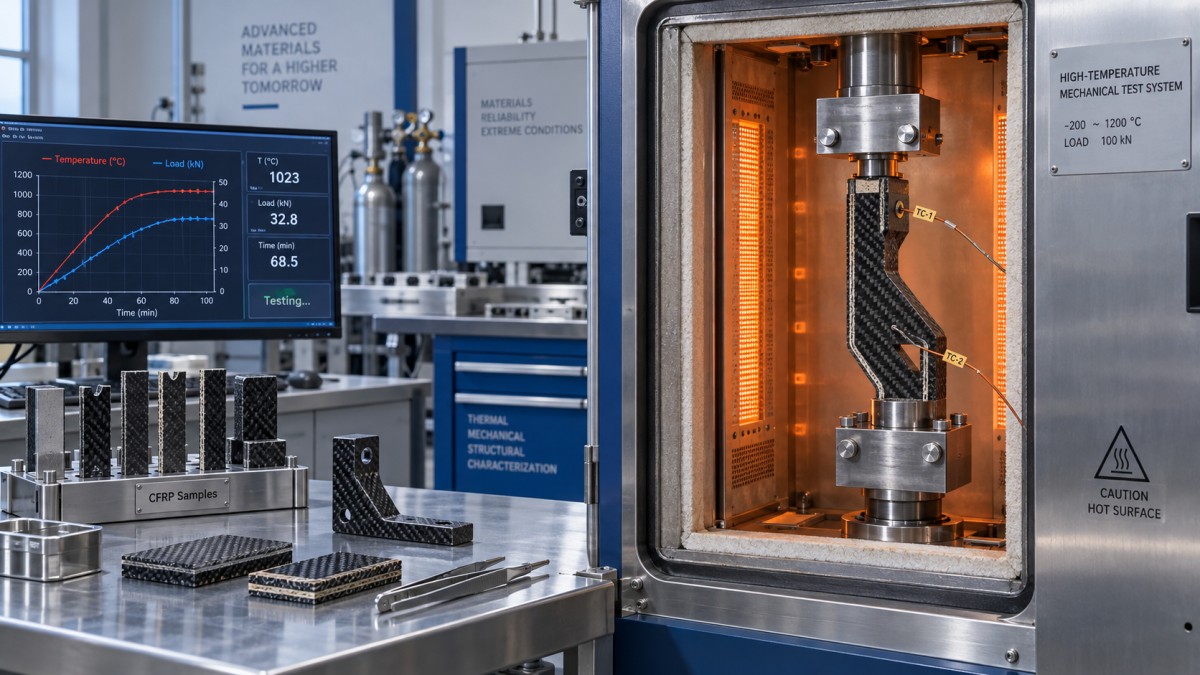
The laminate and cure process can change the decision
Reinforcing fibers do not remove the matrix temperature limit. Carbon reinforcement can preserve strong longitudinal properties while the softened matrix loses the ability to support fibers in compression or transfer shear between plies. Glass and other fibers introduce their own stiffness, expansion, and environmental considerations. Fiber sizing must also be compatible with the resin and its processing temperature.
Thermal expansion mismatch generates stresses within the laminate and at metal attachments. Repeated cycling can create transverse cracks or delamination even when each temperature peak remains below the nominal resin limit. Ply orientation, laminate symmetry, joint geometry, and local thickness therefore belong in the material assessment.
Cure quality is equally consequential. Under-cure leaves properties below the intended level; an unsuitable heating schedule can trap volatiles or create excessive internal heat in thick sections. Porosity reduces matrix-dominated strength and creates sites where damage develops. A post-cure schedule must account for part support, tooling compatibility, and distortion while the resin passes through a more compliant state.
Qualification panels should represent production thickness and processing conditions. A thin laboratory laminate made under favorable consolidation conditions offers limited assurance for a thick molded part. Record material condition before processing, temperature measurements through the part, pressure or vacuum history, and the completed cure cycle.
Build evidence around the expected failure mode
Begin with baseline properties for the selected resin, reinforcement, fiber volume fraction, and layup. Then condition specimens to represent the service environment. Testing an unaged specimen at elevated temperature measures immediate hot performance; testing an aged specimen measures the additional effect of exposure. The two results answer different questions.
A useful qualification program includes:
- Mechanical testing at the operating temperature, emphasizing compression, shear, bearing, or other properties governing the component.
- Thermal aging at relevant exposure durations, followed by property measurements. Include hot measurements where load remains applied during service.
- Representative heating and cooling cycles, particularly for constrained joints and laminates with significant through-thickness temperature gradients.
- Sustained-load testing where creep or stress relaxation could change alignment, fastener preload, or sealing pressure.
- Conditioning with moisture or relevant fluids when those exposures form part of the operating environment.
Accelerated aging needs a defensible relationship to service conditions. Raising the test temperature too far can introduce a different degradation mechanism, making lifetime extrapolation unreliable. Specimen thickness and exposed surface area also influence oxidation, so small coupons do not automatically predict the behavior of a protected interior or an exposed thin edge.
Evidence should identify the exact formulation, cure schedule, reinforcement, conditioning, test temperature, and failure mode. A data sheet reporting a high Tg without aged mechanical results leaves the continuous-service question unresolved.
Turn the selected material into an enforceable specification
Define acceptance around the properties needed at the actual operating conditions. Include the permitted formulation and reinforcement, cure requirements, relevant defect limits, and minimum retained performance after agreed conditioning. Changes to tougheners, fiber sizing, or processing schedules require review because they can alter the qualified behavior.
Advanced thermoplastics such as PEEK and PEKK merit separate consideration when welding, reforming, or impact performance affects the design. Their melting temperatures do not define allowable loaded-service temperatures; crystallinity, creep, and temperature-dependent stiffness require evaluation.
The final material choice should be supported by representative laminate and joint results. When only dry Tg or short-duration heat-survival data are available, the missing evidence is retained performance under the intended combination of temperature, environment, time, and load.
Technical Specifications
- How to fix sliding doors and windows that are difficult to openAuthor :Construction Materials Editorial Team
- Which resin types suit composite parts exposed to high temperatures?Author :Chemical Industry Editorial Team
- Is a higher DC power supply price justified by lower ripple?Author :Electrical Components Editorial Team
Expert Insights

Chief Security Architect
Dr. Thorne specializes in the intersection of structural engineering and digital resilience. He has advised three G7 governments on industrial infrastructure security.
Core Sector // 01
Security & Safety
- Which resin types suit composite parts exposed to high temperatures?Author :Chemical Industry Editorial Team

- How to verify REACH compliance for epoxy resin before purchaseAuthor :Chemical Industry Editorial Team

- Resins Explained: Common Types, Properties, and Industrial UsesAuthor :Chemical Industry Editorial Team

- How to Compare Resin Prices: What Really Affects Material Cost and Supply RiskAuthor :Chemical Industry Editorial Team

- Epoxy Resins for Flooring, Coatings, and Casting: How to Choose the Right TypeAuthor :Chemical Industry Editorial Team

- Why Epoxy Resins Fail to Cure Properly: 7 Causes and Practical FixesAuthor :Chemical Industry Editorial Team