How to Compare Resin Prices: What Really Affects Material Cost and Supply Risk
Author
Date Published
Reading Time
Why do resin prices vary so much between suppliers?
Comparing resins starts with a simple point: the lowest quote rarely shows the full purchasing picture.
Resin prices move with upstream feedstocks, energy costs, plant operating rates, freight pressure, and regional supply balance.
That is why two offers for similar-looking resins can differ sharply within the same month.
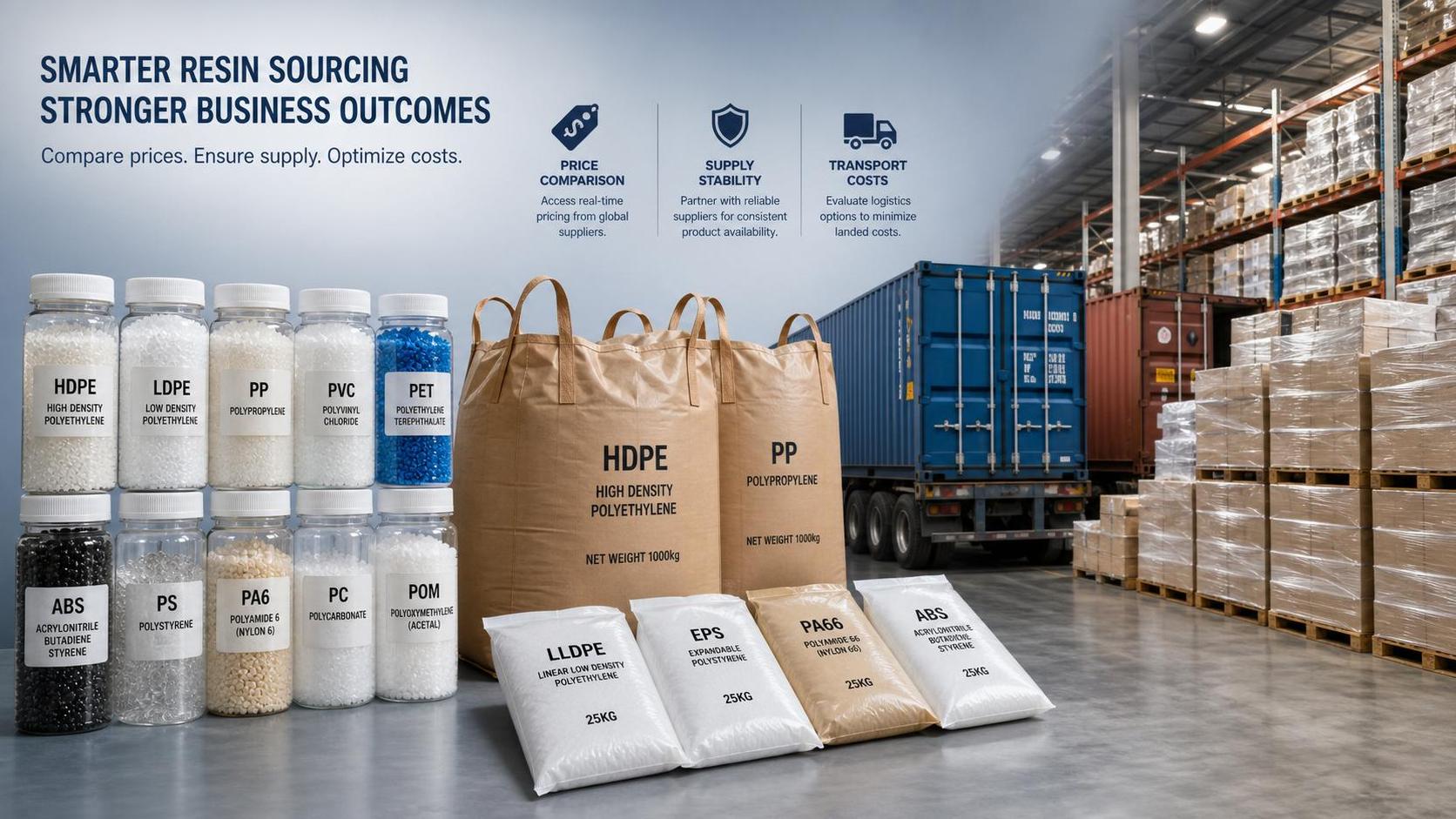
In practice, quoted cost also reflects packaging type, order volume, payment terms, and whether the supplier keeps local stock.
A supplier with stronger distribution coverage may look more expensive, but the risk-adjusted cost can be lower.
For that reason, resin price comparison works best when market news, logistics conditions, and availability signals are reviewed together.
Which cost drivers matter more than the headline resin price?
The headline number matters, but it is only one layer of total resin cost.
A more useful comparison checks what is built into the material and what will be added later.
- Grade specification: general-purpose, food-contact, flame-retardant, medical, or engineering grades carry different pricing logic.
- Certification burden: REACH, RoHS, FDA, UL, or other approvals often raise document and testing costs.
- Processing performance: stable melt flow, color consistency, and lower reject rates can offset a higher resin price.
- Freight and storage: imported resins may look competitive ex-works, then lose advantage after shipping and warehousing.
- Currency and trade factors: exchange swings, tariffs, and customs checks can quietly reshape landed cost.
More common misjudgments happen when resins are compared by price per ton alone, without checking yield, scrap, and replacement risk.
How can you compare two resin offers without missing hidden differences?
A side-by-side review should test commercial terms and technical fit at the same time.
That approach reveals whether one resin is cheaper, or simply less complete.
This kind of comparison is more useful than asking which resins are “best” in general.
The better question is which offer fits the required output with the least total disruption.
When does supply risk become more important than a lower resin quote?
That shift usually happens when resins are tied to strict delivery windows, compliance-sensitive products, or limited substitution options.
A low quote loses value quickly if the supplier cannot maintain volume or replace delayed shipments.
Watch for several warning signs in resin sourcing:
- Frequent force majeure references or unclear plant status.
- Large quote swings without feedstock explanation.
- Single-port dependence or unstable inland transport routes.
- No clear backup grade, alternate origin, or distributor support.
- Repeated document delays for export, customs, or certification checks.
In wider industry coverage, these signals often appear before formal shortages become visible in spot prices.
That is why tracking market updates and supplier changes matters when comparing resins over several buying cycles.
Are imported resins always cheaper than local or regional supply?
Not necessarily. Imported resins can offer attractive base pricing, especially during oversupply periods in major exporting regions.
Still, landed cost often changes after freight, terminal charges, financing time, and customs uncertainty are added.
Regional supply may carry a higher nominal resin price, yet provide faster replenishment and lower interruption risk.
A balanced sourcing mix is often more resilient than relying on one country, one producer, or one shipment lane.
Where applications are sensitive, keeping approved secondary resins can reduce both cost shocks and production stress.
What is the practical way to judge resin value before placing volume orders?
Start by defining the real comparison unit. That may be cost per finished unit, cost per accepted batch, or cost per delivered week.
Then compare resins using the same technical standard, logistics assumption, and time window.
A workable review usually includes three steps:
- Screen offers against grade fit, documents, and lead-time realism.
- Test total landed cost, not only ex-works or FOB resin price.
- Rate supply resilience by alternate source options and communication quality.
Comparing resins well means connecting price movement with technical suitability and market risk.
The next useful step is to build a short evaluation sheet for current grades, recent offers, and likely disruption points.
That gives a clearer basis for follow-up negotiations, supplier review, and timing decisions when resin conditions change.
Technical Specifications
- How to test melt flow consistency in batches of recycled plasticsAuthor :Polymers & Rubber Editorial Team
- When does a cast resin transformer need high-altitude derating?Author :Electrical Components Editorial Team
- How to verify Global Industrial Insights sourcing informationAuthor :Industrial Machinery Editorial Team
Expert Insights

Chief Security Architect
Dr. Thorne specializes in the intersection of structural engineering and digital resilience. He has advised three G7 governments on industrial infrastructure security.
Core Sector // 01
Security & Safety
- How do different types of resins compare in UV resistance?Author :Chemical Industry Editorial Team

- Which resin types suit composite parts exposed to high temperatures?Author :Chemical Industry Editorial Team

- How to verify REACH compliance for epoxy resin before purchaseAuthor :Chemical Industry Editorial Team

- Resins Explained: Common Types, Properties, and Industrial UsesAuthor :Chemical Industry Editorial Team

- How to Compare Resin Prices: What Really Affects Material Cost and Supply RiskAuthor :Chemical Industry Editorial Team

- Epoxy Resins for Flooring, Coatings, and Casting: How to Choose the Right TypeAuthor :Chemical Industry Editorial Team

- Why Epoxy Resins Fail to Cure Properly: 7 Causes and Practical FixesAuthor :Chemical Industry Editorial Team