Epoxy Resins for Flooring, Coatings, and Casting: How to Choose the Right Type
Author
Date Published
Reading Time
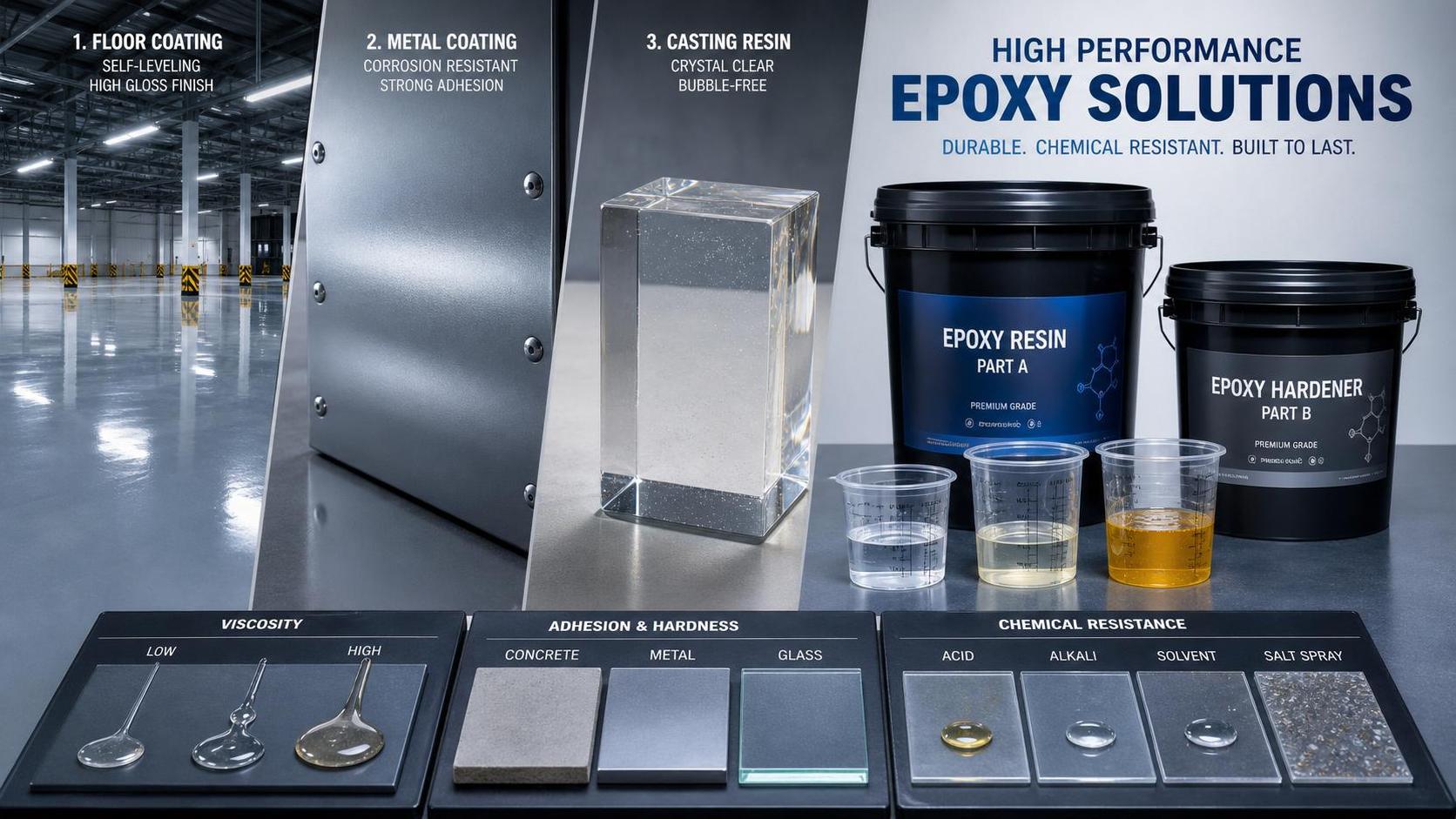
Choosing among epoxy resins for flooring, coatings, and casting is rarely a simple material selection exercise. Small differences in viscosity, cure profile, adhesion, and chemical resistance can change installation efficiency, service life, and compliance risk across very different projects.
That matters more now because buyers and specifiers are working in a market shaped by supply shifts, tighter standards, freight uncertainty, and stronger demand for application-specific performance. In practice, the right resin is the one that fits both the substrate and the business case.
What distinguishes one epoxy resin from another
Epoxy resins share the same basic chemistry platform, but they are not interchangeable. The resin backbone, molecular weight, reactive diluents, and hardener pairing all shape how the system behaves in real use.
Liquid bisphenol-A epoxy remains common because it offers balanced cost and performance. Novolac grades usually provide stronger chemical and heat resistance. Aliphatic and cycloaliphatic systems may be chosen where color stability or weathering matters.
In many commercial evaluations, the resin itself is only part of the picture. Fillers, pigments, accelerators, and curing agents can shift hardness, flexibility, open time, and final appearance just as much as the base resin type.
Why current market conditions make selection more important
The epoxy resins market is being influenced by feedstock volatility, regional environmental rules, and changing logistics costs. A technically suitable grade may still create procurement problems if lead times are unstable or documentation is incomplete.
For global sourcing, consistent batch quality has become a practical concern. Variations in color, viscosity, or gel time can disrupt flooring crews, coating lines, or casting cycles, especially when production windows are tight.
This is why material comparison increasingly combines lab data with commercial checks. Technical fit, regulatory status, packing format, and supplier traceability now need to be reviewed together rather than in isolation.
How requirements change across flooring, coatings, and casting
The same epoxy resin chemistry can perform well in one application and fail in another. Selection starts with understanding what the system must endure after curing.
Flooring systems
Floor coatings and self-leveling floors usually require strong adhesion to concrete, controlled flow, abrasion resistance, and manageable pot life. Moisture tolerance also matters because damp substrates remain a common field problem.
Where forklifts, cleaning chemicals, or thermal cycling are present, tougher formulations are often preferred over highly rigid ones. Surface appearance still matters, but service durability usually drives the better decision.
Protective and decorative coatings
For industrial coatings, chemical resistance, film build, recoat window, and edge retention are central. Marine, tank, and plant maintenance applications may require novolac-based epoxy resins or higher crosslink density.
Decorative coatings add another layer of evaluation. Clarity, gloss retention, yellowing behavior, and VOC constraints can all become selection points, especially in export-oriented product lines.
Casting and encapsulation
Casting applications typically need low viscosity, good air release, and controlled exotherm. Deep pours are especially sensitive because heat buildup can cause cracking, haze, shrinkage, or surface distortion.
In electrical or decorative casting, optical clarity and dimensional stability may matter more than mechanical strength. That shifts the evaluation toward cure speed, bubble control, and long-term color performance.
Key parameters worth comparing before approval
A useful comparison framework keeps attention on measurable properties that affect processing and end use. The table below highlights practical differences.
Common mistakes in resin selection
One frequent mistake is choosing epoxy resins by price per kilogram alone. Lower unit cost can be offset by higher consumption, slower cure, more rejects, or shorter maintenance intervals.
Another issue is relying on generic data sheets without checking the full formulation context. Test results may reflect a curing agent or additive package different from the one actually being supplied.
- Review substrate condition, service environment, and required film or pour thickness together.
- Confirm compliance documents, storage conditions, and shelf life before approval.
- Request trial batches when switching origin, grade, or hardener system.
- Check whether local climate affects cure, blush formation, or moisture sensitivity.
A practical way to narrow the options
A workable shortlist usually begins with end-use exposure. Chemical contact, traffic load, UV exposure, and casting depth immediately remove unsuitable epoxy resins from consideration.
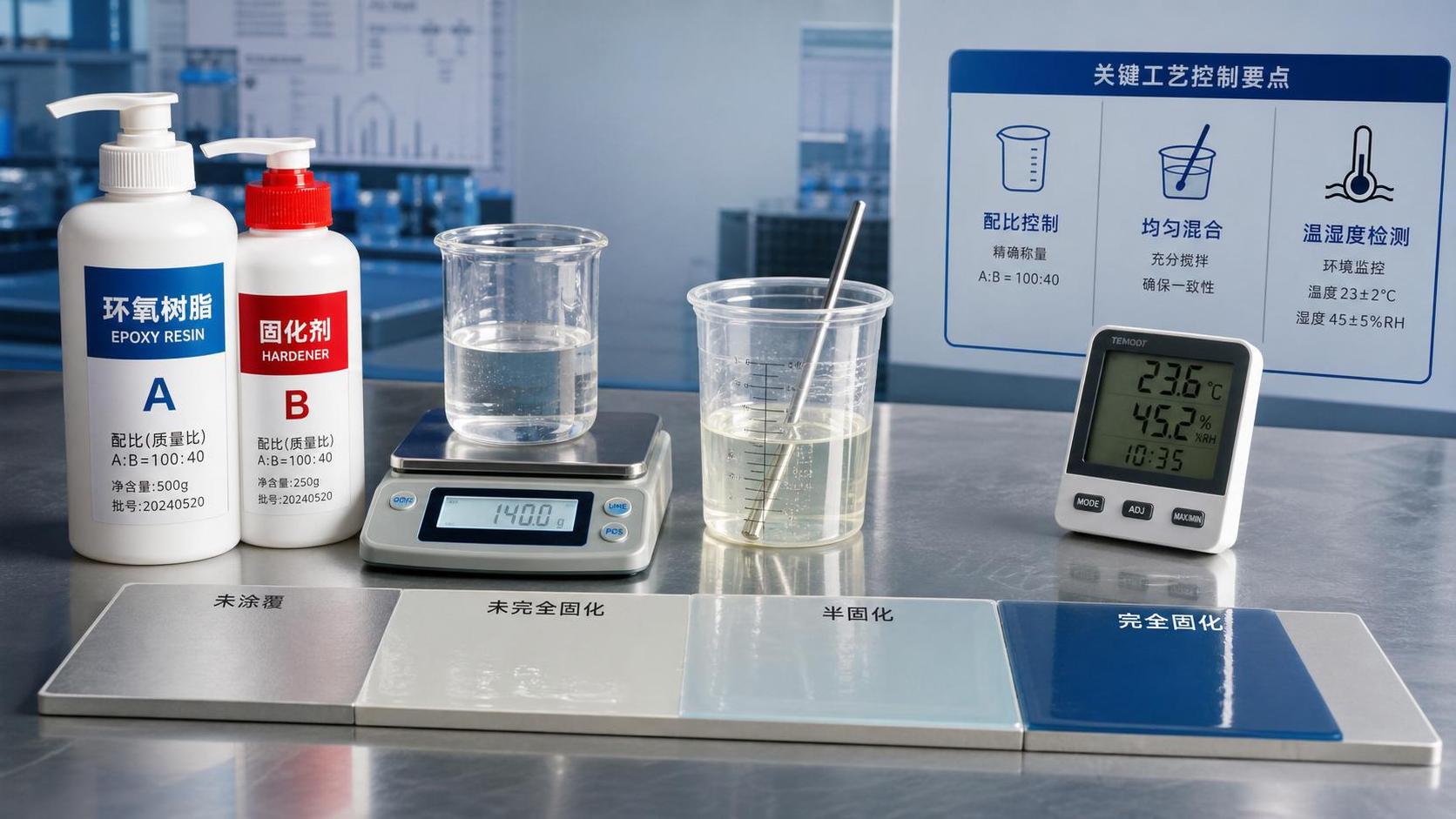
After that, processing requirements should guide the next screen. Mixing ratio, application temperature, recoat timing, and cure schedule often determine whether a material works smoothly on site or in production.
The final comparison should include supply reliability and technical support. When two systems perform similarly, the more dependable source, clearer documentation, and lower logistics risk often make the stronger long-term choice.
For anyone tracking material options through industry news, sourcing references, and market updates, the next step is to build a comparison sheet around application conditions, not product claims. That approach makes epoxy resins easier to judge, test, and specify with confidence.
Technical Specifications
- How to test melt flow consistency in batches of recycled plasticsAuthor :Polymers & Rubber Editorial Team
- When does a cast resin transformer need high-altitude derating?Author :Electrical Components Editorial Team
- How to verify Global Industrial Insights sourcing informationAuthor :Industrial Machinery Editorial Team
Expert Insights

Chief Security Architect
Dr. Thorne specializes in the intersection of structural engineering and digital resilience. He has advised three G7 governments on industrial infrastructure security.
Core Sector // 01
Security & Safety
- How do different types of resins compare in UV resistance?Author :Chemical Industry Editorial Team

- Which resin types suit composite parts exposed to high temperatures?Author :Chemical Industry Editorial Team

- How to verify REACH compliance for epoxy resin before purchaseAuthor :Chemical Industry Editorial Team

- Resins Explained: Common Types, Properties, and Industrial UsesAuthor :Chemical Industry Editorial Team

- How to Compare Resin Prices: What Really Affects Material Cost and Supply RiskAuthor :Chemical Industry Editorial Team

- Epoxy Resins for Flooring, Coatings, and Casting: How to Choose the Right TypeAuthor :Chemical Industry Editorial Team

- Why Epoxy Resins Fail to Cure Properly: 7 Causes and Practical FixesAuthor :Chemical Industry Editorial Team